 Ferndale Exterior
 Board & Batten Siding Built for Lummi Island's Weather
Board and batten has become a favorite look for homes on Lummi Island — the vertical lines suit the island's mix of modern cabins, remodeled cottages, and classic Northwest farmhouse-style builds. But the look is only half the story. Lummi Island sits fully exposed to Puget Sound weather: salt-laden air off the water, long stretches of driving rain, and shaded, moisture-heavy lots that stay damp well into the dry season. Board and batten siding has more seams and more places for water to find a way in than plain lap siding, which means the installation details matter more here than almost anywhere else in Whatcom County.
This page covers what board and batten siding actually needs to hold up on Lummi Island, what a correct installation looks like, and why we install it exclusively in James Hardie fiber cement rather than wood, vinyl, or engineered wood alternatives.
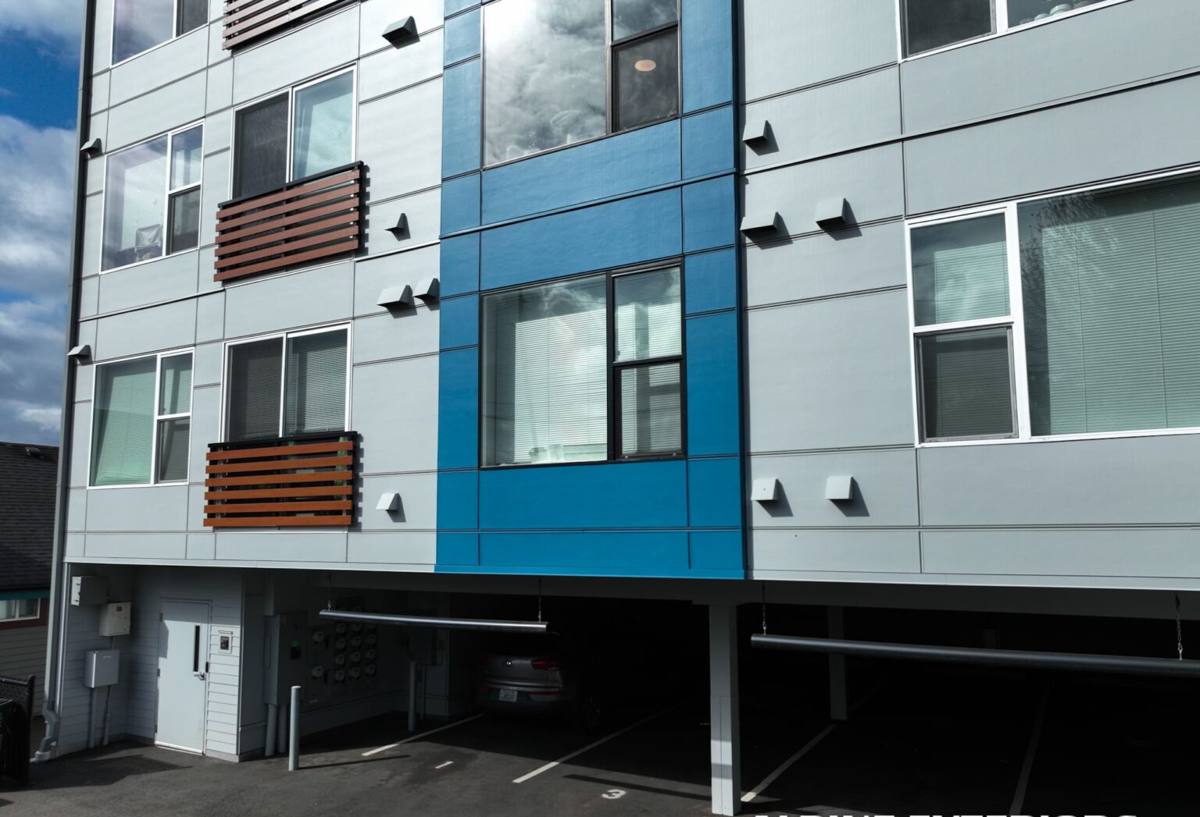
What Lummi Island's Climate Does to Exterior Siding
Lummi Island is a marine environment in every sense — it's surrounded by saltwater, sits in the path of Pacific weather systems moving through the Salish Sea, and much of the housing stock is tucked under fir and cedar canopy that keeps siding shaded and slow to dry.
Salt Air
Airborne salt is corrosive to metal. Standard fasteners, un-coated flashing, and cheaper trim hardware break down faster this close to the water, and once a fastener starts rusting behind a board and batten seam, that rust streaks down the face of the siding — a cosmetic problem that also signals the fastener is losing its grip.
Driving Rain
Storms coming off the water don't just fall straight down — wind pushes rain sideways into the wall assembly, especially on west- and southwest-facing elevations. Board and batten siding has vertical battens covering every panel seam, and each one of those seams is a potential entry point if it isn't flashed and gapped correctly.
Moss and Algae
Shade, moisture, and mild temperatures are exactly what moss and algae need to establish themselves. On siding that stays damp longer than it should — because of poor drainage behind the panels or a finish that holds moisture — moss doesn't just look bad, it holds water against the substrate and shortens the siding's life.
What a Correct Board & Batten Installation Requires
Board and batten looks simple from the outside — wide panels, narrow battens covering the seams — but it's less forgiving of shortcuts than lap siding. A few details separate a board and batten job that lasts decades from one that causes problems in five to ten years.
A Working Drainage Plane
Behind every panel there needs to be a weather-resistive barrier and, ideally, a rainscreen gap that lets any moisture that gets past the surface drain and dry out instead of sitting against the wall sheathing. This matters more on board and batten than lap siding because the batten strips create more surface interruptions for water to test.
Panel Expansion Gaps
Fiber cement panels expand and contract slightly with temperature and moisture swings. Panels installed tight against trim or against each other with no gap will eventually buckle or crack at the joints. Correct spacing at every panel edge is a small detail that has a big effect on how the siding looks in year eight.
Fastener Selection and Placement
On an island surrounded by saltwater, fastener corrosion resistance isn't optional. Hot-dip galvanized or stainless fasteners, placed at the manufacturer's specified pattern and depth, keep battens secure without over-driving nails that crack the panel or under-driving nails that work loose in wind.
Batten Attachment
Battens need to be fastened into the panel and framing correctly — not just face-nailed decoratively. Done wrong, battens trap water against the seam instead of shedding it. Done right, they cover and protect the seam while still allowing the wall to drain.
Flashing at Every Penetration
Windows, doors, hose bibs, light fixtures, vents — every penetration through board and batten siding needs proper flashing integrated with the water-resistive barrier, not just a bead of caulk. Caulk fails; correctly lapped flashing doesn't depend on staying intact forever.
Comparing Board & Batten Material Options for a Coastal Island Climate
Board and batten can be built from several materials. Here's how they hold up under Lummi Island's salt air, rain, and shade conditions specifically.
| Material | Moisture Behavior | Maintenance | Typical Lifespan (Installed to Spec) |
|---|---|---|---|
| James Hardie fiber cement | Non-combustible, engineered to resist moisture-related swelling and rot; factory ColorPlus finish resists moss and mildew staining | Occasional rinse; no repainting for years with ColorPlus finish | 30+ years, backed by a strong transferable warranty |
| Cedar or primed spruce | Natural wood absorbs and releases moisture; prone to cupping, checking, and rot in shaded, damp spots | Repainting or restaining every few years; more frequent in shaded coastal exposures | Highly variable — often 10-20 years before major repair or replacement in this climate |
| Vinyl board & batten | Doesn't rot, but seams and panels can warp or loosen in wind-driven rain and temperature swings; doesn't offer true drainage detailing | Low, but cracked or faded panels can't be spot-repaired invisibly | 15-25 years, shorter in high-wind coastal exposure |
We install James Hardie exclusively — not because the alternatives are worthless, but because we've made a professional decision about what stands up to this specific climate with the least long-term maintenance burden for the homeowner. Hardie's HZ5 product line in particular is engineered for climates with significant moisture exposure, which describes Lummi Island well.
Our Process for Lummi Island Board & Batten Projects
1. On-Site Assessment
We look at the home's actual exposure — which elevations take the brunt of driving rain, how much shade and moss buildup is already present, and the condition of the existing wall assembly underneath the current siding.
2. Tear-Off and Substrate Check
Removing the old siding lets us check the sheathing and framing for any hidden moisture damage before it's covered back up. This step matters more on older island homes where past siding may not have drained properly.
3. Weather-Resistive Barrier and Drainage Plane
We install a proper water-resistive barrier and rainscreen gap so the wall assembly can dry out even if moisture gets past the surface — a standard we hold to on every board and batten job here, not just when it's requested.
4. Panel and Batten Installation
Hardie panels go up with correct expansion gaps, corrosion-resistant fasteners at manufacturer-specified spacing, and battens fastened to shed water rather than trap it.
5. Flashing and Trim Detail
Every window, door, and penetration gets flashed and integrated into the drainage plane before trim goes on.
6. Final Walkthrough
We review the finished job with the homeowner, including basic care guidance specific to an island property.
Why a Crew That Already Works on Lummi Island Matters
Lummi Island isn't just another neighborhood — it's ferry access only, which changes how a siding project has to be planned. Materials, crew, and equipment all have to be staged and scheduled around the ferry, not just driven over on a whim. A crew unfamiliar with the island can lose real time and money figuring that out mid-project, and that cost has a way of landing on the homeowner's timeline.
There's also a site-specific knowledge factor. Which elevations catch the worst of the wind off the water, which lots stay shaded and damp longest, where moss tends to establish first — these are things a crew learns by working the island repeatedly, not from a general Whatcom County playbook. We plan Lummi Island jobs around the ferry schedule and around what we've already learned about how homes here weather over time.
Caring for Board & Batten Siding Once It's Installed
A correctly installed Hardie board and batten system is low-maintenance, but "low" isn't "none." A few habits keep it performing the way it's designed to:
- Rinse the siding once or twice a year, focusing on shaded sides where moss and algae tend to establish first
- Keep trees and shrubs trimmed back from the wall so air can move and siding can dry between rain events
- Check caulking at trim joints and penetrations annually — it's a maintenance item even on a well-flashed wall
- Clear debris out of any gutters or drainage paths near the base of the siding so water isn't sitting against the bottom edge
- Watch for any streaking near fasteners or battens, which can be an early sign a fastener needs attention
None of this is heavy upkeep — it's the kind of light seasonal attention that keeps a well-installed system living up to its warranty rather than fighting the island's climate from day one.
What to Watch For If You Already Have Board & Batten Siding
If your home already has board and batten siding — wood, vinyl, or fiber cement — a few warning signs are worth a closer look before they turn into bigger repairs: soft spots or visible swelling at panel bottoms, battens that have pulled away from the wall, persistent moss growth that comes back right after cleaning, or rust streaking below fastener points. On an island property, these issues tend to show up first on the sides that face open water or stay shaded longest.
If you're planning a new install, a repair, or just want an honest look at what's going on with your current siding, we're happy to come out and give you a straightforward, no-pressure estimate — use the form below to get started.