 Ferndale Exterior
 Building a Deck That Can Handle Birch Bay
Birch Bay sits right where Whatcom County meets the water, and that location shapes everything about how a deck ages here. Homes along the bay and back through the surrounding neighborhoods deal with a combination that inland decks rarely see all at once: salt-laden air off the water, long stretches of driving rain through fall and winter, and a moss and algae season that can run eight months or more in shaded, low-airflow spots. A deck built without that combination in mind will show it within a few seasons — fading unevenly, staining green in the corners, or working loose at the fasteners well before it should.
Composite decking has become the go-to answer for waterfront and near-waterfront properties in this part of Washington, but "composite" isn't one product — it's a category with a wide range of quality, and installing it correctly in a salt-air, high-moisture environment takes more care than installing it inland. This page walks through what Birch Bay homes actually need from a composite deck, what a correct installation involves, and what to look for when you're choosing a crew to do the work.
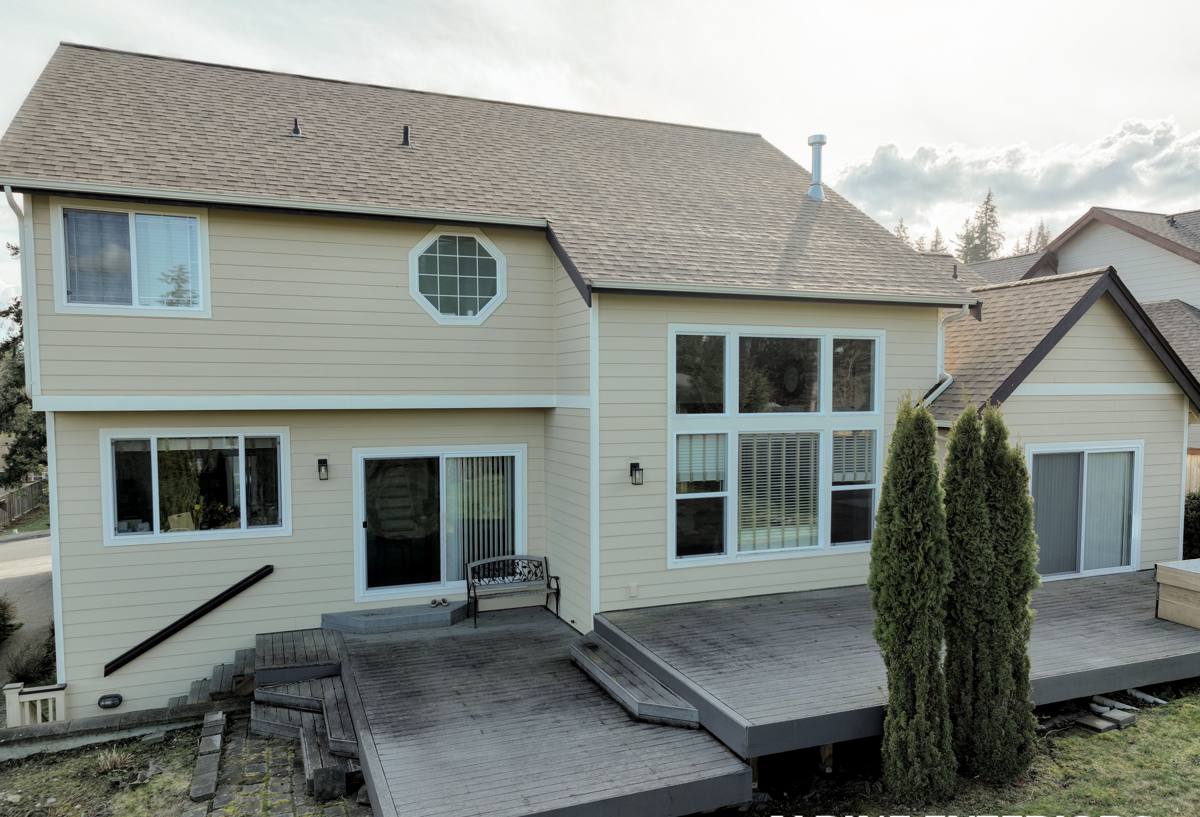
What Salt Air and Driving Rain Actually Do to a Deck
It helps to understand the specific failure modes before talking about the fix. In a marine environment like Birch Bay, the damage isn't one thing — it's several slow processes working at once.
Corrosion at the fasteners
Salt air accelerates corrosion in any exposed metal — screws, joist hangers, flashing, railing hardware. Standard fasteners that would last decades in a drier inland yard can start rusting and staining within a few years this close to the water. Once a fastener corrodes, it weakens, and the discoloration bleeds into the surrounding decking or framing.
Moisture trapped below the boards
Whatcom County's wet season means the ground and substructure under a deck rarely get a chance to fully dry out. If the framing doesn't have proper airflow and drainage underneath, that moisture sits, feeding rot in wood framing and creating the damp, shaded conditions moss and algae need to take hold on the deck surface itself.
UV and moisture cycling on the surface
Decking here goes through repeated wet-dry cycles — soaked by rain, then exposed to sun between systems. Materials that aren't built to handle that cycling can swell, crack, or fade unevenly, especially on the side of the deck that gets more weather exposure.
Why Composite Fits This Environment
Composite decking is manufactured from a blend of wood fiber and recycled plastic, and on capped boards, wrapped in a protective polymer shell. That construction addresses the specific problems above:
- It doesn't absorb water the way solid wood does, so it's far less prone to rot, splintering, or cupping from constant wet-dry cycling.
- A capped surface resists staining from moss, algae, and organic debris better than uncapped wood or lower-grade composite, making it easier to keep clean through the wet months.
- It doesn't need annual staining or sealing, which matters for owners who don't want to be out there re-treating a deck every spring.
- Color and texture stay more consistent over time when the board is properly capped and UV-stabilized, instead of graying or blotching unevenly like untreated wood exposed to salt air.
That said, composite is not maintenance-free, and it's not immune to the effects of a marine climate — it just handles them better than the alternatives when it's specified and installed correctly. The specific brand, board profile, and hardware matter more here than they would on a deck twenty miles inland.
Choosing the Right Composite for a Waterfront Property
Not every composite board on the market is built for this kind of exposure. Lower-tier, uncapped composite boards absorb more moisture at the core and are more prone to surface mold in constantly damp conditions. For Birch Bay properties, we generally steer homeowners toward fully capped composite or PVC decking, and explain the trade-offs honestly rather than pushing whatever has the best margin.
| Decking Type | Moisture Behavior | Maintenance | Typical Fit for Birch Bay |
|---|---|---|---|
| Uncapped/first-gen composite | Some water absorption at the core; can mold in shaded, damp spots | Occasional cleaning, more prone to surface staining | Workable inland; less ideal directly on the water |
| Capped composite | Protective shell resists moisture and staining well | Periodic rinsing; no staining or sealing | Strong fit — our standard recommendation |
| PVC decking | Fully synthetic, essentially no moisture absorption | Low; very resistant to mold and algae growth | Excellent for heavy salt exposure, higher cost |
| Pressure-treated wood | Absorbs and releases moisture constantly; prone to cupping | Annual staining/sealing recommended | Requires the most upkeep in this climate |
We don't install every product on the market, and that's intentional. Boards without a real capped or fully synthetic surface simply don't hold up as well against sustained salt air and moisture, and we'd rather steer a homeowner toward something that will still look good in ten years than sell whatever's cheapest today.
What a Correct Composite Deck Installation Involves
The board itself is only part of the story. Most composite deck problems we get called out to inspect — soft spots, uneven boards, mysterious staining — trace back to how the substructure and hardware were handled, not the decking material.
Substructure and framing
Joists and beams need to be sized correctly for the span and spaced to match the manufacturer's requirements for the specific composite board being used — composite typically needs tighter joist spacing than solid wood, especially on diagonal or picture-frame patterns. In a wet climate, we also pay close attention to ledger board flashing where the deck attaches to the house, since that's the single most common point where water intrusion leads to structural rot behind the siding.
Corrosion-resistant hardware
Given the salt air off the bay, we use fasteners, joist hangers, and structural screws rated for coastal or marine-grade exposure rather than standard galvanized hardware. It costs more up front and matters far more over the life of the deck than most homeowners realize until they've seen a corroded joist hanger fail.
Ventilation and drainage underneath
Airflow beneath the deck keeps the framing drying out between rain systems instead of staying damp all winter. That means correct deck height off grade, gaps where required, and grading or drainage work underneath so water doesn't pool against posts and footings.
Board spacing and fastening
Composite expands and contracts with temperature more than people expect. Gaps between boards need to be set correctly for the season and board type, and hidden fastener systems need to be installed to the manufacturer's spec so boards don't buckle or gap unevenly as they move through the year.
Moss, Algae, and Realistic Maintenance
Whatcom County's long, wet season means moss and algae pressure is a fact of life for any exterior surface, decks included — especially on shaded sides of a house or under tree cover near the bay. Composite resists staining better than wood, but it isn't immune, particularly where debris and standing moisture sit undisturbed for weeks.
Realistic upkeep on a well-installed composite deck in this area looks like:
- Periodic sweeping or blowing off leaves and debris, especially in fall, so organic matter doesn't sit and feed moss growth.
- An occasional rinse or light wash with a soft brush and a composite-safe cleaner — no pressure washing at close range, which can damage the capped surface.
- Keeping gutters and downspouts near the deck clear so runoff isn't dumping extra water onto the surface or framing below.
- A quick seasonal check of railing hardware and fasteners for early signs of corrosion, particularly heading into the wettest months.
None of that is heavy maintenance — it's the difference between a deck that stays clean and stable for decades and one that develops chronic moss and staining problems because water and debris were left to sit.
Our Process for Birch Bay Decking Projects
We start with an on-site look at the property, because every waterfront lot around Birch Bay has its own exposure — some are more sheltered, some take the full brunt of wind and salt spray off the water. That assessment shapes the board recommendation, the hardware spec, and the framing plan, rather than applying a one-size approach.
From there, our process is straightforward:
- Site evaluation and measurements, including sun/shade exposure and drainage patterns around the deck footprint.
- A written estimate covering material selection, substructure work, hardware, and any ledger or flashing repairs needed.
- Permitting through the appropriate local jurisdiction where required, before any framing work begins.
- Demolition of the old deck (if applicable) and inspection of the framing or ledger attachment behind it.
- Substructure build-out with corrosion-resistant hardware and correct joist spacing for the chosen composite board.
- Composite board installation with manufacturer-specified spacing and fastening.
- Final walkthrough covering care and cleaning expectations specific to a marine climate.
Permits and Local Considerations
Deck projects in and around Ferndale and unincorporated Whatcom County — which covers Birch Bay — typically require a building permit once the structure exceeds a certain height or size, and any work tied to a shoreline or critical area designation can involve additional review given the property's proximity to the water. We handle that permitting conversation as part of the estimate so there are no surprises once work starts, rather than leaving a homeowner to figure out local requirements on their own.
What to Ask Before Hiring a Deck Contractor Here
Because so much of a deck's long-term performance in this climate comes down to details you can't see once it's finished — hardware grade, joist spacing, flashing — it's worth pressing a contractor on specifics before signing anything:
- What fastener and hardware grade will be used, and is it rated for coastal or marine exposure?
- Is the composite board fully capped, and what does the manufacturer's warranty actually cover?
- How will ledger board flashing be handled where the deck meets the house?
- What joist spacing will be used, and does it match the composite manufacturer's requirements?
- Who pulls the permit, and has the contractor worked with the local jurisdiction before?
- What does realistic long-term maintenance look like for this specific board and this specific site?
A contractor who's done this work in Birch Bay before should be able to answer all of that without hesitation — it's the difference between a crew that's building for this climate and one that's just building a deck.
Get a Free, No-Pressure Estimate
If you're planning a new composite deck or replacing an aging one on your Birch Bay property, we're happy to walk the site, talk through material options for your specific exposure, and put together a clear written estimate — no pressure, no obligation. Use the form below to get started.