 Ferndale Exterior
 Why Decks in Point Roberts Wear Out Differently Than Elsewhere in Whatcom County
Point Roberts sits on its own peninsula, water on three sides and cut off by land from the rest of Whatcom County by the international border. That geography means homes here get a more concentrated version of Pacific Northwest weather than a deck a few miles inland deals with: near-constant marine air, driving rain pushed in off Boundary Bay and the Strait of Georgia, and a moss season that runs longer than most homeowners expect. A deck built to a generic spec, or built by a crew that doesn't normally work this stretch of the county, tends to show its age faster out here — soft framing, corroded fasteners, or a slick, moss-covered surface well before it should.
Composite decking is a good answer to a lot of that, but not automatically. What matters is which composite product goes down, how the substructure underneath it is built, and whether the installer actually accounts for a shaded, damp, salt-touched lot instead of treating it like any other build. This page covers what a Point Roberts home actually needs from a composite deck, what a correct installation looks like here, and why it matters that we already work this peninsula regularly.
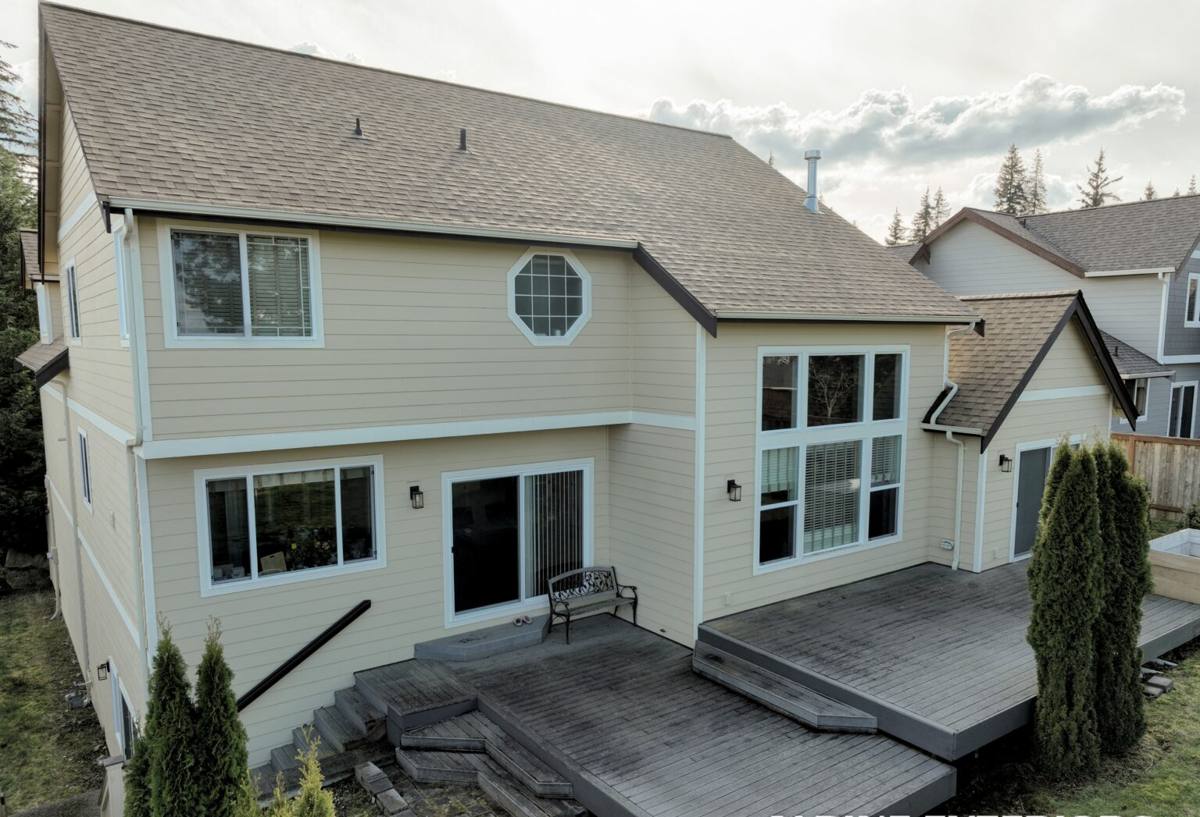
What This Climate Actually Does to a Deck
Salt Air, From More Than One Direction
Most inland decks in Whatcom County deal with rain and humidity, but not much salt. A deck in Point Roberts, surrounded by water, is exposed to salt-laden marine air almost continuously, and depending on the lot it can be catching that air from more than one side. Salt speeds up corrosion in anything metal — fasteners, brackets, railing hardware — and it does this quietly. A fastener can lose real holding strength well before it looks visibly rusted, which is one reason fastener grade isn't a place to save money on a build out here.
Driving Rain and Wind Off the Water
Rain that comes in sideways behaves differently than rain falling straight down. Wind off open water pushes moisture up under railings, into board end grain, and against ledger connections in a way that a sheltered inland deck rarely experiences to the same degree. Over time, that's what turns a small gap in flashing or a poorly sealed cut end into a real moisture problem, often well before the deck surface itself shows any sign of trouble.
The Long Moss Season
Point Roberts, like much of this part of Whatcom County, gets a long stretch of low sun angle, tree cover, and near-constant dampness through fall, winter, and spring — conditions moss thrives in. On a shaded or north-facing deck, that season can run most of the year. Moss and algae aren't just a cosmetic issue: they hold moisture against whatever surface they're growing on, and on the wrong decking material that constant dampness accelerates rot, staining, and a slick, unsafe walking surface. The right composite product and the right airflow underneath the deck both make a real difference in how much moss actually takes hold.
What "Composite Decking" Actually Means
Composite decking is generally a blend of wood fiber and plastic, but the ratio, the plastic type, and how the board is finished vary considerably between manufacturers and product lines. Two distinctions matter most for a site like this one:
Capped vs. Uncapped
Capped composite boards have a plastic shell wrapped around a wood-plastic core, which keeps the core from absorbing moisture and resists staining, mold, and UV fade at the surface. Uncapped composite — the older style of the product — is exposed wood-plastic blend on all sides, so it absorbs moisture more readily and is more prone to surface mold and fading over time. In a damp, shaded, salt-touched environment like Point Roberts, that difference shows up faster than it would somewhere drier, which is why we standardize on capped composite for this area.
PVC as an Alternative
Some manufacturers also make fully cellular PVC decking, with no wood fiber in it at all. PVC won't absorb moisture the way any wood-fiber product can, and it holds up well against constant dampness and moss-prone shade, though it can flex more under heavy point loads and typically costs more than capped composite. Whether capped composite or PVC is the better fit depends on how shaded the site is, the budget, and how the deck will actually be used — we'll walk through that with you rather than defaulting to one answer.
What a Correct Composite Deck Build Involves Here
The visible decking boards get most of the attention, but on a site like this the substructure and fastening details are what actually decide whether the deck holds up. A build done right for Point Roberts conditions includes:
- Framing material rated for damp, ground-contact conditions — pressure-treated lumber suited to the site, or an alternative substructure where a shaded, wet lot calls for it
- Stainless steel or coated marine-grade fasteners throughout, not standard-grade hardware that corrodes faster in salt air
- Hidden fastener systems on the decking surface where the product allows, reducing exposed metal and giving moss and algae less to grab onto
- Correct board gapping for expansion, contraction, and drainage — composite still moves with temperature and moisture, just differently than wood does
- Proper ledger board flashing and attachment where the deck ties into the house, since wind-driven rain finds this connection point first
- Joist spacing matched to the specific composite product's span rating, not a generic wood-framing spacing carried over out of habit
- Ventilation and drainage beneath the deck so moisture and organic debris don't sit against the framing through a long wet season
- Railing and post attachment built to code, particularly on any deck with real wind exposure off the water
Skip any one of these and the deck usually still looks fine on day one. The problem shows up two, five, or ten years later — a soft joist, a loosening railing post, or a green film building up in the gaps between boards faster than it should.
How Our Process Works
We start with a site visit to see what's actually there: existing framing condition if it's a replacement, how much shade and tree cover the deck area gets, drainage and grade, and how exposed the site is to wind and rain off the water. From there we go over composite options that fit the budget and the way you'll actually use the space, whether that's a simple sitting deck or something built for entertaining.
Point Roberts also comes with a logistical wrinkle that doesn't apply to most jobs elsewhere in Whatcom County: it's only reachable by road through Canada, or by air or water. That affects how material deliveries, crew scheduling, and any mid-project supply runs get planned — a detail that matters more than it sounds like once a job is underway and someone needs a second trip for a forgotten part. Permitting runs through Whatcom County the same as it would in Ferndale or Blaine, and we handle that as part of the job. Once permitted, the build follows the order above — substructure first, sized and fastened for this site's actual exposure, then the composite surface, railing, and trim. We finish with a short walkthrough covering the maintenance your specific product actually needs, which is minor, but not zero.
Composite Decking Compared to the Alternatives
| Material | How It Handles Damp Shade & Salt Air | Maintenance | Typical Lifespan Here |
|---|---|---|---|
| Capped composite | Strong — cap layer resists moisture absorption, staining, and mold growth | Occasional washing; no sealing or staining | Long-term, backed by manufacturer warranty |
| Cellular PVC | Excellent — no wood fiber to absorb moisture at all | Occasional washing; no sealing or staining | Long-term, generally at a higher upfront cost |
| Uncapped composite | Moderate — absorbs some moisture, more prone to mold and fading in shade | Periodic cleaning to manage surface growth | Shorter than capped products in wet, shaded conditions |
| Pressure-treated wood | Weak against constant dampness and salt air over time — fasteners corrode, moss takes hold in the grain | Regular sealing or staining, plus moss treatment | Shortest, with the most ongoing upkeep |
| Cedar | Naturally moisture-resistant but still grays and grows moss without upkeep | Periodic oiling or sealing to manage moisture and moss | Long if maintained; degrades faster if neglected |
Moss, Mold, and What Composite Still Needs From You
Composite decking is low-maintenance compared to wood, not maintenance-free, and on a moss-prone lot that distinction actually matters. A little routine care goes a long way here:
- Wash the surface a couple of times a year, more often in shaded spots, to keep moss and algae from establishing before they stain the cap layer
- Keep the gaps between boards clear of needles, leaves, and debris so water can drain and air can move through as designed
- Trim back overhanging branches or shrubs that keep the deck surface shaded and damp longer than it needs to be
- Check railing posts and visible hardware once a year for early corrosion or loosening, especially heading into the wet season
- Deal with any substructure concerns — soft framing, standing water underneath — right away, since that's structural, not cosmetic
Why It Matters That We Already Work Point Roberts
A crew that mostly builds decks elsewhere in Whatcom County can still install composite decking competently, but Point Roberts has a few things that don't come up as often on a typical inland job: the border-crossing logistics of getting materials and crews onto the peninsula efficiently, a moss and shade problem that's more persistent than most nearby communities see, and salt exposure from a site that can face open water on more than one side. Working here regularly means we're not learning those variables on your project. We know which composite lines actually hold up against damp shade over years rather than months, what fastener grade earns its keep against salt air, and how to plan a job so we're not making an extra supply run through the border partway through.
That familiarity also means being straightforward with you about what your specific lot actually needs — a heavily shaded, north-facing deck and a sun-exposed deck facing the water don't need the exact same build, even on the same street.
Get a Straight Answer About Your Deck
Whether you're replacing a tired wood deck that's finally lost the fight with moss, building new, or just want an honest read on what a composite deck would take on your Point Roberts property, we're happy to walk the site with you and lay out the options plainly. Reach out below for a free, no-pressure estimate.