 Ferndale Exterior
 Deck Building for Sudden Valley's Lake and Tree-Cover Climate
Sudden Valley sits differently than most Whatcom County neighborhoods. Homes here are built into wooded, often sloped lots close to Lake Whatcom, under heavy stands of Douglas fir and cedar. That combination — steep grades, dense canopy, and constant lake-area humidity — creates a specific set of problems for outdoor decks that a generic build doesn't account for. Add in the driving rain and long moss season that the whole region deals with, and a deck built without local knowledge can start showing real problems within a few years instead of holding up for decades.
We build and repair decks throughout the Ferndale area and Whatcom County, and Sudden Valley shows up on our schedule regularly enough that we've adjusted how we frame, flash, and finish decks specifically for lots like these.
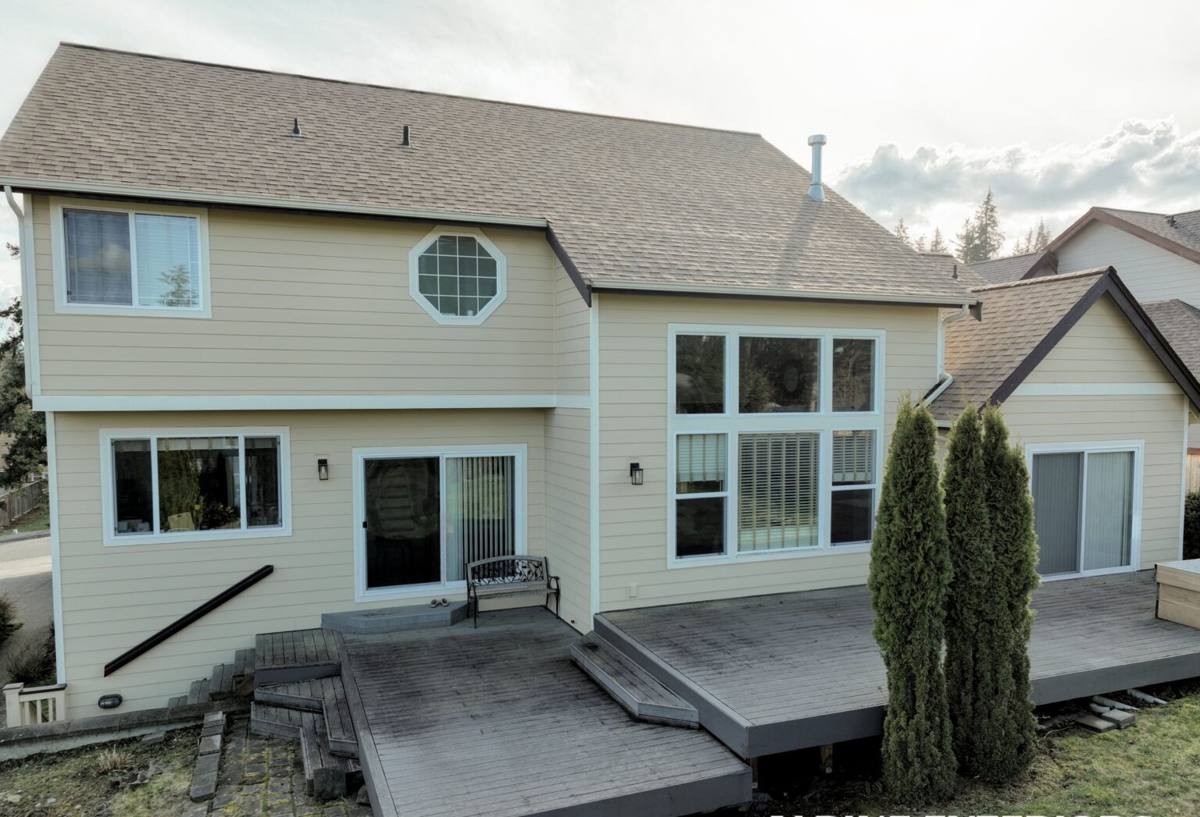
Why Decks Struggle in This Environment
Most deck failures we see in shaded, lake-adjacent lots trace back to a few repeating causes:
- Trapped moisture under tree cover. Dense canopy blocks the sun and wind that would normally dry a deck surface between rain events. Boards, joists, and ledger connections stay damp longer than they would in an open yard.
- Moss and organic buildup. Needles, leaves, and moss collect between boards and in corners. Left alone, that debris holds water against the wood and accelerates rot, and on painted or sealed surfaces it becomes slick and genuinely dangerous underfoot.
- Driving rain intrusion at the house. Wind-driven rain off the lake pushes water sideways into ledger board connections and any gap in the flashing where the deck meets the house — this is where we find the most structural rot, not usually in the open field of the deck.
- Slope-related drainage problems. On graded lots, water that isn't directed away from footings and posts pools against them, which speeds up decay in untreated or improperly rated lumber.
None of these are exotic problems. They're the predictable result of building an outdoor structure in a shaded, wet, sloped environment without adjusting the details for it.
What a Correctly Built Deck Actually Includes
A deck that's going to hold up under these conditions needs more attention paid to the parts you don't see than the decking boards themselves.
Ledger and flashing
Where the deck attaches to the house is the single most important detail on the whole project. That connection needs proper flashing — not just caulk — to keep wind-driven rain from working its way behind the ledger board and into the house's rim joist. This is the point of failure we replace the most often on older decks in this area.
Framing and fasteners
Joists, beams, and posts should be rated lumber for exterior/ground-contact use where applicable, and every fastener and connector needs to be corrosion-resistant hardware rated for treated lumber contact. In a damp, shaded environment, standard hardware corrodes faster and can fail quietly, out of sight, under the deck.
Footings on sloped ground
On graded lots, footing depth and post height often vary across the same deck. Footings need to be sized and set below frost depth with drainage considered around them, not just poured to a uniform spec that ignores the slope.
Board spacing and airflow
Gapping between boards needs to account for wood movement and drainage, and the space underneath the deck needs enough airflow to let moisture escape rather than sit trapped against the framing.
Choosing the Right Decking Material for a Shaded, Wet Lot
Material choice matters more here than on an open, sunny lot. Some products that perform fine in full sun struggle under constant shade and moss exposure.
| Material | How it handles shade and moisture | Maintenance in this climate |
|---|---|---|
| Pressure-treated lumber | Good rot resistance when properly treated, but surface can stay damp longer under canopy | Needs regular cleaning and re-sealing to prevent moss and graying |
| Cedar | Naturally rot- and insect-resistant, ages well in shade, but softer surface | Benefits from periodic cleaning and an oil or stain to maintain color and resist moss |
| Composite decking | Doesn't rot, but can hold surface moisture and grow algae/moss film in constant shade | Low structural maintenance, but needs regular washing to stay from getting slick |
| Tropical hardwoods (e.g. ipe) | Extremely dense and rot-resistant, performs well long-term in wet shade | Higher upfront cost; occasional oiling if color retention matters, otherwise low maintenance |
We don't push one product as universally "best" — the right call depends on your budget, how much shade your specific lot gets, and how much upkeep you actually want to do. What we won't do is install a decking product in a heavily shaded, wet location without being upfront about the maintenance it will demand to look and perform the way you expect.
Sloped Lots, Site Access, and Community Guidelines
Sudden Valley's terrain adds a few site-specific factors we plan for before the first board goes down:
- Grade and access. Steep or wooded lots often mean equipment and material staging need to be planned in advance rather than figured out on-site.
- Septic systems. Many properties in this area rely on septic systems, and deck footings and post placement need to respect the location of the drain field and tank access.
- Community design guidelines. Homes within Sudden Valley often fall under the community association's architectural review process. We build the permit and design paperwork around that from the start so it doesn't stall the project partway through.
None of this is complicated once it's accounted for, but a crew unfamiliar with the neighborhood can lose real time — and money — discovering it mid-project.
Our Deck Building Process
- Site walk. We look at slope, sun exposure, tree cover, existing drainage, and how the deck will tie into the house before we design anything.
- Design and material selection. We talk through decking material, railing, and layout options against your budget and how much maintenance you actually want to take on.
- Permitting and, where applicable, HOA paperwork. We handle the permit submission and, where the property requires it, the community architectural review documentation.
- Build. Framing, flashing, and fastener choices are set for this climate — not a generic spec — including footing depth adjusted for the site's grade.
- Finish and seal. Any sealant, stain, or oil is applied to manufacturer spec, with attention to the surfaces that will see the least sun and the most moss pressure.
- Walkthrough. We go over what maintenance the specific materials you chose will need going forward, so there are no surprises a year or two in.
Deck Maintenance Checklist for the Moss Season
Whatever material you choose, a little seasonal attention goes a long way in a shaded, wet environment:
- Sweep needles, leaves, and debris out from between boards regularly, especially in fall
- Wash the deck surface at least once a year to remove moss and algae film before it builds up
- Check the ledger board connection and flashing at the house for gaps, cracks, or staining
- Inspect fasteners and hardware under the deck for rust or corrosion
- Re-seal or re-stain wood decking on the schedule the product calls for — don't wait until it's visibly failing
- Confirm water is draining away from footings and posts, not pooling against them
- Trim back overhanging branches where practical to reduce shade and debris load
What Affects the Cost of a Deck in This Area
| Factor | Why it matters here |
|---|---|
| Decking material | Ranges from pressure-treated lumber on the lower end to tropical hardwoods and premium composites on the higher end |
| Site grade and access | Sloped or wooded lots can require deeper or more numerous footings and more labor to stage materials |
| Ledger and flashing detail | Doing the house connection correctly costs more upfront than caulking it, but it's the difference in whether the deck protects the house |
| Size and layout complexity | Multiple levels, built-in seating, or wraparound layouts add framing and labor |
| Railing and code requirements | Height and guard requirements depend on the deck's elevation above grade |
We give straightforward, itemized estimates so you can see where the cost is actually going rather than a single lump number.
Why Hiring a Crew That Already Works Sudden Valley Matters
A deck built for a flat, sunny lot in a different part of Whatcom County won't automatically hold up on a shaded, sloped lot above Lake Whatcom. The framing details, drainage planning, and material choices that matter here come from having actually built and repaired decks on lots like this — not from a general spec sheet. A crew that already understands the grading, septic considerations, and community review process on properties in this neighborhood can plan around them instead of running into them halfway through a project, which keeps the timeline and the budget where they should be.
If you're planning a new deck or need an honest look at an existing one, we're happy to come out and walk the site with you. There's no cost and no pressure to move forward — just a straightforward look at what your specific lot needs and what it would take to get it right. Use the form below to request a free estimate.