 Ferndale Exterior
 Windows Built for Cordata's Coastal Climate
Homes in and around Cordata sit close enough to the water and open farmland that windows take a beating most inland homeowners never have to think about. Salt-laden air off the Strait, driving rain that comes in sideways during winter storms, and a moss season that stretches longer here than almost anywhere else in Washington all work against a window's seals, frames, and finish year-round. When we replace or install custom windows in this part of Whatcom County, we're not just matching a size and calling it done — we're building the unit and the installation to survive conditions that are genuinely harder on materials than what you'd find thirty miles inland.
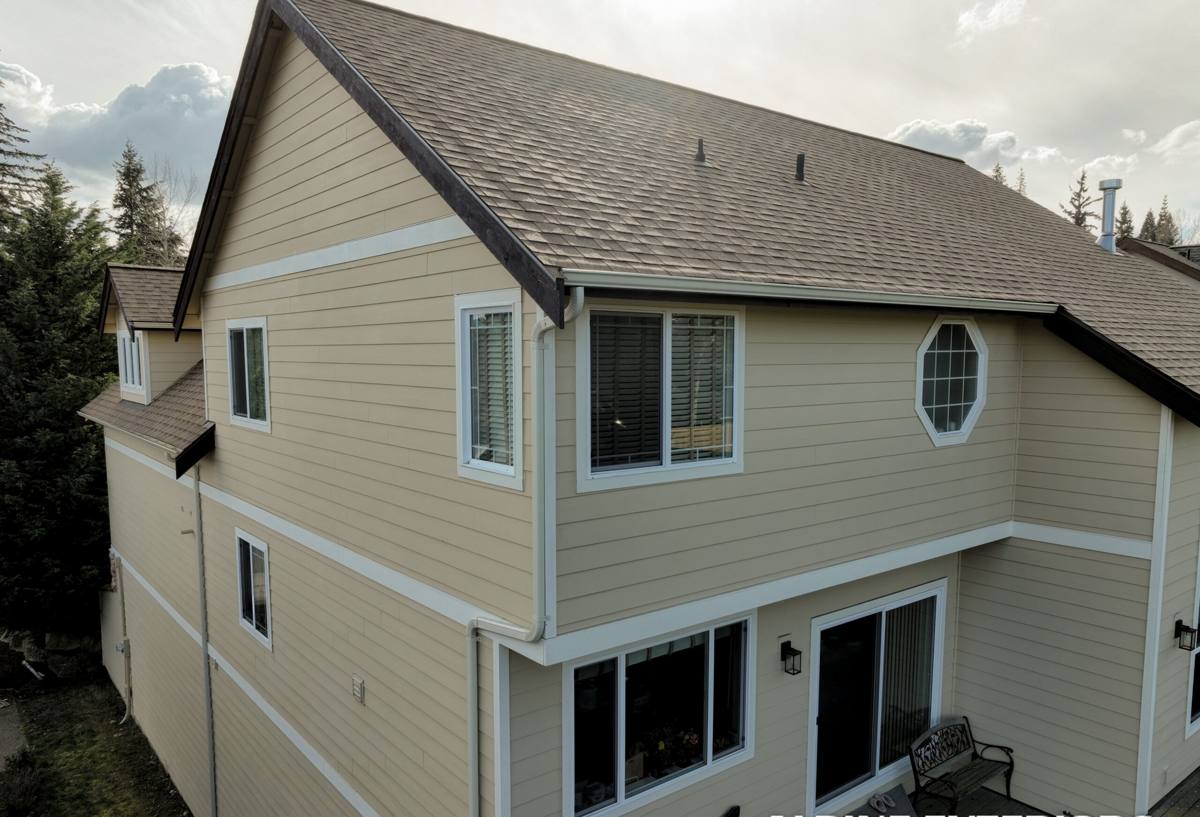
What Cordata Homes Actually Need From Their Windows
Most of the housing stock in this area falls into two categories: older homes with original or once-replaced windows that were never detailed for this level of moisture exposure, and newer builds where the windows are fine on paper but the flashing and sealant work around them was rushed. Either way, the window itself is only half the job. A correct install needs to manage three things at once: keep bulk water out, let incidental moisture that does get past the exterior escape instead of collecting inside the wall, and hold up to repeated wet-dry-wet cycling without the frame swelling, warping, or letting seals fail early.
Custom windows matter here specifically because Cordata has a real mix of home ages and architectural styles — from older single-story ranch homes to newer two-story construction. Stock sizing often means gaps get packed with extra trim or foam instead of a properly fitted frame, and that's exactly where water finds a way in over time.
How the Local Climate Wears Windows Down
Salt Air
Airborne salt accelerates corrosion on hardware — hinges, locks, balance systems, and any exposed fasteners. It also degrades certain finishes faster than manufacturers' standard warranties assume, which is why we pay attention to hardware grade and frame coating when we spec a window for this area rather than defaulting to whatever's cheapest.
Driving Rain
Wind-driven rain doesn't just hit a window — it gets pushed sideways and upward under standard flashing details that work fine in calmer climates. Around here, we treat every window opening as if it will see rain coming from an angle, not just straight down, because that's the reality most of the year.
Moss and Sustained Moisture
A long moss season means more months where trim, sills, and cladding around a window stay damp instead of drying out between rain events. Moss holds moisture against wood and composite surfaces, which is hard on caulk lines, sill pans, and any exposed fasteners. Windows and the trim around them need detailing that accounts for that extended damp period, not just the rain itself.
Signs a Cordata Home Needs New or Upgraded Windows
- Condensation or fogging between panes — the seal has failed and the insulating gas has escaped
- Soft or discolored wood trim, sills, or framing around the window opening
- Visible gaps, drafts, or a noticeable temperature difference near the window in winter
- Windows that are difficult to open, close, or lock — often a sign of frame swelling or hardware corrosion
- Peeling paint or bubbling finish on interior trim near the glass
- Moss or persistent green staining building up on the exterior sill or trim
- Rising energy bills without a clear explanation elsewhere in the home
What a Correct Installation Actually Involves
Removing the Old Window the Right Way
We don't just pull the sash and drop a new unit into the old frame. We open up the surrounding area enough to inspect the sheathing, framing, and any existing flashing for hidden rot or moisture damage — problems that are common in this climate and easy to miss if you're only looking at what's visible from inside the house.
Flashing and Weatherproofing
This is the step that gets skipped most often on rushed jobs, and it's the one that matters most here. Proper flashing means a sill pan that sheds water outward instead of letting it pool, side and head flashing that integrates correctly with your home's existing weather-resistive barrier, and sealant used only where it belongs — not as a substitute for proper flashing sequence.
Fitting and Fastening
A custom-built window should fit its opening with consistent, shimmed gaps on all sides — not forced in, not packed with excess foam to make up for a poor fit. Fasteners and hardware should be corrosion-resistant given the salt exposure in this area, not standard-grade parts that are fine forty miles east but start rusting here within a few seasons.
Interior and Exterior Finish
Once the window is set and weatherproofed, trim and finish work needs to seal cleanly without trapping moisture behind it. That includes back-priming or sealing any wood trim before installation, not after — a detail that's easy to skip and hard to catch once the job looks finished.
Comparing Window Materials for This Climate
| Material | How It Handles Salt Air & Rain | Maintenance | Typical Lifespan Here |
|---|---|---|---|
| Vinyl | Won't corrode or rot; performs well against salt and moisture | Low — occasional cleaning | 20-30+ years |
| Fiberglass | Very stable in wet, salty conditions; minimal expansion/contraction | Low | 30-40+ years |
| Wood-Clad | Good if cladding and flashing are done right; vulnerable if seals fail | Moderate to high — watch for moisture at joints | 20-30 years, install-dependent |
| Aluminum | Conducts cold and can corrode without a quality finish; needs careful hardware spec | Moderate | Varies widely by finish quality |
We don't push one material for every home. A wood-clad window can look great and perform well here if the cladding and flashing details are done correctly — but that install has to be more precise, because any gap in the seal gives moisture a path into the wood underneath. For homeowners who want the lowest long-term maintenance in this specific climate, vinyl and fiberglass tend to be the more forgiving choices, and we'll walk through the honest trade-offs for your home rather than steering you toward whatever's easiest for us to install.
Our Process, Start to Finish
- On-site assessment — we inspect your current windows, surrounding trim, and any signs of moisture intrusion before recommending anything
- Honest scope and estimate — you get a clear breakdown of what's being replaced, what materials we recommend and why, and what it costs
- Measuring and custom fitting — no stock-size shortcuts; each opening is measured for a precise fit
- Removal and inspection — old windows come out carefully so we can check the framing underneath for hidden damage
- Flashing, installation, and sealing — done in the correct sequence so water sheds out, not in
- Finish work and final check — trim, caulking, and a walkthrough so you know exactly what was done and why
Cost Factors to Understand Before You Budget
| Factor | Why It Moves the Price |
|---|---|
| Number of windows | Per-window cost drops somewhat with larger jobs, but each opening still needs full flashing and fitting work |
| Material choice | Vinyl is generally the most budget-friendly; fiberglass and wood-clad cost more upfront |
| Glass package | Upgraded low-E coatings and gas fills add cost but pay back in comfort and lower energy loss |
| Condition of existing framing | Hidden rot or water damage found during removal adds repair work before a new window can go in |
| Access and home height | Second-story or hard-to-reach openings take more time and equipment |
We'll never give you a number over the phone without seeing the windows first — too much of the real cost in this climate comes down to what condition the framing is actually in once we open things up, and that varies house to house.
Why It Matters to Hire a Crew That Already Works This Area
Window installation isn't uniform across Washington. A crew that mostly works drier, inland areas can do fine work there and still under-detail a job in Cordata, because the climate simply doesn't demand the same level of flashing and material attention. We work in Ferndale and the surrounding Whatcom County communities regularly, which means we're not guessing at how salt air, wind-driven rain, and a long wet season affect window performance here — we see the results of good and bad installs on local homes on a routine basis, and we build every job around what actually holds up in this environment.
That local familiarity also means we're not learning your neighborhood's housing stock on your dime. We know the difference between what an older home in this area typically needs versus a newer build, and we spec materials and details accordingly instead of applying a one-size-fits-all approach.
Ready to Talk About Your Windows?
If you're noticing drafts, fogged glass, soft trim, or windows that just don't feel right anymore, it's worth having someone take an honest look before winter weather makes small problems worse. Fill out the form below for a free, no-pressure estimate — we'll assess your home's specific exposure and walk you through real options and honest pricing, with no obligation to move forward.