 Ferndale Exterior
 Deck Repair Built for the Cordata Area's Climate
Homes in the Cordata area sit within our regular Whatcom County service territory, and decks out here take a different kind of beating than decks in drier parts of the state. Salt-laden air off the Puget Sound corridor, long stretches of driving rain, and a moss season that can run from October through May all work on wood and hardware year-round. A deck that would hold up fine in eastern Washington can develop soft spots, rust streaks, and slick moss growth here in just a few seasons if it isn't built and maintained with that climate in mind.
This page covers deck repair specifically — not new construction — for homeowners in and around Cordata who have an existing deck showing wear, damage, or safety concerns. We'll walk through what causes the damage, what a proper repair actually involves, and how our process works when you call us out.
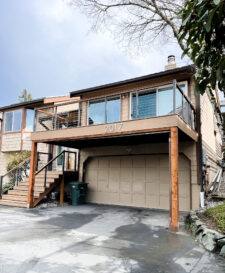
What Salt Air, Rain, and Moss Actually Do to a Deck
Moisture and Wood Rot
Wood decking and framing absorb moisture every time it rains, and in this part of Whatcom County that's a lot of the year. The problem isn't the rain itself — it's wood that can't dry out between storms. Boards that sit flush against each other, framing that's shaded most of the day, and ledger boards attached to the house without proper flashing all trap moisture against wood fibers. Over months and years, that constant damp-dry cycle breaks down the wood and invites rot, especially at joints, fastener holes, and anywhere two pieces of wood touch.
Moss, Algae, and Surface Wear
Moss doesn't just make a deck look neglected — it holds moisture directly against the decking surface and turns walkways and stairs slick and genuinely dangerous, especially on stairs and ramps. Left alone through a full moss season, it can etch into softwood decking and accelerate the same rot process described above.
Salt Air and Hardware Corrosion
Salt-influenced air corrodes exposed metal faster than it would further inland — screw heads, joist hangers, railing brackets, and any hardware that isn't rated for exterior or coastal-adjacent use. Corroded fasteners lose their grip strength long before they look obviously rusted, which is part of why a deck can feel wobbly even when the boards themselves look fine.
Signs a Cordata-Area Deck Needs Repair
Most deck problems out here start small and get more expensive to fix the longer they sit. Here's what we tell homeowners to watch for between professional inspections:
- Boards that feel spongy, soft, or flex more than they used to underfoot
- Visible gaps, dark staining, or separation where the deck ledger meets the house
- Rust streaks running down from screw heads or metal connectors
- Railings or stair rails that wobble or shift when you put weight on them
- Persistent moss or algae that comes back within weeks of cleaning
- Standing water that doesn't drain within an hour or two after rain stops
- Fasteners that have popped up above the board surface or spin freely
- Any visible daylight or gap between support posts and their footings
If you're seeing more than one or two of these, it's worth having someone look at the structure, not just the surface — cosmetic wear and structural failure can look similar from a distance.
What a Correct Deck Repair Actually Involves
Structural Repair vs. Cosmetic Repair
There's a real difference between fixing what you can see and fixing what's actually failing. Replacing a few worn boards is cosmetic work — it makes the deck look better but doesn't address why those boards failed in the first place. A correct repair starts underneath: checking joists, beams, posts, and footings for rot or movement before any new decking goes down. If the framing is compromised, new boards on top of it just hide the problem for a season or two.
Ledger Board and Flashing
The ledger board — where the deck attaches to the house — is the single most common failure point we see on repair calls in wet climates like ours. If it was installed without proper flashing, or the flashing has failed over time, water gets behind it and rots both the ledger and the rim joist of the house. Fixing this properly means pulling the ledger, inspecting and repairing what's behind it, and reinstalling with correct flashing — not just re-caulking the seam.
Decking Boards, Framing, and Railings
Beyond the ledger, a full repair typically covers sistering or replacing damaged joists, swapping out rotted or split decking boards, re-securing or rebuilding loose railings and stair stringers, and replacing corroded fasteners and hardware with connectors rated for exterior exposure. Railings in particular get inspected closely — a railing that looks solid but has rotted post connections is a liability risk, not just a cosmetic issue.
Repair or Replace? What Actually Drives That Decision
Homeowners often ask whether it's worth repairing an older deck versus starting over. The honest answer depends on a handful of factors, not the deck's age alone.
| Factor | Leans Toward Repair | Leans Toward Replacement |
|---|---|---|
| Framing condition | Posts, beams, and joists are solid | Widespread rot in structural framing |
| Ledger board | Sound or needs isolated flashing fix | Ledger or rim joist significantly rotted |
| Decking damage | Scattered boards affected | Most boards soft, split, or warped |
| Age of structure | Under 15-20 years, built to code | Older, undersized, or non-code framing |
| Footings and posts | Stable, no settling or shifting | Heaving, settling, or undersized footings |
| Budget goals | Extend usable life affordably | Want a size, layout, or material change |
In a lot of cases the honest answer is a partial rebuild — sound framing kept in place, decking and railings replaced. We'll tell you straight if we think repair is throwing money at a deck that's past the point of it making sense.
Our Process for a Cordata-Area Deck Repair
1. On-Site Assessment
We start by walking the whole deck — surface, underside, ledger connection, posts, and footings — rather than just looking at whatever prompted the call. Problems in this climate rarely stay isolated to one spot.
2. Straight Talk on Scope
We tell you what's actually wrong, what's optional, and what's a safety issue that shouldn't wait. You get a clear picture before any work starts, not a surprise change order halfway through.
3. Repair Work
Framing and structural issues get addressed first, then decking, railings, stairs, and hardware. We use fasteners and connectors rated for wet, exterior conditions given how much rain this area sees.
4. Final Check and Cleanup
Before we call it done, we walk the deck again to check for level, secure railings, and proper drainage, and we clean up the site so you're not left with debris or old hardware lying around.
Materials We Use and Why
For decking surfaces, homeowners in this area generally choose between pressure-treated lumber, cedar, and composite or capped-composite decking. Each has real trade-offs worth understanding rather than a clear "best" answer.
Pressure-treated lumber is the most affordable option and repairs easily, but it needs regular sealing to perform well in a climate this wet — skip that maintenance and it will show it. Cedar looks better untreated and resists rot naturally to a point, but it's softer and more prone to surface wear from foot traffic and moss. Composite decking costs more upfront and doesn't need sealing, but it's less forgiving to install correctly — gaps, fastening, and ventilation underneath all matter more than they do with wood, and a poorly installed composite deck can trap moisture just as badly as a poorly installed wood one. Our standard is to match the material to how the deck will actually be used and maintained, and to be upfront about the maintenance commitment each option carries rather than just selling the lowest bid.
Maintenance That Keeps a Repair Lasting
A repair is only as good as what happens after it. In a climate with a moss season this long, a few habits make a real difference in how long new work lasts:
- Clear leaves, needles, and debris from between boards before fall rains set in
- Treat moss and algae buildup early rather than waiting for it to spread
- Reseal or refinish wood decking on the schedule appropriate to the product used
- Check railings and stair connections for movement once or twice a year
- Keep gutters and downspouts near the deck clear so runoff isn't draining onto it
Why a Crew That Already Works Cordata Matters
A deck repair contractor who works regularly in Whatcom County knows what this climate does to a deck over time — not from a manual, but from having repaired the same failure points on other homes in similar conditions. That means we're not guessing at flashing details, fastener selection, or drainage on the fly. It also means when you call for an estimate, you're getting someone who can be on-site without a long drive, and who's still around locally if a question comes up after the work is done. For homeowners in and around Cordata dealing with a deck that's showing its age, that local familiarity with salt air, rain, and moss conditions is worth as much as the repair itself.
If you're seeing any of the warning signs above, or just want an honest read on whether your deck needs repair or replacement, we're happy to take a look. Fill out the form below for a free, no-pressure estimate — we'll tell you exactly what we find.