 Ferndale Exterior
 Deck Replacement in Cordata: Built for Whatcom County's Wet Side
Cordata sits in the part of Whatcom County where the marine climate isn't background noise — it's the main design constraint. Homes here deal with salt-tinged air rolling in off the Sound, long stretches of driving rain from fall through spring, and a moss season that can run eight months or longer on anything shaded or north-facing. A deck built to a generic national spec doesn't hold up the same way here as it does in a dry inland climate. It holds up worse, and usually faster than homeowners expect.
When we replace a deck in this area, we're not just swapping old boards for new ones. We're rebuilding a structure to actually survive the conditions it sits in — correct drainage at the ledger, fasteners rated for wet exposure, footings sized for saturated soil, and a decking surface chosen with moss and algae growth in mind, not just looks. That's the difference between a deck that needs attention every year and one that quietly does its job for a couple of decades.
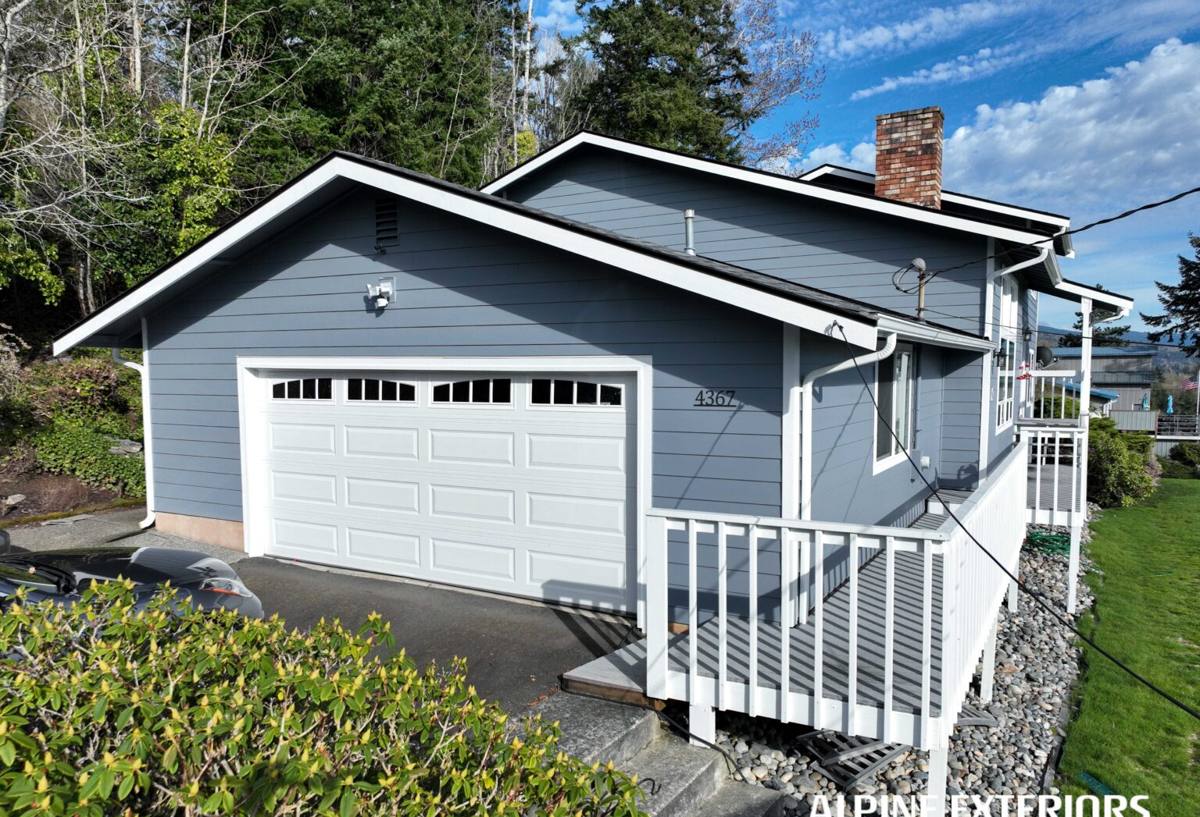
Signs Your Deck Has Reached the End of Its Life
Not every tired-looking deck needs full replacement — some just need a repair to the ledger flashing or a few swapped joists. But certain signs point to a structure that's past the point of patching, especially once moisture has been working on it for years.
- Soft, spongy, or springy spots underfoot, especially near the house or at board ends
- Visible rot or dark staining at the ledger board where the deck meets the house
- Rust streaking from fasteners, or fasteners that back out on their own
- Persistent green or black growth that comes back within weeks of cleaning
- Gaps that have widened between boards, or boards that cup and no longer sit flat
- Railings that flex or posts that wiggle at the base
- Footings you can see are cracked, heaved, or sitting above grade after years of soil movement
- A deck older than 20-25 years that has never had the substructure inspected
If more than one or two of these show up together, it's usually a sign the frame — not just the decking — has been compromised. That's when replacement starts making more financial sense than repair.
What a Correct Deck Replacement Involves
A deck is only as good as the parts you can't see once it's finished. The visible decking gets all the attention, but the structure underneath is what determines whether the deck is still solid in fifteen years or soft and unsafe in five.
Substructure and Footings
Footings need to be sized and set below frost depth, on undisturbed or properly compacted soil, and positioned to actually carry the load above them — not just placed where the old ones happened to be. In areas with heavier clay or persistently damp soil, drainage around the footing matters as much as the footing itself; standing water against concrete over years of wet winters is what causes premature heaving and cracking.
Ledger Board and Flashing
The ledger board — where the deck attaches to the house — is the single most common failure point we find on old decks in this climate. Water works its way behind poorly flashed ledgers, and by the time it shows up as a stain on the siding, the rim joist behind it has often been wet for years. Correct flashing (metal flashing plus a water-resistant membrane, properly lapped and sealed) is not optional trim work — it's the detail that keeps driving rain from turning into structural rot.
Decking Material and Fasteners
All fasteners need to be rated for the decking material and for exterior, wet-exposure use — mixing incompatible metals (like standard steel screws with certain treated lumber) accelerates corrosion and can void warranties on both the wood and the hardware. The decking surface itself should be matched to how much sun and shade the deck actually gets, since shaded, north-facing sections of a Whatcom County deck will grow moss and algae noticeably faster than sections in open sun.
Comparing Decking Materials for a Marine Climate
There's no single "best" decking material — the right choice depends on budget, how much upkeep you want to do, and how much shade the deck sits in. Here's how the common options actually perform under our conditions.
| Material | Moisture Behavior | Moss/Algae Resistance | Maintenance | Typical Lifespan |
|---|---|---|---|---|
| Pressure-treated lumber | Absorbs water, prone to checking and cupping if not sealed regularly | Low — porous surface holds moisture and organic buildup | Annual cleaning and re-sealing recommended | 10-15 years |
| Cedar | Naturally moisture-resistant, but still needs sealing in wet climates | Moderate — better than treated pine but still needs cleaning | Sealing every 1-2 years to maintain appearance | 15-20 years |
| Composite decking | Does not absorb water or rot, but surface texture affects how well it sheds moisture | Varies by brand and finish — capped composites resist growth better than uncapped | Occasional wash-down, no sealing or staining | 25-30+ years |
| PVC decking | Fully water-resistant, does not swell or rot | Generally high, though shaded areas still need periodic cleaning | Lowest — soap and water as needed | 25-30+ years |
For shaded or north-facing decks in Cordata — which is a lot of decks, given how many lots here have mature tree cover — we lean toward capped composite or PVC for anyone who wants to spend less time cleaning moss off boards every spring. For homeowners who prefer the look and feel of real wood and are willing to keep up with sealing, cedar remains a solid choice as long as expectations about maintenance are set up front.
Our Deck Replacement Process in Cordata
We keep the process straightforward and communicate clearly at each stage, since a deck replacement affects how you use your yard for a few weeks.
- On-site assessment. We inspect the existing deck, ledger, footings, and framing to confirm replacement (versus repair) is the right call, and take measurements for the new structure.
- Design and material selection. We walk through decking material, railing style, and layout options based on your budget and how the space is used.
- Permitting. We handle the permit application through the appropriate jurisdiction and make sure the design meets current code for footings, railings, and guard height.
- Demolition and disposal. The old deck is removed and hauled away, with the site protected during teardown.
- Framing and inspection. New footings, posts, and joists go in, built to hold the required inspection before decking goes down.
- Decking, railing, and finish work. Boards, railings, and any stairs or skirting are installed and detailed out.
- Final walkthrough. We go over the finished deck with you, including care instructions specific to the material you chose.
Permits, Codes, and Setbacks in Ferndale and Whatcom County
Deck replacement in Whatcom County almost always requires a permit once you're touching footings, framing, or attachment to the house — even if the old deck was never permitted in the first place. Requirements cover footing depth and spacing, guard and railing height, stair geometry, and ledger attachment, and they can vary depending on whether a property is inside Ferndale city limits or in unincorporated county jurisdiction near Cordata. We pull the permits and coordinate inspections as part of the job, so you're not left tracking down paperwork or guessing whether an inspector will sign off on the work.
Moss, Algae, and Long-Term Deck Care in This Climate
Even a well-built deck will grow some moss or algae in a climate this wet — the goal of good construction isn't to eliminate that entirely, it's to make the deck easy to keep clean and to avoid trapping moisture where it can do damage. A few habits go a long way:
- Keep gaps between boards clear of leaves and debris so water and air can move through
- Rinse or lightly scrub shaded, north-facing sections more often than sunny ones
- Trim back overhanging branches that keep sections of the deck damp and shaded
- Check and clear any drainage or gutter systems that direct water near or under the deck
- Re-seal wood decking on schedule rather than waiting until it visibly needs it
- Address any soft boards or loose fasteners right away rather than waiting for a bigger repair
A little routine maintenance in this climate prevents most of the problems that eventually force an early replacement.
Why Hire a Crew That Already Works in Cordata
A lot of deck problems we get called out to fix started with a design that would have been fine somewhere drier — a ledger detail that skipped proper flashing, decking chosen without thinking about shade and moss, or footings that weren't sized for how saturated the soil gets here in winter. None of that shows up as a defect on day one. It shows up two or three wet seasons later, once it's already causing damage.
Working regularly in and around Ferndale and the rest of Whatcom County means we're not guessing at how a given material or detail holds up under this weather — we're building to what we've already seen play out on decks in this exact climate. That's a meaningful advantage over a design pulled from a generic spec sheet, and it's the reason we build every deck replacement here with driving rain, salt air, and a long moss season already factored into the plan.
If you're weighing a repair against a full deck replacement, or you just want an honest read on what your current deck actually needs, we're happy to take a look. Reach out for a free, no-pressure estimate using the form below.