 Ferndale Exterior
 Building Decks That Actually Hold Up in Custer
Custer sits close enough to the water that salt air is part of daily life, and far enough into rural Whatcom County that homes often have more open exposure to wind-driven rain than you'd get in a denser neighborhood. That combination is hard on outdoor structures. A deck built with generic, big-box assumptions about weather will show problems within a few years here — soft spots at the ledger, rusted fasteners, green film on every horizontal surface by November. A deck built with Custer's actual conditions in mind will still look and perform well a decade later.
This page covers what a deck for a Custer property really needs, what a correct build looks like from the ground up, and how we approach the job when we're out at your home instead of somewhere theoretical.
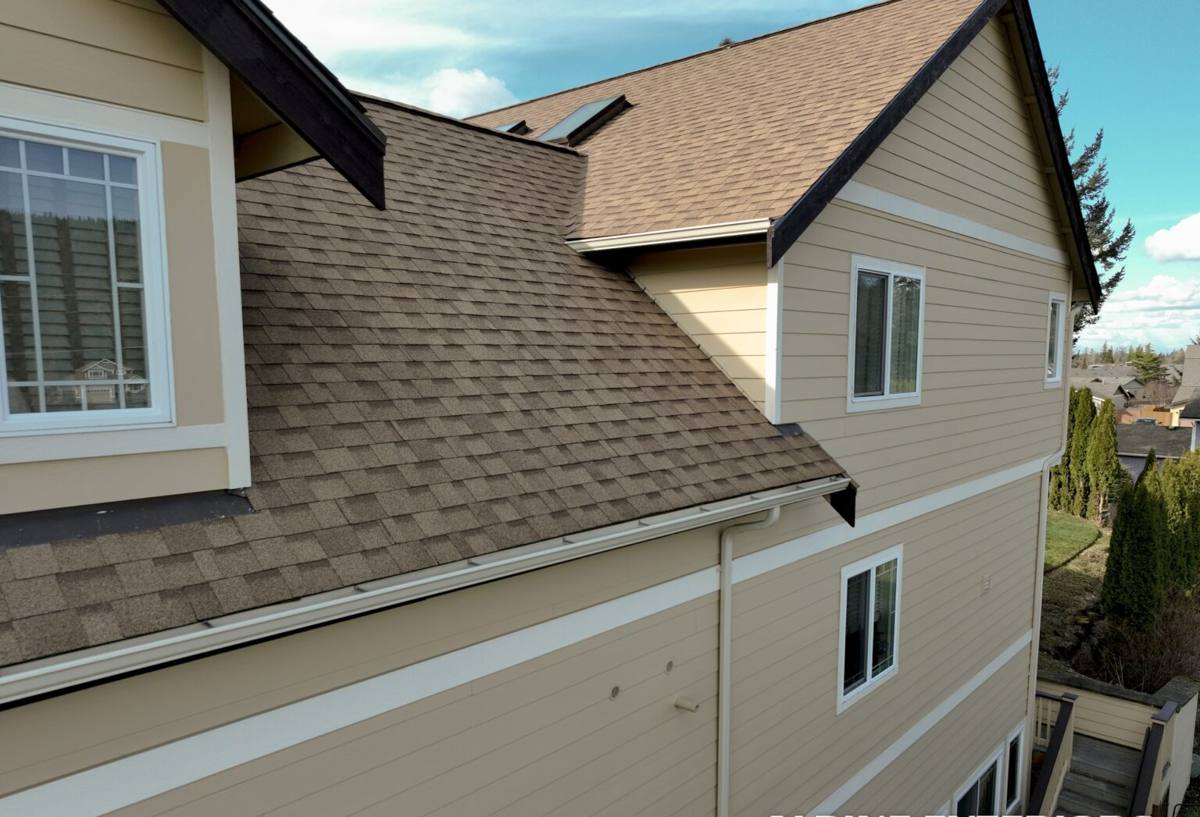
What Salt Air, Driving Rain, and Moss Season Actually Do to a Deck
These three factors don't act alone — they compound each other, and understanding how helps explain why some of the choices below matter more here than they would in a drier inland climate.
Salt Air
Airborne salt accelerates corrosion on anything metal — fasteners, joist hangers, railing brackets, screws. A fastener rated for general outdoor use can start rusting at the head within a couple of seasons in a coastal-adjacent setting like Custer. Once a fastener rusts, it weakens, and the surrounding wood fibers stain and soften around it. This is almost always invisible until you go looking for it, which is why we check hardware condition specifically on any deck inspection or rebuild out here.
Driving Rain
Rain that comes in sideways during a windstorm doesn't just fall on a deck — it gets pushed under railings, into end grain, and behind ledger boards where the deck attaches to the house. Standing water is a known problem; wind-driven moisture intrusion at joints and fastener penetrations is the less obvious one, and it's usually where rot actually starts.
Moss and Prolonged Damp
Whatcom County's wet season runs long, and shaded or north-facing decks in Custer can stay damp for weeks at a stretch. Moss and algae aren't just cosmetic — a mossy surface holds moisture against the decking longer, and on smooth-surfaced boards it turns walking surfaces genuinely slippery. Deck orientation, gap spacing between boards, and material choice all affect how much of this you'll deal with.
Choosing Decking Material for This Climate
There's no single "best" decking material — there's a best fit for your budget, your maintenance appetite, and how exposed your specific site is. Here's how the common options actually compare under Custer conditions:
| Material | Moisture Behavior | Maintenance | Typical Lifespan Here |
|---|---|---|---|
| Pressure-treated pine | Absorbs water readily; needs sealing to perform well | Annual cleaning, re-sealing every 1-3 years | 10-15 years with upkeep |
| Cedar | Naturally rot-resistant, still needs a finish to slow graying and moisture cycling | Cleaning plus periodic oil or stain | 15-20 years with upkeep |
| Composite (capped) | Doesn't absorb water into the core; surface sheds moss more easily | Occasional washing, no sealing/staining | 25+ years, backed by manufacturer warranty |
| Composite (uncapped/older style) | Can absorb moisture at cut edges over time | Low, but edge sealing matters at install | 15-20 years |
We install all of the above depending on what a homeowner wants, but for a Custer property with real salt exposure or a shaded, damp yard, capped composite is usually the easiest recommendation to stand behind — it removes the sealing/staining maintenance cycle that's easy to fall behind on when the rain never really stops. Where a homeowner wants the look and feel of real wood, cedar is the stronger long-term choice over pressure-treated pine specifically because it handles the wet-dry cycling better without relying entirely on the finish coat.
A Note on Board Spacing and Surface Texture
Beyond material, two smaller details make a real difference in a moss-prone yard: gap spacing between boards (tighter gaps trap more moisture and debris) and surface texture (grooved or heavily textured composite boards can hold grime and moss longer than a smoother finish, even though they market as "grip" surfaces). We'll walk through the tradeoff based on where your deck sits and how much shade it gets.
Structural Basics That Matter Most on a Custer Site
The decking surface is what you see, but the framing underneath is what determines whether the deck is safe and how long it lasts. In this climate, a few structural points get extra attention:
Ledger Attachment and Flashing
The ledger board — where the deck bolts to the house — is the single most common failure point on decks anywhere, and wind-driven rain makes it worse here. Proper flashing that directs water away from the house-to-deck connection, rather than letting it wick in behind the ledger, is non-negotiable on every deck we attach to a structure.
Footings Below the Frost and Saturation Line
Whatcom County's wet ground conditions mean footings need to be sized and set correctly to avoid shifting as the soil saturates and drains through the seasons. Undersized or shallow footings are a common shortcut on lower-cost builds, and they show up years later as a deck that's started to lean or bounce.
Joist Protection
Joist tape or an equivalent moisture barrier on top of each joist keeps water from sitting directly on cut lumber under the decking boards, where it's out of sight and easy to ignore until the joist itself is compromised.
Fasteners, Hardware, and Railings for a Marine-Adjacent Climate
Given how much damage salt air does to standard hardware, we spec stainless steel or high-grade coated fasteners and structural connectors on Custer builds rather than the basic galvanized hardware that's fine further inland. It costs a bit more up front and it's the difference between hardware that's still solid at year fifteen and hardware that's staining the wood around it by year five.
Railings deserve the same thought. Metal cable and aluminum railing systems look clean but need genuinely corrosion-rated hardware at every connection point in this environment — cut corners there and you'll see it first at the fasteners, not the rail itself. Wood railings need the same fastener standard as the frame, plus attention to end-grain sealing where they're most likely to take on water.
Our Deck Building Process
- On-site assessment — we look at sun/shade exposure, drainage patterns, existing structure (for replacements), and how exposed the site is to wind and weather.
- Design and material walkthrough — we go over decking material, railing style, footing layout, and any code-driven requirements (height, guard rails, stair geometry) specific to your property.
- Permitting — we handle the permit application and inspection scheduling so it's not on your plate.
- Demolition (if replacing an existing deck) — including a check of the ledger and house sheathing behind it, since that's often where hidden rot is found.
- Framing — footings, posts, beams, joists, and ledger flashing, built to hold up to this climate rather than just to pass a minimum code check.
- Decking and railing installation — with attention to board spacing, fastener placement, and drainage at every seam.
- Final walkthrough — we go over maintenance expectations for whatever material you chose so there are no surprises in year two.
Permits and Whatcom County Code Considerations
Most decks attached to a house, and many freestanding decks above a certain height, require a permit in Whatcom County and within Ferndale city limits. Guardrail height, baluster spacing, stair rise/run, and footing depth are all governed by code, and inspectors here pay particular attention to ledger attachment given how often it's the point of failure on older decks. We build to pass inspection the first time, and we handle the permit paperwork and inspection scheduling as part of the job rather than leaving it to the homeowner.
Maintenance: What Actually Keeps a Custer Deck Going
Whatever material you choose, a little consistent upkeep goes a lot further here than it would in a drier climate. A practical seasonal checklist:
- Sweep debris and standing leaves off the deck surface regularly through fall — trapped organic matter is what feeds moss and holds moisture against the boards.
- Wash the surface at least once or twice a year with a deck-safe cleaner to break up algae and moss film before it gets established.
- Check fastener heads and railing hardware annually for early rust staining — it's much easier to address a handful of fasteners than to deal with the wood damage that follows.
- Re-seal or re-stain wood decking on the manufacturer or product's recommended cycle — don't wait until the finish has visibly failed.
- Confirm gaps between boards haven't clogged with debris, which can trap water against the joists below.
- Inspect the ledger area where the deck meets the house for any staining, soft wood, or gaps in flashing, ideally each fall before the wet season sets in.
Why Hiring a Crew That Already Works in Custer Matters
A deck built to a generic national code minimum, by a crew that doesn't build regularly in this specific climate, tends to run into the same predictable problems: rusted hardware, ledger rot, and a moss-covered surface within a handful of years. A crew that already works Custer and the surrounding Ferndale area knows which fastener grade actually holds up here, which decking materials are worth the extra upfront cost given the shade and rain patterns, and where inspectors focus their attention. That's not a marketing distinction — it shows up in whether the deck you build is still solid and safe fifteen years from now.
If you're planning a new deck or need an existing one assessed or rebuilt, we're happy to come take a look. Reach out for a free, no-pressure estimate using the form below, and we'll walk the site with you and talk through what makes sense for your home.