 Ferndale Exterior
 Custer Roofs Take a Different Kind of Beating
Homes in the Custer area, just north of Ferndale in Whatcom County, deal with a specific combination of weather that doesn't show up the same way in drier parts of the state. Salt-laden air off the water corrodes exposed metal faster than inland air does. Driving rain, pushed sideways by wind rather than falling straight down, finds its way into gaps that would stay dry in a calmer climate. And the long, wet stretch of fall through spring gives moss and algae months to take hold on anything north-facing or shaded by trees. None of this means Custer roofs are doomed to fail early — it means they need to be built and installed with these specific stresses in mind, not just installed to a generic code minimum.
A new roof installed without accounting for wind-driven rain, salt exposure, and moss pressure will often look fine for the first year or two and then start showing problems — soft decking, streaked shingles, leaks at wall intersections — well before it should. Getting the details right at installation is cheaper than fixing them later.
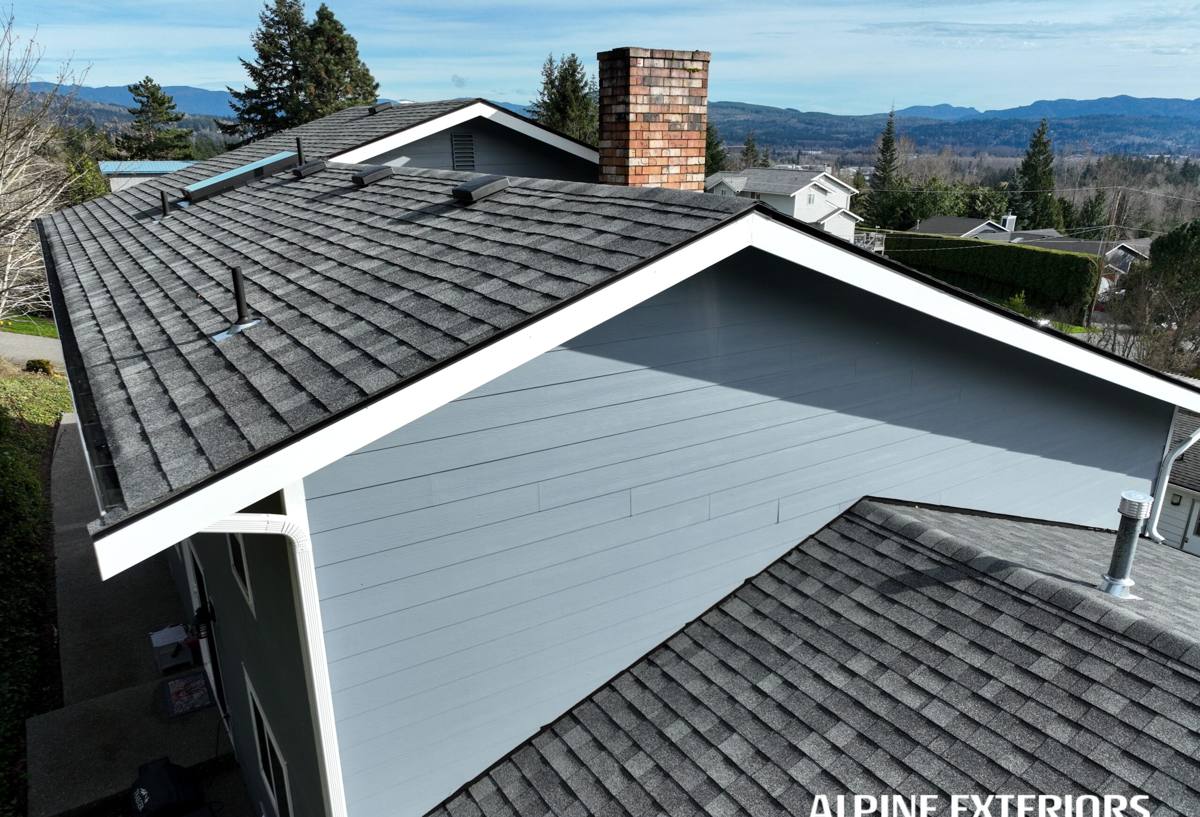
What "Correct" Actually Means for a New Roof Here
A roof is a system, not just a layer of shingles. Every layer underneath the visible surface has a job, and skipping or shortcutting any of them is where most premature failures start.
Decking First
Before anything new goes down, the sheathing underneath the old roof gets inspected. Years of trapped moisture from moss and slow leaks can soften or delaminate plywood or OSB decking without it being visible from inside the attic. Any soft, spongy, or delaminated sections get replaced — installing new roofing over compromised decking just hides a problem that will resurface as a soft spot or sag.
Underlayment and Water Barrier
Synthetic underlayment goes down over the full deck, but the critical upgrade for this climate is a self-adhering ice-and-water membrane at the eaves, valleys, and around any roof penetration. In a region where wind can drive rain uphill under shingles, this membrane is what stops water that gets past the shingle layer from reaching the deck.
Flashing Details
Chimneys, skylights, and anywhere a wall meets a roof plane are the most common leak points on any home. Proper step flashing, counter-flashing, and kick-out flashing at wall-roof intersections direct water into the gutter instead of behind the siding — a detail that's easy to skip and hard to notice until there's already water damage inside a wall.
Ventilation
A balanced intake-and-exhaust system (soffit vents feeding air in, ridge or box vents letting it out) keeps the attic at close to outdoor temperature and humidity. Without it, moist air gets trapped, condensates on the underside of the decking, and creates the exact damp conditions that rot wood and feed moss growth from below.
Choosing a Roofing Material for Custer's Conditions
There's no single "best" material — the right choice depends on how much tree cover the property has, how exposed it is to wind off the water, and how much long-term maintenance the homeowner wants to take on. Here's how the common options stack up for this specific climate:
| Material | Moss/Algae Resistance | Wind & Salt Air Performance | Typical Lifespan | Maintenance |
|---|---|---|---|---|
| Architectural (laminate) asphalt shingle | Good with algae-resistant granules; still needs periodic cleaning under trees | Solid wind ratings when installed with proper nailing pattern | 25–30 years | Low to moderate |
| 3-tab asphalt shingle | Fair; shows algae streaking sooner | Lower wind rating than architectural | 15–20 years | Moderate |
| Standing seam metal | Excellent; moss struggles to anchor on smooth metal | Very strong; needs coastal-rated fasteners and coatings near salt air | 40–50+ years | Low |
| Cedar shake | Poor; retains moisture and grows moss quickly in shaded, damp spots | Sensitive to driving rain if not detailed carefully | 20–30 years with upkeep | High |
| Synthetic composite shake/slate | Good; sheds moisture better than real wood | Strong wind resistance | 40–50 years | Low |
We're honest with homeowners about cedar shake in particular: it looks great, but on shaded or tree-covered lots in this climate it holds moisture longer than other materials, which shortens its effective life and increases the maintenance burden. That's not a knock on the product — it's a trade-off worth knowing before you commit to it.
Our Installation Process
The steps don't change much from job to job, but the details within each step are where quality is won or lost.
- On-site inspection and estimate — we look at the existing roof, decking condition (where visible), attic ventilation, and any problem areas the homeowner has noticed.
- Tear-off — old roofing is fully removed rather than layered over, so the deck can be properly inspected and repaired.
- Decking repair — any soft, rotted, or delaminated sheathing is replaced before new material goes down.
- Ice-and-water membrane and underlayment — applied at eaves, valleys, and penetrations first, then synthetic underlayment across the full deck.
- Drip edge, starter strip, and field installation — installed per manufacturer specification, including correct nailing height and pattern, which directly affects the wind warranty.
- Flashing — chimneys, skylights, vents, and wall intersections get new step and counter-flashing rather than reusing old, corroded pieces.
- Ventilation check — intake and exhaust venting is verified or upgraded to match the attic's actual airflow needs.
- Cleanup and magnetic sweep — job site and yard are cleared of debris and stray nails.
- Final walkthrough — we go over the finished roof with the homeowner before calling the job complete.
Living With a New Roof: Moss, Algae, and Salt Air Over Time
Even a well-installed roof benefits from a little ongoing attention in this climate. A few things make a measurable difference in how long a roof performs at its best:
- Zinc or copper strips near the ridge release trace metal ions with every rain, which slows moss and algae regrowth on the surfaces below them.
- Keeping overhanging branches trimmed back reduces both shade and the steady drop of organic debris that feeds moss.
- Gutters and downspouts should be checked before the fall rains start — clogged gutters back water up under the eaves, right where wind-driven rain is already testing the roof's defenses.
- Soft-washing moss off a roof (rather than pressure-washing) protects the granule layer on asphalt shingles, which is what provides UV and weather protection.
- An annual visual check from the ground after storm season catches lifted shingles or displaced flashing before they turn into a leak.
Signs a Custer Home May Need a New Roof
Not every roof problem means a full replacement, but these are the signs that usually point that direction rather than a simple repair:
- Granules collecting in gutters or at downspout outlets in noticeable amounts
- Moss returning within weeks of a cleaning, especially on north-facing slopes
- Shingle edges curling or cupping, particularly on older 3-tab roofs
- Daylight visible through the roof deck from inside the attic
- Water stains on ceilings or in the attic after wind-driven rain events
- The roof is approaching or past the expected lifespan of its material
What Drives the Cost of a New Roof
Every roof is priced individually, but the same handful of factors move the number up or down on almost every job:
| Factor | Why It Matters |
|---|---|
| Roof size and pitch | Steeper roofs take longer to work on safely and use more material per square foot of coverage |
| Material choice | Metal and composite materials cost more upfront than asphalt but last longer with less upkeep |
| Number of existing layers | Tear-off of multiple old layers takes more labor and disposal than a single-layer removal |
| Decking condition | Hidden rot or moisture damage found during tear-off adds repair cost that can't always be quoted in advance |
| Roof complexity | Valleys, dormers, chimneys, and skylights all add flashing work and labor time |
| Access and tree cover | Heavy tree cover or difficult site access can add setup and cleanup time |
We walk homeowners through where their specific quote comes from rather than handing over a flat number with no explanation — it's easier to trust a price you understand.
Why It Matters to Hire a Crew That Already Works Custer
A roofing crew that regularly works in and around Ferndale and the greater Whatcom County area already knows which details matter most out here — how much wind exposure a given property is likely to see, how fast moss tends to come back under mature Douglas fir and cedar cover, and how to detail flashing for rain that doesn't always fall straight down. That familiarity shows up in fewer callbacks and fewer surprises mid-project. It also means a crew that's available and local if a question comes up after the job is done, rather than a company that installed the roof once and moved on to the next region.
If you're weighing a new roof for a Custer-area property, we're happy to take a look and give you a straightforward, no-pressure estimate — no hard sell, just an honest assessment of what your roof actually needs. The form below is the easiest way to get started.