 Ferndale Exterior
 Why Sudden Valley Decks Wear Out Faster Than You'd Expect
A deck in Sudden Valley works harder than a deck almost anywhere else in the country. Between the salt-laden air moving in off the water, long stretches of driving rain through fall and winter, and a moss season that can run half the year, the wood, fasteners, and hardware holding your deck together are under constant, low-grade attack. None of it looks dramatic day to day. It shows up slowly, as a soft spot near the stairs, a railing that flexes a little more than it used to, or a green film that never fully goes away no matter how many times you sweep it off.
Most decks don't fail because of one bad storm. They fail because moisture finds a way in and never fully dries out between rain events. In Whatcom County's marine climate, that drying window is short. A deck that would air out in two days in a drier region might stay damp for a week here, and that extra time is exactly what rot fungus and corrosion need to get established.
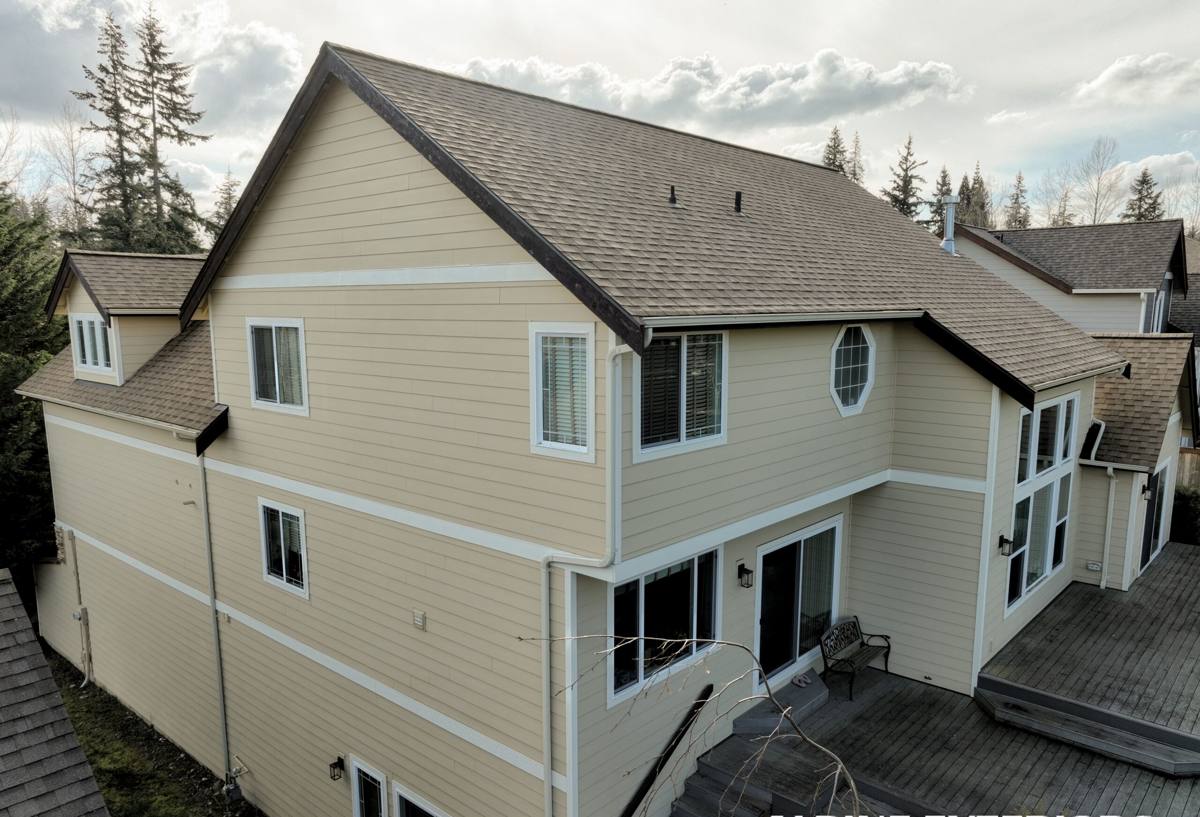
Signs Your Deck Needs Repair, Not Just a Cleaning
Homeowners often assume a tired-looking deck just needs a wash and a coat of sealer. Sometimes that's true. Other times, the surface is telling you something is wrong underneath. Before you book a cleaning, walk your deck and check for these:
- Soft, spongy, or springy spots when you walk across the decking boards
- Railings or posts that wiggle or flex when pushed sideways
- Visible gaps opening up between boards or where the deck meets the house
- Dark staining or streaking running down from joints, fasteners, or the ledger board
- Mushrooms, moss, or slick green growth that returns within days of cleaning
- Nail or screw heads that have popped up or show rust bleeding into the wood
- Stair stringers that feel bouncy or steps that aren't quite level anymore
- A musty smell coming from underneath the deck, especially near the house
Any one of these on its own might be minor. Two or three together usually mean the structure needs a real look, not just a surface fix.
What's Actually Happening Underneath
The Ledger Board Connection
The ledger board — where the deck attaches to your house — is the single most important structural connection on most decks, and it's also the one most exposed to hidden water damage. If flashing behind the ledger was installed poorly, missing, or has failed over time, water gets trapped between the deck framing and the house wall. That's a problem you often can't see from the yard. It shows up as soft framing, staining on the siding above the deck, or in worse cases, rot working its way into the house's rim joist.
Joists, Posts, and Footings
Underneath the decking boards, joists carry the weight of everything and everyone on the deck. In a climate with this much sustained moisture, joists near the ground, near planters, or under gaps where debris collects are the first to soften. Posts sitting in or near standing water, and footings that were never poured to the depth or size the load actually requires, are common weak points we find on older Whatcom County decks that were built to get by rather than built to last.
Fasteners and Hardware
Salt air accelerates corrosion in ordinary steel fasteners and connectors far faster than most homeowners expect. A joist hanger or ledger bolt that looks fine on the surface can be rusting from the inside, especially where it's in direct contact with damp wood. Corroded hardware doesn't just look bad — it loses holding strength, which matters most in exactly the connections that carry the most load.
Moss, Algae, and the Slip Hazard Nobody Talks About
Moss on a deck isn't just cosmetic. Once it establishes itself on horizontal surfaces, it holds moisture directly against the wood around the clock, which speeds up decay underneath the growth even when the surface still looks solid. It's also a genuine safety issue — wet moss and algae on stair treads and walking surfaces get slick fast, and Sudden Valley's shaded, tree-covered lots and long damp season give moss exactly the conditions it needs to keep coming back. Pressure washing alone knocks it down temporarily but doesn't change the conditions that let it grow, which is why it often returns within weeks. A proper repair addresses drainage, airflow underneath the deck, and surface treatment together, not just the visible growth.
Repair vs. Replace: How We Actually Decide
Not every deck with problems needs to be torn out. The right call depends on how much of the structure is still sound versus how much has been compromised. Here's the general framework we use when we're assessing a deck:
| Factor | Leans Toward Repair | Leans Toward Replacement |
|---|---|---|
| Framing condition | Solid, dry joists and posts with isolated soft spots | Widespread rot in joists, beams, or ledger connection |
| Age of structure | Under 15 years, built to a reasonable code standard | Older deck built before current guardrail and attachment codes |
| Fastener condition | Localized corrosion, easily accessed for replacement | Widespread rust, hidden or inaccessible hardware |
| Footings | Adequate size and depth for current load | Undersized, shallow, or heaving footings |
| Scope of damage | Limited to a few boards, a rail section, or stair stringer | Damage spread across multiple systems (decking, framing, and rails) |
In a lot of cases, especially on decks under ten to fifteen years old, the framing is still in good shape and the problems are limited to surface boards, a rail section, or a stair run — all very reasonable repairs. Older decks that were never properly flashed at the ledger, or that show rot in multiple structural members, usually cost more to patch piecemeal than to rebuild correctly once.
How We Handle a Deck Repair, Step by Step
- Full inspection from underneath the deck, not just a walk across the top — checking ledger flashing, joists, posts, footings, and fastener condition
- Probing suspect wood with an awl or moisture meter to find the true edges of rot rather than guessing from surface appearance
- Written explanation of what we found, what's structural versus cosmetic, and what your real options are — no pressure toward the more expensive path
- Removing and replacing only the compromised material, matching decking profile and fastener type to what's already there where possible
- Correcting the root cause where one exists — improving ledger flashing, adding drainage, or upgrading corroded hardware to a more corrosion-resistant type
- Rechecking rail attachment points and guardrail spacing against current safety standards while we're already in there
- Final walk-through so you can see and understand exactly what was repaired and why
Getting the Details Right — Code and Long-Term Safety
A deck repair that only replaces what's visibly broken can leave you with a deck that looks fine but still has an underlying weakness. When we're repairing a rail, stair, or ledger connection, we check it against current safety expectations, not just how it was originally built. That includes guardrail height and baluster spacing on any rail section being reworked, proper structural attachment at the ledger rather than relying on nails alone, and stair stringer support that won't develop bounce over time. If a deck was built years ago to a lighter standard, a repair is often a practical opportunity to bring that specific section up to a safer, more durable standard without paying for a full rebuild.
Keeping a Repaired Deck Healthy Afterward
A correctly repaired deck still needs some seasonal attention in this climate, particularly given how long moss season runs here. A few habits go a long way:
- Keep gaps between deck boards clear of leaves and debris so water and air can move through, not pool
- Sweep off moss and organic buildup regularly rather than letting it establish through a whole wet season
- Trim back overhanging branches where practical to let more light and airflow reach shaded sections
- Reapply a quality sealer or finish on the schedule the product actually calls for, not just when it looks worn
- Do a quick under-deck check once a year, especially near the ledger board and any planters or low-clearance areas
None of this takes much time, but it's the difference between a repair that lasts and one you're revisiting in a couple of years.
Why It Matters to Hire a Crew That Already Works Sudden Valley
A lot of deck problems in this area trace back to work that was done to a generic standard rather than one that accounts for what this specific climate does to a structure over time. Ledger flashing details, fastener choice, and how much drainage and airflow a deck needs underneath all matter more here than they would in a drier part of the state. A crew that regularly works on Sudden Valley and greater Ferndale homes has already seen how the salt air, sustained rain, and shaded, moss-prone lots in this part of Whatcom County affect decks year after year — and builds repairs accordingly, rather than treating every deck the same regardless of where it sits.
If your deck is showing soft spots, loose rails, persistent moss, or you're just not sure whether what you're seeing is cosmetic or structural, we're happy to take a look. We offer free, no-pressure estimates — you'll get a straight answer about what's going on and what it would take to fix it right, with no obligation to move forward.