 Ferndale Exterior
 Why Decks in Blaine Wear Out Faster Than Homeowners Expect
Blaine sits right up against the water, and that proximity is exactly what shortens the life of an outdoor deck. Salt-laden air corrodes fasteners and hardware from the inside out, often years before any problem is visible on the surface. Combine that with Whatcom County's long stretch of driving rain and the moss season that follows, and you get a deck that's fighting moisture intrusion for most of the year instead of just a few wet months. A deck built for a drier inland climate simply doesn't hold up the same way here.
Most of the deck failures we see in this area aren't caused by bad lumber or lazy construction. They're caused by a build that wasn't specified for coastal exposure in the first place: standard fasteners instead of corrosion-resistant hardware, decking that traps moisture instead of shedding it, or framing that was never properly flashed against the ledger board. Over time, that adds up to soft spots, rust streaks, and a structure that's no longer safe to trust with a full deck party or a hot tub.
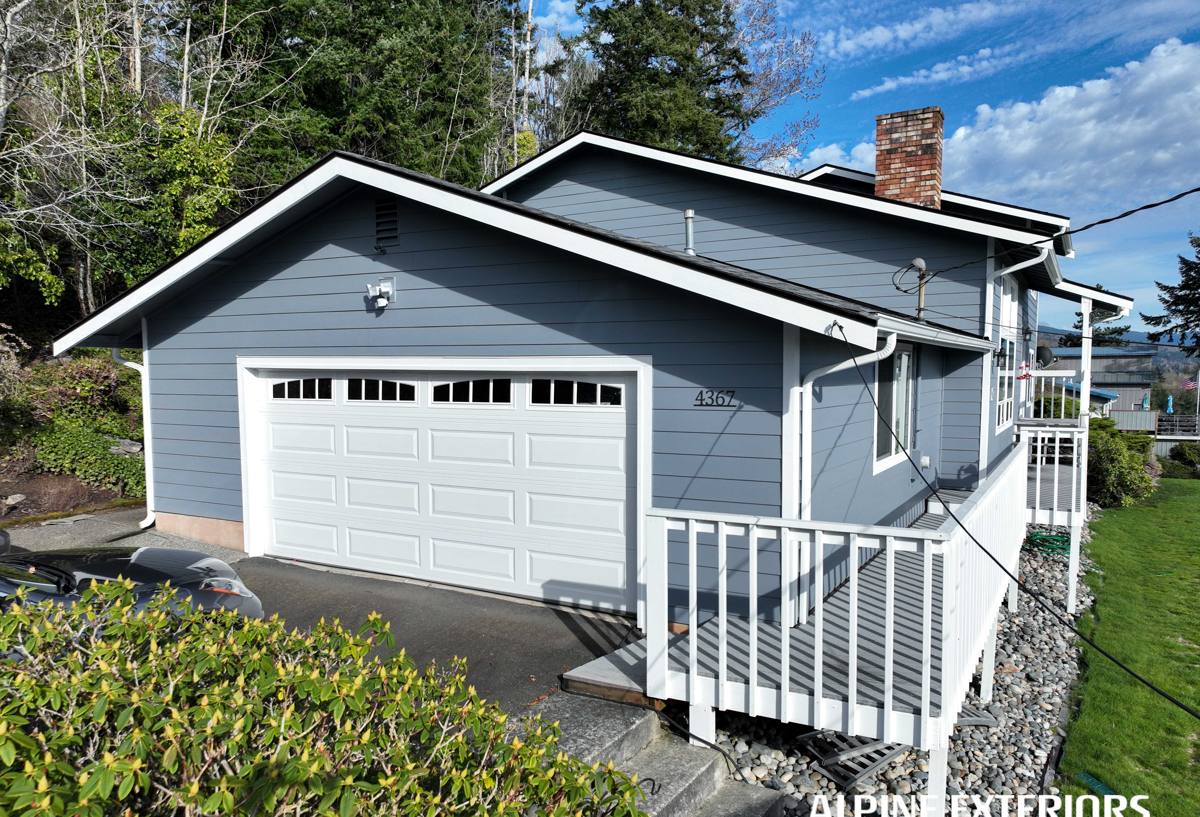
Signs a Blaine Deck Needs Replacement, Not Another Repair
Repair makes sense when the problem is isolated. Replacement becomes the honest recommendation when the damage has spread into the structure itself. Homeowners in Blaine should watch for:
- Soft, spongy, or spring-back decking boards, especially near the ledger or in shaded areas that stay damp longer
- Rust bleeding from fastener heads or visible corrosion on joist hangers and post bases
- Persistent moss or algae growth that keeps returning within weeks of cleaning
- Gaps opening up between the house and the ledger board, which can signal ledger rot or improper flashing
- Railings or stair stringers that feel loose or flex under normal weight
- A deck more than 15-20 years old that has never had its structural framing inspected
If only the top boards are affected and the framing underneath is sound, resurfacing can be the right call. Once the joists, ledger, or posts are compromised, patching the surface just hides a structural problem that will keep getting worse.
Why This Matters More Near the Water
A deck failure inland is usually a maintenance headache. A deck failure in a salt-air environment like Blaine tends to be sudden, because corrosion works on hardware you can't see until it's already failed. That's part of why we treat deck replacement here as a structural project first, and a cosmetic one second.
What a Correct Deck Replacement Actually Involves
A proper deck replacement is more than swapping old boards for new ones. Done right, it addresses everything underneath the surface that determines how long the new deck will last in this climate.
Structural Framing
Joists, beams, and posts get inspected and replaced where compromised. In coastal conditions, we favor hardware and fasteners rated for corrosion resistance rather than standard-grade options, since the difference in longevity is significant once salt air is a factor.
Ledger Attachment and Flashing
The ledger board — where the deck attaches to the house — is one of the most common failure points on any deck, and it's especially vulnerable in a climate with as much driving rain as Whatcom County sees. Correct flashing at this connection keeps water from working its way behind the siding and into the wall framing, not just off the deck surface.
Footings and Post Bases
Footings need to be sized and set correctly for the load and soil conditions on site, with post bases that keep wood off standing water and away from direct soil contact. This is one of the details that's invisible once the deck is finished but determines whether the structure stays solid for decades or starts failing within a handful of years.
Drainage and Airflow
Decking material and board spacing both affect how quickly water sheds off the surface and how much airflow reaches the framing below. In a climate where things rarely get a long stretch to fully dry out, drainage design isn't optional — it's what keeps moss and rot from taking hold in the first place.
Choosing a Decking Material for Blaine's Climate
There's no single "best" decking material — the right choice depends on how much maintenance a homeowner wants to take on, budget, and how the deck will be used. Here's how the common options compare specifically for a salt-air, high-rain environment.
| Material | Moisture Performance | Maintenance | Typical Lifespan Here |
|---|---|---|---|
| Pressure-treated wood | Good if sealed regularly; prone to moss in shaded, damp areas | Annual cleaning and periodic re-sealing | 10-15 years with upkeep |
| Cedar | Naturally moisture-resistant but still needs sealing near the water | Regular sealing and moss treatment | 15-20 years with upkeep |
| Composite decking | Very good; won't rot or splinter, sheds water well | Periodic washing to prevent surface moss/mildew | 25+ years |
| PVC/capped polymer decking | Excellent; fully sealed surface resists moisture and salt exposure | Low; occasional washing | 25-30+ years |
In our experience, composite and capped polymer boards tend to be the better long-term value for homes closer to the water, simply because they don't give moss and moisture the foothold that wood can. That said, plenty of homeowners still prefer the look and feel of real wood and are willing to keep up with sealing — that's a legitimate choice too, as long as it's going into a structurally sound frame with the right fasteners underneath it.
Our Deck Replacement Process
- On-site assessment — we inspect the existing deck's framing, ledger connection, footings, and hardware to determine what's salvageable and what isn't.
- Honest scope and estimate — you get a clear breakdown of what's being replaced and why, with material options laid out plainly.
- Demolition and disposal — the old deck is removed and hauled off, with attention to protecting landscaping and the area around the house.
- Framing and structural rebuild — new joists, beams, posts, and footings are set to code, with corrosion-resistant hardware appropriate for this climate.
- Ledger flashing and waterproofing — the connection to the house is properly flashed before any decking goes down.
- Decking, railing, and stairs installed — using the material you've chosen, with attention to spacing and airflow for drainage.
- Final walkthrough — we go over the finished deck with you, including basic care guidance for whatever material was installed.
Permits and Local Code Considerations
Deck replacement in Whatcom County typically requires a permit when the structure involves changes to framing, footings, or height — not just a cosmetic board swap. Requirements can touch on guardrail height, stair geometry, and setback from property lines, and they vary depending on the specifics of the project and the site. Rather than guessing at what applies, we handle the permitting conversation as part of the project so the work is done correctly and documented, not just built and hoped for.
What Deck Replacement Typically Costs
Every deck is different, but the biggest cost drivers tend to be the same across most Blaine-area projects:
| Cost Factor | Why It Matters |
|---|---|
| Deck size and layout | Square footage and shape (multiple levels, angles) directly affect material and labor |
| Decking material | Composite and PVC cost more upfront than wood but less over the deck's lifetime |
| Extent of structural damage | Rotted framing, footings, or ledger issues add work beyond a surface swap |
| Railing and stair complexity | Custom railing systems and multiple stair runs add both material and labor time |
| Site access | Decks over slopes, water features, or with limited equipment access take longer to build safely |
Rather than quote a number that doesn't reflect your actual deck, we'd rather walk the site and give you a real range based on what we see.
Keeping a New Deck Healthy in This Climate
A correctly built deck still needs some seasonal attention in a place like Blaine, where moss season is long and the air carries salt year-round.
- Sweep debris off the deck regularly, especially in fall when leaves and needles trap moisture against the boards
- Rinse salt residue off the surface periodically, particularly after storms with wind off the water
- Treat moss and algae as soon as it appears rather than waiting until it spreads
- Check railings and stair connections once a year for looseness
- For wood decks, keep up with the sealing schedule recommended for the specific species installed
- Keep gutters and downspouts near the deck clear so runoff isn't draining directly onto it
Why It Matters to Hire a Crew That Already Works in Blaine
Deck construction that works fine in a dry inland climate can fail fast on a lot exposed to salt air and steady coastal rain. A crew that already works in Blaine and the surrounding Ferndale area has seen firsthand which fastener grades hold up, which ledger details actually keep water out, and which materials are worth the extra upfront cost given how long this area's wet season runs. That local track record is the difference between a deck that needs attention again in five years and one that's still solid in twenty-five.
If your deck is showing its age or you're not sure whether it needs repair or a full replacement, we're happy to take a look and give you a straight answer. Reach out for a free, no-pressure estimate using the form below.