 Ferndale Exterior
 Windows Built for Everson's Weather, Not Just Its Openings
Everson sits inland from the coast but still catches everything Whatcom County's weather throws at it — long stretches of driving rain off the Nooksack valley, damp air that never fully dries out in winter, and enough shade and moisture on north-facing walls to grow moss on siding, trim, and window sills alike. Add in salt-tinged air that carries in off the Puget Sound corridor, and you've got a climate that's genuinely hard on window frames, seals, and glazing over time. "Custom" windows in this context isn't a marketing word — it means windows sized, flashed, and specified to actually hold up to these conditions in a specific house, not a generic size pulled off a shelf.
We work on homes throughout Ferndale and the surrounding Whatcom County area, including Everson, and we see the same failure patterns again and again: swollen wood sashes, fogged double-pane glass, sills with soft spots from years of standing moisture, and vinyl frames that have gone brittle and chalky from sun and salt exposure. A correct custom window job addresses all of that at the install stage, not after the fact.
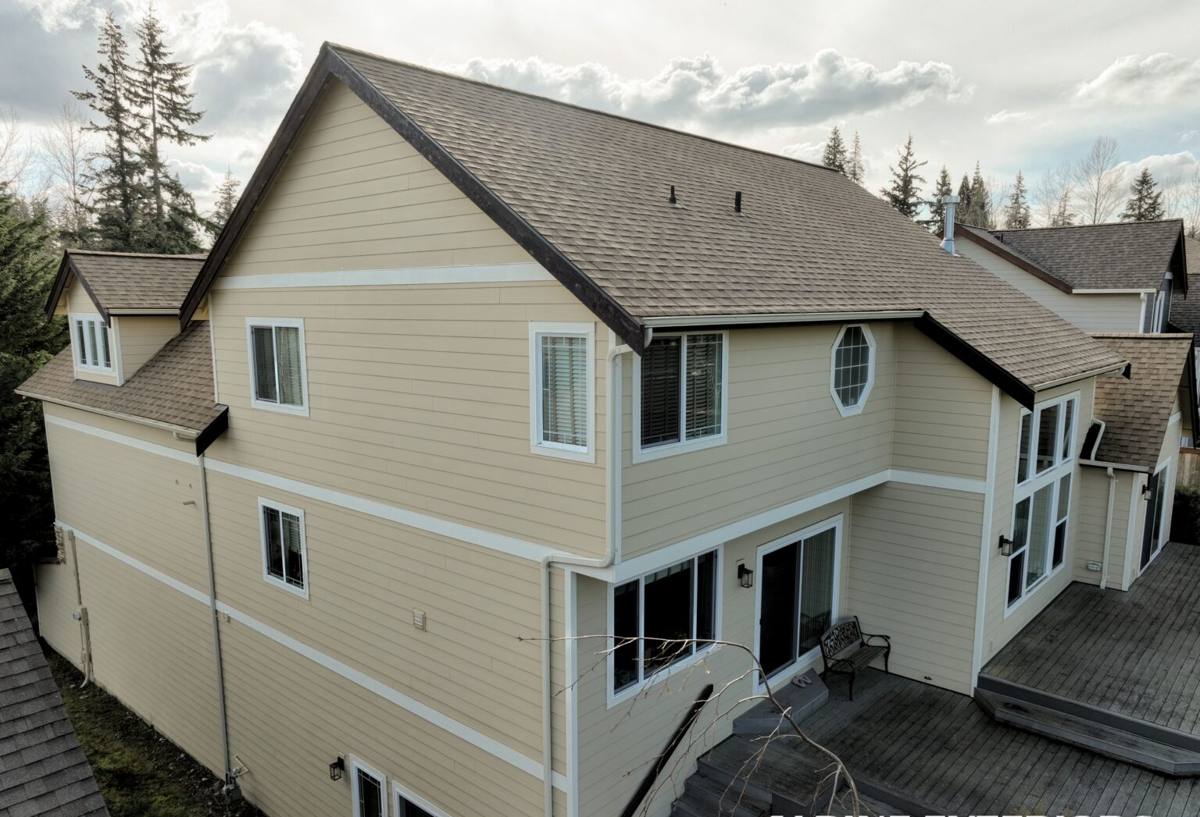
What "Custom" Actually Means for a House Like Yours
Most Everson homes we work on fall into one of a few categories: older farmhouses and post-war homes with settled, slightly out-of-square openings; additions or remodels where a window opening was never quite standard size to begin with; and newer construction where the builder used a size that no longer matches what's currently stocked by manufacturers. In every one of these cases, a stock window forced into an opening it doesn't fit is where leaks and drafts start.
Common Everson Situations We Size For
- Older homes with openings that have shifted slightly out of square over decades of settling
- Additions where the rough opening doesn't match any current standard size
- Replacing a single odd-shaped or specialty window (arched, angled, or oversized) without redoing the whole wall
- Homes where the exterior siding or trim profile limits how deep or wide a replacement frame can be
- Barns, shops, and outbuildings converted to livable or working space with non-standard framing
Custom sizing means we take precise field measurements at every opening, order to that exact size, and install with flashing and shims that account for the specific gaps involved — instead of caulking over a mismatch and hoping it holds.
Frame Materials: What Holds Up Here and What Doesn't
Frame material matters more in a climate like this than it does in a dry inland region. Constant damp cycles and salt-bearing air will expose weaknesses in a frame that might go unnoticed elsewhere. Here's how the common options actually perform in Whatcom County conditions.
| Frame Material | Moisture Behavior | Maintenance | Best Fit |
|---|---|---|---|
| Vinyl | Won't rot; can become brittle after many years of UV and salt exposure | Low — occasional cleaning | Most standard replacements, budget-conscious projects |
| Fiberglass | Very stable in wet/dry cycling, resists warping | Low | Larger openings, exposed walls, longer-term durability |
| Wood (clad exterior) | Interior wood needs protection from condensation; exterior cladding shields from rain | Moderate — interior finish upkeep | Homes prioritizing interior wood appearance |
| Aluminum | Conducts cold, prone to condensation and interior moisture issues in this climate | Low, but condensation-related issues increase over time | Rarely our first recommendation for this region |
We don't push one material on every job. The right call depends on the wall's sun and rain exposure, your budget, and how the window fits the rest of the house's exterior. What we won't do is install a frame material we know is a poor match for a wet, shaded wall just because it's cheaper up front — that's a callback waiting to happen, and it's not worth it for either of us.
Signs Your Current Windows Are Already Losing the Fight
Because failures here tend to be gradual — a little more moisture intrusion each winter — homeowners often don't notice until there's visible damage. Worth checking your windows for these signs before they become a bigger repair:
- Fogging or a hazy film between panes of double-pane glass (means the seal has failed)
- Soft, spongy wood at the sill or lower corners of the frame
- Visible moss or dark staining on the sill, trim, or exterior casing
- Drafts you can feel near the frame even when the window is fully latched
- Difficulty opening, closing, or locking that wasn't there when the window was new
- Peeling or bubbling paint on interior trim near the window, often a sign of moisture getting past the seal
Any one of these on its own might not need immediate replacement, but a few of them together on the same window usually means the frame or seal is done, not just cosmetically tired.
How We Approach a Custom Window Job
1. On-Site Assessment
We look at each opening individually — not just measuring, but checking the condition of the framing behind the trim, whether there's existing water damage, and how the wall is oriented to prevailing rain and sun.
2. Precise Measurement and Ordering
Custom windows are ordered to the exact field-measured size of each opening, accounting for any out-of-square conditions rather than forcing a stock size to fit.
3. Removal Without Collateral Damage
Old windows come out carefully, with attention to protecting surrounding siding, trim, and interior finishes — and to catching any hidden rot or damage in the framing before it gets covered back up.
4. Flashing and Weatherproofing First
This is the step that actually determines whether a window leaks in five years. Proper flashing tape, a correctly lapped weather-resistant barrier, and sill pan protection go in before the window itself, directing any water that does get past the frame back out rather than into the wall.
5. Setting, Shimming, and Sealing
The window is set level and plumb, shimmed at the correct load points, and sealed with materials rated for exterior exposure — not just a bead of caulk around the trim.
6. Final Check and Cleanup
We test operation, check the seal from inside and out, and leave the site clean.
Flashing and Moisture Management Matter More Here Than the Window Itself
We'll say it plainly: in Whatcom County's climate, a mediocre window installed with excellent flashing will outlast an excellent window installed with sloppy flashing. Driving rain finds any gap, and once moisture gets behind a window frame into the wall cavity, the damage is usually hidden until it's significant — rotted framing, stained drywall, or mold. This is also where moss becomes relevant: moss and algae growth on sills and trim isn't just cosmetic, it holds moisture against the surface longer, which accelerates whatever underlying problem already exists. Correct flashing and drainage detailing at install time is the difference between a window that just needs occasional cleaning and one that's quietly failing behind the trim.
Glass and Energy Performance
Most replacement windows today come standard with double-pane, low-E glass, which is a reasonable baseline for this region's mix of cool winters and mild summers. Triple-pane glass adds cost and weight but can be worth it on walls with heavy noise exposure or rooms that run noticeably cold in winter — it's a smaller efficiency jump here than it would be in a much colder climate, so we'll give you an honest read on whether it's worth the added cost for your specific situation rather than upselling it by default.
Why It Matters That We Already Work in This Area
A crew that installs windows across Ferndale and Whatcom County day in and day out has already seen how the local weather treats different products and installation methods over years, not just at the time of install. That translates into practical judgment calls — which sills need extra protection, which walls take the worst of the rain, when a slightly more expensive frame material is actually the cheaper option over ten years. It also means we're not learning the region's quirks on your project; we already know them.
After Installation: Keeping Windows Performing
New windows still need basic upkeep in this climate. A simple annual routine goes a long way:
- Clean sills and tracks to prevent moss or algae buildup, especially on shaded or north-facing walls
- Check exterior caulking and sealant lines each fall before the wet season sets in
- Operate every window at least once each season to keep hardware and weatherstripping working properly
- Clear debris from window wells or sills after storms
If you're seeing any of the warning signs above, or you've got an odd-sized opening that's been a headache to deal with, we're happy to take a look and give you a straightforward read on what it needs. Reach out for a free, no-pressure estimate — use the form below to get started.