 Ferndale Exterior
 What Everson's Climate Does to Exterior Siding
Everson sits inland from the Puget Sound and Georgia Strait, but it still gets the full weather package that defines Whatcom County living: long stretches of driving rain, damp air that lingers for months, and a moss season that can run from fall through spring. Homes here don't fail because of one big storm — they fail because of years of steady moisture pressure finding the smallest gap in a wall system. Siding that isn't installed with drainage, flashing, and clearances in mind will eventually let that moisture in, no matter how good the material looks on the day it goes up.
The Pacific Northwest's marine-influenced air also means humidity stays elevated even on dry-looking days, which is exactly the environment moss, algae, and mildew need to take hold on painted wood trim, caulked seams, and any siding product that isn't dimensionally stable. A siding job that's "correct on paper" but not built for this specific climate will show problems within a few winters — cupping boards, soft trim, dark streaking, and caulk joints that split open.
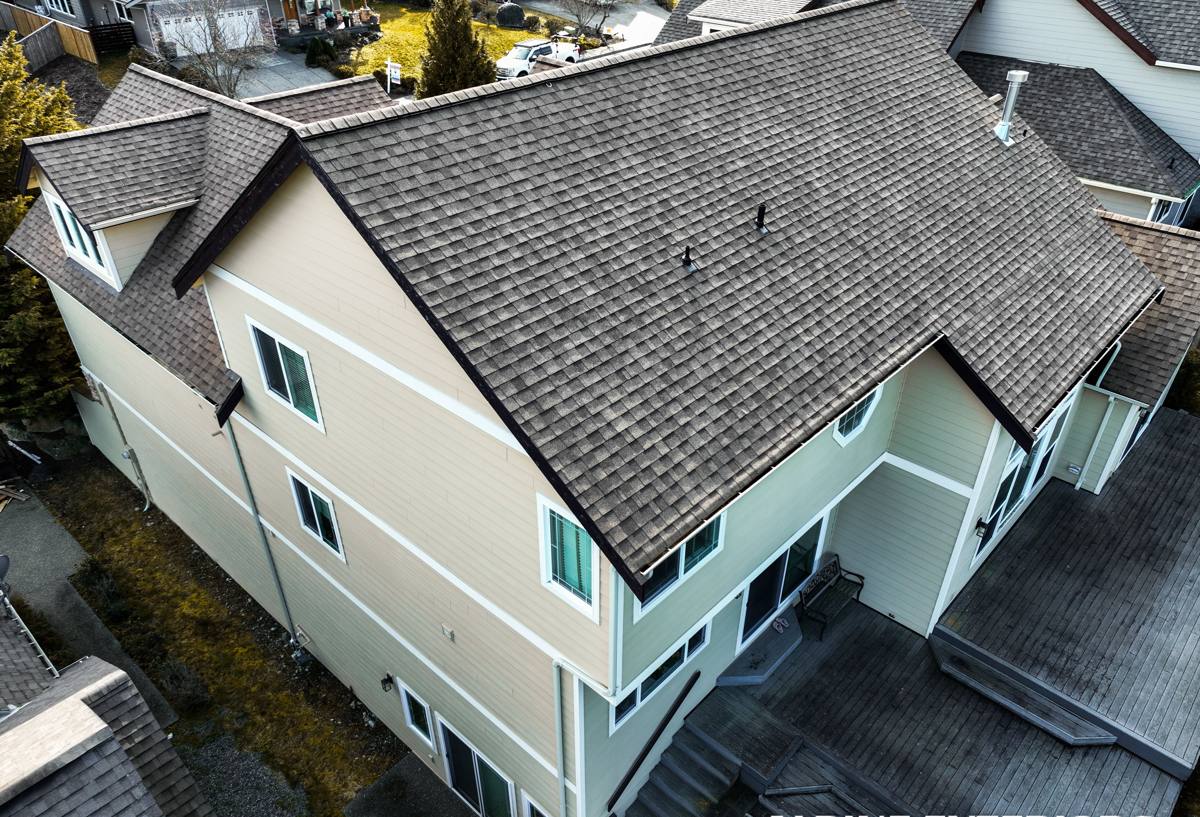
What a Correct Siding Installation Actually Involves
Siding is a system, not a single product. The board or panel you see is the last layer of a wall assembly that has to manage water, air, and vapor correctly. A rushed or undertrained crew can install a good product badly and get a bad result — and an average product installed with real attention to detail will usually outperform it.
Water management starts before the siding goes up
Before any siding is fastened, the wall needs a properly lapped weather-resistive barrier, correctly integrated window and door flashing, and drainage planes that let incidental moisture escape instead of pooling behind the cladding. This is the step that determines whether your walls stay dry for the next 30 years or start rotting from the inside in year eight, invisibly, behind siding that still looks fine from the curb.
Fastening and clearances matter as much as the product
Fiber cement siding has specific fastening patterns, nailing zones, and minimum clearances from grade, roofing, and decks that manufacturers publish for a reason. Skip those specs and you can void the warranty and create the exact wicking points that let Whatcom County's rain work its way into the wall over time. Correct installation also means proper caulking at penetrations, back-priming or factory-sealed cut edges, and butt joints that are actually weather-tight rather than just visually tight.
Why We Install Only James Hardie Fiber Cement Siding
We made a deliberate decision to install one siding system — James Hardie fiber cement — and nothing else. Not vinyl, not LP SmartSide, not Cemplank or Allura, not primed spruce or cedar. That's a narrower offering than most exterior contractors give homeowners, and we think that trade-off is worth explaining rather than glossing over.
Vinyl is inexpensive and low-maintenance in the sense that it never needs painting, but it's a thin, heat-sensitive plastic product that can warp, crack in cold snaps, and fade unevenly over time — and it does nothing to slow a fire. Engineered wood products like LP SmartSide perform reasonably when kept dry and maintained on schedule, but wood-based substrates are inherently more vulnerable to the sustained moisture exposure that defines this region's climate; edge swelling and finish failure are common when maintenance slips even a little. Other fiber cement brands compete on price but don't offer the same factory-cured ColorPlus finish, the same range of climate-engineered HZ product lines, or the same depth of installer training and warranty backing that James Hardie has built over decades in wet climates specifically.
James Hardie fiber cement is non-combustible, dimensionally stable in swings between soaked and dry, and available in HZ5 and HZ10 formulations engineered for regions with exactly this kind of freeze-thaw and moisture cycling. The ColorPlus factory finish is baked on under controlled conditions rather than field-painted, which matters directly in a climate where field-applied paint has a shorter useful life due to constant humidity. Combined with a strong transferable warranty, it's the system we're willing to put our name behind on Everson homes.
How Our Siding Installation Process Works
- On-site assessment. We walk the exterior, check for existing moisture damage, evaluate trim and window flashing condition, and measure for material needs.
- Honest scope and estimate. You get a clear breakdown of what's being replaced, what the water management plan is, and what it costs — no pressure, no inflated urgency.
- Tear-off and substrate check. Old siding comes off and we inspect the sheathing underneath before anything new goes on. Hidden rot gets addressed, not covered.
- Weather-resistive barrier and flashing. Housewrap or building paper is installed and lapped correctly, with proper flashing at every window, door, and penetration.
- Hardie installation to spec. Boards or panels go up following James Hardie's fastening patterns, clearances, and joint treatment — not shortcuts that happen to look fine at handoff.
- Trim, caulking, and final detail. Corners, trim boards, and joints are sealed correctly, and the site is cleaned up before we walk it with you.
Signs an Everson Home Needs New Siding
Whatcom County's damp climate tends to produce a recognizable pattern of warning signs. If you're seeing several of these, it's worth having someone look before the damage spreads past the siding into the sheathing:
- Persistent moss, algae, or dark streaking that comes back within weeks of cleaning
- Soft, spongy, or bubbling spots when you press on siding or trim
- Boards that are cupping, warping, or separating at the seams
- Paint that's peeling or blistering in patches rather than wearing evenly
- Visible gaps or cracked caulk around windows, doors, or corner trim
- A musty smell near exterior walls inside the home, especially after rain
- Rising utility bills that suggest the wall assembly isn't insulating the way it should
James Hardie vs. Other Siding Materials for This Climate
| Factor | James Hardie Fiber Cement | Vinyl | Engineered Wood (e.g. LP SmartSide) |
|---|---|---|---|
| Moisture behavior in wet climates | Dimensionally stable, resists swelling and rot | Doesn't rot, but can warp under heat/cold stress | Vulnerable to swelling and edge decay if maintenance lapses |
| Fire resistance | Non-combustible | Melts and can contribute to fire spread | Combustible wood-based substrate |
| Finish durability | Factory-baked ColorPlus finish, resists fading | Color molded in, but can fade and chalk | Field-painted or factory-primed; repainting needed on a cycle |
| Maintenance in a moss/algae climate | Low; occasional wash | Low; occasional wash | Moderate to high; paint and caulk upkeep required |
| Typical lifespan when installed to spec | Multiple decades | 20-30 years, variable | Shorter if moisture exposure isn't well managed |
What Siding Installation Costs Depend On
We don't publish blanket prices because every Everson home is different, but the real cost drivers are consistent from job to job:
| Cost Factor | Why It Matters |
|---|---|
| Home size and wall complexity | More square footage and more corners, gables, and dormers mean more material and labor |
| Condition of existing sheathing | Hidden rot found during tear-off adds repair work before new siding can go on |
| Siding profile and trim details | Lap siding, panel systems, and custom trim packages price differently |
| Removal and disposal of old siding | Type and amount of existing material affects tear-off time and haul-away cost |
| Site access | Tight lots, slopes, or landscaping close to the house can affect staging and labor time |
Why a Crew That Already Works in Everson and Whatcom County Matters
Siding installers who mostly work in drier climates, or who move between regions without adjusting their methods, tend to under-build for what this weather actually does over time. A crew based in and around Ferndale that regularly works Whatcom County homes has seen firsthand how the local combination of driving rain, humidity, and moss season plays out on real walls a few years after installation — not just at handoff. That experience shows up in the small decisions: how tight the flashing laps are, how much clearance is left at grade and roof lines, and which details get extra attention because we've seen what happens when they don't.
It also means we're not guessing at what this region's homes need. We size up your home's exposure, orientation, and existing moisture history and build the installation around that, rather than applying a generic approach and hoping it holds up.
Ready to Talk About Your Siding?
If your Everson home's siding is showing its age, or you're planning ahead before small problems turn into structural ones, we're happy to take a look. Reach out for a free, no-pressure estimate — we'll walk the exterior with you, tell you honestly what we see, and explain what a correct James Hardie installation would involve for your specific home. Use the form below to get started.