 Ferndale Exterior
 Composite Decking Built for the Fairhaven Climate
Fairhaven sits close enough to the water that every deck in the area is fighting the same three things at once: salt-laden air, long stretches of driving rain, and a moss season that seems to start earlier and last longer every year. A deck built for inland Whatcom County doesn't automatically hold up here. If you're comparing decking materials for a home in or near Fairhaven, the conversation has to start with what this specific environment does to a deck over ten or twenty years, not just what looks good on day one.
This page is about one job done right: composite decking, installed for Fairhaven conditions, by a crew that already works this part of Ferndale and knows what the salt air and moss actually do to a structure over time.
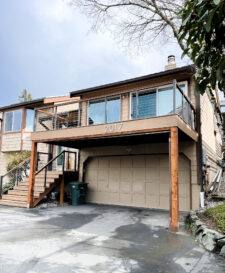
What Salt Air, Rain, and Moss Do to a Deck
Each of these factors works on a deck differently, and a correct installation has to answer all three at once.
Salt Air
Airborne salt doesn't just sit on the surface — it works into fasteners, hardware, and any exposed metal connector. Over years, that's what causes rust streaks on deck boards and corrosion at the ledger board connection, long before the boards themselves show real wear. Anything metal in a Fairhaven deck build needs to be rated for coastal exposure, not just general outdoor use.
Driving Rain
Rain that comes in sideways off the water finds every gap in flashing, every unsealed fastener hole, and every spot where a board butts up against the house. The problem usually isn't the rain itself — it's where that water ends up after it lands. A deck that drains slowly, or traps water against the house framing, will rot from the inside long before the surface looks bad.
Moss and Algae
Shade, moisture, and mild temperatures are exactly what moss wants, and Fairhaven has all three for a good part of the year. Moss holds moisture against the board surface, and on wood decking it also creates a slick, slippery walking surface fast. On composite, moss is mostly a surface and cleaning issue rather than a structural one — which is one of the bigger practical differences between the two materials here.
Why Composite Makes Sense for This Area
Wood decking isn't a bad product everywhere — but in a coastal, moss-prone climate, it asks a lot more of the homeowner to stay ahead of. Composite decking was designed to resist exactly the kind of moisture cycling this climate produces, which is why we lead most Fairhaven deck conversations with it rather than defaulting to whatever's cheapest up front.
| Factor | Wood Decking | Composite Decking |
|---|---|---|
| Moisture absorption | Swells, cups, and checks with repeated wet/dry cycles | Minimal absorption; capped boards shed water at the surface |
| Moss and algae growth | Grows into the wood grain, hard to fully remove | Sits on the surface; rinses and brushes off more easily |
| Refinishing | Needs stripping, sanding, and re-staining every few years | No staining or sealing required over its service life |
| Splintering underfoot | Increases with age and sun/rain exposure | Not a factor with properly capped boards |
| Fastener corrosion risk | Same risk as composite if hardware isn't coastal-rated | Same risk if hardware isn't coastal-rated |
| Typical service life (this climate) | Shorter without consistent yearly maintenance | Longer, with far less annual upkeep |
Composite doesn't remove the need for any maintenance at all — it just removes the maintenance that this climate makes most punishing: sanding, staining, and fighting moss that's soaked into wood grain.
What a Correct Composite Deck Build Actually Involves
The board itself is only part of the job. Most of the decks we get called out to repair failed at the substructure or the connection points, not because the composite decking itself wore out. A correct build for a Fairhaven property covers:
Ledger Connection and Flashing
Where the deck meets the house is the single most important detail on the whole project. Proper flashing — installed so water sheds outward and down, never behind the siding — is non-negotiable in a climate with this much driving rain.
Substructure and Drainage
Joists and framing need consistent airflow and a clear path for water to leave the structure. Composite decking that's laid over a substructure with poor drainage will still trap moisture underneath, which is where rot and mold problems actually start.
Fastening System
We use hidden fastener clip systems on composite boards wherever the product allows it, both for a cleaner look and because it means far fewer exposed screw heads for salt air to attack. Where face-screwing is required, we use coastal-rated, corrosion-resistant fasteners.
Board Gapping and Ventilation
Composite boards expand and contract with temperature, and correct gapping keeps the deck flat and prevents standing water between boards — which matters more here than in a drier inland climate, since standing water is exactly what feeds moss growth.
Choosing the Right Composite Board
Not all composite decking is built the same way, and for Fairhaven's conditions the difference matters more than it would somewhere drier.
Capped vs. Uncapped Composite
Capped composite has a protective outer shell bonded to the core, which is what actually resists moisture absorption and staining. Uncapped composite (or older-generation composite) can still absorb some moisture at the surface, which gives moss and algae more of a foothold. For this climate, we recommend capped composite as the standard, not the upgrade.
Color and Grain Considerations
Lighter colors show pollen, dirt, and early moss growth faster, and can also show water spotting more visibly after rain. Mid-tone and variegated colors tend to hide the day-to-day grime of a wet climate better while still looking clean between cleanings. This is a practical call as much as an aesthetic one.
Warranty Structure
Composite warranties vary by manufacturer and typically separate structural/performance coverage from staining and fading coverage. We walk homeowners through what's actually covered — and what installation mistakes can void — before any board is chosen, so there are no surprises later.
Our Process for a Fairhaven Composite Deck
- On-site assessment — we look at sun exposure, prevailing wind and rain direction, existing drainage, and the condition of any structure being replaced.
- Design and board selection — sizing, board pattern, color, and railing style, matched to how the deck will actually be used and how exposed it is to wind-driven rain.
- Old deck removal (if applicable) — including an honest look at what condition the ledger and framing are in before anything new goes up.
- Framing and flashing — ledger flashing, joist protection, and drainage detailing done before a single composite board is installed.
- Composite board installation — hidden-fastener systems where possible, correct gapping, and clean picture-framing or fascia where specified.
- Railing, stairs, and finish details — installed to match the board system and the home's exposure to weather.
- Final walkthrough — including a plain-English rundown of what maintenance the deck actually needs going forward.
Living With a Composite Deck in This Climate
Composite decking cuts the maintenance workload significantly, but "low maintenance" isn't "no maintenance" — especially a few hundred yards from saltwater. A short seasonal routine keeps a Fairhaven deck looking and performing the way it should for its full service life.
- Rinse salt spray and airborne grime off the surface periodically, especially after storms
- Sweep off leaves, needles, and pollen before they break down into organic material that feeds moss
- Keep gutters and downspouts above the deck clear so runoff isn't dumping directly onto the boards
- Check hidden fastener clips and any exposed hardware for movement once a year
- Confirm the space under the deck still has clear airflow — stored items or overgrown landscaping can block it over time
- Use a soft-bristle brush and a composite-safe cleaner on any moss film, rather than a close-range pressure washer
- Inspect ledger flashing and the house connection point during your annual walk-around
Cost Factors for a Composite Deck Project
Every Fairhaven property is a little different, so we always price a project after seeing the site — but these are the main variables that move the number up or down.
| Factor | Why It Changes the Price |
|---|---|
| Board tier (capped vs. entry-level composite) | Higher-cap boards cost more per square foot but need less long-term upkeep in this climate |
| Substructure material | Treated wood framing costs less upfront; coastal-rated or composite substructure costs more but resists moisture longer |
| Deck height and footing access | Elevated decks and difficult site access add labor time for framing and footings |
| Railing style | Composite or metal railing systems cost more than basic wood but match the low-maintenance goal of the deck itself |
| Fascia and picture-framing details | Wrapped edges and border boards add material and labor but improve the finished look and edge durability |
| Removal of an existing deck | Demo, disposal, and any rot repair discovered underneath affect the overall scope |
Why Local Experience in Fairhaven Matters
A contractor who mostly builds decks inland, away from the water, is used to solving for sun and general rain — not for salt air working into fasteners or moss establishing itself in shaded, damp corners for months at a stretch. Working regularly in Fairhaven and the greater Ferndale area means we've seen which flashing details actually hold up here, which fastener hardware corrodes too fast near the water, and which board colors and finishes handle this climate's grime without looking tired within a couple of years. That's the kind of judgment that doesn't show up in a product brochure — it comes from building and maintaining decks in Whatcom County's specific conditions, year after year.
Get a Straight Answer for Your Property
Every lot near the water handles wind, rain, and shade a little differently, and the right composite decking setup for one Fairhaven home isn't always right for the one next door. If you'd like an honest look at what your project actually needs, request a free, no-pressure estimate using the form below — we'll walk the site, answer your questions plainly, and give you a real number to work from.