 Ferndale Exterior
 Why Fairhaven's Coastal Conditions Change the Metal Roofing Equation
Fairhaven sits close enough to the water that salt air is a daily fact of life for anything mounted on a roof. Add Whatcom County's long, wet winters and the moss season that comes with them, and you've got a combination that's harder on roofing materials than most inland parts of the state ever see. A metal roof can handle all of it — but only if it's specified and installed with that combination in mind, not treated like a generic metal roof job dropped onto a coastal house.
The three things that matter most here are corrosion resistance, water management, and how the roof sheds moisture and organic debris over time. Get those right and a metal roof in this area will comfortably outlast two or three asphalt roofing cycles. Get them wrong — the wrong fastener, a skipped underlayment detail, a coating rated for a drier climate — and you end up with rust streaking, panel fatigue, or leaks at penetrations well before the material itself was ever the problem.
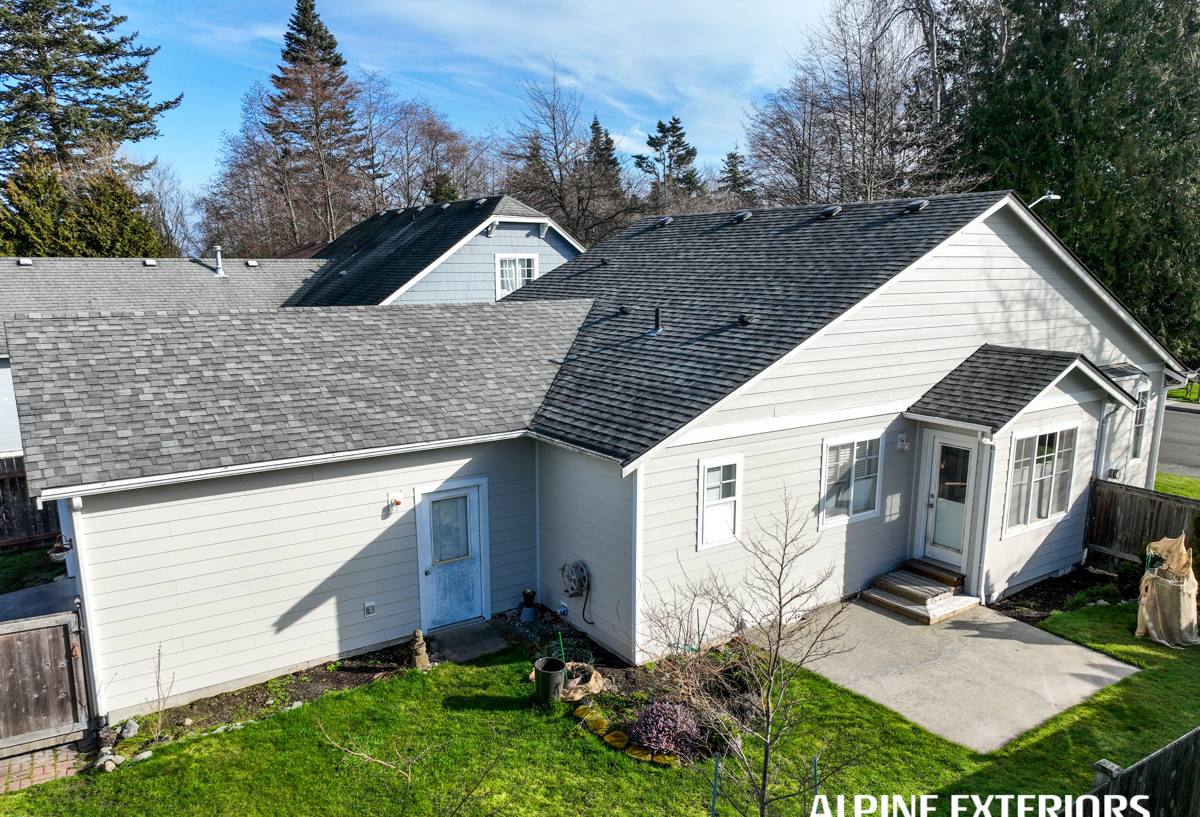
What a Correctly Installed Metal Roof Needs Here
Corrosion Resistance, Not Just Weather Resistance
"Weatherproof" and "corrosion-resistant" aren't the same thing, and salt air exposes that difference fast. Airborne salt accelerates galvanic corrosion at any point where dissimilar metals touch — a steel screw in an aluminum panel, a copper flashing detail against the wrong fastener, mismatched trim. On homes closer to the water, we pay close attention to matching metal types and fastener coatings so the roof isn't corroding itself from the inside out.
Water Volume, Not Just Water Presence
Driving rain off the water doesn't just fall — it gets pushed sideways under wind load, which means it finds its way into laps, seams, and flashing details that would stay dry in a calmer climate. Panel overlap, seam type, and underlayment all need to be sized for that reality, not for a baseline rainfall number that assumes still air.
Moss and Organic Growth Management
Whatcom County's moss season is long, and a north-facing or heavily shaded metal roof will collect the same spores and debris a shingle roof does. Metal doesn't feed moss the way organic shingle granules can, but debris that sits in valleys or against low-slope transitions still holds moisture against the panel finish and fasteners, which is exactly the environment that speeds up corrosion.
Choosing the Right Metal System for Fairhaven Homes
Not every metal roofing product performs the same way in a salt-air, high-rainfall environment. We walk homeowners through the real trade-offs rather than pushing one product for every house.
| System | Best For | Coastal Trade-Offs |
|---|---|---|
| Standing seam (concealed fastener) | Most Fairhaven homes, especially anything within a mile or two of the water | Higher upfront cost, but no exposed fasteners to corrode or work loose over time — the strongest long-term choice in salt air |
| Exposed-fastener panel | Budget-conscious projects, outbuildings, sheltered sites | Lower cost, but exposed screws and washers need inspection and occasional replacement as gaskets age faster in salty, wet air |
| Stone-coated steel | Homeowners who want the profile of shingles or tile with metal's durability | Good performance, but coating and fastener quality matter even more here — we're selective about which lines we'll install |
Panel gauge and finish quality matter as much as the system type. A thicker panel with a proper factory finish (PVDF-type coatings hold up better than basic polyester in salt air) will outperform a thinner, cheaper panel of the same style by years, even if they look identical on install day.
What We Won't Recommend, and Why
We generally steer homeowners away from mixed-metal assemblies — for example, uncoated steel trim paired with an aluminum panel — near the water. It's not that either metal is a bad product on its own; it's that the two together, in salt air, accelerate corrosion at every contact point. Where a manufacturer's fastener or trim package isn't rated for coastal exposure, we say so upfront rather than installing it and letting the homeowner find out in a few years.
Fasteners, Flashing, and the Details That Actually Prevent Leaks
Most metal roof failures in this climate don't start at the panel — they start at the details around it. This is where experience with local conditions actually shows up in the finished job.
- Fasteners and washers rated for coastal/marine exposure, not standard interior-grade hardware
- Properly lapped, high-quality underlayment as the roof's real second line of defense against wind-driven rain
- Kick-out flashing at every roof-to-wall transition so water is directed into the gutter, not behind the siding
- Valley and penetration flashing sized for higher water volume, not minimum code
- Sealed but serviceable penetrations for vents, flues, and skylights — over-sealing with caulk alone is a short-term fix that fails within a few seasons
- Ventilation detailing that lets the roof assembly dry from the underside, not just shed water on top
Any one of these done wrong will eventually leak, regardless of how good the panel itself is. This is also why we don't treat metal roofing as a quick add-on service — the flashing and fastening work takes real attention to sequence correctly.
Moss, Algae, and Long-Term Roof Care
A well-installed metal roof needs far less maintenance than shingles, but "far less" isn't "none," especially in a long moss season. Debris that collects in valleys, behind chimneys, or on low-slope sections holds moisture against the panel and fasteners even when the panel itself sheds water fine on the open field.
We recommend a simple annual check: clear debris from valleys and low-slope transitions, confirm gutters and downspouts are flowing freely, and look for any early rust bloom around fasteners or trim, which is easier and cheaper to address early than after it's spread. None of this requires a full inspection contract — it's the kind of thing most homeowners can do themselves or have checked during a gutter cleaning.
Our Installation Process
- On-site evaluation. We look at roof pitch, exposure to prevailing wind and salt air, existing decking condition, and any moss or moisture patterns already visible on the current roof.
- System and material selection. Based on that evaluation, we recommend a panel system, gauge, and finish suited to the specific exposure of that home — not a one-size answer for every Fairhaven property.
- Tear-off and deck assessment. Old roofing comes off and the deck is checked for rot or soft spots before anything new goes down; hidden water damage under an old roof is common and needs to be addressed, not covered over.
- Underlayment and flashing installation. This is the step most likely to be rushed on lower-quality jobs. We treat it as equal in importance to the panels themselves.
- Panel installation. Panels go down with fasteners and clip spacing matched to the manufacturer's coastal-exposure specifications, not generic spacing.
- Final walkthrough. We review the completed roof with the homeowner, including where the flashing details are and what basic annual maintenance looks like.
Cost Factors to Understand Before You Get Quotes
Metal roofing costs more upfront than asphalt shingles, and the range varies widely based on system type, roof complexity, and finish quality. Rather than quote a number that won't reflect your actual roof, here's what actually drives the price up or down.
| Factor | Effect on Cost |
|---|---|
| Panel system (exposed-fastener vs. standing seam) | Standing seam typically costs more per square but needs less long-term maintenance in salt air |
| Roof complexity (valleys, dormers, penetrations) | More cuts, flashing, and detail work adds labor time regardless of panel choice |
| Deck condition | Rot or soft decking found during tear-off adds repair cost before new roofing can go on |
| Coating and gauge quality | Marine-grade coatings and thicker gauge cost more but directly extend service life near the water |
| Access and site conditions | Steep pitch, limited staging area, or multi-story sections add labor and safety equipment time |
We provide itemized, written estimates so you can see exactly what's driving the number, rather than a single lump figure.
Why Hiring a Crew That Already Works Fairhaven Matters
Metal roofing installed to a generic spec sheet, without accounting for salt air and driving rain, tends to develop problems at the exact points a crew unfamiliar with this exposure wouldn't think to double-check — fastener corrosion, flashing at wall transitions, moss buildup in valleys. A crew that regularly works this part of Whatcom County has already seen what fails here and builds those lessons into every install, not just the ones that go wrong.
That local experience also shows up in smaller ways: knowing which finishes and hardware lines actually hold up near the water over the manufacturer's paper spec, sequencing work around the wet season instead of fighting it, and giving homeowners a realistic maintenance expectation instead of an oversold "zero maintenance" pitch.
Quick Checklist If You're Comparing Metal Roofing Contractors
- Do they specify marine- or coastal-grade fasteners for homes near the water?
- Do they explain flashing and underlayment details, not just panel brand and color?
- Do they check for mixed-metal contact points that could cause galvanic corrosion?
- Do they give a written, itemized estimate rather than a single flat number?
- Can they speak specifically to how the local climate affects the install, not just general metal roofing benefits?
If you're weighing metal roofing for a home in Fairhaven, we're happy to walk your roof, talk through what your specific exposure and roof layout call for, and give you a straightforward, no-pressure estimate. Use the form below to get started.