 Ferndale Exterior
 Window Replacement Built for Fairhaven's Coastal Climate
Homes near Fairhaven sit close enough to the water and the tree cover of Whatcom County that windows take a different kind of beating than they would further inland. Salt-laden air corrodes hardware and finishes faster than dry-climate products expect. Driving rain off the Strait pushes water sideways into gaps that would stay dry in a calmer region. And the long, wet moss season keeps humidity sitting against exterior surfaces for months at a stretch. None of this means windows here fail faster because the product is bad — it means the installation and the material choices have to account for conditions the manufacturer's average install guide wasn't written for.
We work on homes throughout the Ferndale area, including Fairhaven, and we size window replacement jobs around what actually happens to a window over a Whatcom County winter, not just what looks good in a showroom.
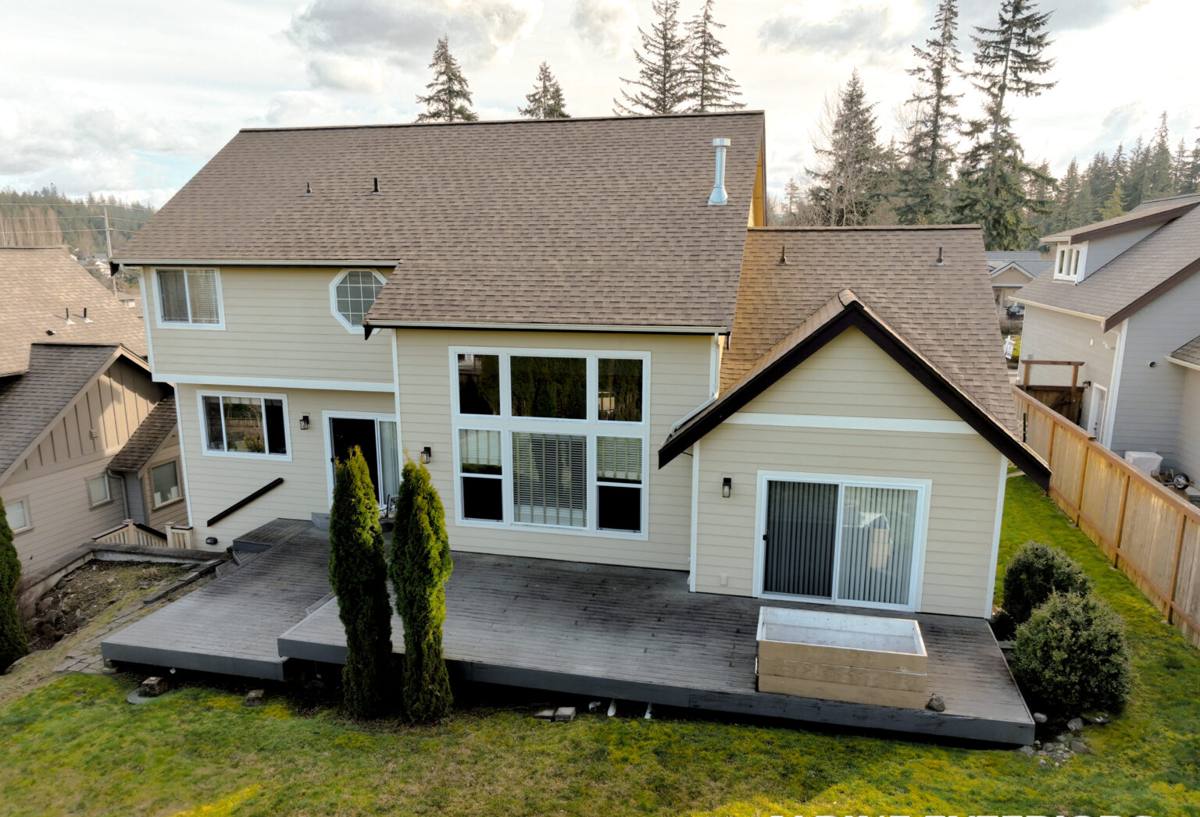
What Salt Air, Driving Rain, and Moss Season Actually Do to Windows
Salt Air
Airborne salt settles on metal window components — hinges, cranks, screen frames, and especially aluminum cladding or trim — and accelerates oxidation. Vinyl and fiberglass frames resist this better than untreated aluminum, but even those benefit from hardware rated for coastal exposure. Over years, corroded hardware is one of the most common reasons a window that "still looks fine" won't lock or operate properly anymore.
Driving Rain
Wind-driven rain doesn't just fall on a window — it gets forced sideways and upward into any gap in the flashing or sill pan. A window that would perform fine in a still, dry climate can leak here if the flashing details around the rough opening aren't done correctly. This is almost always an installation issue, not a product issue, which is why we treat flashing and sill pan work as non-negotiable steps, not optional add-ons.
Moss and Sustained Moisture
Whatcom County's moss season means exterior wood trim, sills, and siding around a window stay damp for extended stretches. If a window's exterior trim isn't sealed and back-primed correctly, or if the sill doesn't shed water away from the wall, moisture gets trapped against wood framing. That's when you start seeing soft spots, paint failure, and eventually rot — problems that show up years after a rushed install, not on day one.
Signs a Fairhaven Home Needs Window Replacement
- Visible fogging or a hazy film between the panes of a double-pane window — the seal has failed and the insulating gas is gone
- Windows that are hard to open, close, or lock, especially if hardware looks corroded or chalky
- Cold drafts near the frame even when the window is fully latched
- Soft or discolored wood trim around the exterior of the window
- Visible daylight or gaps between the frame and the wall from outside
- Noticeably higher heating bills without another clear cause
- Peeling paint or bubbling finish concentrated around window openings, a common sign of trapped moisture
Any one of these on its own might just need a repair. Several together, especially on an older home, usually mean the windows are past the point where patching makes sense.
What a Correct Window Replacement Job Involves
A window swap isn't just pulling one unit out and setting a new one in the same hole. In a wet, coastal climate like this one, the details around the window matter as much as the window itself.
- Removal without damaging the rough opening. Old windows come out carefully so the surrounding framing can be inspected, not just yanked out.
- Inspection of the framing and sill. This is where hidden water damage from a prior poor install often turns up. Any soft or rotted wood gets addressed before a new window goes in — installing a new window over damaged framing just hides the problem.
- Proper flashing and sill pan installation. This is the single most important step for keeping driving rain out over the long run. It's also the step most likely to get skipped by crews trying to move fast.
- Setting and shimming the window level, plumb, and square. An out-of-square window stresses the frame, makes hardware wear faster, and can compromise the seal.
- Insulating and sealing the gap between the window frame and the rough opening — not overfilled with expanding foam, which can bow the frame, and not left with gaps that let air and moisture in.
- Exterior trim and sealant work sized for sustained wet weather, not just a quick bead of caulk.
- Final operation check — every window opens, closes, locks, and seals the way it's supposed to before we call the job done.
Choosing the Right Frame and Glass for This Climate
There's no single "best" window for every home — it depends on the home's age, exposure to weather, and budget. What we can tell you honestly is how common options hold up under salt air, rain, and moss-season humidity.
| Frame Material | How It Handles Coastal Exposure | Maintenance |
|---|---|---|
| Vinyl | Resists salt corrosion well; no repainting needed | Low — occasional cleaning |
| Fiberglass | Very stable in temperature and moisture swings; strong long-term performer near the coast | Low |
| Wood (clad exterior) | Good insulator; exterior cladding protects the wood from rain and salt, but any gap in that cladding invites moisture into the wood | Moderate — depends on cladding integrity |
| Aluminum | Prone to corrosion and condensation in salt air and cold, wet winters unless it's a thermally broken, coastal-rated product | Higher — watch hardware and finish |
On glass, we generally recommend double-pane units with a low-E coating and an argon fill as the practical standard for this region — they cut heat loss and reduce condensation risk on cold, damp mornings, which is a real issue here given how much moisture sits in the air for months at a time. Triple-pane is worth discussing for homes with more direct wind exposure or higher energy goals, but it comes at a real cost premium that doesn't make sense for every house.
Cost Factors for Fairhaven Window Replacement
We don't publish flat prices because window jobs vary a lot based on the home, but these are the factors that actually move the number:
| Factor | Why It Affects Cost |
|---|---|
| Number and size of windows | More or larger openings mean more material and labor |
| Frame material chosen | Fiberglass and higher-end vinyl cost more than builder-grade vinyl |
| Condition of the rough opening | Rot or water damage found during removal adds repair work |
| Access and window height | Second-story or hard-to-reach windows take more time and equipment |
| Glass package | Low-E coatings, argon fill, and triple-pane options each add cost |
| Trim and exterior finish work | Matching existing trim or upgrading finish adds labor |
We give a written, itemized estimate before any work starts so you know exactly what's driving the price — no vague lump-sum numbers.
Our Process, Start to Finish
1. On-Site Assessment
We look at the actual windows and the framing around them, not just take measurements from a brochure. This is where we catch moisture damage, note which windows are structural priorities versus cosmetic upgrades, and talk through material options that fit the home and the budget.
2. Written Estimate
You get a clear breakdown of scope, materials, and cost before committing to anything. No pressure, no same-day-signature tactics.
3. Install
Crews follow the same sequence every time — removal, inspection, flashing, setting, sealing, trim — regardless of how many windows are on the job. Skipping steps to move faster isn't how we operate.
4. Final Walkthrough
Every window is tested for smooth operation and a tight seal before we consider the job complete, and you get a chance to look everything over with us.
Why It Matters That We Already Work in Fairhaven
A crew that regularly works homes in and around Ferndale and Fairhaven has already seen how local houses respond to this specific mix of salt air, wind-driven rain, and long wet seasons. That translates into practical judgment calls — knowing which sills are worth upgrading during a replacement, how much clearance to leave for drainage, and which trim details actually hold up here versus what looks fine on paper but fails in year three. It also means we're not learning the region's weather patterns on your project. We're a local business working in the community we live in, and callbacks on our own installs cost us more than doing it right the first time.
Get a Free, No-Pressure Estimate
If your windows are drafty, fogged, hard to operate, or showing water damage around the trim, it's worth having a local crew take a look before winter weather makes the problem worse. We'll walk your home, give you an honest read on what needs replacing versus what can wait, and provide a written estimate with no obligation. The form below gets you started.