 Ferndale Exterior
 Fiber Cement Siding Built for Sumas Conditions
Sumas sits at the edge of Whatcom County, close enough to the Nooksack valley and the marine air pushing in from the Strait of Georgia that homes here take on a specific kind of weather load: long stretches of driving rain, humidity that lingers under tree cover, and a moss season that can run most of the year on north-facing walls. Siding in this part of the county isn't decorative — it's the first line of defense between that weather and the framing behind it. We install James Hardie fiber cement siding for homeowners in Sumas because it's the one product system we've found holds up to that combination without turning into an annual maintenance chore.
This page is specific to fiber cement siding work in Sumas. If you're comparing products or want the broader case for Hardie across our whole service area, that's covered elsewhere on our site — here we're talking about what a correct installation looks like on a home in this exact part of Whatcom County.
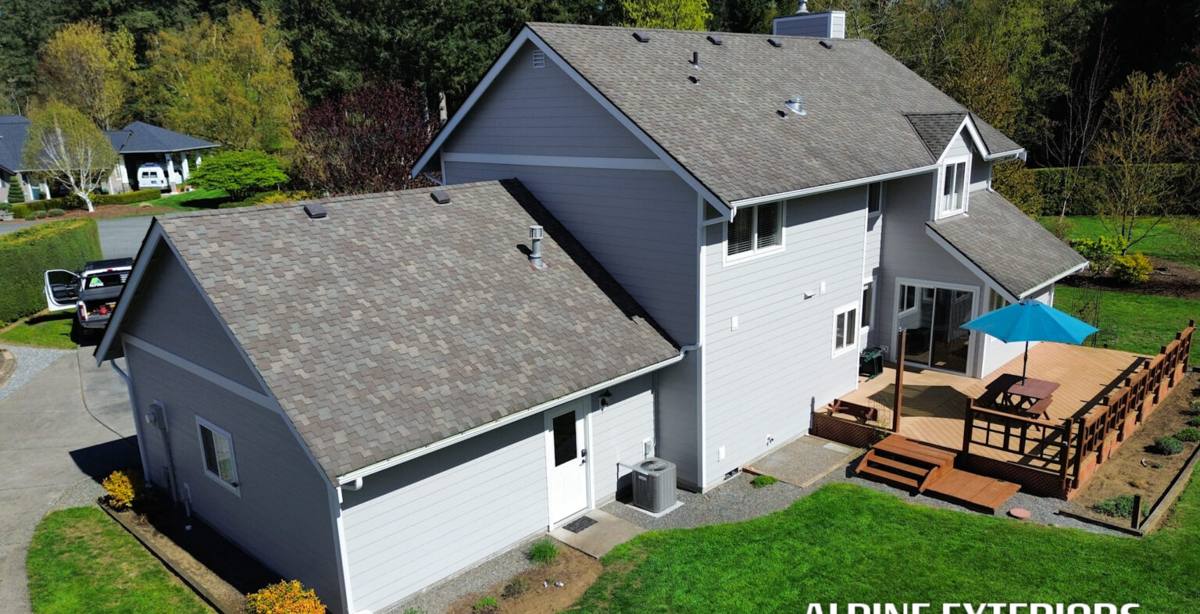
What Sumas Homes Are Actually Up Against
Three climate factors shape how we approach every siding job in this area:
- Driving rain: Wind-driven rain doesn't just wet a wall, it forces moisture sideways into laps, seams, and penetrations. Siding that isn't detailed correctly at those points lets water behind the cladding, where it can sit against sheathing for days.
- Salt-influenced air: Proximity to the Strait and Puget Sound means fasteners, flashing, and trim are exposed to a slow corrosive load over years, not just fresh water. Material choices at the fastener and flashing level matter as much as the siding itself.
- Extended moss season: Shade, moisture, and mild temperatures mean moss and algae get a long runway on north and east elevations. Surfaces that hold moisture at the joint lines feed that growth; surfaces that shed water and dry out don't.
None of this is unique to Sumas, but the combination is persistent enough here that we plan for it on every estimate, not just the jobs where a homeowner already has visible problems.
Why We Install Only James Hardie
We don't carry LP SmartSide, vinyl, Cemplank, Allura, or unfinished wood siding. That's a deliberate standard, not an oversight. Fiber cement as a category performs well in wet climates because it's dimensionally stable and doesn't feed rot the way wood-based products can, but not all fiber cement is engineered the same way. James Hardie's HZ10 product line is formulated specifically for climates like ours — wetter, milder, and prone to prolonged moisture exposure rather than freeze-thaw cycling. The factory-applied ColorPlus finish also matters here more than in drier regions: a finish that's baked on and warrantied against fading holds up better to repeated wet-dry cycling than field-applied paint, which is exactly the stress this climate puts on a painted surface.
We also value that Hardie's warranty is transferable and backed by a manufacturer with decades of specific engineering behind its regional product lines. That's not a small thing on a coastal-influenced property where the siding needs to perform for 30-plus years without repainting.
What This Means in Practice
When we bid a Sumas job, we're not choosing Hardie because it's the only thing we sell — we're explaining why the alternatives, whatever their upfront cost advantage, tend to ask more of the homeowner in maintenance, recoating, or moisture vulnerability than we think is a fair trade for this climate.
What a Correct Fiber Cement Installation Involves
Fiber cement siding fails less often because of the material and more often because of how it was installed. In this climate, a handful of details separate a job that lasts decades from one that causes problems in five to ten years:
- Weather-resistive barrier and rainscreen gap: A drainage plane behind the siding lets any moisture that does get past the cladding drain and dry instead of sitting against sheathing.
- Correct flashing at every penetration: Windows, doors, hose bibs, light fixtures, and vents each need proper head and sill flashing — this is where driving rain finds its way in if skipped.
- Manufacturer-specified fastening: Corrosion-resistant fasteners, set to the correct depth and pattern, matter more near salt-influenced air than in inland climates.
- Proper clearances: Hardie specifies minimum clearances from grade, roofing, and decking — these exist specifically to keep the bottom edge of the siding from sitting in standing moisture or splashback.
- Caulked and painted cut edges: Any field-cut panel edge needs to be sealed per manufacturer instructions, or it becomes the one spot on the wall that absorbs water.
Skipping any one of these doesn't usually cause an immediate problem — it shows up two or three winters later as a soft spot, a stain, or moss taking hold along a seam that should have shed water.
Our Process for a Sumas Siding Project
1. On-Site Assessment
We walk the exterior looking at existing siding condition, moisture staining, trim and flashing details, and any areas where moss or algae growth signals a chronic wet spot. On older homes we're also checking what's behind the current siding before we quote anything.
2. Detailed Estimate
You get a written scope covering product line, color, trim approach, and any sheathing or flashing repair the tear-off reveals. We don't quote a number without knowing what's underneath the existing siding whenever that's practically possible to check.
3. Tear-Off and Prep
Old siding comes off, sheathing is inspected and repaired as needed, and the weather-resistive barrier and rainscreen system go on before a single piece of Hardie siding is installed.
4. Installation to Spec
Panels or planks go up per James Hardie's installation manual — fastening pattern, clearances, flashing, and joint treatment. This is the stage where the climate-specific details above actually get executed.
5. Final Walkthrough
We review the finished work with you, including how joints, trim, and penetrations were handled, so you know what was done and why.
Comparing Approaches: Why Correct Installation Costs What It Costs
| Factor | Cut-Corner Approach | Correct Approach |
|---|---|---|
| Drainage plane | Skipped or minimal | Full rainscreen gap behind siding |
| Flashing | Reused or caulk-only at penetrations | New flashing, correctly lapped, at every penetration |
| Fasteners | Standard fasteners, inconsistent depth | Corrosion-resistant, manufacturer-spec depth and pattern |
| Cut edges | Left unsealed | Primed and sealed per Hardie instructions |
| Warranty | Installer labor only, short term | Manufacturer product warranty plus installer labor warranty |
The material cost difference between these two approaches is small relative to the total project. The labor and attention-to-detail difference is where the actual value sits, and it's also where problems either do or don't show up years later.
Maintenance Expectations After Installation
One of the practical advantages of a correctly installed Hardie system in this climate is how little ongoing maintenance it asks for. You're not scraping and repainting on a five-to-seven-year cycle the way you would with wood or field-painted siding. Realistic upkeep looks like:
- Periodic rinsing to clear pollen, dust, and early moss growth, especially on shaded elevations
- Visual check of caulking at trim joints and penetrations every year or two
- Prompt attention to anything that looks like a new stain or soft spot, since catching it early is always cheaper than catching it late
That's a much shorter list than most alternative sidings require in a climate that stays wet as much of the year as Whatcom County does.
Why Hire a Crew That Already Works in Sumas
Fiber cement installation isn't exotic work, but doing it correctly in this specific climate takes judgment calls that come from having done it here before — how much rainscreen gap to use on a shaded north wall, how to detail flashing around a low-slope porch roof that sees constant runoff, which trim details actually shed the driving rain this area gets versus which just look fine on a dry day. A crew that installs siding across a range of climates may not carry the specific habits that this stretch of Whatcom County rewards. We do this work throughout the Ferndale area and into communities like Sumas regularly enough that these details aren't an afterthought — they're just how we build the job.
Get a Straightforward Estimate
If your Sumas home has aging siding, visible moss buildup, or you're just planning ahead for a replacement, we're happy to take a look and walk you through what we'd recommend and why. There's no pressure and no obligation — just a straight assessment from a crew that installs one product system because we believe it's the right one for this climate. Use the form below to request your free estimate.