 Ferndale Exterior
 Lummi Island's Marine Climate Asks More of Your Siding
Lummi Island sits out in the salt water of Whatcom County, and that location changes what a home's exterior has to deal with day in and day out. Homes here catch salt-laden air off the water, take driving rain straight off Puget Sound storms, and sit under tree cover and marine humidity that keeps north- and west-facing walls damp for long stretches of the year. Add in a moss season that can run from fall through spring, and you have an environment that is genuinely harder on exterior siding than most inland neighborhoods around Ferndale.
This isn't a reason to over-build or over-sell a project. It's a reason to be precise about material choice and installation detail. A siding system that performs fine in a sheltered inland yard can fail early on an exposed island lot, and the failure usually shows up as swelling, soft spots, cracked paint, or moss and algae staining that never fully washes off.
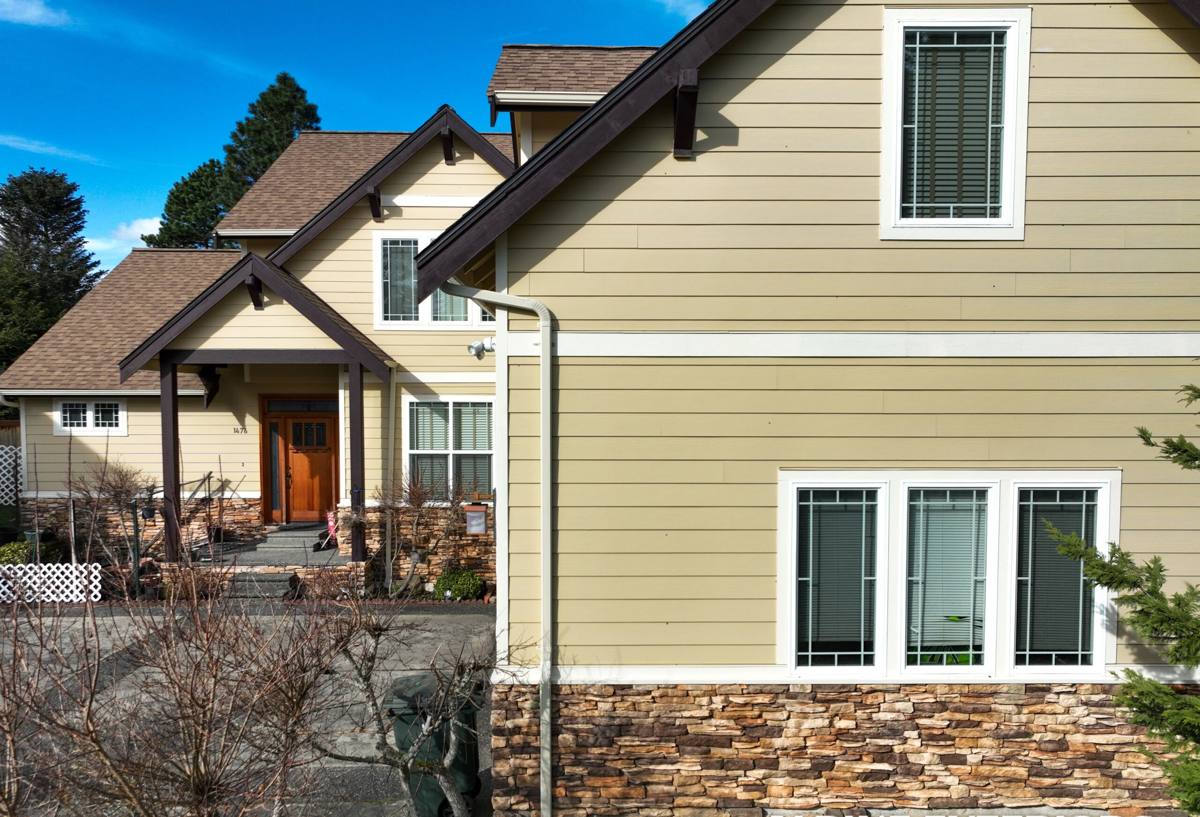
What Salt Air, Rain, and Moss Actually Do to Siding
Salt Air
Airborne salt settles on exterior surfaces and accelerates corrosion of fasteners, trim, and any metal flashing components. It also slowly breaks down lower-quality paint films and finishes, leading to chalking and fading well ahead of schedule.
Driving Rain
Wind-driven rain off the water doesn't just run down a wall, it gets pushed sideways and upward at laps, corners, and penetrations. Any gap in flashing or a poorly lapped joint becomes a path for water to reach the sheathing behind the siding.
Moss and Algae
Shade, moisture, and moderate temperatures are exactly what moss and algae need to take hold. On siding that absorbs and holds moisture, growth can establish itself in the surface texture and keep feeding on trapped dampness, which is a different and more persistent problem than surface dirt.
Why We Install Only James Hardie Fiber Cement
Ferndale Exterior Company made the decision to install James Hardie fiber cement siding exclusively, and not vinyl, not LP SmartSide, not Cemplank or Allura, and not primed wood species like spruce or cedar. That's not a marketing position, it's a standard we hold because of what we see happen to siding in exactly the conditions Lummi Island produces.
Wood-based products, including engineered wood siding, rely on a sealed factory coating to keep moisture out. Once that coating is compromised at a cut edge, fastener hole, or damaged corner, the wood substrate underneath can absorb water and swell. In a marine environment with near-constant humidity and driving rain, that risk goes up, not down. Vinyl siding handles moisture fine on its own, but it flexes and gaps with temperature swings, doesn't hold paint well if a color change is ever wanted, and can look and perform like a budget product on a waterfront home. Fiber cement from other manufacturers may share Hardie's basic composition, but we've standardized on James Hardie specifically for its factory-applied ColorPlus finish, its climate-engineered HZ product line, and the depth of its installation documentation and warranty backing.
None of this means other products are junk. It means that for the specific combination of salt exposure, driving rain, and moss pressure that Lummi Island homes face, we've concluded fiber cement installed to Hardie's spec is the more reliable long-term choice, and we'd rather turn down work than install something we don't believe will hold up out there.
Matching the Right Hardie System to Island Exposure
James Hardie makes climate-specific product lines, and the HZ5 line is engineered for regions with more moisture and temperature swing, which fits western Washington's marine belt well. For a home on Lummi Island, that usually means:
- HardiePlank lap siding in an HZ5 formulation, which resists moisture-related damage better than standard-zone product
- ColorPlus factory-applied finish, which is baked on and cured under controlled conditions rather than site-applied, giving better fade and chalk resistance against salt air and UV
- HardieTrim and HardieSoffit to keep corners, fascia, and eaves in the same non-combustible, moisture-stable material rather than mixing in wood trim that will age differently
- Stainless or coated corrosion-resistant fasteners appropriate for coastal exposure, since standard fasteners can streak or fail faster in salt air
Color selection also matters more here than it might inland. Darker colors absorb more heat and can accelerate expansion and contraction at joints, and certain finishes show salt film and water spotting more readily. We walk homeowners through which ColorPlus options tend to perform and look best on exposed, water-facing elevations versus more sheltered sides of the house.
What a Correct Installation Actually Involves
Fiber cement siding is only as good as the installation behind it. Most of the failures we get called out to inspect on older homes trace back to installation shortcuts, not the material itself. On Lummi Island in particular, we hold to these details without exception:
- Proper weather-resistive barrier installed and lapped correctly before any siding goes up
- Correct flashing at every window, door, and roof-to-wall intersection, with special attention to water-facing elevations
- Manufacturer-specified nailing patterns and fastener spacing, not a shortcut pattern
- Minimum clearance maintained between siding and grade, decks, patios, and roof lines to avoid wicking moisture
- Properly caulked and sealed joints only where Hardie's install guide calls for sealant, not over-caulking in ways that trap moisture
- Butt joints and laps installed with correct overlap and gapping for expansion
- Field-cut edges primed or sealed per manufacturer instructions before installation
Skipping any one of these doesn't usually cause an obvious problem in year one. It shows up two, five, or ten years later as a soft spot, a stain pattern, or paint failure at a specific joint, right in the areas that take the most wind-driven rain.
Our Process for Lummi Island Projects
Working on Lummi Island adds a logistics layer that a mainland Ferndale project doesn't have, and it's part of why local experience matters. Our process is built around it:
- On-site assessment — we look at existing siding condition, moisture damage, exposure direction, and which elevations take the worst of the wind and rain
- Material and ferry planning — Hardie board, trim, and accessories are staged and scheduled around ferry sailings so the crew has everything on-site before work starts, avoiding mid-project delays
- Tear-off and inspection — old siding comes off and the sheathing underneath gets checked for hidden moisture damage before anything new goes on
- Weather barrier and flashing — installed and inspected before a single piece of Hardie board goes up
- Hardie installation — HZ5 product installed to manufacturer spec, with corrosion-resistant fasteners throughout
- Trim, caulking, and final punch list — including a walk-through so the homeowner sees exactly what was done and why
Because we already plan projects around the ferry schedule and island access, we're not learning that logistics curve on your project. That translates into fewer surprises and a tighter timeline.
What Affects Cost on a Lummi Island Siding Project
Every home is different, but these are the main factors that move a Lummi Island quote up or down compared to a similar job closer to Ferndale:
| Cost Factor | Why It Matters Here |
|---|---|
| Ferry logistics and material staging | Extra scheduling and coordination time to get materials and crew to the island efficiently |
| Existing moisture damage | Homes with prior wood or engineered wood siding often need sheathing repair discovered during tear-off |
| Exposure level of the lot | Waterfront and wind-exposed elevations need more careful flashing and may call for upgraded fastener specs |
| Trim and detail complexity | Homes with more corners, dormers, and roof-to-wall transitions require more flashing and labor time |
| Color and finish selection | ColorPlus factory finishes vs. field-painted options can shift material cost |
| Access and staging area | Tighter lots or limited equipment access can add labor time |
We give a firm, itemized quote after the on-site assessment, and we're upfront about which of these factors apply to your specific home before any work begins.
Living With Fiber Cement in a Moss-Prone, Salt-Air Environment
One advantage of a correctly installed James Hardie system on Lummi Island is that maintenance stays simple. Fiber cement won't rot, and it doesn't feed moss and algae the way some wood-based products can once moisture gets into the surface. That said, a few habits go a long way in this climate:
- Rinse salt film and debris off exterior walls periodically, especially on water-facing sides
- Keep gutters and downspouts clear so rain isn't overflowing directly onto siding
- Trim back vegetation that keeps a wall shaded and damp, since that's where moss gets its foothold
- Inspect caulking at trim joints every year or two and touch up as needed
- Address any impact damage or chipped finish promptly so the substrate underneath isn't exposed
None of this is heavy maintenance. It's the kind of upkeep that keeps a well-installed system looking and performing the way it's supposed to for decades, rather than the kind of repair work that comes from moisture getting behind the wrong material.
Why Local, Island-Experienced Crews Matter
A siding crew that has never worked on Lummi Island will learn the ferry schedule, the exposure patterns, and the access constraints on your project's timeline. A crew that already works out here has that figured out before your job starts. We know which elevations on island homes typically take the worst wind-driven rain, we plan materials around sailings instead of discovering the problem mid-project, and we've seen what happens to siding that wasn't installed with this specific climate in mind. That experience shows up as fewer delays, fewer surprises, and a finished exterior that's actually built for where it sits, not just for a general Pacific Northwest climate.
If you're weighing a siding replacement or new construction project on Lummi Island, we'd be glad to walk your property, look at your exposure and existing condition, and give you a straight, no-pressure estimate using the form below.