 Ferndale Exterior
 Roof Replacement Built for Kendall's Climate, Not a National Average
Every roofing brochure talks about "25-year shingles" and "lifetime warranties" as if a roof in Kendall wears the same way as one in Phoenix or Denver. It doesn't. This part of Whatcom County deals with a long, wet shoulder season, driving winter rain that comes in sideways off the water, and a moss season that can run eight or nine months out of the year in shaded, north-facing sections of a roof. Homes closer to the water also pick up salt-laden air that accelerates corrosion on unprotected fasteners, flashing, and metal accessories faster than most manufacturers' spec sheets account for.
None of that means a Kendall roof needs exotic materials or a bigger budget than anywhere else. It means the details — underlayment choice, fastener grade, ventilation balance, and how the edges and valleys are flashed — matter more here than they would in a drier climate. A roof replacement done to a generic national standard will often underperform in this environment years before its rated lifespan runs out.
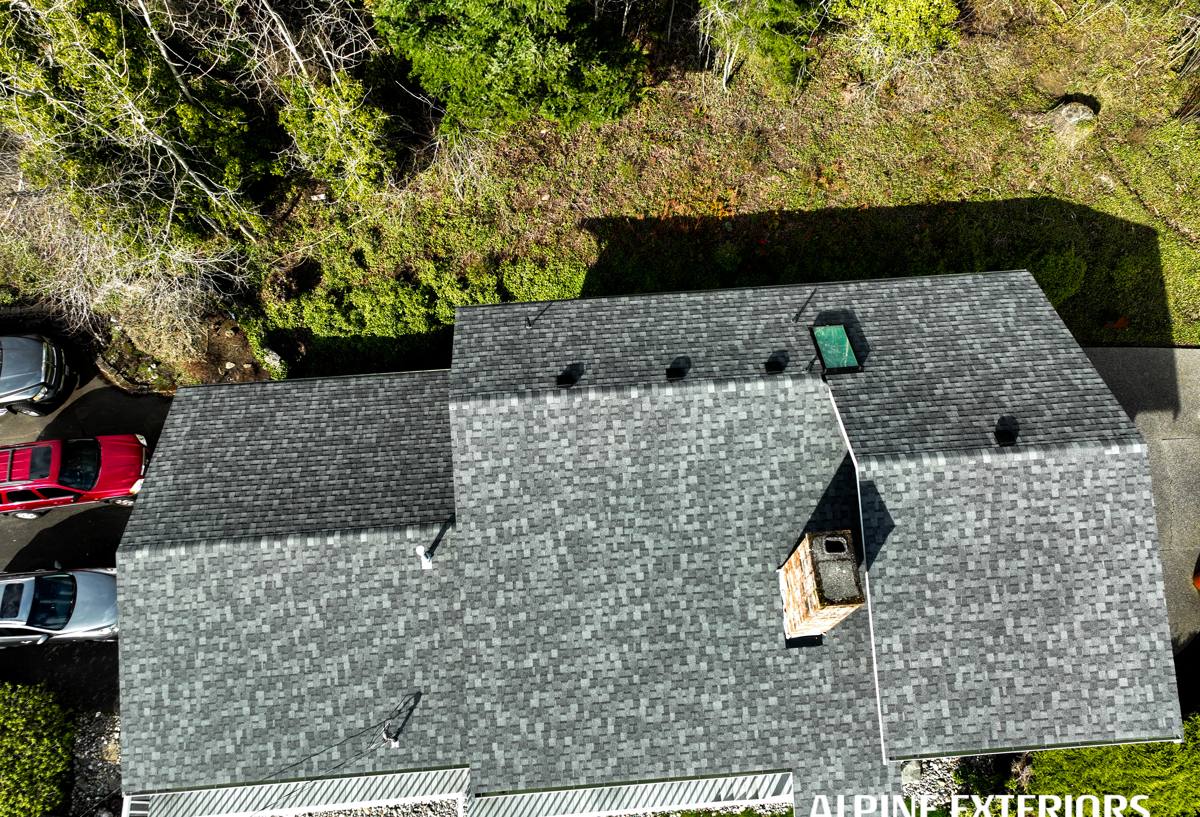
Signs a Kendall Roof Needs Replacement, Not Another Repair
Not every roof problem calls for a full replacement, and we'll tell you honestly when a repair is the smarter move. But there's a point where patching starts costing more than it saves. Watch for:
- Granule loss heavy enough that you're finding sand-like debris in gutters after every storm
- Shingles that are cupping, curling at the edges, or cracking when walked on
- Moss mats thick enough to hold water against the roof deck rather than shedding it
- Soft or spongy spots underfoot, which usually mean the decking underneath is compromised
- Daylight visible through the roof deck from inside the attic
- Multiple leak points, or a single leak that keeps returning after repair
- A roof that's already had two or more layers of shingles installed over time
If you're seeing two or more of these, especially combined with a roof that's past 18-20 years old, replacement is usually the more cost-effective path over the next decade than continuing to chase repairs.
Why Moss Damage Sneaks Up on Homeowners
Moss doesn't just look bad — it holds moisture directly against shingles and decking long after the rest of the roof has dried out. Over a long moss season, that constant low-grade moisture exposure breaks down the shingle mat and can rot decking underneath, all while the roof still looks "fine" from the ground. By the time moss damage shows up as a leak, the underlying wood is often already compromised.
What a Correct Roof Replacement Actually Involves
A roof replacement is more than swapping old shingles for new ones. Done correctly, it's a full system replacement, and skipping steps is exactly what leads to premature failures. Here's what should happen on every job:
- Full tear-off — removing all existing layers down to bare decking, not roofing over old material
- Deck inspection and repair — replacing any rotted, delaminated, or soft plywood or sheathing found underneath
- Ice and water shield at eaves, valleys, and vulnerable transitions where wind-driven rain is most likely to force its way under shingles
- Synthetic underlayment across the full roof as a secondary moisture barrier
- New flashing at all penetrations, chimneys, walls, and valleys — reused flashing is one of the most common sources of "mystery" leaks after a replacement
- Balanced ventilation — intake at the eaves and exhaust at the ridge, sized correctly for the attic volume
- Correct fastening per manufacturer spec, using corrosion-resistant fasteners appropriate for a coastal-influenced climate
Any one of these steps done wrong or skipped can undercut everything else about the job, no matter how good the shingles themselves are.
Choosing the Right Roofing Material for a Kendall Home
There's no single "best" roofing material — the right choice depends on your home's roof pitch, your budget, how long you plan to stay in the home, and how much maintenance you're realistically willing to do. Here's how the common options compare for this climate specifically:
| Material | Moss/Moisture Resistance | Typical Lifespan | Maintenance |
|---|---|---|---|
| Architectural asphalt shingles | Good with algae-resistant granules; still needs periodic moss removal | 25-30 years | Low to moderate |
| 3-tab asphalt shingles | Fair; more prone to moss buildup in shaded areas | 15-20 years | Moderate |
| Standing seam metal | Excellent; moss and moisture shed quickly off smooth panels | 40-50+ years | Low |
| Composite/synthetic shingle | Very good; resists moisture absorption better than wood | 30-50 years | Low |
We don't install cedar shake as a matter of professional standard for this climate. It's a beautiful material, but it demands a maintenance schedule — regular treatment, careful moss control, and eventual replacement of individual shakes — that most homeowners underestimate, and in a moss-heavy, high-moisture environment like this one, the upkeep burden and moisture sensitivity outweigh the look for most of our clients. We're happy to talk through it honestly if it's a material you're set on.
Our Roof Replacement Process
We keep the process straightforward and communicate at each step, since a roof replacement disrupts your home for a few days and you deserve to know what's happening and when.
- On-site inspection and estimate — we look at the current roof, attic ventilation, and any signs of deck damage before quoting anything
- Material selection — we walk through options based on your budget, home style, and how long you plan to own the home
- Scheduling around weather — we plan around Whatcom County's rain patterns to minimize the window your home is exposed
- Tear-off and deck inspection — old roofing comes off, decking is inspected and any damaged sections replaced before anything new goes on
- Underlayment, flashing, and ventilation installation — the parts of the job that don't show but determine how long the roof actually lasts
- New roofing installation — installed to manufacturer spec, not shortcuts
- Cleanup and final walkthrough — magnetic sweep for stray fasteners, full debris removal, and a walkthrough so you can see the finished work and ask questions
Ventilation: The Step That Gets Skipped Most Often
Attic ventilation doesn't get much attention because it's invisible once the job is done, but it's one of the biggest factors in how long a roof actually lasts in this climate. An attic that can't breathe properly traps moisture from the home below, which condenses on the underside of the decking during cold, damp stretches — and over a long wet season, that trapped moisture rots decking from the inside even on a roof with perfectly good shingles. Balanced intake and exhaust ventilation is a standard part of every replacement we do, not an upsell.
Why a Crew That Already Works This Area Matters
Roofing crews that don't regularly work Whatcom County's coastal-influenced climate tend to default to installation practices built for drier regions — lighter underlayment, standard fasteners instead of corrosion-resistant ones, ventilation ratios that don't account for how much moisture this area actually holds through the winter. Those shortcuts don't usually show up as a failure in year one. They show up as premature granule loss, soft decking, or a leak in year eight instead of year twenty.
A crew that regularly works in and around Kendall and Ferndale knows to size ventilation for the moisture load this climate produces, use fasteners and flashing that hold up to salt-influenced air, and plan installation timing around the rain patterns rather than fighting them. That familiarity doesn't cost you more — it just means fewer surprises down the road.
What to Ask Any Roofing Contractor Before You Hire
- Are you licensed and insured in Washington State, and can you provide proof?
- Will you do a full tear-off, or are you proposing to roof over existing layers?
- What underlayment and ice-and-water shield will you use, and where?
- How will you handle deck repair if rot is found once tear-off starts?
- What's your plan for attic ventilation on this specific roof?
- What does the manufacturer's warranty actually cover, and what voids it?
- Is the estimate written, itemized, and clear about what's included?
What Drives Roof Replacement Cost
Every roof is different, so we won't quote a number without seeing yours, but these are the main factors that move the price up or down:
| Factor | Why It Matters |
|---|---|
| Roof size and pitch | Steeper roofs take longer, need more safety setup, and use more material |
| Number of layers being removed | Tearing off two or three old layers costs more in labor and disposal than one |
| Deck condition | Rotted or delaminated sheathing found during tear-off adds material and labor |
| Material choice | Asphalt, composite, and metal carry different material and labor costs |
| Roof complexity | Valleys, dormers, skylights, and chimneys all add flashing work and time |
| Ventilation upgrades | Adding or correcting intake/exhaust venting where none exists properly |
We give you a written, itemized estimate before any work starts, so you know exactly what you're paying for and why — no vague lump-sum numbers.
If your roof is showing its age, or you'd just like an honest opinion on whether repair or replacement makes more sense for your Kendall home, we're glad to take a look. Fill out the form below for a free, no-pressure estimate — we'll tell you what we actually see, not just what sells the biggest job.