 Ferndale Exterior
 Window Installation in Kendall: Built for the Weather We Actually Get
Kendall sits in a part of Whatcom County where the weather doesn't do anything halfway. Wet seasons run long, moisture-laden marine air pushes in off the Salish Sea and settles into the low-lying, tree-covered lots that are common out here, and moss finds a foothold on anything that stays damp for more than a few days at a stretch. Windows take the brunt of this. A window that's installed correctly shrugs off years of that pattern. A window that's installed with shortcuts starts showing problems within a couple of wet seasons — and by the time you can see the damage from inside the house, there's usually more going on behind the trim than you'd guess.
This page is about window installation specifically for homes in and around Kendall — what the climate does to windows here, what a correct installation actually involves, and how we approach the job so it holds up.
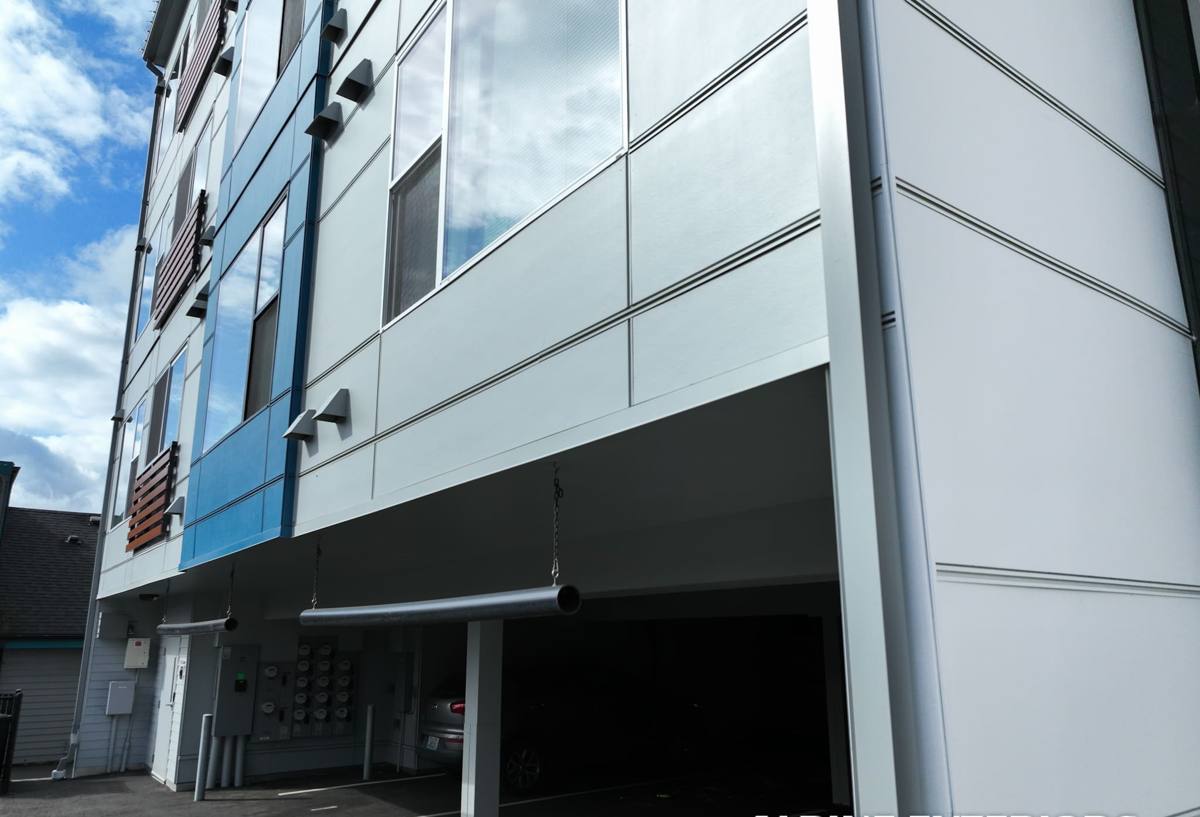
What Driving Rain and a Long Moss Season Do to Windows
Whatcom County doesn't get hurricane-force storms, but it gets something arguably harder on a house: months of steady, wind-driven rain that hits siding and window openings sideways, combined with long stretches where surfaces simply never fully dry out. That combination is what actually damages a home — not any single storm, but the cumulative effect of moisture that has nowhere to go.
Where the problems show up
- Wood trim and sills that stay damp long enough for rot to start, often hidden under paint that still looks fine
- Moss and algae growth around window frames and on north-facing walls that get less sun to dry them out
- Condensation between panes, a sign the seal has failed and the insulating gas has escaped
- Drafts and cold spots around the frame, especially noticeable during the region's cold snaps
- Soft or spongy framing discovered only when a window is finally pulled for replacement
None of this is unique to Kendall, but the combination of tree cover, rural lot drainage, and a genuinely long wet season makes it show up faster here than it would in a drier climate.
Signs Your Windows Are Losing the Battle
Most homeowners don't replace windows because they woke up and decided to — they replace them because something got hard to ignore. Common triggers we see in this area include persistent fogging between panes, windows that won't stay open or won't latch properly because the frame has shifted, visible daylight or airflow around the edge of the sash, and paint or caulk that keeps failing no matter how often it's touched up. Any one of these is worth a look. Several at once usually means the original installation — not just the window unit itself — is the underlying issue.
What a Correct Window Installation Actually Involves
The window unit itself is only part of the job. In a climate like this, the installation details matter as much as the product, because they determine whether water that inevitably reaches the wall gets managed or trapped.
The details that separate a proper install from a quick swap
- Sill pan flashing — a sloped, sealed pan under the window opening that directs any water that gets past the window back outside instead of into the wall cavity
- Proper flashing sequencing — house wrap and flashing tape layered shingle-style so water always sheds outward and downward, never into a seam
- Correct shimming and leveling — a window that's out of square stresses the seals and hardware from day one
- Continuous insulation around the frame — gaps packed with the right low-expansion material, not left hollow or overstuffed
- Weather-resistant exterior sealant — applied at the right joints only, since sealing the wrong spots can trap moisture instead of keeping it out
- Interior air sealing — closing the inside air gap, which matters as much for condensation control as the exterior work does for rain
Skip any one of these and the window can look perfect for a year or two while a problem builds behind the wall. This is the part of the job that doesn't show up in a sales brochure but is exactly what a long, wet climate tests.
Choosing the Right Window Material for a Kendall Home
There's no single "best" window material — the right choice depends on your home's exposure, your maintenance appetite, and your budget. Here's how the common options compare for a climate with heavy rain, humidity, and a long moss season:
| Material | Moisture Resistance | Maintenance | Typical Lifespan | Best For |
|---|---|---|---|---|
| Vinyl | Very good — won't rot, doesn't need paint | Low — occasional cleaning | 20–30 years | Most homes wanting solid performance at a reasonable cost |
| Fiberglass | Excellent — dimensionally stable in wet/dry cycles | Low | 30+ years | Exposed walls, larger openings, homeowners planning long-term |
| Wood-clad | Good on the exterior clad side, vulnerable at cut edges and joints | Higher — finish and seals need periodic attention | 20–30 years with upkeep | Homeowners prioritizing interior wood appearance who accept the upkeep |
| Aluminum | Poor thermal performance, prone to condensation | Moderate | 15–25 years | Rarely our recommendation for this climate |
We steer most Kendall homeowners toward vinyl or fiberglass, not because other materials are bad products, but because low-maintenance, moisture-stable materials are simply the more honest trade-off in a climate that gives wood and painted surfaces very little time to dry between rain events.
Glass matters too
Double-pane windows with a low-E coating are the practical baseline here. Triple-pane adds real value mainly for rooms facing prevailing weather or homes further from any windbreak — the extra pane improves insulation and reduces condensation risk, at added cost and weight on the frame and hardware.
Our Installation Process
The process is straightforward, but we don't shortcut any of these steps:
- On-site assessment — we check existing framing condition, look for hidden moisture or rot, and measure each opening individually rather than assuming uniformity
- Product selection — matched to the exposure of each wall, not a one-size-fits-all spec for the whole house
- Removal and inspection — old units come out carefully so we can inspect the sill and framing before anything new goes in; any rot found gets addressed before the new window does
- Flashing and sill pan installation — the step most often skipped elsewhere, done properly here every time
- Window setting, shimming, and fastening — leveled and squared before anything is sealed
- Insulation and sealing, interior and exterior
- Trim and finish work to match your home's existing exterior
- Final check — operation, seal, and weatherproofing confirmed before we consider the job done
Replacement vs. New Construction Openings
Most of our Kendall work is replacement — swapping failing windows in existing openings — but the approach differs depending on what we find. A retrofit into a sound, dry opening can often use an insert window that fits within the existing frame with less disruption. If we find rot, poor original flashing, or an opening that's out of square, a full-frame replacement is the honest recommendation, even though it's more involved, because it's the only way to actually fix the underlying water management rather than build a new window on top of an old problem.
Living With the Climate After Installation
A correct installation dramatically reduces upkeep, but no window in this region is entirely maintenance-free. A little seasonal attention keeps things performing as designed:
- Rinse pollen, moss spores, and debris off frames and tracks a couple of times a year so drainage weep holes don't clog
- Check exterior caulking annually for cracking or separation, especially after a hard freeze
- Keep gutters and downspouts clear so roof runoff isn't sheeting down over window heads
- Trim back vegetation that shades windows and keeps them damp longer than the surrounding wall
- Watch for soft spots in exterior trim, which are easier and cheaper to address early than after they've spread
Why Hire a Crew That Already Works in Kendall
Window installation isn't identical everywhere. A crew used to working in a dry climate can do a technically fine job and still miss the details that matter here — because they've never had to solve for months of sustained rain, tree cover that keeps walls shaded and damp, or the specific moss and moisture patterns that show up on this side of Whatcom County. Working this area regularly means we've seen how different exposures, lot layouts, and older home construction methods hold up over time, and we build the installation around that experience rather than a generic checklist.
Questions Worth Asking Before You Sign a Window Contract
- Will you install sill pan flashing on every window opening, not just the ones that clearly need it?
- What happens if you find rot or moisture damage once the old window is removed?
- What's the warranty on the installation labor, separate from the manufacturer's product warranty?
- Will the same crew handle removal, flashing, setting, and finish work, or is any of it subcontracted?
- Can you walk me through why you're recommending this specific material and glass package for my home?
A contractor who answers these clearly and specifically — rather than with a generic pitch — is usually one who's done the work enough times to know where it actually goes wrong.
If your windows in Kendall are fogging, drafting, sticking, or just showing their age, we're happy to take a look and give you a straightforward, no-pressure estimate. Use the form below to get started.