 Ferndale Exterior
 Lummi Island's Exposure Is a Step Up From the Mainland
Lummi Island sits out past the Whatcom County mainland, reachable only by a short ferry crossing, and that setting changes how hard the weather works on a home's exterior. Wrapped by open water on more sides than a typical Ferndale lot, island homes take a steadier, more direct version of the salt air, wind, and rain that the rest of the county deals with more occasionally. We work on the island regularly, and the siding decisions we make there reflect that difference rather than treating it like just another Ferndale address.
We install James Hardie fiber cement siding exclusively, and for Lummi Island specifically, it's the material we'd choose for our own home if we lived out there — not just the one we happen to sell.
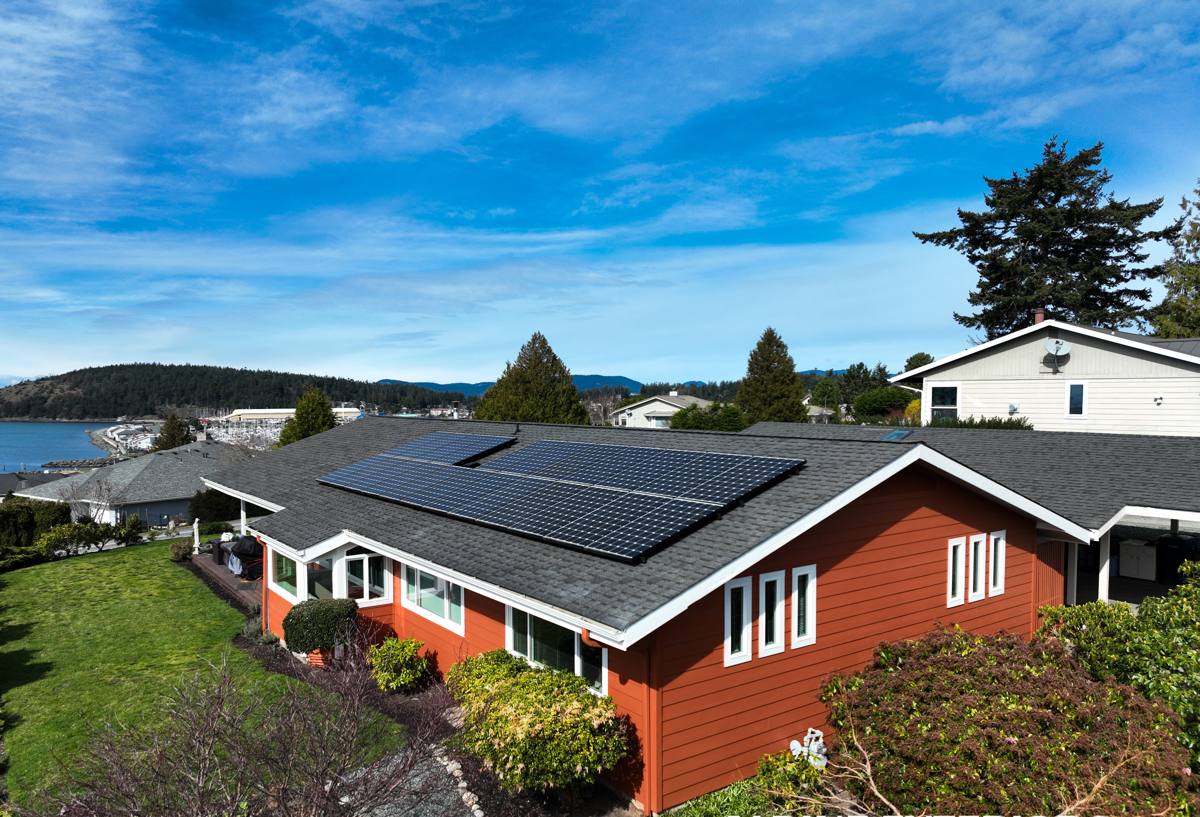
What Island Exposure Does to a Home's Exterior
Salt Air, Concentrated
The closer a home sits to open water, the more salt-laden moisture settles on every exterior surface, and most Lummi Island lots are closer to that exposure than the average mainland property. Salt air accelerates corrosion in fasteners and flashing, and it breaks down lower-grade paints and coatings faster than a drier, more sheltered site would. Siding and trim chosen without that in mind tend to show it early: rusting nail heads, chalky finishes, and paint that needs redoing well ahead of schedule.
Driving Rain With Nothing to Block It
Open water on multiple sides means fewer windbreaks, and wind is what turns ordinary rain into a sideways problem. Driving rain gets pushed into lap joints, trim seams, and any spot where flashing isn't doing its job — a tougher test than a simple rainfall total suggests. A siding system that would hold up fine on a sheltered inland lot can still fail on an exposed island wall because the water is attacking from the side, not just from above.
A Long Moss and Mildew Season
Tree cover, shaded elevations, and near-constant dampness add up to a moss and mildew season that runs longer on Lummi Island than in drier parts of Whatcom County. It shows up first on north-facing walls and anywhere sunlight and airflow are limited, and it's more than cosmetic — sustained organic growth holds moisture against the wall assembly, which is exactly the condition that leads to rot behind the siding if nobody catches it.
Why James Hardie Is What We Put on Lummi Island Homes
We used to install a wider range of siding products. We narrowed to one system after watching, year after year, which materials actually held up under this kind of sustained marine exposure and which ones quietly didn't. For an island property, the case for fiber cement is stronger than almost anywhere else we work.
- Non-combustible core: Fiber cement doesn't feed a fire the way wood-based or wood-derived siding can, which matters for household safety and often for insurance underwriting on a harder-to-reach property.
- Factory-applied ColorPlus finish: The color is baked on under controlled conditions instead of brushed on in the field, so it resists salt exposure and UV fading far longer than site-applied paint.
- Climate-engineered HZ5 formulation: Hardie's HZ5 product line is built for regions with heavy, sustained moisture exposure and freeze-thaw cycling, which is a close match for an island home taking wind and rain off open water.
- Dimensional stability: Fiber cement doesn't swell, cup, or warp the way engineered wood siding can after repeated wet-season moisture cycles, and that long moss season on the island only extends how many of those cycles a wall sees each year.
- Strong transferable warranty: Hardie backs its products with a real warranty structure, provided the installation follows spec, which gives a homeowner protection rather than a marketing line.
We don't install LP SmartSide, vinyl siding, Cemplank, Allura, primed spruce, or cedar. Every one of those has a place in the broader market and plenty of owners who are satisfied with it. But on an island property that takes this much sustained salt and moisture exposure, and where a callback means scheduling around a ferry instead of just driving over, we made a professional call that one system we trust completely is worth more than a cheaper option that quietly shifts maintenance risk back onto the homeowner a few years down the line.
What a Correct Installation Involves Out Here
Choosing James Hardie only gets an island home halfway there. The rest comes down to installation detail, and on a wall that takes more wind and more direct rain than most, cutting corners on any of these steps tends to show up faster than it would on a sheltered mainland lot.
- A drainage gap or rainscreen behind the siding so incidental moisture has somewhere to go instead of sitting against the wall
- Corrosion-resistant fasteners driven to Hardie's spec, not just whatever was on the truck that day
- Flashing at every window, door, and penetration that actually sheds water, rather than relying on caulk to make up for a missing flashing detail
- Joints lapped and sealed correctly instead of butted tight with no room for the material to move
- Factory-cut edges field-touched with matching paint so the cement core isn't left exposed at trim and corners
- Proper clearance from grade, decks, and rooflines so the bottom edge of the siding isn't sitting in standing water or leaf litter
How Fiber Cement Compares for an Island Property
| Material | How It Handles Salt Air and Moisture | Maintenance Over Time |
|---|---|---|
| James Hardie fiber cement | Doesn't absorb moisture into its core; factory finish resists salt and UV | Occasional rinse and a caulk/flashing check; repainting isn't on the usual schedule |
| Vinyl siding | Can become brittle and fade faster under sustained salt and UV exposure | Low upkeep but limited repair options once it cracks or discolors |
| Cedar or other wood siding | Absorbs moisture readily; needs a sound, well-maintained finish to hold up | Regular refinishing and vigilant moisture management, more so in a long moss season |
| Engineered wood (LP SmartSide type) | Wood-based core can swell or deteriorate if moisture gets past the coating | Coating integrity has to be watched closely; edge and seam failures are the usual entry point |
The differences in that table matter more on Lummi Island than they would on a calmer inland lot, simply because the island delivers more of every stressor: more salt, more wind-driven rain, and more months a year where moss and mildew have the conditions to take hold.
Our Process for a Lummi Island Project
Working on the island adds a logistics layer that a mainland Ferndale job doesn't have. We plan material deliveries and crew scheduling around the ferry rather than assuming we can send an extra truck over on short notice, and we build tear-off, haul-off, and staging into the timeline up front so a wait for a ferry slot doesn't turn into wasted days standing around. We also plan the work itself around the weather more carefully than we would inland — an open wall on an exposed lot needs a realistic dry window, not just a hopeful one, before it gets closed back up.
Repair vs. Full Re-Side
Not every siding issue on an island home calls for a full tear-off. Storm-damaged sections or isolated trim failures around a window can often be repaired and matched into existing Hardie siding. But if water has been tracking behind the wall for a while, or the home still has an older, non-Hardie product nearing the end of its life, patching it usually just delays a bigger job while hidden rot keeps spreading underneath. We'll tell you which situation you're actually in.
Living With a Long Moss Season
You can't out-clean a Lummi Island moss season, but you can keep it from turning into a moisture problem. A few habits make a real difference over the life of the siding:
- Rinse siding down at least once a year, more often on shaded or north-facing walls
- Keep gutters and downspouts clear so overflow isn't running down the siding face
- Trim back trees and shrubs that are blocking sun and airflow along a wall
- Have caulking and flashing checked annually, since that's usually where trapped moisture gets in
- Skip high-pressure washing directly against siding joints and trim, which can force water in rather than out
- Watch north-facing and heavily shaded elevations closest, since that's where moss returns fastest
Why a Crew That Already Works Lummi Island Matters
A contractor who works this island regularly understands the ferry schedule, the realistic weather windows, and how salt air and moss behave on real homes here over a full year, not just how a product performs on a spec sheet. That experience shapes decisions on install day: which wall orientations stay wet the longest, where extra flashing attention actually pays off, and how to plan the job so a callback doesn't mean coordinating another ferry trip for both the crew and the homeowner. A crew that treats an island job like a slightly harder version of a mainland job, instead of planning for the ferry and the exposure from the start, usually ends up costing the homeowner time, money, or both.
The Warranty Behind the Work
James Hardie backs its siding with a long, non-prorated limited warranty on the material itself, and its ColorPlus factory finish carries its own separate finish warranty covering fading and chipping under normal conditions. Both are transferable if the home changes hands, which matters on an island where buyers often ask hard questions about exterior condition before closing. None of that protection means much if the installation doesn't follow Hardie's spec, though, which is exactly why we treat correct fastening, flashing, and clearance as non-negotiable rather than optional extras.
If your Lummi Island home needs new siding, a repair, or just an honest look at what's happening behind an aging wall, we're glad to come take a look. Reach out using the form below to schedule a free, no-pressure estimate.