 Ferndale Exterior
 Roof Repair Built for Lummi Island Conditions
Lummi Island sits out in the water off Whatcom County, and that location is exactly what makes roofs here behave differently than roofs ten miles inland. Homes get salt-laden air coming off the water, wind-driven rain that finds every weak seam, and a moss season that can run most of the year in the shaded, damp spots under trees. A roof repair that works fine in a dry inland neighborhood can fail fast out here if it doesn't account for that exposure. We work on Lummi Island regularly, and this page covers what we actually look at and do when we're asked to repair a roof on the island — not a generic repair pitch.
Roof repair, done right, is about stopping water intrusion at its actual source and restoring the roof's ability to shed water, wind, and moisture the way it was designed to. It is not the same job as a full re-roof, and it's not just slapping sealant over a stain. On a property exposed to Puget Sound weather, a repair has to hold up to conditions that are more corrosive and more consistently wet than most of the county sees.
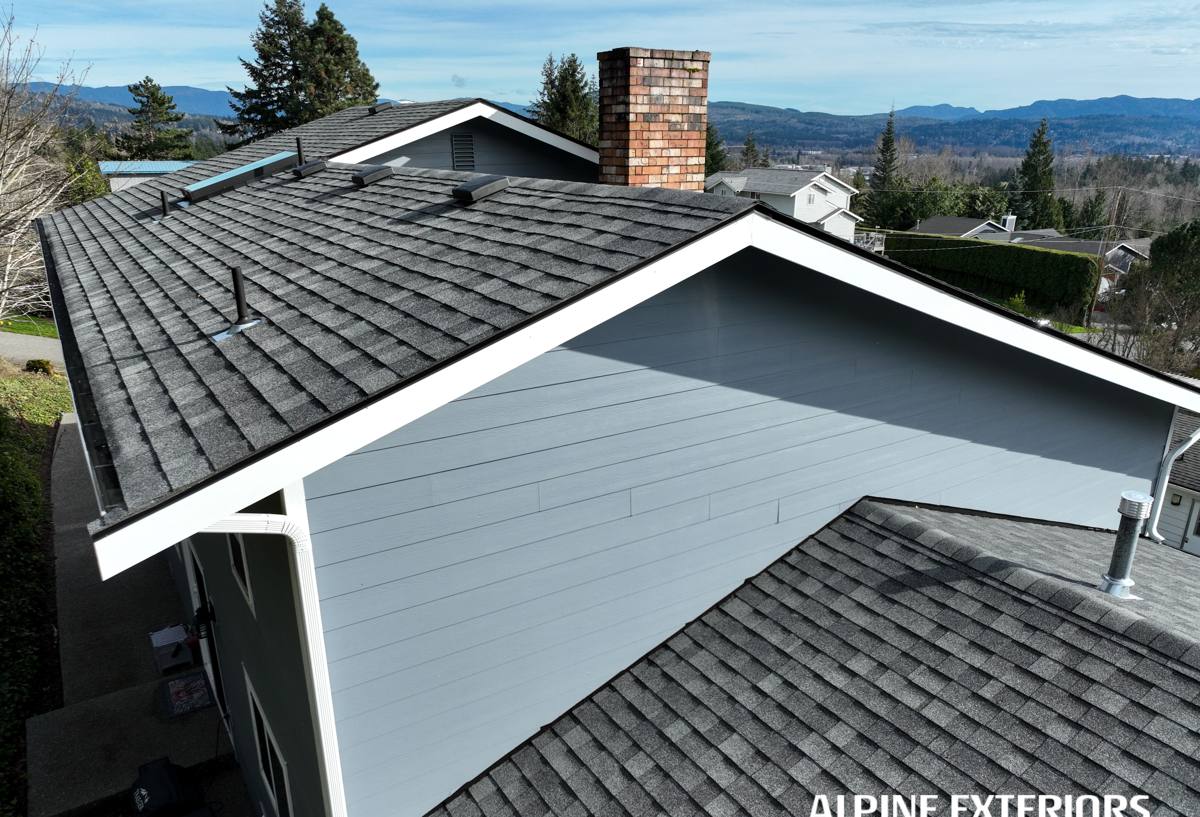
What Salt Air, Rain, and Moss Actually Do to a Roof
Salt Air and Corrosion
Metal fasteners, flashing, and any exposed metal roofing components are the first things salt air goes after. Galvanized nails and cheaper flashing can start to corrode years before they would inland, and once a fastener weakens, the shingle or panel it's holding loses its grip in the next windstorm. This is one of the most common root causes we find when a roof develops a leak that "came out of nowhere" — it didn't come out of nowhere, it was a slowly failing fastener or flashing seam.
Driving Rain and Wind
Rain that comes in sideways off the water doesn't behave like rain falling straight down. It gets pushed up under shingle tabs, around chimney flashing, and into any gap at a roof-to-wall transition. Repairs that only address the surface — without checking whether wind-driven rain can get underneath — tend to come back as the same leak a season later.
Moss and Moisture Retention
Shaded roof sections, north-facing slopes, and areas under tree cover hold moisture longer. Moss doesn't just look bad — it holds water against the roofing material, lifts shingle edges as it grows, and can work its way into seams over time. A roof with a heavy moss buildup often has moisture damage underneath that isn't visible until the moss is cleared and the surface is actually inspected.
Signs a Lummi Island Roof Needs Repair Now
Most roof repairs get called in too late — after a leak has already stained a ceiling or soaked insulation. Catching these signs earlier keeps the job smaller and cheaper.
- Granules collecting in gutters or at downspout outlets (a sign shingles are wearing thin)
- Curling, cupping, or lifted shingle edges, especially on shaded or north-facing slopes
- Moss or dark streaking concentrated in one section rather than spread evenly
- Rust staining or visible corrosion around flashing, vents, or metal roofing panels
- Soft spots when walking the roof, or sagging visible from the ground
- Daylight visible through the attic roof deck, or damp insulation near the eaves
- Interior ceiling stains, especially ones that appear or worsen after wind-driven storms
Any one of these on its own might be minor. Several together, or anything near a chimney, skylight, or roof valley, usually means active water intrusion that's worth having looked at before the next storm cycle.
What a Correct Repair Actually Involves
A repair that's done properly starts with finding the real source of the problem, not just the spot where water showed up inside the house. Water travels along the underside of roof decking before it drips, so a leak over a bedroom closet might actually originate several feet away near a vent pipe or valley.
Diagnosis First
We inspect the roof surface, the flashing details, and — when accessible — the attic or roof deck from underneath to trace the water path. Guessing at a repair location wastes the homeowner's money and doesn't fix anything.
Flashing and Transitions
Most leaks on this coastline trace back to flashing: around chimneys, skylights, vent pipes, and anywhere two roof planes meet. On a salt-exposed roof, we pay close attention to the condition of the flashing metal itself, not just whether it's sealed, since corroded flashing needs replacing rather than resealing.
Matching Materials Correctly
A repair should use materials compatible with what's already on the roof — same shingle profile and weight where possible, or a flashing detail that matches the existing roofline. Mismatched materials can create new water paths instead of closing old ones.
Fasteners Rated for the Exposure
Given how fast standard fasteners corrode in salt air here, we use fastener and flashing materials suited to coastal exposure rather than the cheapest available option. It costs a little more upfront and saves a callback in a year or two.
Ventilation Check
Poor attic ventilation traps moisture, which accelerates moss growth and deck rot from the inside. Part of a thorough repair visit includes checking that ridge, soffit, or gable vents are clear and functioning, since a repair on a roof with a moisture problem underneath won't hold long-term.
Repair Approach by Roofing Material
The right repair technique depends heavily on what's already on the roof. Here's how our approach differs across the material types most common in this area.
| Roofing Type | Common Failure Point Here | Repair Approach |
|---|---|---|
| Asphalt Composition Shingle | Granule loss, curling from moisture cycling, wind lift at edges | Replace damaged shingles in matched courses, reseal tabs, check underlayment condition |
| Metal Roofing / Panels | Fastener corrosion, sealant failure at seams and penetrations | Replace corroded fasteners with coastal-rated hardware, re-seal seams with compatible sealant |
| Wood Shake or Shingle | Moss retention, splitting, moisture absorption in shaded areas | Remove and replace split or moss-damaged pieces, improve airflow around affected area |
| Flat or Low-Slope Sections | Ponding water, membrane seam separation | Patch or reseal seams, correct drainage where ponding is the underlying cause |
Our Roof Repair Process on Lummi Island
Working on an island community means being upfront about logistics and not treating the job any differently than one closer to our home base in Ferndale.
1. Scheduling With Ferry Access in Mind
Lummi Island is reached by ferry, so we build that into scheduling from the start — arriving with everything needed for the visit and coordinating timing around ferry sailings so the homeowner isn't waiting around for a crew that's stuck on the mainland side.
2. On-Site Inspection
We walk the roof (weather permitting) and inspect from the attic side where accessible, documenting the actual condition rather than assuming based on the age of the roof alone.
3. Clear, Honest Estimate
We explain what we found, what's causing it, and what it will take to fix — including whether a repair is genuinely the right call or whether the roof is at a point where a repair would just be a short-term patch on a bigger problem.
4. The Repair Itself
We complete the work using materials suited for coastal exposure, matched to the existing roof where possible, and we clean up the site fully before leaving — no shingle scraps or old flashing left in the yard or gutters.
5. Follow-Up
If a repair is part of a larger issue we flagged, we're straightforward about what to watch for and when it might make sense to revisit — we don't disappear after the invoice.
What Roof Repair Typically Costs
Costs vary based on the scope of damage, roof pitch, material type, and how the repair site is accessed. These are general ranges to help with planning, not a quote — every roof is different once we're actually up there looking at it.
| Repair Scope | What Drives the Cost | General Range |
|---|---|---|
| Minor spot repair (small shingle section, single flashing point) | Material match, roof height, accessibility | Lower end, often a single visit |
| Moderate repair (multiple areas, valley or chimney flashing) | Extent of water damage found, underlayment condition | Mid-range, may require a follow-up visit |
| Extensive repair (widespread moss damage, deck repair needed) | Roof deck condition, ventilation corrections, material availability | Higher end, approaches re-roof territory in some cases |
If we find that a full re-roof would serve the home better than an ongoing series of repairs, we'll say so directly rather than stretching out repair visits on a roof that's genuinely at end of life.
Between-Repair Maintenance for Island Homes
Given how much salt air and moss shorten the useful life of a repair, a bit of regular upkeep goes a long way toward protecting the work once it's done.
- Clear gutters and downspouts at least twice a year so water isn't backing up under roof edges
- Trim back tree branches that keep sections of the roof shaded and damp
- Have moss treated or removed before it builds up thick enough to lift shingles
- Rinse salt residue off metal roofing and flashing periodically if the home is close to the shoreline
- Check attic ventilation isn't blocked by insulation or debris
- Walk the roofline visually after major windstorms for lifted or missing shingles
- Schedule a professional inspection every year or two, even without an obvious leak
Why a Crew That Already Works Lummi Island Matters
A repair on Lummi Island isn't just a smaller version of a mainland job — it involves ferry-dependent scheduling, weather windows that can shift quickly out on the water, and roofing conditions shaped by direct exposure to the Sound. A contractor unfamiliar with the island can underestimate travel time, show up without the right materials for coastal exposure, or misdiagnose a moss-related moisture issue as something simpler than it is. We're based in Ferndale and serve Whatcom County broadly, including Lummi Island, so we already account for these realities when we schedule and price a job rather than treating the island as an afterthought.
If your roof is showing early warning signs, or you've already got an active leak, we're glad to take a look and give you an honest read on what it needs. Reach out for a free, no-pressure estimate using the form below.