 Ferndale Exterior
 Living on the Water Takes a Toll on Siding
Homes in and around Lummi Nation sit close to Bellingham Bay and Hale Passage, which means they take on a version of Pacific Northwest weather that's harder on exterior materials than what you'd see a few miles inland. Salt-laden air moves off the water and settles on siding, trim, and fasteners year-round. Add Whatcom County's long wet season, driving rain that comes in sideways during winter storms, and a moss season that can stretch from fall through spring in shaded or north-facing areas, and you've got a climate that will find every weakness in a siding product or an installation shortcut within a few years, not a few decades.
This isn't a page about siding in general. It's about what fiber cement siding specifically needs to do — and what a contractor specifically needs to get right — on a Lummi Nation home. The material matters. The installation details matter more.
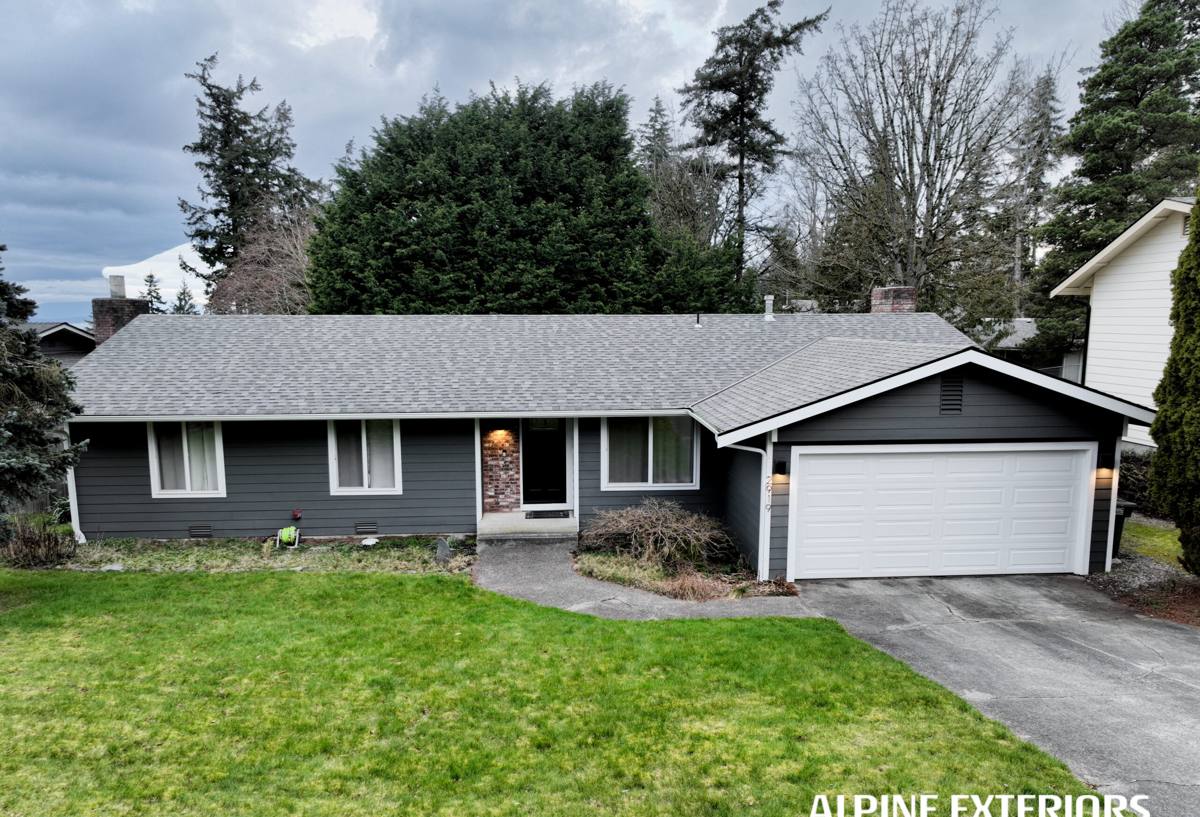
What Salt Air, Rain, and Moss Actually Do to a Wall
Salt Air
Airborne salt is corrosive to metal and abrasive to finishes over time. Fasteners, flashing, and trim caps that aren't rated for coastal exposure will show rust streaks and pitting well before an inland install would. It also accelerates the breakdown of lower-grade paint finishes, which is one of the practical reasons factory-applied finishes hold up better here than field-applied paint.
Driving Rain
Wind-driven rain doesn't just fall on a wall, it gets pushed into every gap, seam, and fastener hole it can find. Siding that relies on caulk alone to keep water out, rather than proper flashing, house wrap, and drainage planes, will eventually let moisture behind the cladding. Once that happens, the sheathing and framing behind it are at risk, even if the siding itself still looks fine from the street.
Moss and Sustained Moisture
Shaded lots, tree cover, and north-facing walls near the water stay damp longer between storms. That extended dampness is exactly what moss and algae need to establish. Moss holds moisture against a wall surface, which is a slow but real problem for any siding material, and it's unsightly enough that it affects how a home presents itself, especially for owners who want their property looking cared for.
What Correct Fiber Cement Installation Looks Like Here
Fiber cement siding is only as good as the assembly behind it. In a coastal, high-moisture climate like this one, a correct installation includes several things that are easy to skip and hard to notice once the siding is up:
- A continuous, properly lapped weather-resistive barrier behind the siding, not just wherever the sheathing has gaps
- Rain-screen or drainage gap detailing where the design calls for it, so any moisture that does get behind the cladding can drain and dry
- Corrosion-resistant fasteners and flashing appropriate for a marine-influenced environment, not standard interior-grade hardware
- Correct flashing at every window, door, and roofline penetration, installed in the right shingle-lap order before the siding goes on
- Manufacturer-specified fastener spacing, clearance from grade and roofing, and joint treatment at every seam
- Factory-finished panels and planks wherever possible, so the protective coating isn't dependent on field paint quality or weather conditions on install day
None of this is exotic. It's the difference between an installation that's built to the manufacturer's specification and one that just looks right when the crew drives away. The first one holds up through twenty Whatcom County winters. The second one starts showing problems in five.
Why We Only Install James Hardie
We install James Hardie fiber cement siding exclusively. We don't install LP SmartSide, vinyl, Cemplank, Allura, primed spruce, or cedar, and that's a deliberate standard, not an oversight. Each of those products has legitimate uses and reasonable arguments in its favor. Here's the honest version of why we've chosen not to put them on homes we're responsible for:
| Product | What it does well | Why we don't install it |
|---|---|---|
| Vinyl siding | Low upfront cost, no painting | Softens and warps in direct heat, cracks in impact, and offers little protection against fire — a real consideration during PNW wildfire smoke seasons |
| LP SmartSide | Engineered wood, lighter and easier to install than fiber cement | Wood-based core is more vulnerable to sustained moisture exposure over decades, which is a specific concern in a wet, salt-air climate |
| Cemplank / Allura | Fiber cement alternatives at a lower price point | Thinner factory finish systems and shorter, less established warranty backing compared to Hardie's ColorPlus and product warranties |
| Primed spruce / cedar | Natural look, traditional appeal | Requires ongoing field painting and sealing to stay protected — high long-term maintenance burden in a wet, moss-prone climate |
James Hardie's fiber cement is non-combustible, which matters more each year as fire risk becomes part of the conversation even on the wet side of the state. Its HZ5 product line is engineered for climates with freeze-thaw cycling and sustained moisture, which describes Whatcom County well. The ColorPlus factory finish system is baked on under controlled conditions rather than applied on a job site at the mercy of that day's weather, and it carries a stronger, clearly transferable warranty structure than most of the alternatives above. When it's installed to spec, it's the product we're comfortable standing behind for the long haul.
Our Process, From Estimate to Finished Job
1. On-Site Assessment
We walk the exterior and look specifically at moisture exposure points: north- and shade-facing walls, areas with visible moss or algae, existing caulk and flashing condition, and any soft spots that suggest trapped water behind the current siding.
2. Removal and Substrate Check
Old siding comes off in sections so we can inspect the sheathing underneath before it's covered again. Any water-damaged sheathing gets addressed before new material goes up — covering a compromised wall with new siding just hides the problem.
3. Weather Barrier and Flashing
A continuous weather-resistive barrier goes on, properly lapped, with flashing installed in correct order at every window, door, and penetration. This step is invisible once the job is done, which is exactly why it's the step that separates a durable install from one that fails early.
4. Siding Installation
James Hardie planks or panels go up per manufacturer fastener spacing and clearance specs, with corrosion-resistant fasteners appropriate for a coastal-influenced environment.
5. Trim, Caulking, and Final Walkthrough
Trim and joints are sealed with products rated for the exposure, and we walk the finished exterior with the homeowner before calling the job complete.
Picking the Right Hardie Line and Finish
James Hardie makes several product lines and engineers them by climate zone. For homes in this part of Whatcom County, that generally means specifying the HZ5 line, which is built for regions with real moisture exposure and temperature swings rather than the milder HZ10 line used in the Southeast. Beyond the product line, the ColorPlus finish options matter for a coastal setting because the factory-applied coating is more consistent in its protection than repeated field painting, and it reduces how often a homeowner needs to think about repainting at all.
We'll walk through lap versus panel profiles, trim options, and color choices as part of the estimate, based on the home's exposure and the look the owner wants — there's no single right answer for every house.
Keeping Moss and Salt Air From Winning Long-Term
Even correctly installed siding benefits from basic upkeep in this climate. A short annual routine goes a long way:
- Rinse siding gently once or twice a year, especially on shaded or north-facing walls where moss and algae take hold first
- Keep gutters clear so overflow isn't running down the siding face during heavy rain
- Trim back vegetation and tree limbs that keep a wall section shaded and damp
- Check caulking at trim and penetrations every couple of years and refresh it if it's cracking or pulling away
- Watch for any soft or discolored spots near the base of the wall, which can signal moisture getting in at grade level
None of this is heavy maintenance. It's closer to the kind of routine upkeep any home near the water needs, and it's far less than what a wood-based or vinyl product typically demands in the same conditions.
Why a Crew That Already Works Lummi Nation Matters
Coastal exposure isn't uniform even within a small area. A wall facing open water sees different wind-driven rain and salt exposure than one tucked behind a treeline a quarter mile inland, and a contractor who works this specific stretch of coastline regularly has a feel for those differences before they ever pull out a tape measure. That local familiarity shows up in small decisions: which walls get extra attention on flashing and drainage detailing, which fastener and hardware choices hold up best given the exposure, and how a home's siding is likely to age based on its orientation and surroundings. It also means fewer surprises during the job itself, because a crew that's worked the area knows what access, weather windows, and site conditions typically look like out here.
What It Costs — and What Drives the Number
Every home is different, but the factors that move the price on a fiber cement siding job are consistent. We won't quote a number without seeing the house, but here's what typically drives the estimate up or down:
| Factor | Why it affects cost |
|---|---|
| Extent of existing moisture damage | Any sheathing or framing repair needed before new siding goes on adds labor and material |
| Home size and wall complexity | More corners, dormers, and trim details mean more cutting, fitting, and flashing work |
| Siding profile and finish selection | Lap versus panel, plank width, and ColorPlus color all carry different material costs |
| Accessibility | Steep grades, limited driveway access, or multi-story walls affect staging and labor time |
| Removal and disposal | Tear-off and haul-away of old siding is priced separately from new material and labor |
The most reliable way to get an accurate number is a walkthrough — anything else is a guess, and we'd rather give you a real figure than a placeholder one.
If you're thinking about siding for a home in or around Lummi Nation, we're glad to come take a look and walk you through what we'd recommend and why. There's no pressure and no obligation — just a straight assessment and a real estimate based on your home.