 Ferndale Exterior
 Roofing Built for Where Lummi Nation Actually Sits
Homes in and around Lummi Nation face a combination most inland Whatcom County properties don't deal with: near-constant marine air off Bellingham Bay and the Strait of Georgia, wind-driven rain that comes in sideways off the water, and a moss season that can run eight or nine months out of the year in shaded, north-facing sections of a roof. Any one of these on its own is manageable. Together, over ten or fifteen years, they shorten the life of a roof that wasn't built with this specific exposure in mind.
This page is about roof replacement — not repair, not a quick patch — for homes in this area. If you're looking at a roof that's past the point where another repair makes sense, here's what actually matters for a job done right here, not a generic roof job dropped into a coastal community.
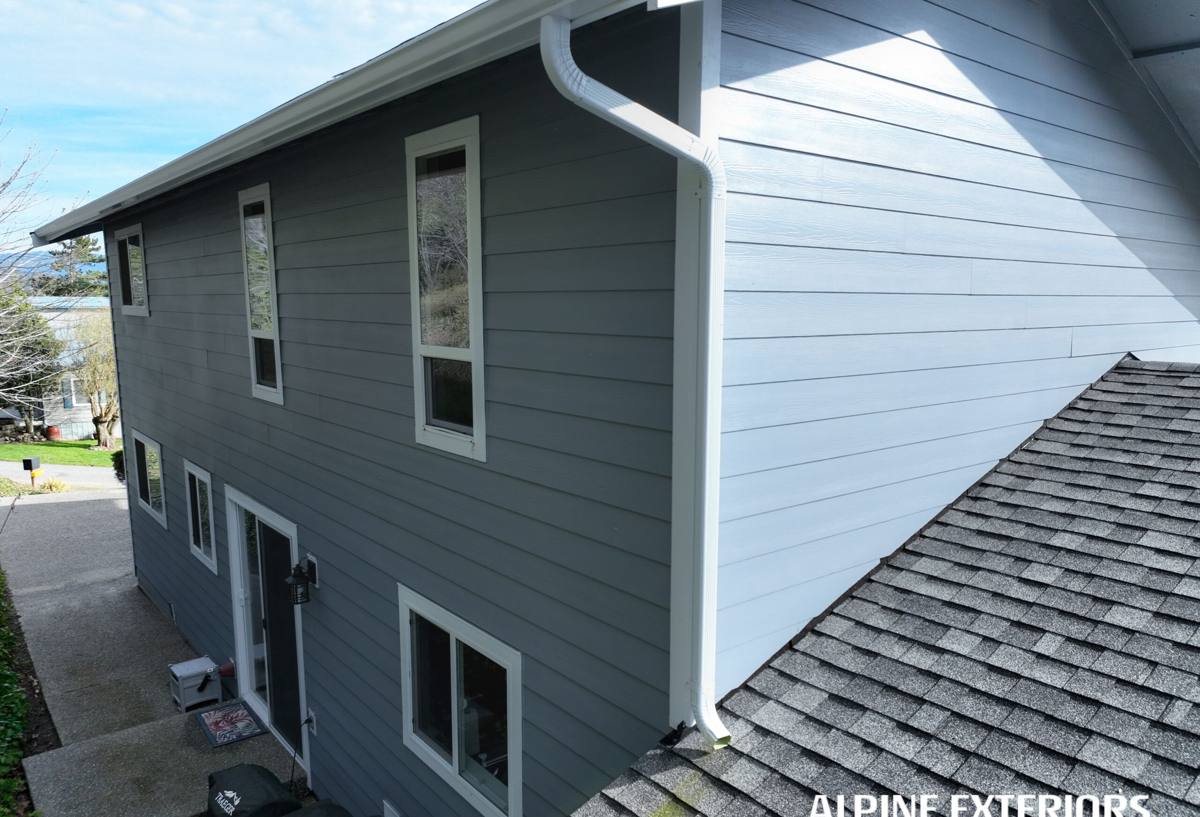
What Salt Air, Rain, and Moss Actually Do to a Roof Over Time
Salt Air
Airborne salt from the water doesn't just sit on the surface — it works into metal fasteners, flashing, and any exposed hardware. Galvanized fasteners that would last decades inland can start showing rust streaks and pinholing years earlier this close to the water. Once a fastener corrodes, it loses grip, and that's how you get lifted shingles or metal panels working loose in wind.
Driving Rain
Wind off the water doesn't just fall straight down — it drives rain sideways and upward under laps, around penetrations, and into any gap that would stay dry in a calmer climate. This is why underlayment choice and how flashing is installed matter more here than the shingle brand on top. A roof that's technically "up to code" but assembled for a calm inland lot will leak here long before it should.
Moss
Shaded roof sections — north slopes, areas under overhanging trees, valleys that stay damp — grow moss almost year-round in this climate. Moss isn't just cosmetic. It holds moisture against the roofing material, lifts shingle edges as it grows under them, and channels water where it isn't supposed to go. A roof with heavy, established moss has usually been holding moisture underneath it for longer than the surface growth suggests.
Signs You're Looking at Replacement, Not Another Repair
- Granule loss heavy enough that you can see bare, shiny patches on asphalt shingles, especially on south and west-facing slopes
- Shingles that are cupping, curling at the edges, or cracking when you walk the roof
- Moss that's established enough to have raised or separated shingle tabs, not just surface staining
- Flashing around chimneys, vents, or wall intersections that's rusted, separated, or was never properly stepped in the first place
- Soft spots in the decking, visible sagging, or daylight through the attic sheathing
- Interior water stains that reappear after repairs, or staining in more than one spot
- A roof that's 20+ years old and has already had multiple patch repairs — at that point, patching is usually just deferring the same cost with added labor
If you're only seeing one or two of these, a repair may still be the right call. Replacement makes sense when the underlying materials — decking, underlayment, flashing — are compromised broadly enough that patching one area just shifts the problem to the next.
What a Correct Roof Replacement Involves Here
A roof replacement in this climate is more than swapping old shingles for new ones. The parts that don't show — underlayment, flashing detail, ventilation — are what determine whether the new roof actually outperforms the old one in salt air and driving rain.
| Component | Why it matters in this climate |
|---|---|
| Underlayment | A synthetic or self-adhered underlayment rated for high-wind, wind-driven-rain exposure gives a second line of defense when water gets past the surface layer — which it will, eventually, in this environment |
| Flashing | Properly stepped and sealed flashing at chimneys, walls, and valleys is where most leaks start; corrosion-resistant materials matter more here than inland |
| Fasteners | Corrosion-resistant fasteners rated for coastal or high-moisture exposure hold longer against salt air than standard galvanized |
| Ventilation | Balanced intake and exhaust ventilation keeps moisture from condensing in the attic, which matters when the roof deck is already dealing with damp air from outside |
| Ice and water shield | Applied at eaves, valleys, and penetrations to stop wind-driven rain from working backward under the roofing material |
Skipping any one of these to save on the upfront number is usually where a "new roof" ends up with the same leak complaints five years later.
Our Roof Replacement Process
- On-site inspection. We walk the roof, check the decking condition where accessible, look at existing ventilation, and note any areas with heavy moss buildup or repeated past repairs.
- Honest scope and estimate. We tell you what we're seeing — including if a repair is genuinely a reasonable option instead of a full replacement — and give you a written estimate before any work starts.
- Tear-off and deck inspection. Once old roofing is removed, we inspect the decking itself. Any soft or water-damaged sheathing gets flagged and replaced before new roofing goes on — this isn't optional, it's the foundation of the whole job.
- Underlayment and flashing installation. This is where the climate-specific work happens — proper underlayment coverage, correctly stepped flashing, and ice and water shield at vulnerable points.
- Roofing material installation. Installed to manufacturer spec and to the fastening pattern appropriate for wind exposure this close to the water.
- Ventilation check. We confirm intake and exhaust are balanced so the new roof isn't trapping moisture from day one.
- Final walkthrough and cleanup. We walk the finished roof with you, and the site gets cleared of debris and nails before we call it done.
Choosing a Roofing Material for This Climate
There's no single "best" material for every home — it depends on your roof's pitch, your budget, and how much maintenance you want to take on. Here's how the common options actually perform in salt air, heavy rain, and moss conditions.
| Material | How it holds up here | Maintenance consideration |
|---|---|---|
| Architectural asphalt shingles | Solid performance when installed with proper underlayment and corrosion-resistant fasteners; moss-resistant granule options help but don't eliminate the need for cleaning | Moderate — periodic moss removal on shaded slopes extends life meaningfully |
| Metal roofing | Sheds rain and moss buildup well due to smooth surface and slope, but fasteners and cut edges need corrosion-resistant treatment near the coast | Low — occasional inspection of fastener and seam condition |
| Cedar shake | Traditional look, but sustained damp conditions and moss pressure in this climate mean it requires closer, more frequent upkeep than other options | High — regular treatment and moss management needed to avoid premature decay |
| Composite/synthetic shingles | Good moisture and moss resistance with lower maintenance than natural materials, at a higher material cost | Low to moderate |
We'll walk you through which option fits your roof's exposure and your maintenance appetite rather than pushing one material across every job — a steep, shaded north slope and a sun-exposed south slope on the same house can reasonably call for different thinking, even if the final material ends up the same.
Why Hiring a Crew That Already Works This Area Matters
A roof replacement isn't just about the materials — it's about whether the crew installing them understands what this specific stretch of Whatcom County does to a roof over time. A contractor who mostly works drier, inland areas may not default to coastal-grade fasteners, may under-spec the underlayment, or may not think through moss-prone shaded areas as a design consideration rather than an afterthought.
Working in and around Lummi Nation and the greater Ferndale area regularly means we're not guessing at how a roof here ages — we're accounting for it in the materials and installation details from the start, not reacting to problems after they show up.
After Replacement: What Keeps a New Roof Performing
- Clear debris — leaves, needles, branches — from valleys and gutters at least twice a year, more often under overhanging trees
- Have moss growth addressed early, before it has a chance to lift shingle edges or hold moisture against the surface
- Keep gutters and downspouts flowing freely so water isn't backing up under the roof edge during heavy rain
- Trim back branches that shade roof sections and keep them perpetually damp
- Get an occasional visual check after major windstorms, since that's when flashing and fastener issues tend to show up first
- Address any small leak or staining right away — in this climate, small issues don't stay small for long
A properly installed roof in this climate can go a long time between major issues, but "install it right and forget it forever" isn't realistic anywhere near the water — a little seasonal attention protects the investment.
Get a Straight Answer on Your Roof
If you're dealing with a roof that's showing its age — moss that keeps coming back, granule loss, flashing that's seen better days — we're happy to come take an honest look. We'll tell you if replacement is actually the right call or if you've still got some life left in what's up there. Reach out below for a free, no-pressure estimate.