 Ferndale Exterior
 Asphalt Shingle Roofing Built for Lynden's Wet, Mossy Winters
Lynden sits in one of the wetter corners of Washington, and that shows up on roofs faster than most homeowners expect. Marine air moving inland off the Salish Sea and Bellingham Bay keeps humidity high through much of the year, and the surrounding farmland and tree cover mean roofs stay shaded and damp longer than they would in a drier climate. Add in driving winter rain that comes in sideways during a good storm, and a moss season that can run from early fall through late spring, and you have a roofing environment that punishes shortcuts. An asphalt shingle roof installed the same way you'd install one in Spokane or Yakima will not hold up the same way here.
We're based in Ferndale and have worked on homes throughout this part of Whatcom County long enough to know which details actually matter locally versus which ones are just upsells. This page is about one thing specifically: asphalt shingle roofing for Lynden homes, done right, with materials and methods chosen for this climate rather than a generic install.
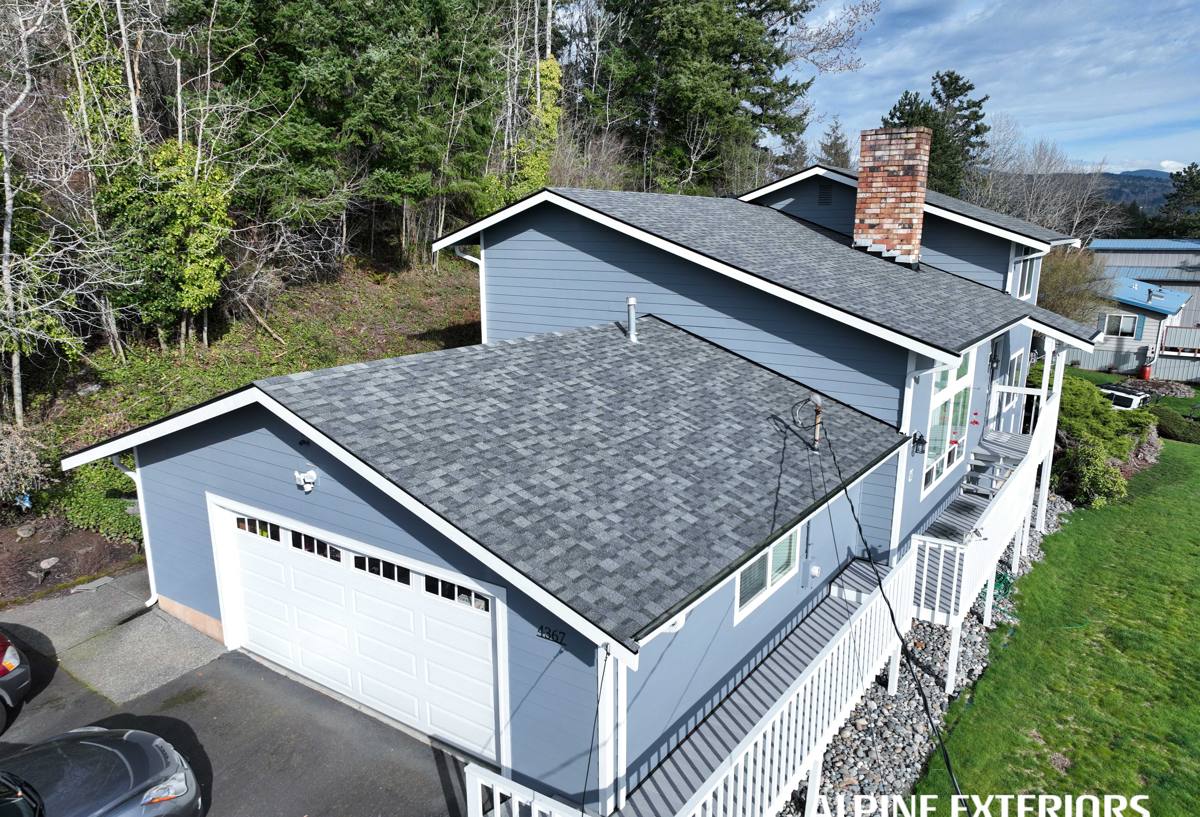
What Actually Damages Asphalt Shingle Roofs Around Here
Moss and Organic Growth
Moss is the single biggest asphalt shingle problem we see in this area. It's not just cosmetic — moss holds moisture directly against the shingle mat, and over a few seasons that trapped moisture accelerates granule loss, lifts shingle edges, and works its way under laps where it doesn't belong. North-facing slopes, roofs shaded by mature trees, and any area that stays damp longer after a rain are the spots that go first.
Wind-Driven Rain and Water Intrusion
Standard rain falling straight down is rarely the problem. It's rain pushed sideways by wind during a fall or winter storm that finds every weak seam, undersized flashing detail, or corner where the underlayment wasn't lapped correctly. Roofs that look fine in summer often reveal their real weak points during the first hard windstorm of the season.
Freeze-Thaw and Temperature Swings
Whatcom County doesn't get brutal winters, but it does get enough freeze-thaw cycling — cold nights followed by wet, mild days — to stress shingles that are already brittle from age or poor ventilation. Combined with sustained moisture, this is what turns a 20-year roof into a 14-year roof.
What a Correct Asphalt Shingle Roof Job Actually Involves
A shingle roof is a system, not a single product. Skipping or shortcutting any layer below the shingles themselves is where most premature failures start.
Tear-Off and Deck Inspection
We remove the old roofing down to the deck rather than layering over it. That lets us actually see the plywood or OSB underneath, find soft spots or rot before they're hidden under new material, and replace only the sections that need it — not the whole deck, unless the damage calls for it.
Underlayment and Ice-and-Water Barrier
A synthetic underlayment goes down across the full deck as the roof's secondary water barrier. In vulnerable areas — eaves, valleys, and around penetrations like vent pipes and chimneys — we add a self-adhering ice-and-water membrane. In a climate with as much sustained wet weather as this one, that membrane is doing real work, not just checking a code box.
Flashing at Every Transition
Valleys, chimneys, skylights, sidewalls, and roof-to-wall transitions are where leaks actually start on a shingle roof — almost never in the open field of shingles. Correctly formed and properly lapped metal flashing at these points matters more to long-term performance than the shingle brand you pick.
Ventilation
Balanced intake and exhaust ventilation keeps the attic space dry and temperature-stable, which protects the roof deck from the inside and helps the shingles reach their expected lifespan. A roof can be installed perfectly on the outside and still fail early if the attic underneath is trapping moisture.
Starter Strips, Nailing Pattern, and Ridge
Proper starter shingles at the eaves and rakes, manufacturer-specified nail placement and count, and correctly capped ridges aren't optional extras — they're what the shingle warranty is actually built around. Rushed nailing is one of the more common causes of blow-offs during a windy winter.
Choosing the Right Shingle for This Climate
Not every asphalt shingle product performs the same in a wet, shaded, moss-prone environment. Algae-resistant granules (usually copper-infused) are worth the modest upcharge here, since they slow the black streaking that ordinary granules develop within a few years in this humidity. Beyond that, the choice mostly comes down to how the roof will be used and what it needs to withstand.
| Shingle Type | Typical Lifespan | Best Fit For | Trade-Offs |
|---|---|---|---|
| 3-tab | 15–20 years | Budget-conscious projects, simpler rooflines | Lower wind rating, less resistant to moss-related lifting over time |
| Architectural / laminate | 25–30 years | Most Lynden homes; the current standard install | Higher upfront cost than 3-tab, but better wind resistance and appearance |
| Impact-resistant (Class 4) | 25–30+ years | Homes wanting extra durability against wind-driven debris | Highest material cost; benefit is durability, not moss resistance |
For most homes in this area we recommend algae-resistant architectural shingles as the baseline. They handle wind better than 3-tab, resist the local moss-and-algae cycle longer, and their warranty structures are generally more robust — but the right call always depends on your roof's pitch, exposure, and your own budget priorities, which is part of what we walk through during an estimate.
Moss, Algae, and Ongoing Roof Maintenance
A well-installed roof still needs some upkeep in this climate. A few honest points on moss control:
- Zinc or copper strips installed near the ridge release trace metal ions with every rain, which helps suppress new moss growth over time — most effective as a preventive measure, not a cure for an already moss-covered roof.
- Pressure washing shingles is not something we recommend or perform — it strips protective granules and shortens shingle life. Gentle, low-pressure treatments are the safer route for existing moss.
- Keeping overhanging branches trimmed back reduces shade and debris buildup, which are the two biggest contributors to moss taking hold in the first place.
- Clear gutters and downspouts before the fall rains start — a roof can be in great shape and still suffer water damage from backed-up gutters overflowing under the shingle edge.
Our Process, Start to Finish
- Inspection and estimate. We look at the whole roof system — deck condition, ventilation, flashing, and current shingle condition — not just a quick look from the ground, and give you a written estimate with no pressure to decide on the spot.
- Material selection. We go over shingle options, colors, and warranty terms based on what your specific roof and budget call for.
- Scheduling around the weather. Roofing in Whatcom County means working around rain windows. We schedule realistically and won't tear off more roof than we can dry in before weather moves in.
- Installation day. Tear-off, deck repair as needed, underlayment, ice-and-water membrane at vulnerable areas, flashing, shingles, and ridge — done in sequence, with the job site protected and cleaned as we go.
- Cleanup and magnetic sweep. Debris and stray nails are cleared from the yard and driveway before we consider the job finished.
- Final walkthrough. We go over the completed roof with you, explain warranty paperwork, and answer any questions before we call it done.
Why a Crew That Already Works in Lynden Matters
Roofing crews that mostly work drier regions of the state sometimes underbuild for what this climate actually demands — lighter underlayment, minimal ice-and-water coverage, or ventilation that meets code minimums but not real-world need here. Working this area regularly means we're not guessing at how much moss pressure, wind exposure, or sustained moisture a given roof will see; we're building for conditions we deal with on nearly every job.
Local presence also matters after the install. If a question comes up during the first heavy storm season after a new roof goes on, or if a warranty item needs a look, you're calling a crew that's a short drive away and familiar with your property — not chasing down an out-of-town number.
Warranty and What to Expect After Installation
A quality asphalt shingle install typically carries two layers of coverage: the manufacturer's material warranty on the shingles themselves, and a workmanship warranty from the contractor covering the installation. It's worth understanding the difference before you sign anything — a strong material warranty means little if it's voided by improper installation, and a workmanship warranty is only as good as the company standing behind it years down the road. We'll walk you through exactly what's covered, for how long, and what maintenance (like keeping gutters clear and moss under control) is expected of the homeowner to keep that coverage valid.
Signs Your Lynden Home May Need a New Roof Soon
Most roofs don't fail all at once — there are warning signs first. Worth a call if you're noticing:
- Granules collecting in gutters or at the base of downspouts
- Shingles that look cupped, curled, or cracked, especially on south- or west-facing slopes
- Visible moss or dark streaking covering more than a small patch of the roof
- Daylight visible through the attic roof boards, or damp insulation after a storm
- A roof that's approaching or past 20–25 years old, regardless of how it looks from the ground
- Missing or loose shingles after a windstorm
None of these automatically mean a full replacement is necessary — sometimes a repair or a maintenance visit is the right call, and we'll tell you honestly which situation you're in rather than pushing a bigger job than you need.
If your roof is showing any of these signs, or it's simply time for a straight answer on its condition, we're happy to take a look. Reach out for a free, no-pressure estimate using the form below — we'll walk the roof, explain what we find, and give you options in plain terms.