 Ferndale Exterior
 Siding Replacement for Lynden Homes, Built by a Crew That Works This Area
Lynden sits in a part of Whatcom County that asks a lot of exterior siding. Homes here deal with a long wet season, driving rain that comes in sideways off the marine air, and a moss and mildew season that can stretch from fall through spring. Add proximity to Puget Sound's salt-laden air moving through the county, and you have a climate that punishes the wrong siding choice fast and rewards the right one for decades. This page covers what siding replacement actually involves for a Lynden-area home, what correct installation looks like in this climate, and why we standardized on one product system instead of offering the usual menu of options.
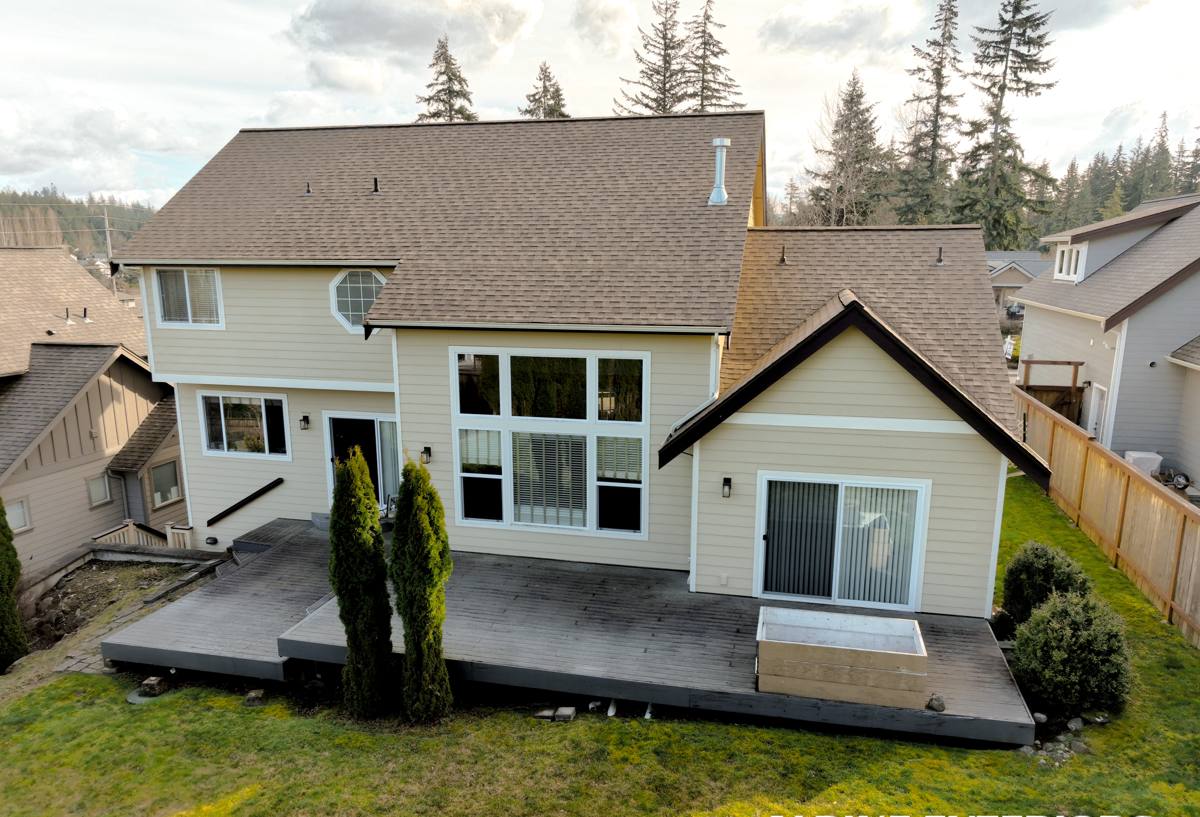
What Lynden's Climate Does to Exterior Siding
Whatcom County's weather pattern is defined by moisture that doesn't let up. Rain here isn't just frequent, it's often wind-driven, which means it hits siding at an angle and works into laps, corners, and butt joints that would stay dry in a calmer climate. That moisture load, combined with cool temperatures for much of the year, creates ideal conditions for moss, algae, and mildew to take hold on north-facing walls, under eaves, and anywhere sun exposure is limited.
Salt air moving inland from the Sound adds another layer of stress. Salt-laden moisture accelerates corrosion on fasteners and trim, and it can degrade certain paint films and coatings faster than a dry-climate homeowner would ever expect. Siding that isn't engineered for this combination of sustained dampness and salt exposure tends to show it early: swelling at seams, paint failure, soft spots at the bottom courses, and moss staining that keeps coming back no matter how often it's cleaned.
None of this means Lynden is a hard place to keep a house looking good. It means the siding material and the installation details both have to be right for the climate, not just for the budget or the look.
Signs Your Lynden Home Needs Replacement, Not Just Repair
Not every siding problem means a full replacement. But in this climate, certain signs point to a system that's failed rather than one that needs a patch.
- Soft, spongy, or crumbling siding, especially near the bottom courses or below windows
- Paint that's peeling, bubbling, or failing across large sections rather than one spot
- Persistent moss or black streaking that returns within a season of cleaning
- Visible warping, cupping, or buckling of individual boards or panels
- Gaps opening up at seams, corners, or trim where caulk keeps failing
- Rising interior humidity, musty smells, or stained drywall near exterior walls
- Siding that's original to a home built more than 20-25 years ago with no upgrades since
If you're seeing two or more of these, it's usually more cost-effective over time to replace than to keep chasing repairs on a system that's already lost its water resistance.
Why We Install Only James Hardie Fiber Cement
We don't offer vinyl, LP SmartSide, primed spruce, cedar, or other fiber cement brands. That's a deliberate standard, not an oversight. James Hardie's fiber cement is non-combustible, dimensionally stable in wet-dry cycling, and available in HZ5 formulations engineered specifically for climates like ours where moisture exposure is constant. The ColorPlus factory-applied finish process bakes color onto the board under controlled conditions, which holds up better against the fading and chalking that field-applied paint often suffers in a wet climate. It also comes with a strong transferable warranty when installed to Hardie's specifications, something that matters a lot if you sell the home before you sell it, that warranty potential transfers with it.
Other products have real strengths. Vinyl is inexpensive and low-maintenance in mild climates. Engineered wood products like LP SmartSide can perform well when detailing and maintenance stay on schedule. Cedar has a look some homeowners love. But in a climate defined by sustained moisture and salt air, we've seen the trade-offs on those products play out in ways that cost homeowners more down the road, whether that's moisture-related swelling, coating failure, or a maintenance schedule that's easy to fall behind on. We'd rather install one product system correctly than offer several and let climate risk fall on the homeowner.
What Correct Siding Replacement Actually Involves
Siding replacement is a system, not just a swap of the outer layer. Get any one part wrong and the new siding can fail years before it should, even if it's the right product.
Tear-off and inspection
Removing the old siding is also the point where hidden problems surface: rotted sheathing, failed flashing, or water damage that's been building behind the old material. In a climate like Lynden's, it's common to find some degree of moisture damage at window and door openings, especially on homes over 20 years old. This is addressed and documented before anything new goes up, not discovered after the fact.
Weather-resistive barrier
A correctly lapped and sealed weather-resistive barrier is what actually keeps wind-driven rain out of the wall assembly. This layer, along with proper flashing at every window, door, and penetration, matters more in a driving-rain climate than almost anything else in the job. Siding sheds most of the water, but the barrier behind it is what handles what gets past the siding.
Fastening and clearances
Hardie siding has specific fastening patterns and minimum clearances from grade, roof lines, and decks that are engineered into the product's warranty terms. Skipping these, tight ground clearance, siding buried in soil or mulch, missed fastener spacing, is one of the most common causes of early failure we see when we're called in to fix someone else's installation.
Corrosion-resistant hardware
Given the salt air moving through this part of the county, fastener and flashing material matters more here than it would inland. Corrosion-resistant fasteners and trim hardware aren't an upgrade, they're a requirement for a job that's supposed to last.
Our Process, Start to Finish
- Assessment and estimate — We inspect the existing siding, sheathing, and trim, and give you a clear picture of what's driving the recommendation before any work is scoped.
- Product and color selection — We walk through Hardie's plank, panel, and shingle lines and ColorPlus palette so you land on something that fits the home and the neighborhood.
- Tear-off and structural check — Old siding comes off, sheathing and framing get inspected, and any repairs are addressed and communicated before covering anything up.
- Weather barrier and flashing — The house gets properly wrapped and flashed at every opening before a single piece of new siding goes up.
- Installation to spec — Fastening, clearances, and joint treatment follow Hardie's published installation guidelines, which is also what keeps the manufacturer's warranty intact.
- Final walkthrough — We go over the finished work with you directly rather than just leaving an invoice.
What Drives the Cost of a Lynden Siding Replacement
| Factor | Why It Matters |
|---|---|
| Home size and wall complexity | More corners, gables, and dormers mean more cuts, more trim, and more labor time |
| Extent of hidden damage | Rot or moisture damage found at tear-off adds sheathing or framing repair before new siding goes up |
| Siding profile chosen | Lap, shingle, and panel styles differ in material and labor cost |
| Trim and accent work | Fascia, soffit, and trim board replacement often gets bundled in for a consistent finished look |
| Access and site conditions | Multi-story sections, tight lot lines, or landscaping close to the house can add labor time |
| Removal and disposal | Tear-off and haul-away of old siding material is part of the overall scope |
We give a firm, itemized estimate after inspection rather than a rough phone quote, since the condition behind the old siding is what really determines the final number.
Why a Ferndale-Based Crew Serving Lynden Matters
Siding decisions in Whatcom County aren't the same as siding decisions in a drier inland region, and a crew that works this area regularly knows that without having to relearn it on your house. We're familiar with the moisture patterns, the moss cycles, and the wear signs that show up specifically on homes exposed to this corridor's rain and salt air. That local familiarity shapes real decisions on the job: where extra flashing attention is worth it, which wall exposures need closer inspection at tear-off, and how to sequence a project around the region's wet stretches so materials and substrate aren't compromised mid-install. A crew based nearby is also easier to reach for a warranty question or a follow-up years down the road, not a name on an invoice from a company that moved on to the next region.
Keeping New Siding Looking Right in This Climate
Hardie fiber cement is low-maintenance compared to wood, but "low-maintenance" isn't "no-maintenance," especially in a climate this wet. A short routine keeps it performing and looking good for the long haul.
- Rinse siding once or twice a year with a garden hose to clear pollen, dust, and early moss growth before it takes hold
- Keep gutters clear so overflow doesn't run down siding faces
- Trim back landscaping and mulch beds to maintain the manufacturer's clearance from grade
- Check and refresh caulking at trim joints and penetrations every few years
- Inspect after major windstorms for any loosened trim, flashing, or fastener issues
- Avoid pressure washing directly at seams and joints, which can force water behind the siding
Choosing the Right Hardie Line and Color for This Area
Hardie's HZ5 product line is engineered for climates with sustained moisture exposure, which makes it the right baseline specification for anything installed in Whatcom County, including Lynden-area homes. Beyond the technical fit, color and profile choice matters for how the home reads in a neighborhood shaped by a lot of mature landscaping and muted, natural surroundings. Darker ColorPlus tones can make a home stand out against greenery, while lighter neutrals tend to blend and stay cooler to the touch in summer sun. We walk through the full plank, shingle, and panel lineup with you so the choice fits both the architecture of the house and the character of the area it sits in.
If your Lynden-area home is showing signs of worn-out siding, or you just want an honest read on what condition it's really in, we're glad to take a look. Reach out for a free, no-pressure estimate using the form below.