 Ferndale Exterior
 Roofing in Marietta Comes With Its Own Set of Rules
Marietta sits close to the water on the edge of Whatcom County, and that location shapes what a roof has to survive year after year. Homes here don't just deal with generic Pacific Northwest rain — they deal with salt-laden air off the water, wind-driven rain that gets pushed sideways under poorly sealed edges, and a moss season that can stretch for most of the year in shaded, north-facing sections of a roof. An asphalt shingle roof that would hold up fine in a drier inland town can wear out faster here if it wasn't specified and installed with these conditions in mind.
We work on roofs throughout Ferndale and the surrounding Whatcom County area, and Marietta's coastal exposure is one of the more demanding micro-climates we see regularly. This page covers what that actually means for an asphalt shingle roof — the materials, the details, and the maintenance rhythm that keeps a roof performing instead of quietly failing from the inside.
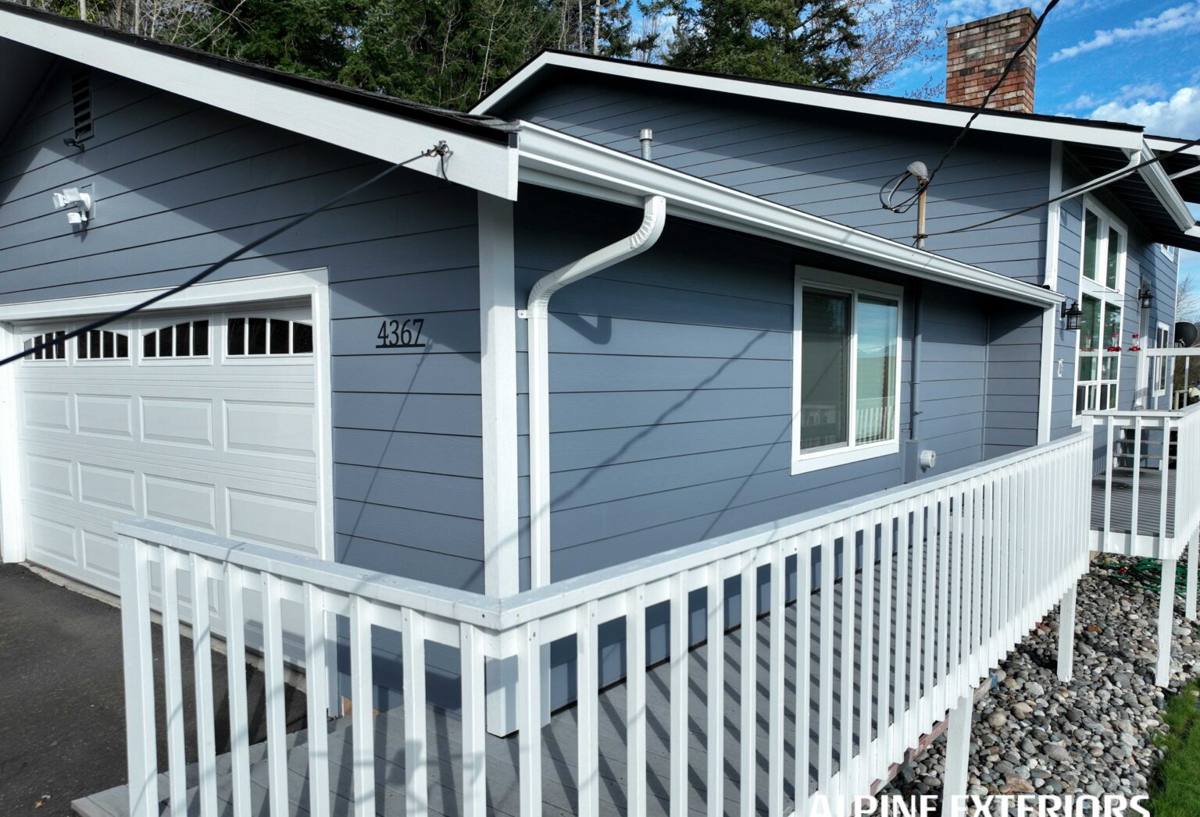
What Salt Air and Coastal Moisture Do to a Roof Over Time
Salt air isn't just a coastal cliché — it's a real factor in how fast metal components on a roof corrode. Nail heads, flashing, drip edge, and vent stacks that aren't rated for coastal exposure can start showing rust and pitting years before they would inland. Once a fastener or a piece of flashing starts to corrode, it stops doing its job of keeping water out, and that's usually how small leaks start in roofs that otherwise look fine from the ground.
Combine that with near-constant humidity and driving rain, and you get two compounding problems: metal components degrading faster, and any gap in the water-shedding system getting exploited more often because there's simply more rain hitting the roof from more angles. A roof near the water needs corrosion-resistant hardware and careful attention to every seam, not just a shingle nailed down to code minimums.
Wind-Driven Rain and Sideways Water
Straight-down rain is easy for any roof to shed. The problem is wind-driven rain that gets pushed uphill under shingle tabs, around chimney flashing, and into valleys that weren't lapped correctly. Marietta gets enough wind off the water that we treat every flashing detail — valleys, sidewalls, chimneys, skylights — as a place where water will eventually be tested sideways, not just from above.
Moss and Algae: The Slow, Quiet Roof Killer
Whatcom County's damp, shaded conditions are close to ideal for moss and algae growth on roofing, and Marietta's tree cover and coastal humidity make it worse in many yards. Moss doesn't just look bad — it holds moisture against the shingle surface, works its way under tabs and granules as it grows, and can lift shingle edges enough to let wind and rain underneath. Left long enough, a mossy roof section will shed water more slowly, stay wet longer after every rain, and shorten the effective life of the shingles in that area.
Algae staining (the dark streaks you see on older roofs) is a different organism but a related problem — it's mostly cosmetic on its own, but it's often a sign of a roof that stays damp longer than it should, which points back to ventilation, tree cover, or shingle condition.
Why This Matters More on Some Roof Sections Than Others
Moss growth is rarely uniform. North-facing slopes, sections shaded by trees, and areas near valleys where debris collects will always show growth first and worst. Knowing which parts of a Marietta roof are most exposed to this lets us plan maintenance and material choices around the actual risk areas instead of treating the whole roof the same.
Choosing an Asphalt Shingle for This Climate
Not every asphalt shingle is built the same, and in a moss- and salt-exposed area like Marietta, the differences matter more than they would in a milder climate. We look at three things when helping a homeowner choose: algae resistance, wind rating, and overall material weight/thickness, which correlates with how well a shingle holds up to repeated wetting and drying cycles.
| Shingle Type | Typical Lifespan | Algae Resistance | Best Fit for Marietta |
|---|---|---|---|
| Standard 3-tab | 15–20 years | Limited unless treated | Budget option; needs more frequent moss upkeep |
| Architectural (laminated) | 25–30 years | Usually includes algae-resistant granules | Good balance of cost, durability, and appearance |
| Premium/designer architectural | 30+ years | Enhanced algae-resistant granules, heavier mat | Best long-term performer for shaded, coastal lots |
Algae-resistant (AR) granules, usually copper- or zinc-infused, are worth prioritizing on almost any Marietta reroof — they don't make moss impossible, but they meaningfully slow algae staining and give the shingle surface better long-term resistance to organic growth. We steer homeowners toward AR-rated shingles as a standard, not an upgrade, in this climate.
The Installation Details That Actually Determine Roof Life
The shingle brand matters less than most homeowners assume. What determines whether a roof performs for its full rated life in a place like Marietta is the underlayment, flashing, ventilation, and fastening — the parts you don't see once the job is done.
- Synthetic underlayment as a full water-resistant layer under the shingles, not just felt paper, to buy protection if wind ever gets under a shingle tab.
- Ice-and-water shield at eaves, valleys, and around penetrations — the spots most likely to see standing water or ice damming during cold snaps.
- Corrosion-resistant flashing and fasteners rated for coastal exposure, not standard galvanized components that can start pitting within a few years near salt air.
- Correct nailing pattern — hand-nailed or gun-nailed to the shingle manufacturer's exact spec, since under- or over-driven nails are one of the most common causes of early shingle failure and voided warranties.
- Balanced attic ventilation so moisture from inside the house isn't adding to the moisture load the roof deck already deals with from outside.
Attic Ventilation: The Part of the Roof System Homeowners Forget
In a humid coastal climate, a roof deck that can't breathe properly traps moisture from both directions — rain and moss moisture pressing in from outside, and warm, humid household air rising into the attic from inside. Over time that trapped moisture can rot decking, degrade the underlayment from below, and even shorten shingle life by keeping the underside of the roof consistently damp.
A correctly balanced system — intake at the eaves, exhaust at the ridge or through vents near the peak — keeps air moving through the attic space so it dries out between rain events instead of staying saturated. We check existing ventilation on every reroof, because installing new shingles over an attic that isn't breathing right just delays the same moisture problems, it doesn't solve them.
Our Process for a Marietta Roof Replacement
- On-site inspection — we walk the roof (not just look from the ground) to check deck condition, existing ventilation, flashing points, and moss/algae extent.
- Honest scope and material recommendation — we tell you what's actually needed versus what's optional, including whether AR shingles and upgraded flashing make sense for your specific exposure.
- Tear-off and deck inspection — old roofing comes off down to the deck so we can catch soft spots or rot before they're covered up again.
- Underlayment and flashing installation — synthetic underlayment, ice-and-water shield at vulnerable points, and corrosion-resistant flashing throughout.
- Shingle installation to manufacturer spec — correct nailing pattern, proper exposure, and attention to valleys, ridges, and penetrations.
- Ventilation check and correction — intake and exhaust balanced for the attic size and roof design.
- Final walkthrough — we go over what was done, what the warranty covers, and what a normal maintenance schedule should look like going forward.
Signs a Marietta Roof Needs a Closer Look
Because leaks in this climate often start at flashing or fastener corrosion rather than a dramatic shingle failure, the early warning signs can be subtle. Worth a call if you notice any of the following:
- Heavy moss buildup, especially on north-facing or shaded slopes
- Dark streaking that's spread noticeably in the last year or two
- Granules collecting in gutters or at downspout outlets
- Curling, cupping, or lifted shingle edges, particularly after a windy stretch
- Rust staining around vent stacks, flashing, or valleys
- Any soft spots, sagging, or interior ceiling staining
Why Local Experience in Marietta Actually Matters
A roofing crew that works Marietta and the greater Ferndale area regularly already knows which slopes tend to hold moss, which flashing details fail first under coastal wind, and what a realistic maintenance schedule looks like for this specific stretch of Whatcom County. That's different from general roofing knowledge — it's the accumulated pattern recognition of seeing the same climate stress show up on roof after roof in the same area. It means fewer surprises during inspection, material recommendations that are actually suited to your exposure, and a crew that isn't guessing at how the salt air and moss season will treat a given roof over the next 20-plus years.
If your Marietta roof is showing its age, dealing with persistent moss, or you're just planning ahead, we're happy to take a look and give you an honest read on where things stand. Use the form below to request a free, no-pressure estimate — we'll walk the roof, answer your questions, and give you a clear picture of your options.