 Ferndale Exterior
 Roofing in Marietta: A Different Climate Than Most Roofers Plan For
Marietta sits close enough to the water that homes here take on a version of coastal weather that inland Whatcom County properties simply don't deal with. Salt-laden air off Bellingham Bay and the Strait of Georgia works on roofing materials and fasteners differently than dry inland air does. Add in Ferndale's long stretch of driving winter rain and the moss season that follows every wet, shaded roof through spring and fall, and you've got a roofing environment that punishes shortcuts. A new roof installed here needs to be built for this specific combination, not just installed to a generic manufacturer spec written for a different climate.
This page covers what a correctly installed new roof looks like for a Marietta home, what our process involves from tear-off to final inspection, and why working with a crew that already knows this neighborhood's roofs matters more than it might in a milder climate.
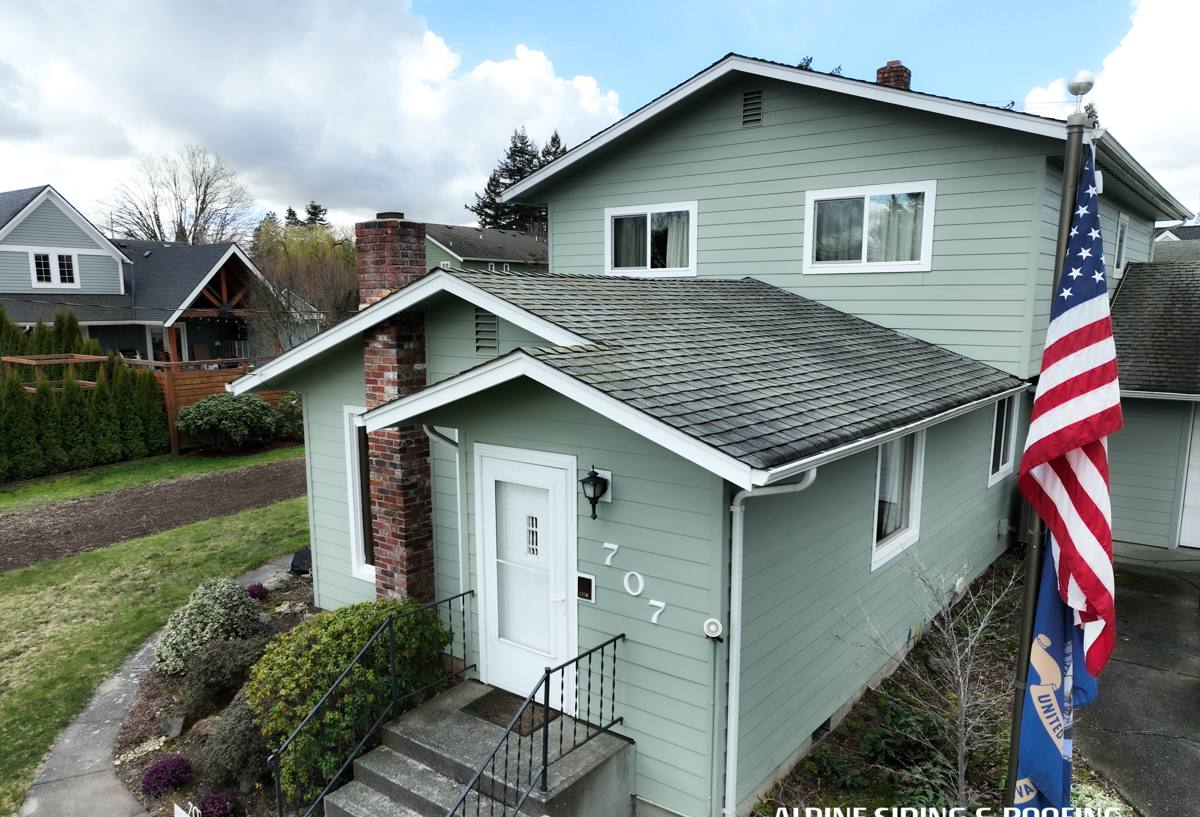
What Marietta's Climate Actually Demands From a Roof
Salt Air and Metal Fasteners
Salt air accelerates corrosion on exposed metal — nails, flashing, valley metal, ridge vents, and any exposed fastener heads. A roof installed with standard-grade fasteners in a salt-air zone can show rust streaking and fastener failure years before it should. Every metal component on a Marietta roof should be rated for coastal exposure, not just the minimum the building code requires.
Driving Rain and Wind-Driven Water
Ferndale's rain doesn't fall straight down for much of the season — wind pushes it sideways and up under shingle tabs, around chimneys, and into any flashing gap that isn't properly lapped. A roof built for this climate needs tighter attention to underlayment overlap, flashing detail, and sealed penetrations than a roof built for a calmer, drier region.
Moss Season
Shaded roof sections, north-facing slopes, and areas under overhanging trees stay damp for extended stretches through the wet months, which is exactly what moss needs to establish. Moss holds moisture against the roofing surface, works into shingle tabs, and can lift materials over time if it's never addressed. A new roof installation is the best opportunity to build in features — proper ventilation, zinc or copper strips at ridges, and material choices — that slow moss regrowth rather than just delaying the next infestation.
Signs a Marietta Home Actually Needs a New Roof
Not every roofing problem means full replacement — but certain signs point away from patch repair and toward starting over:
- Granule loss heavy enough that shingles look bald or patchy, especially on south- and west-facing slopes
- Shingles curling, cupping, or cracking across multiple areas rather than one isolated spot
- Daylight visible through the roof deck from inside the attic
- Soft or spongy decking underfoot when walked, or visible sagging along the roofline
- Repeated leaks in different locations after past repairs
- Heavy, established moss or algae growth that keeps returning after cleaning
- A roof approaching or past the upper end of its material's expected lifespan
- Missing or damaged flashing around chimneys, skylights, and vent stacks that keeps causing water intrusion
If a roof is showing two or more of these signs, a full replacement is usually more cost-effective long-term than continuing to chase individual repairs.
Choosing a Roofing System for This Climate
There's no single "best" roofing material for every home — the right choice depends on the roof's exposure, slope, budget, and how much long-term maintenance the homeowner wants to take on. Here's how the common options compare for a Marietta home specifically:
| Material | Typical Lifespan | Moisture & Moss Resistance | Relative Upfront Cost |
|---|---|---|---|
| Architectural asphalt shingle | 25–30 years | Good with proper ventilation and zinc/copper strips; requires periodic moss treatment | Lower to mid |
| Standing seam metal | 40–50+ years | Excellent — sheds water fast, sheds moss with minimal buildup, corrosion-resistant coatings handle salt air well | Higher |
| Synthetic/composite shingle | 30–50 years | Very good; engineered to resist moisture absorption better than standard asphalt | Mid to higher |
| 3-tab asphalt shingle | 15–20 years | Fair; more prone to granule loss and moss anchoring over time | Lowest |
For a straightforward, well-ventilated roof plane in Marietta, a good architectural shingle with the right underlayment and moss-resistant strips is often the practical choice. For roofs with heavy shade exposure, low slopes, or homeowners planning to stay long-term, metal or a composite product can be worth the higher upfront cost through reduced maintenance and fewer moss-related callbacks.
What a Correct Installation Actually Involves
A new roof is only as good as what's underneath the visible surface. Corners cut here don't show up as problems until years later, when they're expensive to fix. A proper installation includes:
Full Tear-Off, Not Overlay
Installing new shingles over an old layer hides deck problems and shortens the lifespan of the new roof. A full tear-off lets the crew inspect every square foot of decking underneath.
Deck Inspection and Repair
Any soft, rotted, or water-damaged plywood or sheathing gets replaced before anything new goes down. Installing a new roof over a compromised deck is one of the most common causes of early failure.
Ice-and-Water Shield in Vulnerable Areas
Self-adhering waterproof membrane goes in along eaves, valleys, and around penetrations — the areas most exposed to wind-driven rain and ice damming during cold snaps.
Synthetic Underlayment Across the Field
A quality synthetic underlayment provides a secondary water barrier across the whole roof, which matters in a climate where driving rain can find its way under shingles that aren't perfectly sealed.
Proper Flashing at Every Penetration
Chimneys, skylights, vent stacks, and wall-to-roof transitions are where most leaks start. Correctly stepped and counter-flashed details, not just caulk, are what actually keep water out long-term.
Balanced Attic Ventilation
Intake at the eaves and exhaust at the ridge, sized correctly for the attic volume, keeps moisture from condensing inside the roof structure and helps the shingles themselves last their full rated lifespan.
Our Installation Process, Step by Step
- On-site assessment — we inspect the existing roof, attic ventilation, decking condition, and any problem areas specific to your home's exposure and shade pattern.
- Material and system recommendation — based on your roof's slope, exposure, and budget, we recommend a system rather than defaulting to one product for every job.
- Full tear-off — old roofing material is removed completely and disposed of, exposing the deck for inspection.
- Deck repair — any damaged sheathing is replaced before underlayment goes down.
- Underlayment and ice-and-water shield installation — installed to current best practice, not just minimum code.
- Flashing installation — new flashing at all penetrations, valleys, and transitions.
- Roofing material installation — installed to manufacturer specification, including proper nailing patterns and exposure.
- Ventilation and moss-prevention details — ridge vents, intake vents, and zinc or copper strips installed where appropriate.
- Final walkthrough and cleanup — magnetic sweep for stray fasteners, full site cleanup, and a final inspection with the homeowner.
Ventilation and Moisture Management Matter More Here
Attic ventilation isn't a minor detail in Whatcom County — it's one of the biggest factors in how long a roof actually lasts. In a climate with as much sustained moisture as Ferndale sees, an under-ventilated attic traps warm, humid air against the underside of the roof deck. Over time that moisture condenses, soaks into the sheathing, and can rot the deck from the inside, all while the shingles above look fine. Balanced ventilation — enough intake at the soffits matched to enough exhaust at the ridge — moves that moisture out before it does damage. It also keeps attic temperatures more stable in winter, which reduces the ice-damming risk that comes with rapid freeze-thaw cycles.
Why Hiring a Crew That Already Works Marietta Matters
A roofing crew that mostly works drier, inland climates will often build to a generic standard — because that's what works where they usually operate. A crew that regularly works Marietta and the surrounding Ferndale area already knows which roof orientations get hit hardest by wind-driven rain, which slopes hold moss the longest, and which fastener and flashing upgrades are worth the extra cost here versus optional elsewhere. That local pattern recognition shows up in fewer callbacks and a roof that's actually built for the conditions it will face for the next 20 to 50 years, not just the conditions in a manufacturer's install guide written for the whole country.
Questions Worth Asking Before You Sign a Roofing Contract
- Is a full tear-off included, or is this an overlay?
- What underlayment and ice-and-water shield products are specified, and where will they be installed?
- How is attic ventilation being assessed and, if needed, upgraded?
- What's included in the flashing scope — chimneys, skylights, valleys, wall transitions?
- Are zinc or copper moss-prevention strips part of the installation?
- What does the workmanship warranty cover, separate from the manufacturer's material warranty?
- Is the contractor licensed, bonded, and insured in Washington State?
Maintenance That Protects a New Roof
A new roof installed correctly for this climate still benefits from basic upkeep. Keeping gutters clear so water doesn't back up under the eaves, trimming back overhanging branches that keep sections of the roof shaded and damp, and having moss growth addressed early rather than letting it establish are the simplest ways to protect the investment. None of this requires frequent attention — but a roof that's checked once a year, especially after major storms, tends to reach its full expected lifespan instead of falling short of it.
If you're weighing a roof replacement for a home in Marietta or elsewhere in the Ferndale area, we're happy to take a look and give you a straightforward, no-pressure assessment of what your roof actually needs. Use the form below to request a free estimate.