 Ferndale Exterior
 Metal Roofing in Kendall: What the Local Conditions Demand
Kendall sits inland from Ferndale, tucked against the foothills that lead up toward Mt. Baker, with more tree cover and shade than you'll find along the water. That changes the roofing conversation a little. Homes here deal with less direct salt exposure than properties right on Bellingham Bay or the Ferndale waterfront, but the driving rain that rolls in off the Sound still reaches the valley, and the shade from the surrounding conifers means moss and moisture problems tend to show up early and stick around long after the rest of Whatcom County has dried out.
That combination — heavy seasonal rainfall, extended shade, and a moss season that can run most of the year in some spots — is exactly the kind of environment where roofing material choice matters more than it does in a drier climate. A roof that sheds water fast, doesn't give moss anything to grab onto, and holds its fasteners tight through decades of wet-dry cycling is going to outperform one that wasn't built with this specific climate in mind.
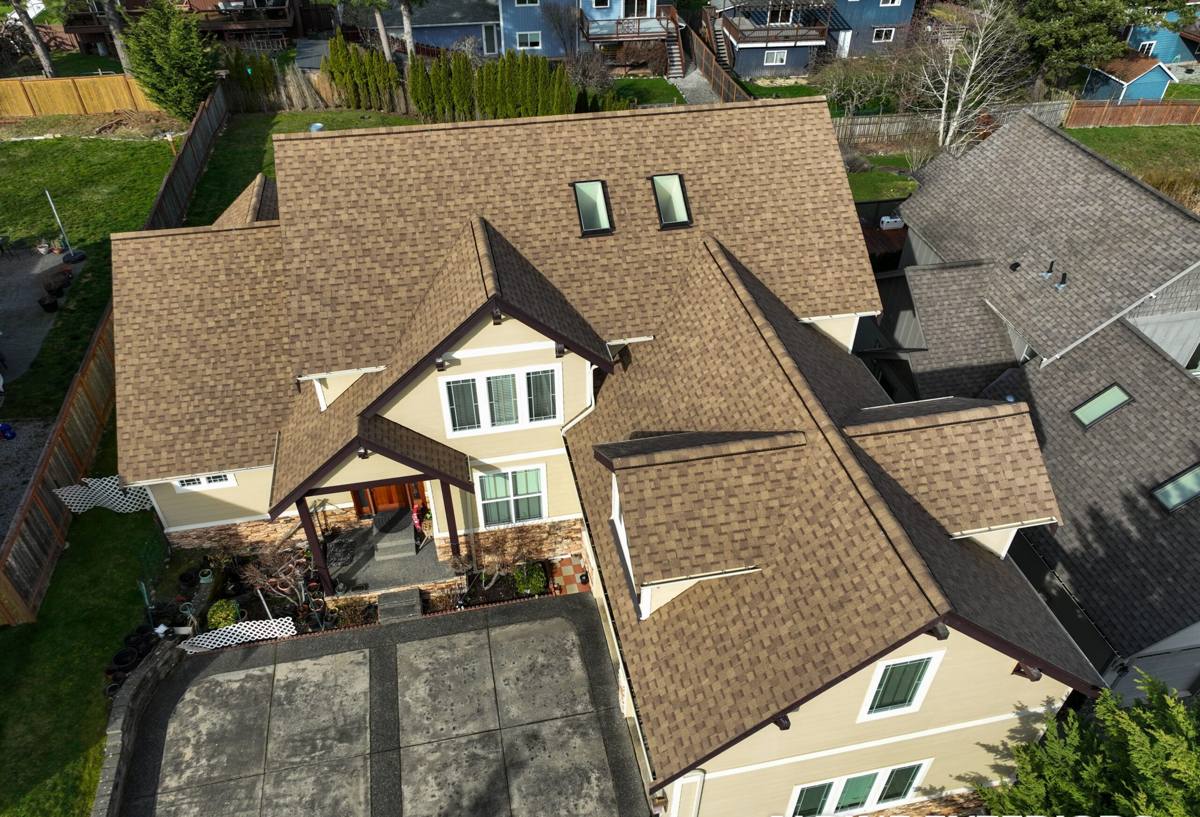
Why Metal Roofing Fits Kendall Homes
Metal roofing isn't the right fit for every house or every budget, and we'll tell you that honestly during an estimate. But for the conditions Kendall properties actually face, it solves several problems at once:
- Steep water shed: Standing water and slow drainage are what let moss colonies establish themselves on a roof. Metal's smooth, continuous surface moves water off fast, giving moss spores far less time to take hold compared to a textured surface.
- No granule loss: Composition shingles lose surface granules over time, especially under constant damp conditions, which accelerates aging. Metal doesn't have granules to shed, so that particular failure path isn't a factor.
- Long service life under wet-dry cycling: A properly installed metal roof is built to expand and contract with temperature swings without the seam or fastener failures that shorten the life of lower-grade materials in a consistently damp climate.
- Lower moss adhesion: Moss still needs organic debris — needles, leaves, dirt — to gain a foothold even on metal. Keeping panels clear reduces moss risk dramatically compared to more porous roofing materials.
None of this means a metal roof is maintenance-free. It means the maintenance burden is lighter and more predictable, which matters on a shaded, tree-heavy lot like the ones common around Kendall.
What a Correct Metal Roof Installation Involves
Metal roofing has a reputation for being simple, but the failures we get called out to fix almost always trace back to shortcuts taken during installation — not the material itself. A correct install has a few non-negotiable pieces.
Underlayment Built for Wet Climates
In a region where a roof deck can stay damp for days after a storm, the underlayment beneath the metal panels matters as much as the panels themselves. We use synthetic or high-temp ice-and-water underlayment at eaves, valleys, and penetrations — the areas most exposed to wind-driven rain and ice dams during cold snaps.
Fastening and Panel Movement
Metal panels expand and contract with temperature. Fasteners that are driven too tight, or a fastening pattern that doesn't account for panel movement, lead to oil-canning, loosened screws, and eventual leaks at the fastener points. We fasten to manufacturer spec and account for thermal movement rather than just running screws until they feel snug.
Flashing and Penetrations
Every chimney, vent pipe, and roof-to-wall transition is a place water can find its way in. Flashing quality and detailing at these points is where a lot of cut-rate installs fail first — usually within a few wet seasons, not decades. We treat flashing work as its own discipline, not an afterthought to panel installation.
Panel Profile Selection
Standing seam, exposed-fastener corrugated, and stone-coated steel panels all behave differently in wind-driven rain and under moss pressure. We walk through the trade-offs for your specific roof pitch and tree coverage rather than defaulting to one product for every job.
Metal Roofing Options: A Practical Comparison
| Panel Type | Best For | Maintenance Notes |
|---|---|---|
| Standing Seam | Steeper roofs, homes wanting a clean modern look, maximum water-shedding performance | Concealed fasteners mean fewer long-term leak points; higher upfront cost |
| Exposed-Fastener Corrugated | Budget-conscious projects, outbuildings, simpler roof lines | Fasteners need periodic inspection and occasional re-torquing over the roof's life |
| Stone-Coated Steel | Homeowners wanting a shingle or shake look with metal's durability | Textured surface holds a bit more debris than smooth panel styles — regular clearing matters more under trees |
Our Process From Estimate to Cleanup
We keep the process straightforward because a confusing process is how homeowners end up surprised by cost or timeline:
- On-site inspection: We look at the existing roof deck, ventilation, flashing points, and how much tree cover and shade the roof deals with — this is a bigger factor in Kendall than it is on more open lots.
- Written estimate: A clear breakdown of material, labor, tear-off (if needed), and any deck repair likely required — no vague allowances.
- Deck prep and tear-off: Old roofing removed, deck inspected for rot or soft spots common under long-term moss growth, and repairs made before anything new goes down.
- Underlayment and flashing: Installed to handle the wet-dry cycling and driving rain typical of this part of Whatcom County.
- Panel installation: Fastened and seamed to spec, with attention to thermal movement and wind exposure for your specific roof.
- Final walkthrough and cleanup: We walk the job with you, confirm everything meets the estimate, and clear the site of old material and debris.
Cost Factors for a Kendall Metal Roof
| Factor | Why It Matters Here |
|---|---|
| Roof pitch and complexity | Steeper or more cut-up roofs need more flashing detail and labor time |
| Panel type chosen | Standing seam runs higher than exposed-fastener panels; stone-coated sits in between |
| Deck condition | Long-term moss and moisture exposure can mean hidden deck repair once old roofing comes off |
| Tree coverage and access | Shaded, tree-lined lots common around Kendall can add setup and debris management time |
| Tear-off vs. re-cover | Removing old roofing adds cost but lets us properly inspect and repair the deck underneath |
We'll give you a firm number in writing before any work starts — broad ranges over the phone aren't useful once we've actually seen the roof.
Maintenance During Moss Season
Even a well-installed metal roof benefits from a light annual check, especially on a shaded property. A few habits go a long way:
- Clear needles, leaves, and debris from valleys and low-slope sections where moss gets its start
- Check gutters each fall so water isn't backing up against the roof edge
- Trim back overhanging branches where practical to cut down on shade and debris buildup
- Have flashing and fastener points looked at every few years rather than waiting for a visible leak
- Avoid pressure washing metal panels — it can drive water under seams and damage finishes; a soft brush and low-pressure rinse is safer
Why a Crew That Already Works Kendall Matters
Roofing crews that mostly work closer to the water tend to default to installation habits built around direct salt exposure. Kendall's challenges lean more toward shade, tree debris, and sustained dampness than salt spray — and a crew that treats every Whatcom County roof the same way can end up over- or under-building for the actual conditions on your property. Knowing the difference between a waterfront install and a foothill install isn't a minor detail; it affects underlayment choices, ventilation needs, and how aggressively you need to stay on top of moss control.
Working in this area regularly also means knowing what local permitting and inspection expect, and having a realistic sense of how weather windows affect scheduling — driving rain doesn't stop for a job site, so timing tear-off and dry-in work correctly is part of doing this right.
Signs You May Need a Metal Roof Repair or Replacement
- Moss buildup returning within months of clearing it, especially in shaded valleys
- Visible rust or fastener staining streaking down panel seams
- Loose or backed-out fasteners on exposed-fastener panels
- Soft spots or sagging felt underfoot in the attic or on the roof deck
- Water stains on interior ceilings after heavy rain, particularly near chimneys or vent penetrations
- Panels that have visibly shifted or show gaps at seams
If you're weighing metal roofing for a Kendall-area home, or just want an honest look at what condition your current roof is really in, we're happy to come take a look. The estimate is free, there's no pressure attached to it, and you'll get a straight answer about what your roof actually needs — use the form below to get started.