 Ferndale Exterior
 Building New in Semiahmoo: What the Climate Asks of Your Windows
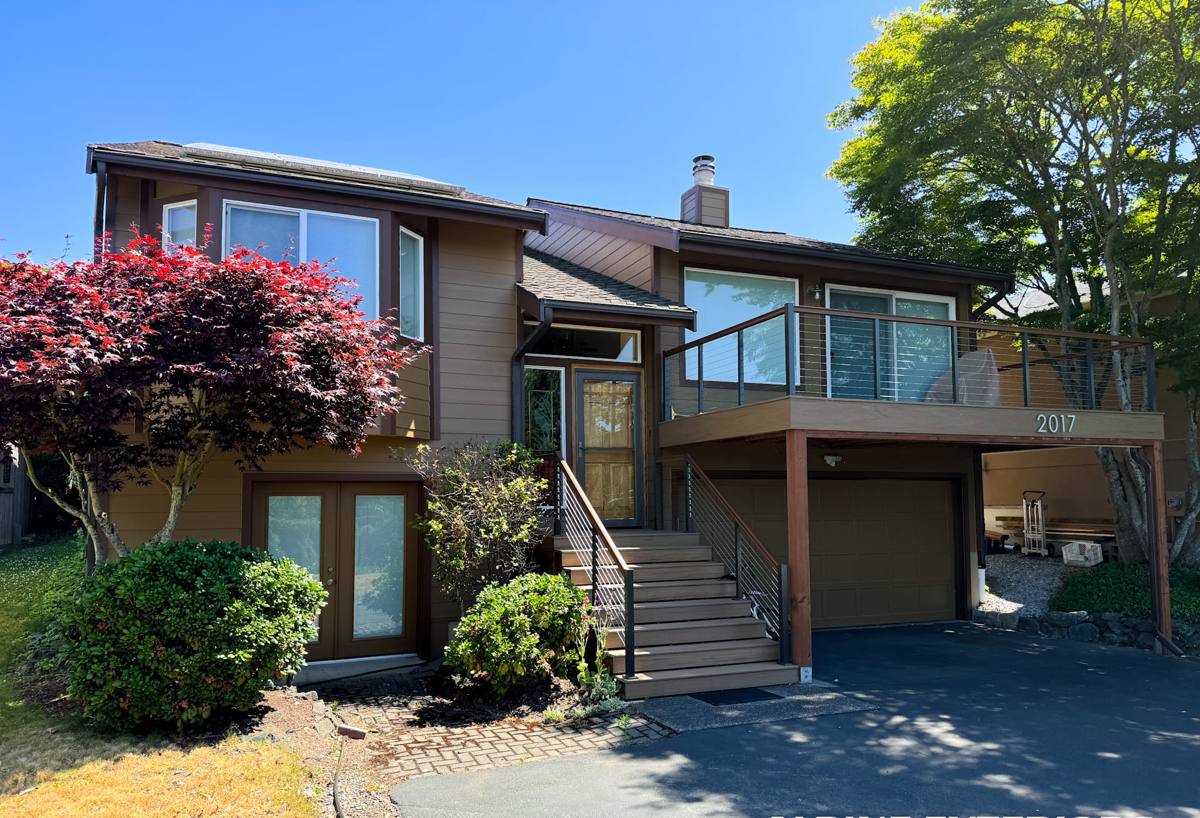
If you're framing a new home in the Semiahmoo area near Ferndale, your windows are going to earn their keep. This stretch of Whatcom County sits close enough to the water that salt-laden air is a constant, driving rain off the Strait shows up sideways more often than straight down, and the gray, damp stretch from fall through spring gives moss and algae months to establish themselves on anything that stays wet. New construction gives you one real chance to get the window opening built correctly before siding, trim, and interior finishes cover it up. Get it right at framing and the windows will perform for decades. Get it wrong, and the mistakes hide behind drywall until a leak forces you to open the wall back up.
We install new-construction windows on builds throughout the Ferndale and greater Whatcom County area, and the Semiahmoo side of our territory gets particular attention because of its exposure. Homes here take more wind-driven moisture against the exterior walls than homes further inland, which changes how we flash, seal, and sequence the install.
New-Construction vs. Replacement: Why the Install Method Matters
New-construction windows have a nailing fin (sometimes called a nailing flange) built into the frame, which gets fastened directly to the sheathing before the weather-resistive barrier and siding go on. This is different from a replacement or "pocket" window, which gets inserted into an existing frame after the fact. New-construction installs give us access to the full rough opening, which means we can build a proper drainage plane from scratch instead of working around what's already there.
That access is the whole advantage — and it's also where corners get cut on production builds when the crew is racing to get the building dried in. On a coastal job like Semiahmoo, rushing this step is how you end up with a window that looks fine for the first year or two and then starts showing staining or soft trim once enough wind-driven rain has worked its way behind the fin.
What "Correct" Actually Means Here
A properly installed new-construction window in this climate isn't just nailed in and caulked around the edges. It's built as a layered system:
- A sloped sill pan flashing under the window so any water that gets past the frame drains back out, not into the wall cavity
- Self-adhering flashing tape at the jambs and head, lapped in the correct shingle-style order so water sheds downward and outward
- The window set plumb, level, and square in the rough opening, with shims at load-bearing points — not just at the corners
- Backer rod and low-expansion sealant at the interior air seal, separate from the exterior weather seal
- Head flashing integrated with the weather-resistive barrier above the window, not just caulked on top of the siding
- Fastening pattern that matches the manufacturer's installation instructions for wind load, which matters more here than on a sheltered inland lot
Skip any one of these steps and the window can still pass a casual walk-through. The problems that show up later — staining below the sill, soft sheathing, moss creeping into a gap that should have been sealed — trace back to a step that got skipped during framing, when nobody was looking closely.
Choosing Windows for Salt Air, Rain, and Moss Exposure
Not every window product handles this environment the same way. Frame material, glass package, and hardware all affect how a window holds up to years of salt-laden humidity and standing moisture at the sill.
| Factor | What to Look For | Why It Matters in Semiahmoo |
|---|---|---|
| Frame material | Vinyl with UV-stable formulation, or fiberglass | Salt air accelerates corrosion on unprotected metal hardware and can degrade lower-grade vinyl faster over time |
| Glass package | Dual-pane, low-E coating, argon fill | Cuts condensation risk on cold, damp days and improves comfort near exterior walls |
| Hardware finish | Corrosion-resistant locks and hinges | Standard hardware can pit or seize faster this close to the water |
| Weep system | Clear, unobstructed weep holes at the sill | Lets water that reaches the frame drain out instead of pooling and feeding moss or algae growth |
| Sill design | Sloped sill with drainage channel | Reduces standing water during the long wet season, which is when moss gets its foothold |
We don't push one brand as the only acceptable option — several manufacturers make a good product. What we do insist on is that whatever line goes in has documented wind and water performance ratings appropriate for a coastal Whatcom County lot, and that the installation matches what the manufacturer specifies for warranty coverage. A great window installed off-spec voids the protection you paid for.
Our Process on Semiahmoo-Area New Builds
Coordinating With Your Builder or GC
Most of our new-construction window work happens as a scheduled trade on someone else's framing timeline. We coordinate directly with the general contractor or framer to hit the rough opening as soon as it's ready, before the weather-resistive barrier goes on, so flashing sequencing isn't compromised by having to work around already-installed house wrap.
Pre-Install Check
Before setting anything, we verify rough openings are square and sized correctly to the window schedule. Undersized or out-of-square openings are common enough on new builds that catching this before install saves a callback later.
Install and Flashing
We build the sill pan, set the window, and run flashing in the correct shingle-lap order — sill, jambs, then head — so every layer sheds water onto the layer below it. This is the step that determines whether the window stays dry for the life of the house.
Final Seal and Walkthrough
Once siding and trim are on, we come back to complete the exterior sealant work and interior air sealing, then walk the openings with whoever is managing the build to confirm everything is square, operating smoothly, and sealed to spec.
Common Mistakes We See on Coastal New Builds
Working this area regularly, we see the same handful of shortcuts repeat themselves on builds we're brought in to fix or finish:
- Caulk used as the primary seal instead of proper flashing tape — caulk degrades and cracks well before the house does
- Head flashing skipped or tucked behind siding instead of integrated with the weather barrier above it
- Sill pans omitted entirely, relying on the window's own weep system to do all the work
- Nailing fins fastened before the sill flashing is fully set, trapping water instead of shedding it
- Shimming only at the corners, leaving the frame able to flex under wind load and stress the seals over time
None of these are visible once the siding is up, which is exactly why they're common — and exactly why the framing stage is the only point where they're cheap to fix.
Living With New Windows Through Whatcom County's Wet Season
A correctly installed window still needs basic upkeep in this climate. The long stretch of damp weather that lets moss take hold on roofs and siding will do the same to window sills and tracks if they're ignored.
- Clear debris from weep holes and sill tracks each fall before the wet season sets in
- Rinse salt residue off exterior frames and glass periodically if you're close to the water
- Check exterior sealant lines yearly for cracking or separation, especially on south and west-facing walls that take the most driving rain
- Keep gutters and downspouts near window openings clear so overflow doesn't run down the wall face
- Watch for any green growth starting at the sill corners — it's an early sign moisture is sitting somewhere it shouldn't
Timeline and What to Expect
Window install timing on new construction is dictated by your framing schedule, not by us, so we build flexibility into how we staff these jobs. A typical single-family window package takes our crew one to a few days on site depending on the number of openings, plus a return trip after siding for final exterior sealing. We'll work directly with your GC to lock in a window that fits the rest of the build sequence.
Why a Crew That Already Works Semiahmoo Matters
Installation detail that's optional on a sheltered inland lot is not optional here. A crew that mainly works drier parts of the county can do competent work and still miss the extra flashing step or drainage detail that this specific exposure calls for, simply because they don't see it often enough for it to be automatic. We install and flash windows on this coastline regularly enough that the sill pan, the lap order, and the sealant choice are standard procedure, not an afterthought — because we've also been the crew called back years later to explain why a shortcut somewhere else finally let water in.
If you're framing a new home or addition in the Semiahmoo area and want a straight answer on what your window package should include for this climate, we're happy to walk the plans with you. Reach out for a free, no-pressure estimate — use the form below to get started.