 Ferndale Exterior
 Why Bellingham Roofs Wear Differently Than Roofs Inland
A roof in Bellingham does a different job than a roof fifty miles east of the Cascades. It isn't just rain — it's rain that shows up for months at a stretch, salt-laden air rolling off Bellingham Bay and the Strait, and shade from mature conifers that keeps roof decks damp long after a storm has passed. Add a moss season that can run from fall through spring, and you have a roofing environment that punishes shortcuts. Materials, fasteners, and underlayment that hold up fine in a drier climate can fail early here if they weren't chosen with this specific combination of moisture and salt exposure in mind.
This page is about one job specifically: full new roof installation for homes in the Bellingham area, done the way local conditions actually require — not a generic install with a Whatcom County zip code attached.
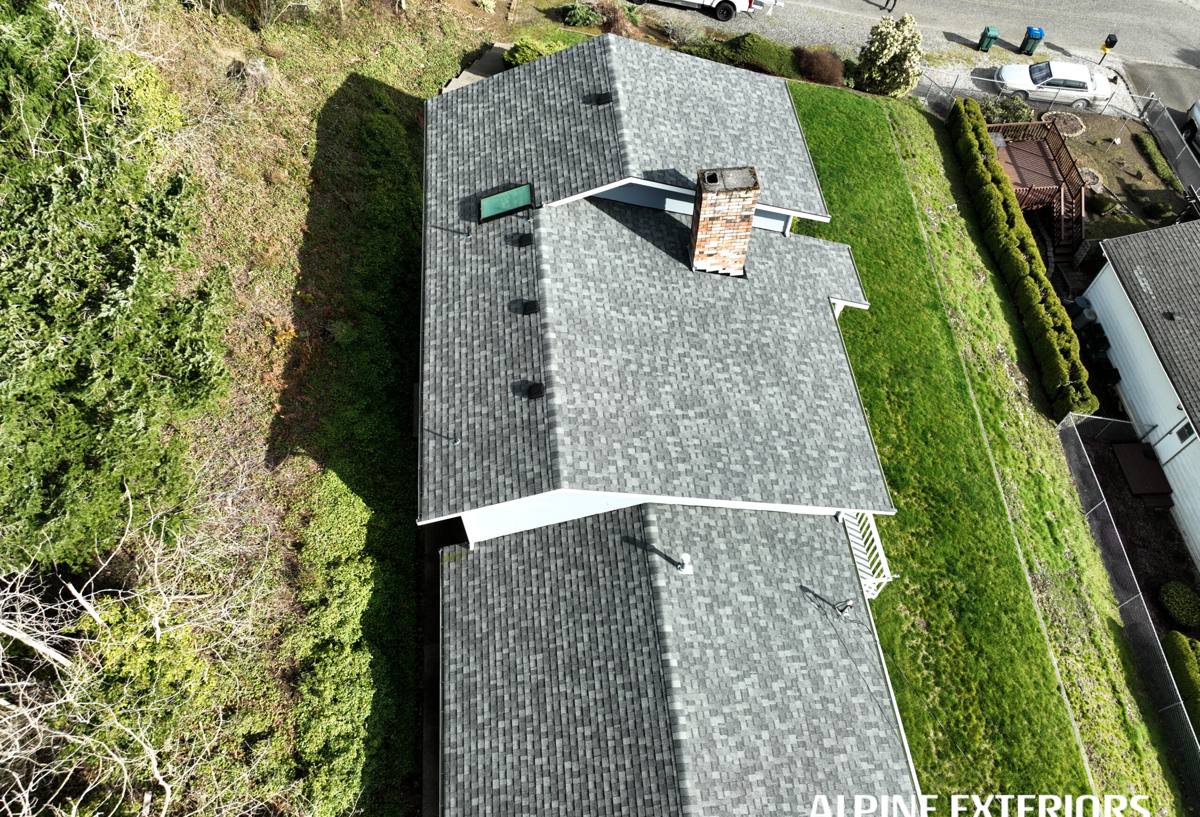
How To Tell It's Time For A New Roof, Not Another Repair
Most homeowners don't wake up and decide they want a new roof — they get there gradually, usually after a few repairs stop holding. Some signals point clearly toward replacement rather than another patch:
- Granule loss heavy enough that you're finding grit in gutters every time it rains
- Shingles that are cupping, curling, or cracking across multiple sections of the roof, not just one spot
- Moss that keeps returning within a season or two of cleaning, especially on north-facing slopes
- Soft spots in the decking when walked, or daylight visible through the attic sheathing
- Repeated leaks at valleys, chimneys, or vent penetrations even after flashing repairs
- A roof that's 20+ years old on asphalt shingles, since underlayment and decking are usually past their useful life by then even if the shingles look okay from the ground
If only one or two of these apply and the roof is under 15 years old, a repair may genuinely be the right call. We'll tell you that directly during an inspection — a full replacement isn't the answer to every roofing problem, and we don't try to make it one.
What A Correct New Roof Installation Actually Involves
A roof is a system, not a single product. Skipping or shortcutting any one layer is where most premature failures start, especially in a wet, mossy climate like this one.
Tear-Off and Deck Inspection
We remove the old roofing down to the deck rather than layering over it. This is the only way to actually see the plywood or OSB underneath — soft, delaminated, or rotted decking is common on older Bellingham homes where slow leaks went unnoticed for years, and it has to be replaced before anything new goes down, not covered up.
Underlayment
Given how much of the year this area spends wet, underlayment choice matters more here than in drier markets. We use synthetic or ice-and-water membrane at eaves, valleys, and penetrations — the spots most prone to wind-driven rain and ice-dam-style backup during cold snaps.
Flashing
Flashing around chimneys, skylights, walls, and valleys is where the majority of "mystery leaks" actually originate. New flashing, properly stepped and sealed, gets installed at every transition — reusing old flashing is a shortcut we don't take.
Ventilation
A roof that can't breathe traps moisture in the attic, which accelerates decking rot and feeds the exact conditions moss and moss-related deck damage need to take hold. Balanced intake and exhaust ventilation is part of a correct install here, not an upsell.
Field Material Installation
Whatever material you choose — architectural shingles, metal, or another system — proper nailing pattern, exposure, and fastener count matter as much as the product itself. This region's wind-driven rain finds every installation shortcut eventually.
Choosing A Roofing Material For A Marine Climate
There's no single "best" roofing material — the right choice depends on your budget, your roof's exposure, and how much long-term maintenance you're willing to take on. Here's how the common options compare for a home in this specific climate:
| Material | Typical Lifespan Here | Moss/Moisture Behavior | Maintenance |
|---|---|---|---|
| Architectural asphalt shingles | 25–30 years | Good with proper ventilation; moss can take hold on shaded slopes without occasional cleaning | Low to moderate |
| Standing seam metal | 40–50+ years | Sheds moisture fast, very moss-resistant on steep slopes | Low |
| Synthetic/composite shingles | 30–50 years | Resists moisture absorption well, holds up to salt air | Low |
| Wood shake | 20–25 years in this climate | Retains moisture, needs regular treatment to resist rot and moss | High |
We don't push wood shake for homes this close to the water and under tree cover — it's a beautiful look, but the maintenance burden and moisture retention it demands works against you in a climate that's already wet more months than not. That's a professional standard we hold to, not a knock on the product itself; it's simply the wrong tool for this particular exposure.
Cost Factors To Expect
Rather than quoting a number that won't match your specific roof, here's what actually drives cost on a new installation:
| Factor | Why It Moves Price |
|---|---|
| Roof pitch and complexity | Steep slopes, multiple valleys, and dormers take more labor and material |
| Decking condition | Rotted plywood found during tear-off has to be replaced, which isn't visible until the old roof is off |
| Material choice | Metal and composite systems cost more upfront than asphalt but last longer |
| Ventilation upgrades | Adding proper intake/exhaust venting where none existed adds labor but pays off in roof lifespan |
| Access | Steep lots, tree cover, and tight driveways affect staging and disposal costs |
Our Installation Process
- On-site inspection and honest assessment of whether you need a repair or full replacement
- Written estimate covering material options, ventilation needs, and any decking concerns we can already see
- Scheduling built around Bellingham's wet season — we plan tear-off days around forecasted dry windows so your home isn't exposed longer than necessary
- Full tear-off and deck inspection, with any damaged sheathing replaced before underlayment goes down
- Underlayment, flashing, and ventilation installed to spec
- Field material installed per manufacturer fastening requirements
- Final walk-through and cleanup, including magnetic sweep for nails and debris
We keep the property protected throughout — tarps over landscaping, driveway protection, and a job site that gets cleaned at the end of each day, not just at the end of the project.
Permits, Code, and Local Requirements
Roofing permits and inspection requirements are handled through Whatcom County or the applicable local jurisdiction depending on exactly where your home sits, and requirements can vary slightly for wind and snow load depending on elevation and exposure near the water. We handle the permitting process as part of the job rather than leaving it to the homeowner to sort out — it's part of doing the install correctly, not an extra step tacked on.
What To Look For When Hiring A Roofer In This Area
Roofing draws its share of storm-chasing crews who show up after a bad windstorm and disappear once the check clears. A few things worth checking before you hire anyone for a roof replacement in Bellingham or Ferndale:
- Active Washington state contractor license and liability insurance you can actually verify, not just a claim
- A physical presence in the area, not just a phone number with a local area code
- A written estimate that spells out materials, underlayment type, and ventilation — not just a single lump-sum number
- Manufacturer certification for the material being installed, since it affects what warranty coverage applies
- Willingness to explain why they're recommending a specific material for your roof's exposure, not just their default product
- References or examples of work on homes with similar exposure — waterfront, wooded, or heavily shaded lots behave differently than open, sunny ones
A crew that already works this area regularly will know, without being told, why a north-facing slope under fir trees needs different ventilation planning than a south-facing slope in the open — that kind of familiarity only comes from doing the work here repeatedly.
Warranty and Long-Term Care
A new roof typically comes with two layers of coverage: a manufacturer's warranty on the material itself, and a workmanship warranty from the installer covering the installation. Both matter — a great shingle installed poorly will still leak, and a perfect installation with a weak material won't hold up as long as it should. We go over both in writing before work starts so there's no ambiguity about what's covered and for how long.
After installation, a roof in this climate still benefits from periodic attention — clearing debris out of valleys, keeping gutters flowing so water doesn't back up under the edge, and addressing moss before it spreads rather than after. None of that is difficult, but it's easy to forget until there's a problem.
Ready When You Are
If your roof is showing its age or you just want a straight answer on whether replacement makes sense yet, we're glad to take a look. Fill out the form below for a free, no-pressure estimate on your Bellingham home — we'll tell you what we actually see, not just what sells a job.