 Ferndale Exterior
 Why Roofs in the Nooksack Area Wear Out Faster Than Homeowners Expect
If you own a home in the Nooksack area near Ferndale, you already know the weather here doesn't do your roof any favors. Whatcom County sits under a steady flow of marine air off the Salish Sea, which means driving rain that comes in sideways during winter storms, long stretches of damp, shaded weather that never quite dries out, and a moss and algae season that can run most of the year. Add in the salt-laden air that moves inland with our weather systems, and you've got a combination that ages roofing materials, fasteners, and flashing faster than they'd wear in a drier climate.
None of that means a roof here can't last its full service life. It means the installation has to account for those conditions from the start — not as an afterthought, but as part of how the roof is designed and built. That's the difference between a roof that looks fine for a few years and one that actually holds up through two or three decades of Whatcom County winters.
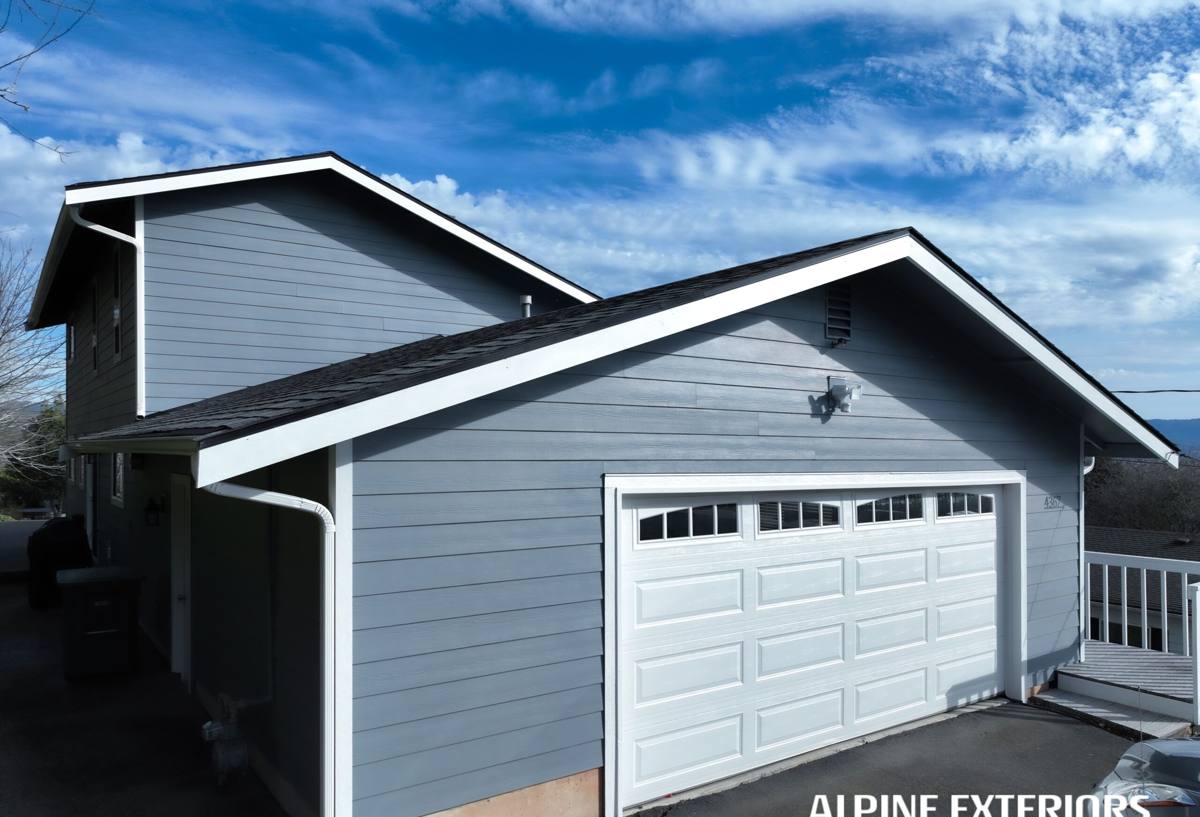
What a Correct New Roof Installation Actually Involves
A new roof is more than shingles nailed to plywood. Every layer underneath the surface material does specific work, and skipping or rushing any of them is where most premature roof failures start.
Tear-Off and Deck Inspection
We remove the old roofing down to the deck rather than layering over it. That's the only way to actually see what's underneath — soft spots, rot around old flashing, or decking that's absorbed moisture over the years. In a climate as wet as ours, hidden deck damage is common, especially around valleys, chimneys, and skylights. Any damaged sheathing gets replaced before anything new goes down.
Underlayment and Water Management
This is arguably the most important layer for a home in this area. We use synthetic underlayment across the full roof and self-adhering ice-and-water membrane at the vulnerable points — eaves, valleys, and roof-to-wall transitions — where wind-driven rain is most likely to find a way in. This membrane matters more here than in drier parts of the state, because our storms come with sustained wind that pushes water uphill under standard shingle laps.
Ventilation
A roof deck that can't breathe traps moisture, which leads to rot, mold, and shortened shingle life from the underside out. We balance intake at the eaves with exhaust at the ridge so air actually moves through the attic space instead of stalling. This is a step that's easy to shortcut on a re-roof and one of the most common reasons we find premature deck damage on homes we're replacing.
Flashing Details
Flashing around chimneys, skylights, vents, and wall intersections is where most roof leaks actually originate — not out in the open field of the roof. We install new flashing rather than reusing old pieces, and we pay particular attention to step flashing at sidewalls, since that's a spot where driving rain from our prevailing storm direction tends to expose weak installations.
Choosing the Right Material for This Climate
There's no single "best" roofing material — the right choice depends on your budget, your roof's pitch and exposure, and how much long-term maintenance you're willing to take on. Here's how the common options compare for a home in the Nooksack and Ferndale area.
| Material | Typical Lifespan | Moss/Algae Resistance | Considerations Here |
|---|---|---|---|
| Standard asphalt shingle | 18–25 years | Low unless treated | Affordable; needs regular moss treatment and gutter maintenance |
| Algae-resistant asphalt shingle | 20–30 years | Good | Copper/zinc granules slow moss and algae growth; our most common recommendation |
| Standing seam metal | 40–60 years | Very good | Sheds moisture fast; higher upfront cost, fewer surfaces for moss to grip |
| Composite/synthetic shake | 30–50 years | Good | Wood look without the moisture absorption of real cedar |
We steer most homeowners away from untreated wood shake and low-end three-tab shingles for this specific area — not because either is a bad product everywhere, but because our moisture and moss exposure works against their weak points: wood shake needs consistent airflow and maintenance to avoid rot, and basic three-tab shingles lack the algae-resistant granules that matter so much here. Those are honest trade-offs, not knocks on the manufacturers.
Moss and Algae: The Long Game
Moss doesn't just look bad — it holds moisture against the shingle surface, works its way under tabs, and lifts material over time, which is exactly the opening driving rain needs. In this part of Whatcom County, moss growth is close to a year-round concern on north-facing slopes and shaded sections under tree cover.
A correct installation gives you a real head start: algae-resistant shingles, clean gutter-to-roof transitions so water doesn't pool at the edges, and drip edge that actually directs water away from the fascia instead of behind it. From there, keeping moss in check comes down to periodic soft washing or treatment and keeping overhanging branches trimmed back so the roof gets what sun it can.
Our Installation Process
We keep the process straightforward because a roof replacement is disruptive enough without surprises.
- On-site inspection and estimate — we walk the roof, check the attic for ventilation and moisture signs, and give you a written scope and price.
- Material selection — we go over the options that make sense for your roof's exposure and your budget, without upselling you on something your home doesn't need.
- Tear-off and deck repair — old roofing comes off, the deck is inspected, and any damaged sheathing is replaced.
- Underlayment and flashing installation — the water management layer goes down before anything else.
- Roofing material installation — installed to manufacturer spec, which matters for both performance and warranty coverage.
- Cleanup and magnetic sweep — job site and yard cleared of debris and stray fasteners.
- Final walkthrough — we go over the finished roof with you before calling the job done.
What Affects the Cost of a New Roof Here
Every roof is priced based on its own specifics, but these are the factors that move the number most for homes in this area.
| Factor | Why It Matters |
|---|---|
| Roof size and pitch | Steeper roofs take longer to work safely and use more material for the same square footage |
| Number of existing layers | Tear-off of multiple old layers adds labor and disposal cost |
| Deck condition | Rot or soft sheathing found during tear-off means replacement boards, which isn't always visible until the old roof is off |
| Material choice | Standard asphalt, algae-resistant shingle, and metal fall at different price points, as shown above |
| Ventilation upgrades | Adding proper intake/exhaust venting where none existed adds cost but protects the new roof's lifespan |
| Roof complexity | Valleys, dormers, skylights, and chimneys all add flashing work and labor time |
Signs Your Roof Needs Replacing, Not Just Repair
Not every roof problem calls for a full replacement. But when several of these show up together, patching usually costs more over time than it saves.
- Shingles that are curling, cracking, or losing granules across large sections, not just one spot
- Persistent moss or dark streaking that comes back within months of cleaning
- Daylight visible through the attic roof boards
- Soft or spongy spots underfoot when walked (checked by a professional, not the homeowner)
- Recurring leaks in the same area despite prior repairs
- A roof older than 20–25 years for asphalt shingle, especially one that's never had algae-resistant material
- Rusted, cracked, or missing flashing around chimneys and vents
Why Local Experience in the Nooksack Area Matters
A crew that already works throughout Whatcom County knows things a traveling estimator doesn't: which slope orientations in this area hold moss the longest, how much wind exposure a given site typically sees during winter storms, and which flashing details tend to fail first on homes built to older regional standards. That local knowledge shows up in small decisions — where we add extra underlayment, how we detail a valley, which fasteners hold up against salt-laden air over time — that add years to a roof's service life.
It also means being reachable after the job is done. A workmanship warranty is only as good as the company standing behind it, and that's easier when the crew that installed your roof is still working in your neighborhood next year and the year after.
If your roof is showing its age or you're planning ahead rather than waiting for a leak, we're happy to take a look and give you a straightforward, no-pressure estimate. Use the form below to get started.