 Ferndale Exterior
 Marietta's Shoreline Climate Is Hard on Siding
Marietta sits close to the water on Ferndale's edge, and that proximity to Bellingham Bay shapes everything about how siding performs here. Salt-laden air corrodes fasteners and trim metal faster than it does a few miles inland. Driving rain off the water finds every seam, lap, and nail hole that wasn't sealed correctly the first time. And the long gray stretch of fall through spring that Whatcom County is known for keeps north and shaded walls damp for weeks at a time, which is exactly the environment moss and algae need to take hold.
None of that is unique to any one house in Marietta — it's the baseline condition every exterior surface in this part of Ferndale has to deal with, year after year. Siding that's rated for a dry inland climate, or installed the way a crew would install it in Spokane or Boise, doesn't hold up the same way here. The product and the installation both have to account for salt, moisture, and moss from day one.
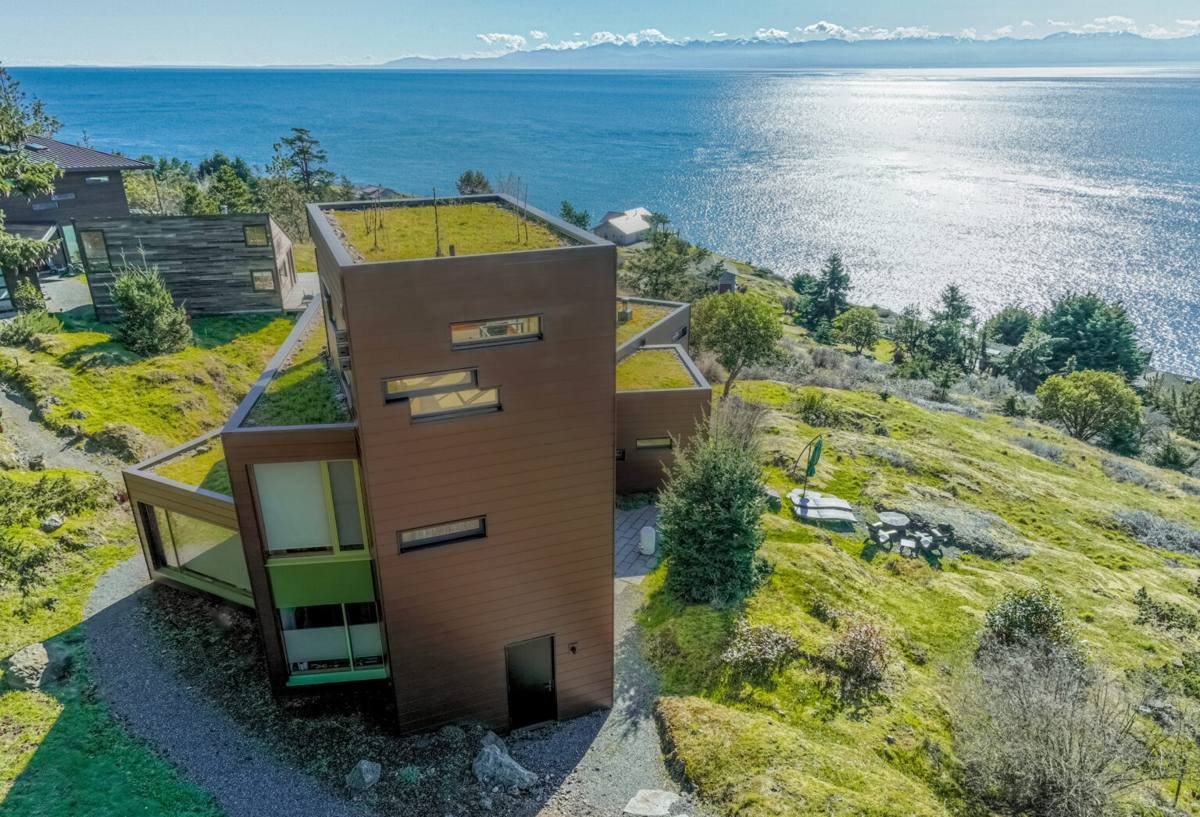
Why Board & Batten Suits This Neighborhood
Board & batten is a vertical siding pattern — wide boards with narrow battens covering the seams between them — that reads as clean, tall, and a little more architectural than standard horizontal lap siding. It works well on Marietta homes for a few practical reasons beyond the look:
- Vertical lines shed water more directly toward the ground instead of collecting on horizontal ledges the way lap siding can at butt joints.
- It pairs naturally with gable ends, dormers, and mixed-material facades, which is common in the mix of older and updated homes around Ferndale.
- Battens cover the seams, giving you one less horizontal shadow line where wind-driven rain can push moisture in over time.
That said, board & batten isn't inherently more weather-resistant than lap siding — it's the material and the installation detailing that decide how it performs. The pattern is a style choice; the protection comes from what's underneath and how it's fastened.
The James Hardie System We Install
We install James Hardie fiber cement exclusively, and for board & batten on a Marietta home that typically means Hardie's vertical panel or board & batten profile in their HZ5 formulation — engineered specifically for wetter, harsher climates like the Pacific Northwest coast, as opposed to the HZ10 version built for hot, dry regions. Fiber cement doesn't absorb and swell with moisture the way wood-based products can, and it won't rot. It's also non-combustible, which matters more each year as wildfire smoke and dry summer stretches become a bigger part of the regional picture.
Hardie's ColorPlus factory finish is baked on under controlled conditions rather than sprayed on site, which gives it better adhesion and fade resistance than field-applied paint — a real advantage in an area that gets constant UV bounce off the water combined with salt exposure. The color coat is backed by its own finish warranty separate from the substrate warranty, and Hardie's product warranty is transferable if you sell the home, which is worth knowing in a neighborhood where houses do change hands.
Why We Don't Substitute Other Materials
We get asked sometimes about vinyl board & batten or engineered wood products because they're cheaper up front. Vinyl can warp and fade faster under sustained UV and salt exposure, and its seams and channels give wind-driven rain more places to work into. Engineered wood and primed spruce need more diligent long-term maintenance to keep moisture out at cut edges and joints — maintenance that's harder to keep up with consistently on a home facing the water. We standardized on Hardie fiber cement because it holds up to this specific climate without asking the homeowner to babysit it every year.
What a Correct Board & Batten Installation Actually Requires
Board & batten fails prematurely almost always because of installation shortcuts, not the material itself. In a high-moisture, salt-air environment like Marietta, a few details matter more than usual.
Rainscreen Gap Behind the Siding
A furring strip or purpose-built rainscreen mat behind the panels creates an air gap so any moisture that does get past the surface can drain and dry out instead of sitting against the wall sheathing. Skipping this is one of the most common corner-cutting moves we see on older re-sides, and it's a major reason homes near the water develop hidden rot behind siding that looked fine from the street.
Fastener Choice and Placement
Salt air accelerates corrosion on standard fasteners, so we use corrosion-resistant nails or screws rated for coastal exposure, placed according to Hardie's fastening schedule — not just "wherever the stud is." Battens need to land over the board seams with enough overlap to actually block wind-driven rain, and fasteners need to miss the panel edges to avoid cracking.
Flashing, Joints, and Penetrations
Every window, door, and utility penetration needs proper flashing integrated with a weather-resistive barrier before the siding goes on — not caulk applied after the fact as a substitute. Horizontal joints where boards meet need Z-flashing or a shingled overlap, never a butt joint sealed with caulk alone, since caulk is a maintenance item, not a permanent seal.
Clearance at Grade and Roof Lines
Siding needs proper clearance above grade, decks, patios, and roof lines so splash-back and roof runoff don't keep the bottom courses perpetually wet — a common issue on homes where siding was extended too close to the ground during a past remodel.
Board & Batten Compared to Other Siding Choices for Marietta
| Factor | Hardie Board & Batten | Vinyl Board & Batten | Engineered Wood / Primed Spruce |
|---|---|---|---|
| Moisture behavior | Won't rot or swell; needs correct flashing detail | Won't rot, but can warp/buckle with heat and age | Vulnerable at cut edges and joints if maintenance lapses |
| Salt air / UV exposure | Factory finish resists fading; non-combustible substrate | Can chalk and fade faster near the water | Finish needs more frequent recoating near salt air |
| Moss and algae resistance | Dense fiber cement surface resists growth; cleans well | Similar surface resistance, but seams collect debris | Grain and joints can hold moisture that feeds growth |
| Long-term upkeep | Occasional wash; repaint on a longer cycle | Low upkeep but limited repair options if damaged | Regular inspection and recoating to protect the substrate |
| Warranty | Manufacturer warranty, transferable to new owners | Varies by manufacturer, often prorated | Varies; often shorter and product-specific |
Signs a Marietta Home May Need New Siding
Because siding failure near the water often starts hidden, it helps to know what to look for before it becomes a structural repair instead of a siding job:
- Soft or spongy spots when you press on the siding, especially near the bottom courses or under windows
- Persistent moss or dark streaking that comes back within weeks of cleaning, particularly on north-facing or shaded walls
- Visible gaps opening up at butt joints or around trim as old caulk shrinks and cracks
- Paint that's peeling or bubbling rather than just fading, which often points to moisture trapped underneath
- Rust staining running down from fastener heads or metal flashing
- Any warping, cupping, or separation at the seams between boards
Our Process, Start to Finish
1. On-Site Assessment
We walk the exterior with you, check the condition of the existing wall assembly where it's exposed, and talk through what board & batten will look like on your specific home — gable treatments, window and corner trim, and color.
2. Tear-Off and Sheathing Check
Old siding comes off and we inspect the sheathing underneath for hidden moisture damage before anything new goes up. This is the point where problems that have been building for years actually get found and fixed, not covered over.
3. Weather Barrier and Rainscreen
A proper weather-resistive barrier goes on, followed by the furring or rainscreen system that gives the wall assembly somewhere to drain and dry.
4. Hardie Installation
Panels and battens go up to Hardie's fastening and flashing specifications, with careful attention to joints, penetrations, and clearances given everything Marietta's climate throws at a wall.
5. Final Walkthrough
We go over the finished work with you directly — this is your chance to ask questions about care and long-term maintenance before we consider the job done.
Why a Local Ferndale Crew Matters Here
A crew that works Marietta and the surrounding Ferndale area regularly already understands how this specific stretch of Whatcom County behaves — where wind-driven rain hits hardest, which walls stay damp longest, and how fast moss comes back on a shaded elevation near the water. That's the kind of judgment that doesn't come from a manufacturer's install manual alone; it comes from having done this work on homes exposed to the same salt air and the same weather pattern, season after season. It also means someone is nearby and accountable if a question comes up after the job is finished, not a crew that installed your siding and then moved on to the next county.
Maintaining Board & Batten in a Salt Air, Moss-Prone Climate
Correctly installed Hardie board & batten is genuinely low-maintenance, but "low" isn't "none" in a coastal environment like this. A light annual rinse to knock off salt residue and organic buildup, especially on shaded walls, goes a long way toward keeping moss from establishing itself. Keep an eye on caulking around trim and penetrations, since even good sealant has a service life and dries out faster under constant sun and salt exposure. Trim back vegetation that shades walls and keeps them from drying out after rain, and have any bare or damaged spots touched up promptly rather than letting moisture find a way in through an exposed edge.
If you're weighing board & batten siding for a home in Marietta or elsewhere around Ferndale, we're happy to take a look and walk you through what your specific house needs. There's no pressure and no cost to get our honest read on the job — just fill out the form below to set up a free estimate.