 Ferndale Exterior
 Sandy Point Siding Takes a Different Kind of Beating
Sandy Point sits close enough to the water that its homes deal with a combination of stresses most inland Whatcom County houses never see. Salt-laden air corrodes fasteners and finishes faster than dry air ever would. Wind-driven rain doesn't just fall on siding, it gets pushed sideways into laps, seams, and trim joints that were only ever designed to shed water moving straight down. And the long, damp moss season that defines this part of Washington gives algae and moss a running head start on any siding that holds moisture, even a little.
None of that means siding on Sandy Point homes is doomed to fail early. It means the repair work has to account for what's actually attacking the material, not just patch the visible symptom. A cracked board on a Sandy Point home and a cracked board on a home twenty minutes inland can have completely different root causes, and treating them the same way is how the same repair gets done twice.
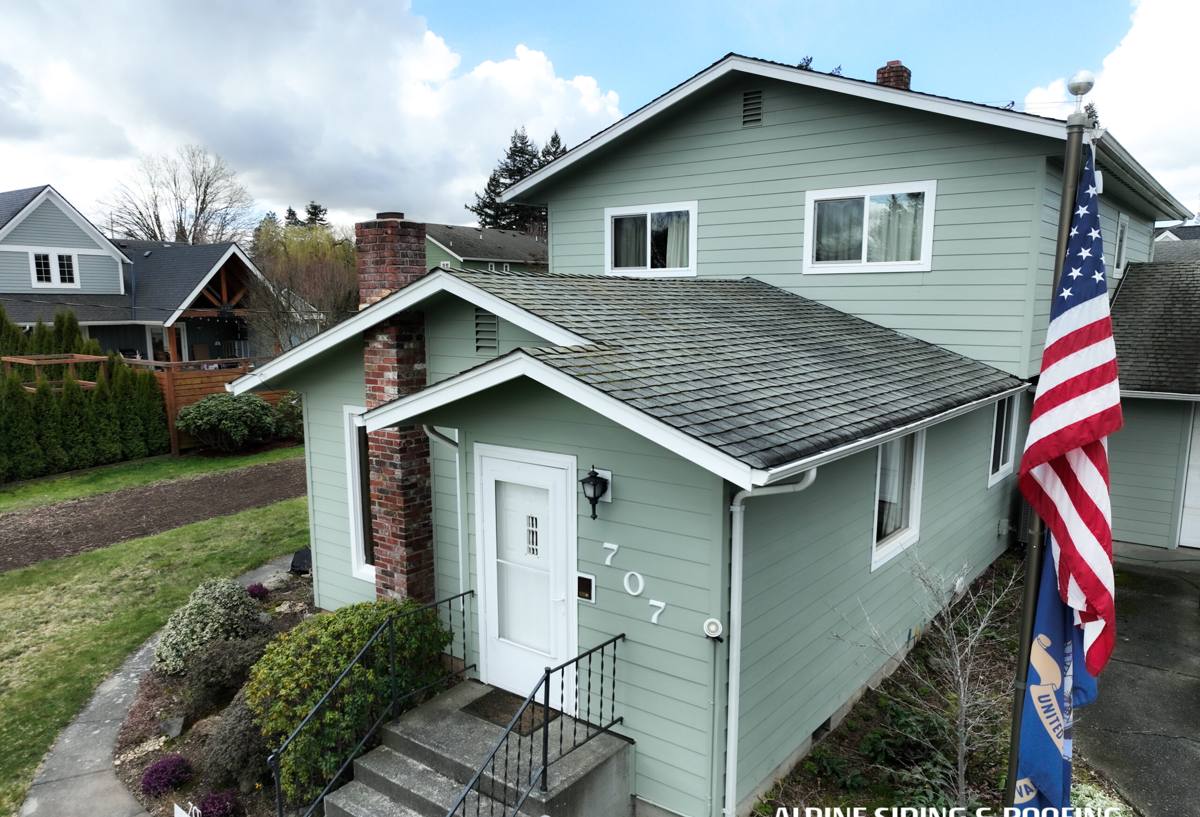
Why Repairs Fail Here When They're Done Generically
Most premature siding failures we get called out to inspect aren't failures of the siding material itself — they're failures of the repair that came before it. A quick caulk-and-paint patch might look fine for a season, but if it doesn't address how water is actually moving behind the cladding, it's just delaying the next call.
What Coastal Exposure Changes About the Job
Salt air is corrosive to unprotected or improperly rated fasteners, and once a fastener starts to corrode, it loosens its grip on the board, which opens a path for water. Wind-driven rain finds any gap in flashing or caulk that a straight-down rain would never reach. And constant surface moisture from moss season means any organic growth left in place keeps a board damp far longer than it should be, softening the material underneath it over time.
What That Means for a Repair
A correct repair on a Sandy Point home has to check the water-resistive barrier and flashing behind the damaged section, not just the visible board. It has to use fasteners rated for coastal or high-moisture exposure. And it has to remove the underlying moss or algae, not paint over it, or the same spot will be back in a year or two.
Signs Your Siding Needs Repair Now
Coastal siding problems tend to start small and stay hidden for a while, especially behind trim, at corners, and low to the ground where splashback and moss both concentrate. Catching them early is almost always cheaper and less disruptive than waiting.
- Soft or spongy spots when you press on the siding, especially near the bottom courses or below windows
- Visible cracking, splitting, or buckling in individual boards
- Persistent moss, algae, or dark streaking that comes back shortly after cleaning
- Paint that's peeling, bubbling, or failing in the same spots repeatedly
- Gaps opening up at seams, corners, or where siding meets trim, windows, or doors
- Rust streaks below fasteners or trim, a sign the hardware itself is corroding
- Any soft trim or sheathing visible once a damaged board is removed
If you're seeing more than one of these at once, it's worth having someone look at the whole wall section, not just the board that's obviously bad. Damage under coastal exposure tends to spread wider than it first appears.
Repair vs. Replacement: What Actually Determines the Call
| Factor | Points Toward Repair | Points Toward Replacement |
|---|---|---|
| Extent of damage | Isolated to one or two boards or a single wall section | Spread across multiple elevations or recurring in many spots |
| Underlying sheathing | Dry, solid wood behind the damaged siding | Soft, discolored, or water-stained sheathing found on inspection |
| Siding age and material | Newer Hardie siding with a matching profile still available | Older or discontinued material that can't be color- or profile-matched |
| Cause of damage | A single event (impact, one failed flashing detail) | Ongoing moisture intrusion from a systemic gap in the water management |
| History on the home | First repair call in years | Third or fourth repair in the same area over a short span |
We'll always tell you honestly which side of that table your home falls on. A lot of coastal homes genuinely only need targeted repair — but if the underlying moisture problem is systemic, a repair that ignores it just becomes the next call.
What a Correct Siding Repair Involves
A repair that's built to hold up under Sandy Point's conditions goes through the same sequence every time, whether it's one board or a full wall section.
1. Diagnose Before Touching Anything
We remove enough siding to see what's actually happening behind it — the water-resistive barrier, the flashing at windows and penetrations, and the sheathing itself. This is the step that gets skipped in a quick patch job, and it's the one that determines whether the repair actually solves the problem.
2. Fix the Water Management, Not Just the Board
If flashing is missing, undersized, or installed backward, we correct it before any new siding goes back on. A new board over a bad flashing detail just fails again on the same schedule.
3. Replace With Matching James Hardie Material
We repair using the same James Hardie fiber cement product line and ColorPlus finish already on the home wherever possible, so the patch doesn't stand out as an obvious repair. Fiber cement also gives us a material that won't rot, swell, or feed the moss and algae growth that coastal moisture encourages.
4. Fasten and Seal to Coastal Standards
Corrosion-resistant fasteners, correct nailing patterns per manufacturer spec, and sealant only where Hardie's installation guidelines call for it — not as a substitute for proper flashing and lapping.
5. Clean and Treat Surrounding Areas
Moss and algae on the boards adjacent to the repair get cleaned as part of the job, not left to spread back onto the new work.
Why We Only Repair With James Hardie Fiber Cement
We install and repair with James Hardie exclusively — we don't do vinyl, LP SmartSide, or unfinished wood siding. On a home exposed to salt air and driving rain, that's not a brand preference, it's a practical one. Fiber cement doesn't absorb water the way wood-based products can, doesn't warp or buckle the way vinyl can in temperature swings, and holds a factory-baked ColorPlus finish that resists the fading and chalking that coastal UV and salt exposure accelerate on field-applied paint.
That matters specifically for repairs: when a patch is done with the same engineered material and factory finish as the rest of the home, it ages the same way the surrounding siding does. Mixing materials on a repair, even with a close color match, tends to age differently over a few seasons and becomes an obvious patch instead of a fix.
Our Sandy Point Repair Process
- On-site inspection — we look at the damaged area and the sections around it, since coastal moisture problems rarely stay contained to one board
- Honest diagnosis — we tell you what we find behind the siding and whether it's a repair or a sign of a bigger issue
- Written scope — what's being repaired, what material and finish it's matched to, and what the flashing or water-management fix involves if one is needed
- The repair itself — removal, correction of any underlying issue, and reinstallation with matching Hardie material and proper fastening
- Site cleanup — old material removed, area cleaned, and a final look at adjacent siding for anything else worth flagging
Moss Season and the Maintenance Reality of Coastal Siding
Even correctly installed and repaired siding needs some seasonal attention in a place like Sandy Point. Moss and algae don't damage James Hardie fiber cement the way they can soften wood-based products, but left unaddressed they hold moisture against the surface and stain the finish over time.
A simple annual rinse-down and a look at ground-level clearance — keeping plantings and soil from piling up against the bottom courses — goes a long way toward keeping a repair from needing to be revisited. This is worth mentioning during any repair visit, since it's a five-minute conversation that can add years to the result.
Questions Worth Asking Before You Hire Anyone for Coastal Siding Repair
- Will you inspect behind the damaged board, or just replace what's visible?
- What fastener and flashing standards do you use for coastal exposure?
- Can you match the existing siding's product line and finish, or will the patch be visibly different?
- Do you address the cause of the damage, or only the symptom?
- Have you worked in Sandy Point or similar waterfront areas in Whatcom County before?
Why Local Experience in Sandy Point Matters
A crew that's already worked waterfront and near-waterfront properties in this part of Whatcom County knows what to check first when a repair call comes in from Sandy Point — the fastener corrosion, the moss buildup low on the wall, the flashing details that take the brunt of driving rain off the water. That familiarity means less time spent diagnosing and more time spent fixing the actual problem.
It also means a straighter answer about whether a repair will actually hold. We'd rather tell a Sandy Point homeowner that a wall section needs more than a patch than sell a quick fix that's back on our schedule next winter.
If you're noticing damage, soft spots, or recurring moss on your Sandy Point home's siding, we're glad to come take an honest look. Reach out for a free, no-pressure estimate and we'll tell you plainly what we find and what it would take to fix it right.