 Ferndale Exterior
 Roofing Built for Sandy Point, Not Just "Whatcom County"
Sandy Point sits close enough to the water that its homes take a different kind of weather beating than roofs a few miles inland in Ferndale or Bellingham. Salt-laden air off the Strait, driving wind-driven rain, and a moss season that can run most of the year all work on a roof at the same time, not one at a time. A new roof installation here has to account for all three from the first day of the job, not as an afterthought once shingles are already down.
We're a local crew that works this area regularly, which matters more on a roof than on almost any other part of a house. A roof installed without Whatcom County's marine climate in mind can look fine for a season or two and then start showing problems — premature granule loss, soft decking, moss establishing in the first year — that trace straight back to material or installation choices that would have been fine in a drier, calmer climate.
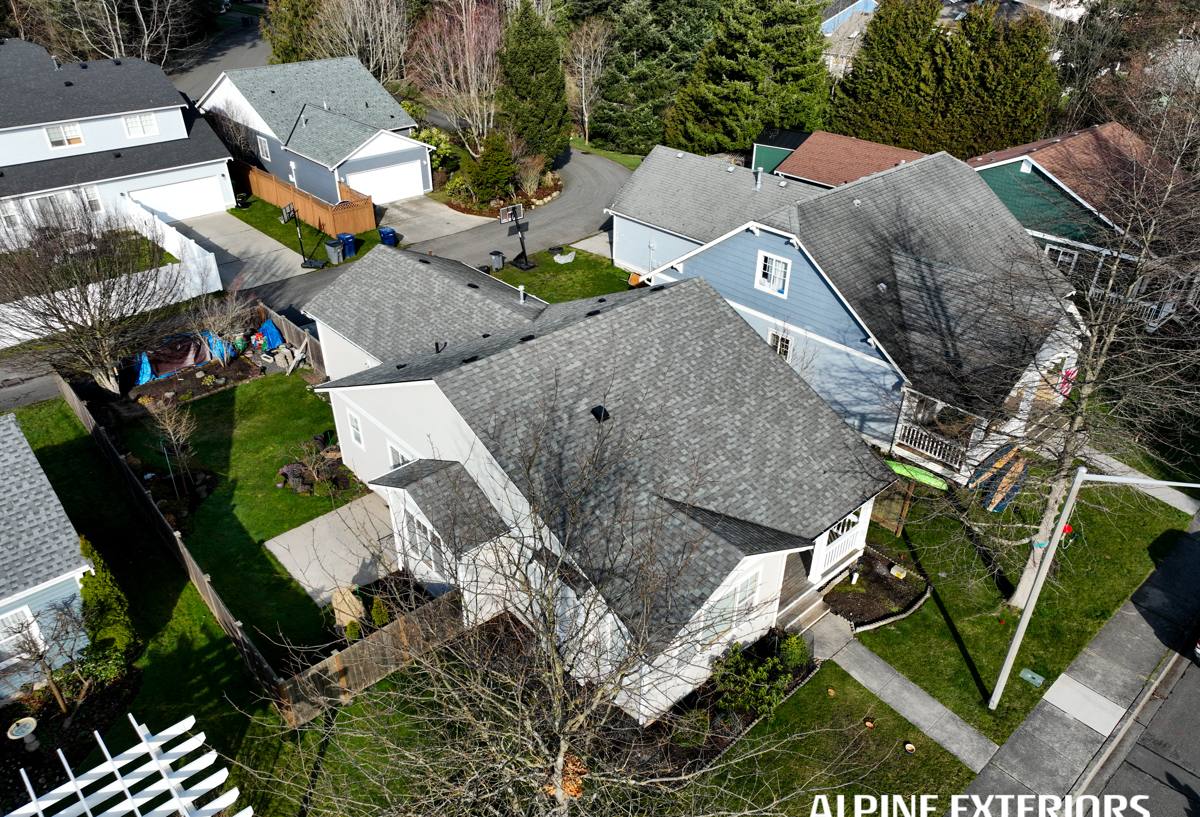
What Salt Air, Rain, and Moss Actually Do to a Roof
Salt Air
Airborne salt doesn't just sit on shingles — it accelerates corrosion on every metal component of a roofing system: nails, flashing, vent boots, ridge caps, and gutter hardware. Fasteners and flashing that are rated for general use but not for coastal exposure corrode faster near the water, and a corroded fastener or flashing seam is where leaks start, even if the shingles above it still look fine.
Driving Rain
Wind-driven rain doesn't fall straight down — it gets pushed sideways and upward under laps, around penetrations, and along ridge lines. A roof system built for calmer inland weather can rely on gravity and basic shingle overlap to shed water. A roof exposed to sustained wind off open water needs tighter underlayment coverage, properly sealed penetrations, and flashing details that assume water will be pushed where it "shouldn't" go.
Moss
Western Washington's damp, mild climate is close to ideal for moss growth, and roofs that stay shaded or hold moisture longer — north-facing slopes, valleys, areas under tree cover — grow it fastest. Moss isn't just cosmetic. Its root structure lifts shingle edges and holds moisture directly against the roofing material and decking underneath, which shortens the life of the roof from the inside out even while the moss itself is only visible from the outside.
Signs a Sandy Point Home Needs a New Roof
Roofs rarely fail all at once — they show warning signs first. In this climate, watch for these in particular:
- Granule loss showing up in gutters or downspouts, especially after wind or heavy rain
- Shingles that are cupping, curling at the edges, or visibly brittle
- Moss or dark algae streaking that keeps coming back within a season of cleaning
- Soft spots or sagging when walked on, which usually means decking underneath has taken on moisture
- Rust staining around nail heads, flashing, or vent boots
- Daylight visible through the roof deck from inside the attic
- Interior water stains on ceilings, especially near chimneys, skylights, or valleys
- A roof approaching or past the manufacturer's expected service life for its material and local exposure
Any one of these on its own might just need a repair. Several together, or a roof already past 20-25 years in a coastal exposure, is usually a sign that a repair is buying time rather than solving the underlying problem.
Choosing a Roofing Material for a Marine Climate
There's no single "right" material for every home — it depends on budget, roof pitch, and how much maintenance a homeowner wants to take on. Here's how the common options actually perform in a salt-air, high-moisture setting like Sandy Point:
| Material | How It Handles Salt Air & Rain | Moss Resistance | Typical Lifespan Here |
|---|---|---|---|
| Architectural asphalt shingle (standard) | Good with proper flashing and underlayment; fasteners should be corrosion-resistant | Moderate — benefits from algae-resistant granules | 20-25 years |
| Algae-resistant asphalt shingle | Same base performance as standard, plus copper-infused granules that slow algae/moss regrowth | Better than standard shingle | 25-30 years |
| Standing seam metal | Excellent water shedding on steep pitches; needs coastal-rated fasteners and coatings to avoid corrosion | Good — smooth surface holds less moisture | 40-50+ years |
| Composite/synthetic shingle | Good weather resistance, doesn't absorb water like organic materials | Moderate to good depending on product | 30-40 years |
We don't push one material on every roof. A lower-slope roof with heavy tree shade is a different conversation than a steep, open, wind-exposed roof — the right call depends on the specific house, not a one-size answer.
How Our New Roof Installation Process Works
1. Roof and Structure Assessment
Before any tear-off, we look at the whole system — decking condition, ventilation, existing moisture damage, and how the roof is exposed to wind and water on that specific lot. Sandy Point homes closer to open water get a different look than ones set back with more tree buffer.
2. Full Tear-Off
We remove existing roofing down to the deck rather than layering over it. A roof-over can hide rot, trap moisture, and voids most manufacturer warranties — and in a climate where moisture is already the enemy, starting clean matters more than it would somewhere drier.
3. Decking Repair
Any soft, delaminated, or water-damaged decking gets replaced before new roofing goes down. Installing new shingles or metal over compromised decking just resets the clock on the same failure.
4. Underlayment and Ice/Water Barrier
We install synthetic underlayment across the full roof, with self-adhered ice-and-water membrane at the vulnerable points — eaves, valleys, penetrations, and low-slope sections — where driving rain is most likely to get pushed under the roofing surface.
5. Flashing and Metal Details
Flashing around chimneys, skylights, walls, and valleys is where most leaks actually start, not the open field of shingles. We use corrosion-appropriate metal and proper step-and-counter flashing techniques rather than relying on sealant to do a flashing detail's job.
6. Roofing Installation
Shingles, metal panels, or the chosen material go down to manufacturer spec, with fastener patterns and nailing adjusted for wind exposure where the site calls for it.
7. Ventilation Check
We confirm intake and exhaust ventilation are balanced. Poor attic ventilation traps moisture against the underside of the new roof and speeds up exactly the kind of decking damage a new roof is supposed to prevent.
8. Final Walkthrough
We walk the finished roof and the site with the homeowner, confirm cleanup, and go over care and warranty details before calling the job done.
Ventilation and Moss Prevention Built Into the Install
A new roof is the best time to fix ventilation problems, because the attic is fully accessible during tear-off in a way it isn't once a roof is finished. Balanced intake (soffit) and exhaust (ridge or roof vents) keeps attic temperature and moisture closer to outdoor conditions, which does two things in this climate: it reduces condensation that rots decking from underneath, and it keeps the roof surface from staying damp longer than it needs to — one of the main reasons moss takes hold in the first place.
Where a roof has zinc or copper strips as part of a moss-management approach, we position them so rain washes their runoff across the roof field, which is what actually suppresses regrowth — placement matters as much as the material itself.
Why a Local Crew Matters for a Sandy Point Roof
Roofing crews who don't regularly work near open water in Whatcom County can under-spec a roof without realizing it — using standard fasteners where coastal-rated ones belong, or skipping extra underlayment coverage that inland jobs don't need. We work this area routinely, which means we're not guessing at how exposed a given roof is or what it's actually been dealing with.
Being local also means we're reachable after the job is done. If a windstorm off the water causes a problem, or you notice something during the first heavy rain of the season, you're calling a crew that already knows your roof and your street, not starting over with someone new.
What Affects the Cost of a New Roof
Every roof is priced on its own specifics, but the same handful of factors drive most of the variation between jobs:
| Factor | Why It Matters |
|---|---|
| Roof size and pitch | More surface area and steeper pitches mean more material and labor time |
| Material choice | Standard asphalt, algae-resistant shingle, and metal carry different material and labor costs |
| Decking condition | Rot or soft decking found during tear-off adds repair cost not visible from the ground |
| Number of penetrations | Chimneys, skylights, and vents each need individual flashing work |
| Tear-off layers | Removing multiple existing layers takes more labor and disposal than a single layer |
| Access and site conditions | Tree cover, steep lots, or limited staging space affect labor time |
We give a written, itemized estimate before any work starts, so there's no guessing about what's included.
Permits and Timeline
Roof replacements in Ferndale and unincorporated Whatcom County generally require a building permit, and we handle that process as part of the job rather than leaving it to the homeowner. Most single-family roof installations, once started, run a few days to a little over a week depending on size, pitch, weather windows, and how much decking repair turns up along the way. We schedule around Whatcom County's wetter stretches where we can, since a dry, uninterrupted install is a better install than one fought through repeated rain delays.
If your roof is showing wear, or you just want an honest read on what shape it's in, we're glad to come out and take a look. Fill out the form below for a free, no-pressure estimate on your Sandy Point home.