 Ferndale Exterior
 Roofing in a Tough Corner of Whatcom County
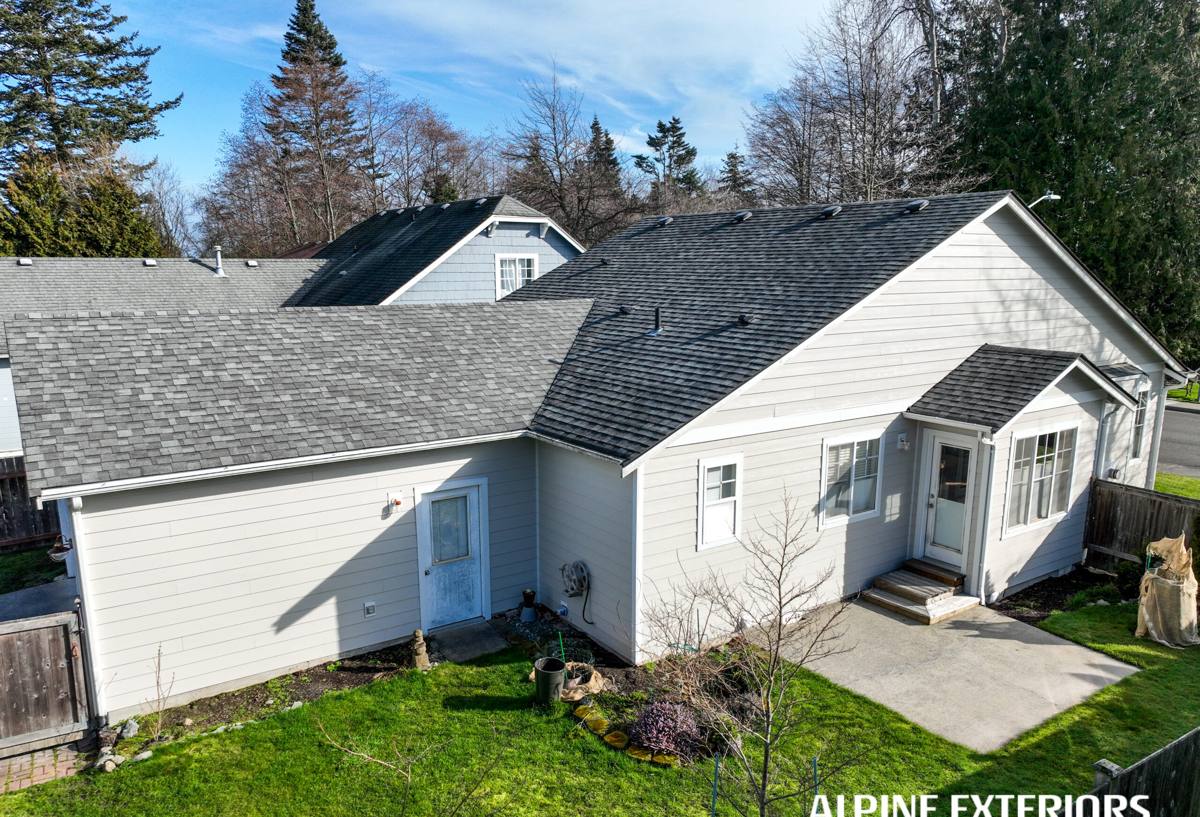
Homes around Nooksack take a beating that a lot of roofing crews from outside the area simply don't plan for. You've got salt-laden air drifting in off the water, driving rain that comes in sideways during winter storms, and long stretches of gray, wet weather that turn shaded rooflines into moss farms. An asphalt shingle roof can handle all of that for decades, but only if it's specified, installed, and maintained with this specific climate in mind. A roof built to a generic national spec, installed by a crew that's never worked a Whatcom County winter, tends to show its age early — curling shingles, granule loss, moss creeping under the tabs, and soft spots at the valleys within the first ten years instead of the twenty-plus you should be getting.
This page is about asphalt shingle roofing specifically for Nooksack-area properties — what the climate does to a roof here, what a correct installation actually involves, and how we approach the job so it holds up.
What This Climate Does to a Shingle Roof
Salt Air and Metal Fatigue
Being close enough to tidal water that salt air reaches inland means every exposed metal component on your roof is working against corrosion from day one. Nail heads, flashing, drip edge, and vent stacks all corrode faster here than they would fifty miles inland. Once a nail head or a piece of flashing starts to rust, it stops sealing properly, and that's how water finds its way under shingles that otherwise look fine from the ground.
Driving Rain and Wind-Driven Water
Pacific Northwest storms don't just drop rain straight down — wind pushes it sideways and up under shingle edges, especially at eaves, rakes, and anywhere two roof planes meet. A roof that's only built to shed water moving downhill will eventually leak here. Every seam, valley, and penetration needs to be treated as a spot where wind-driven water will eventually test the installation.
Moss, Shade, and Moisture Retention
Whatcom County's tree cover and long wet season mean plenty of Nooksack-area roofs sit in partial shade for much of the year. Shade plus moisture is exactly what moss needs to establish, and once moss gets a foothold under shingle tabs, it lifts them, holds water against the roof deck, and accelerates rot from underneath — often before it's visible from the ground or even from a ladder at the eave.
What a Roof Actually Needs to Hold Up Here
A shingle roof is a system, not just the shingles you see. Every layer has a job, and in this climate, skipping or cheapening any one of them is where premature failures start.
- Underlayment: A synthetic, water-resistant underlayment across the whole deck — not just felt paper — gives you a real second line of defense if wind-driven rain gets past the shingles.
- Ice and water shield: Self-adhering membrane at eaves, valleys, and around penetrations, where wind-driven water and ice damming are most likely to cause trouble.
- Flashing: Corrosion-resistant step flashing, valley flashing, and counterflashing at every wall intersection, chimney, and skylight — not just caulk covering a gap.
- Ventilation: Balanced intake at the eaves and exhaust at the ridge so moisture from inside the house doesn't condense against the underside of the deck.
- Fasteners: Corrosion-resistant nails driven correctly — not overdriven, not underdriven, not misaligned off the nailing strip.
- Shingles rated for wind and algae resistance: Standard economy shingles aren't built with this much rain and moss pressure in mind.
Signs a Nooksack Roof Needs Attention
Most roof problems here start small and stay hidden for a while. Catching them early is the difference between a repair and a full tear-off.
- Dark streaking or green/black patches, especially on north-facing or shaded slopes
- Granules collecting in gutters or at downspout outlets
- Shingle tabs that look lifted, curled, or cupped at the edges
- Soft or spongy spots when walked (we check this, not something to test yourself)
- Rusty streaking below metal flashing or vent stacks
- Daylight visible through the attic roof deck, or damp insulation below it
- Moss visibly bridging between shingle courses rather than just sitting on the surface
If you're seeing two or more of these, it's worth getting a roof looked at before the next storm season rather than after a leak shows up on a ceiling.
Choosing the Right Shingle for This Climate
Not every asphalt shingle product is a good match for a wet, shaded, salt-air environment. The table below covers the main categories we work with and how they tend to hold up around Nooksack specifically.
| Shingle Type | Typical Lifespan Here | Best Fit |
|---|---|---|
| 3-tab economy | 12-18 years | Budget-limited projects, low-slope simple roofs, rental properties |
| Standard architectural (laminate) | 20-30 years | Most Nooksack-area homes; good balance of cost, wind rating, and appearance |
| Algae-resistant architectural | 20-30 years, better appearance retention | Shaded lots, north-facing slopes, homes near tree cover |
| Impact-rated / high-wind architectural | 25-35 years | Exposed sites, homes that catch full storm winds off open ground |
Algae-resistant shingles use copper-containing granules that slowly release a small amount of copper as rain washes over the roof, which discourages the algae that causes those dark streaks. On a shaded Nooksack lot, this one product difference alone can add years of clean appearance compared to a standard shingle.
Our Asphalt Shingle Roofing Process
The steps themselves aren't unusual — what matters is not skipping any of them, and not rushing the parts that are easy to hide under the next layer.
- On-site inspection: We check the existing roof, decking condition, ventilation setup, and any problem areas before quoting anything.
- Tear-off and deck inspection: Old roofing comes off down to the deck so we can actually see the wood underneath, not guess at its condition.
- Deck repair: Any soft, rotted, or delaminated sheathing gets replaced before anything new goes down.
- Underlayment and ice/water shield: Installed across the full deck, with extra membrane at eaves, valleys, and penetrations.
- Flashing: New corrosion-resistant flashing at all walls, chimneys, skylights, and valleys — old flashing gets replaced, not reused.
- Ventilation correction: Intake and exhaust balanced to current standards, adding or adjusting vents where the existing setup falls short.
- Shingle installation: Installed to manufacturer spec for nail placement and pattern, with attention to proper exposure and alignment at every course.
- Final walkthrough: We check ridge lines, flashing seams, and cleanup with you before calling the job done.
Cost Factors for a Nooksack Roof Replacement
Every roof is different, so we won't quote a number without seeing the property, but these are the main factors that move the price up or down.
| Factor | Effect on Cost |
|---|---|
| Roof pitch and access | Steeper or harder-to-access roofs take longer and require more safety equipment |
| Deck condition | Rotted sheathing found during tear-off adds material and labor to replace |
| Number of valleys, penetrations, chimneys | More flashing detail work means more labor time |
| Shingle grade chosen | Economy 3-tab costs less upfront; algae-resistant or impact-rated architectural costs more but lasts longer here |
| Existing layers to remove | Tear-off of multiple old layers adds disposal and labor cost |
| Ventilation upgrades needed | Adding proper intake/exhaust venting is inexpensive during a full tear-off, costly to retrofit later |
Ventilation and Moisture: The Part You Can't See
A huge share of "premature" shingle failures we see aren't actually shingle problems — they're ventilation problems. Warm, moist air from inside the house rises into the attic, and without balanced intake and exhaust venting, that moisture condenses against the underside of the roof deck. Over a long, wet Whatcom County winter, that trapped moisture rots the deck from below and shortens shingle life from underneath, regardless of how good the shingles themselves are. Correcting ventilation during a re-roof costs relatively little; ignoring it is one of the most common reasons a 30-year shingle roof doesn't make it past 15.
Maintenance That Actually Extends Roof Life Here
Asphalt shingle roofs in this area benefit from more attention than the same roof would need somewhere drier. A yearly check of gutters, valleys, and shaded slopes for moss buildup catches problems while they're still cosmetic. Keeping overhanging branches trimmed back reduces both shade and the leaf debris that holds moisture against the roof. And if moss does establish, treating it correctly — not power-washing it, which can strip granules and shorten shingle life — matters more than doing it often.
Why a Roofer Familiar with Nooksack Matters
A crew that already works this area knows which slopes tend to hold moss, which older Ferndale-area roofs were originally under-vented, and which flashing details actually hold up against wind-driven rain instead of just looking finished on installation day. That familiarity shows up in fewer callbacks and a roof that's still doing its job in year twenty, not year twelve.
If you're weighing a repair against a full replacement, or just want an honest read on what your current roof has left in it, we're glad to take a look. Reach out for a free, no-pressure estimate using the form below — we'll walk the roof, explain what we see, and give you options without the upsell.