 Ferndale Exterior
 Why Nooksack Homes Need a Different Siding Conversation
Nooksack sits inland enough from the Strait of Georgia to feel a little sheltered, but homeowners here still deal with the same wet-side-of-Whatcom weather pattern that defines this corner of the state: long stretches of driving rain off the water, damp air that lingers under tree cover, and a moss season that can run from October clear through April. Add in the salt-tinged marine air that reaches inland across Whatcom County on a west wind, and you've got a climate that is genuinely hard on exterior building materials. Siding here isn't just a cosmetic choice — it's the first line of defense against moisture intrusion, and the wrong product or the wrong installation shows its weaknesses fast.
We install James Hardie fiber cement siding exclusively. Not because it's the only decent product on the market, but because after years of working on homes in this exact climate, it's the one system we're willing to put our name behind for the long haul. This page is specifically about what that looks like for a home in Nooksack — what the climate demands, what a correct installation actually involves, and how we run the job from estimate to final walkthrough.
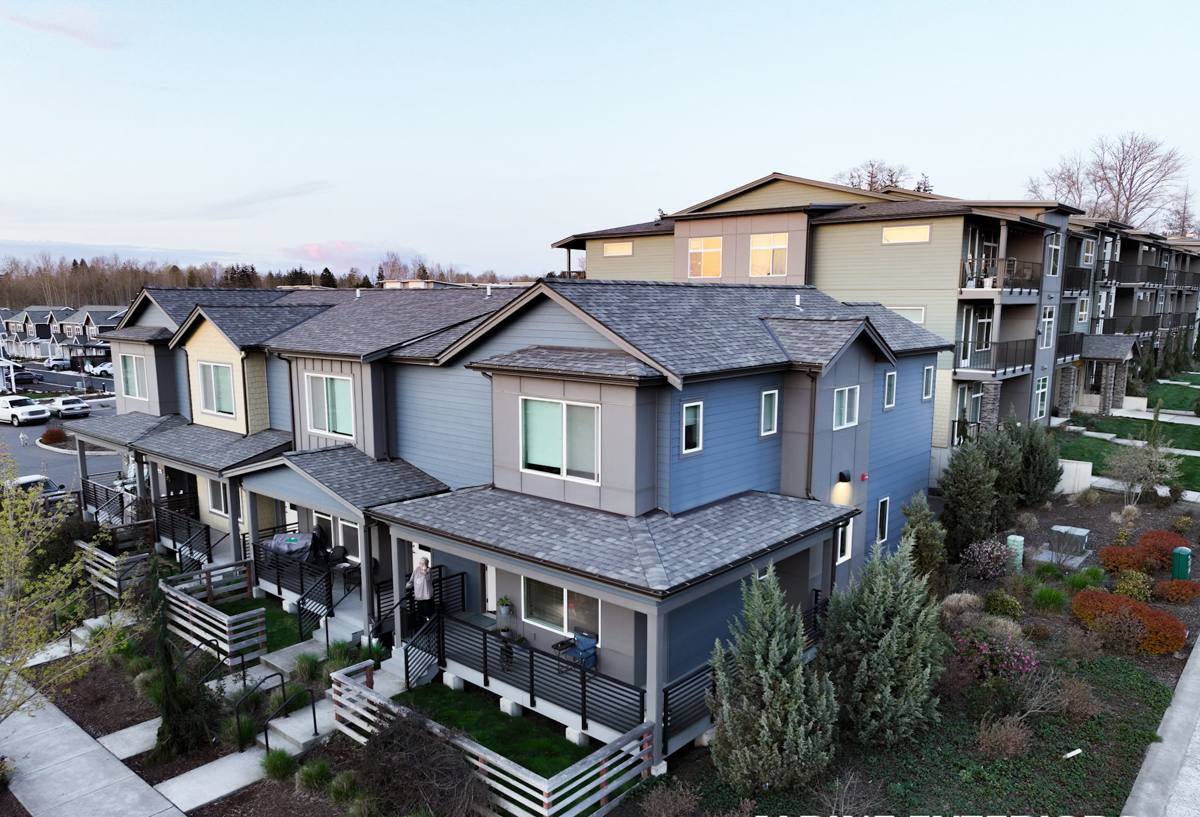
What This Climate Actually Does to Siding
Moisture Load, Not Just Rainfall Totals
Whatcom County doesn't get the heaviest rainfall in the state, but it gets a lot of low-intensity, long-duration wet weather — the kind that keeps siding surfaces damp for days at a stretch rather than a hard downpour that comes and goes. That sustained dampness is what causes problems: it's what feeds moss and algae growth, softens wood-based products at seams and butt joints, and creates the freeze-thaw cycling that cracks caulk and opens gaps for water to get behind the cladding.
Moss Season Is a Real Design Consideration
Nooksack's tree cover and shaded lots mean moss isn't an occasional nuisance — it's a seasonal reality on north-facing walls, under eaves, and anywhere airflow is limited. Moss holds moisture against the siding surface far longer than open exposure would, and on products that aren't dimensionally stable or properly sealed, that translates into swelling, staining, and eventually rot at the substrate. Siding choice and installation detailing both matter here — factory-sealed edges and proper flashing keep moss from ever getting a foothold at a vulnerable joint.
Salt Air Reaches Further Inland Than People Expect
Homeowners inland of Bellingham Bay sometimes assume salt air is a waterfront-only problem. In practice, prevailing westerly winds carry a measurable amount of salt-laden moisture across Whatcom County, and it accelerates corrosion on fasteners, staining on porous materials, and degradation of finishes not engineered for it. This is one of the practical reasons we standardized on Hardie's factory-applied ColorPlus finish — it's baked on under controlled conditions with a finish system built to resist exactly this kind of environmental exposure, rather than relying on a field-applied paint job to hold up over time.
Why James Hardie Fits This Climate Specifically
James Hardie's fiber cement is engineered from cement, sand, and cellulose fibers — a composition that doesn't absorb and swell the way wood-based products do, and doesn't expand and contract with temperature swings the way vinyl does. For a Nooksack home, that means:
- No warping or cupping from sustained damp exposure under tree cover or on shaded elevations
- A factory ColorPlus finish that resists fading and holds its color through repeated wet-dry cycles
- Non-combustible material — relevant given Whatcom County's dry summer wildfire risk, even in a generally wet region
- HZ5 and HZ10 product lines specifically engineered for high-moisture, freeze-thaw climates like ours
- A transferable limited warranty that holds up whether you own the home for five years or fifty
We don't install LP SmartSide, vinyl, Cemplank, Allura, primed spruce, or cedar. Each of those products has legitimate strengths, but none of them combine the moisture performance, finish durability, and warranty structure that Hardie offers for a climate like Nooksack's. We'd rather install one product correctly and stand behind it than offer a menu of options with different failure points down the road.
What a Correct James Hardie Installation Involves
The Details That Actually Determine Longevity
Fiber cement siding is only as good as the installation behind it. Most siding failures we get called out to inspect aren't a product problem — they're a flashing, gap, or fastening problem. On a Nooksack job, the details we treat as non-negotiable include:
- Correct rainscreen or drainage plane behind the siding, so any moisture that does get past the cladding has somewhere to go
- Proper flashing at every window, door, and roof-to-wall intersection — the single most common point of hidden water entry
- Manufacturer-specified fastener spacing and type, since under-fastened panels are a common cause of premature cracking
- Correct minimum clearance from grade, decks, and roofing so splash-back and standing moisture never sit against the bottom edge of the siding
- Factory-cut and factory-sealed panel edges wherever possible, since field-cut edges are the weak point where moisture intrusion starts
- Caulking and sealant only where Hardie's install specs call for it — not as a substitute for correct flashing
Why Installation Sensitivity Matters More Than the Sales Pitch
Fiber cement is a forgiving material to live with once it's on the wall, but it's an unforgiving material to install poorly. Panels that are face-nailed instead of blind-nailed, gaps that are caulked instead of flashed, or butt joints that aren't backed properly will all eventually show it — just not on day one. That's part of why we don't treat this as a side offering; it's the only siding we install, so our crews aren't splitting attention across four different product systems with four different installation standards.
Comparing What Nooksack Homeowners Are Actually Weighing
| Factor | James Hardie Fiber Cement | Vinyl | Wood-Based (Cedar/Primed Spruce) |
|---|---|---|---|
| Moisture/moss resistance | High — non-absorptive, factory-sealed | Moderate — can trap moisture behind panels | Lower — absorbs moisture, prone to rot under sustained damp |
| Salt air / coastal exposure | Engineered finish resists staining and fade | Can chalk and discolor over time | Requires frequent refinishing to hold up |
| Fire resistance | Non-combustible | Combustible, can melt/deform | Combustible |
| Finish durability | Factory-baked ColorPlus, long warranty | Color molded in, can fade unevenly | Field-applied paint/stain, shorter repaint cycle |
| Long-term maintenance | Low — occasional wash, no repainting | Low, but limited repair options if damaged | Higher — regular refinishing and moisture monitoring |
Our Process for a Nooksack Siding Project
1. On-Site Assessment
We walk the property, check existing siding and sheathing condition, look at drainage patterns around the foundation, and note tree cover and shade exposure that affects moss risk on specific elevations.
2. Product and Line Selection
We spec the appropriate Hardie product line (typically HZ5 for this region) and color/texture options, matching panel profile to the home's style rather than pushing a one-size-fits-all option.
3. Written, Itemized Estimate
You get a clear scope of work covering tear-off (if applicable), house wrap or drainage plane, flashing details, siding install, and trim — no vague lump-sum pricing.
4. Installation to Manufacturer Spec
Our crews follow Hardie's installation manual on fastening, clearances, and flashing — not shortcuts that save a day but cost a homeowner a callback in three years.
5. Final Walkthrough
We inspect the finished job with you, confirm all penetrations are properly flashed and sealed, and go over warranty registration and basic maintenance expectations.
Why Hiring a Crew That Already Works Nooksack Matters
A crew that's worked this specific stretch of Whatcom County already understands which elevations tend to hold moss, how far salt air actually travels inland here, and where local drainage and grading tend to cause trouble at the base of a wall. That's knowledge you can't get from a general contractor working from a spec sheet alone — it comes from having done the work in this exact climate, on homes with the same exposure conditions your home faces. It also means faster, more accurate estimates, since we're not guessing at regional factors from scratch on every job.
Signs Your Current Siding May Already Be Struggling
- Persistent moss or algae staining that returns within weeks of cleaning
- Soft spots, bubbling, or visible swelling, especially near the bottom edge or around windows
- Paint or finish that's peeling, chalking, or fading unevenly by elevation
- Visible gaps or separation at butt joints and corner trim
- Any musty smell or staining on interior walls that back up to exterior siding
If you're seeing any of these on a Nooksack-area home, it's worth having someone look at what's happening behind the siding, not just the surface symptoms.
If you'd like a straightforward look at your home's siding situation, we offer a free, no-pressure estimate — no obligation, just an honest assessment of what your home needs and what it would take to do it right. The form below gets you started.