 Ferndale Exterior
 Siding Built for the Nooksack Area's Climate, Not Just the Manufacturer's Brochure
Homes in and around Nooksack sit close enough to Bellingham Bay and the open Whatcom County lowlands that they take on a mix of weather most siding products were never really engineered for: salt-laden air moving in off the water, long stretches of driving rain pushed sideways by wind, and a moss season that can run from late fall clear into spring. That combination is harder on exterior cladding than a straightforward rainy climate alone. Salt air accelerates corrosion on fasteners and trim metal. Wind-driven rain finds every gap in flashing and caulk that a calmer climate would never expose. And moss doesn't just look bad — it holds moisture against the wall assembly for months at a time, which is exactly what rot needs to get started.
We're a Ferndale-based crew, and Nooksack is inside our regular service area, not a stretch assignment. That matters because siding failure here rarely comes from bad material — it comes from installation details that were fine for a drier region but wrong for this one.
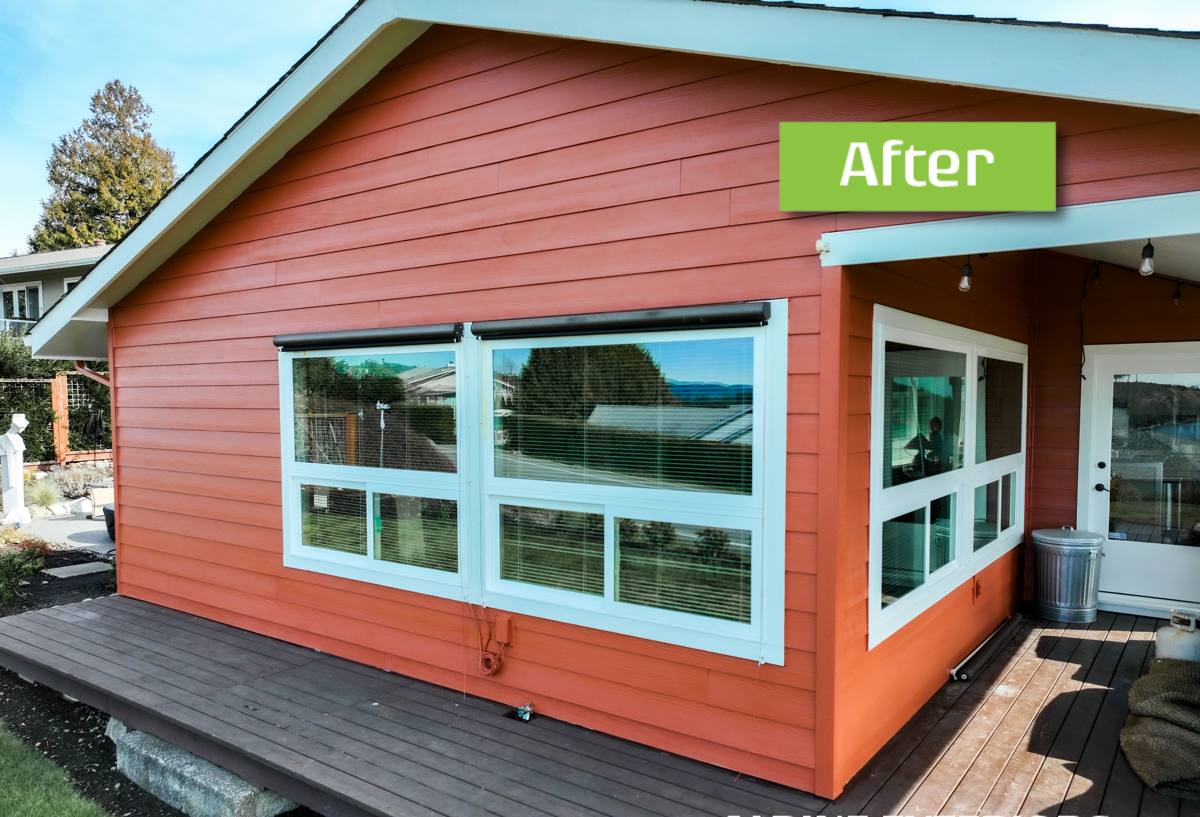
What "Correct" Siding Installation Actually Means Here
A siding job can look finished and still be set up to fail in three to five years. In this climate, the difference between a siding system that lasts and one that doesn't usually comes down to a handful of details that aren't visible once the job is done:
- Weather-resistive barrier and drainage plane: A correctly lapped house wrap behind the siding, with a drainage gap that lets any water that gets past the cladding run down and out instead of sitting against the sheathing.
- Flashing at every penetration: Windows, doors, hose bibs, light fixtures, and deck ledgers all need proper flashing integrated with the water-resistive barrier — not just a bead of caulk.
- Fastener pattern and type: Corrosion-resistant fasteners, driven at the manufacturer's specified spacing and depth. Overdriven or underdriven nails are one of the most common causes of early siding failure, and they're invisible once the piece is hung.
- Clearance from grade, decks, and roof lines: Siding installed too close to the ground, a patio, or a roof-to-wall intersection stays wet longer and is far more likely to develop rot or moss buildup at that joint.
- Caulking only where it belongs: Modern siding systems are designed to shed water, not be sealed like a boat hull. Over-caulking traps moisture inside the wall assembly instead of letting it drain and dry.
Any of these done wrong will eventually show up as staining, soft trim, bubbling paint, or moss creeping up from the bottom courses — usually years after the original crew is gone.
Why We Install Only James Hardie Fiber Cement
We don't install vinyl, LP SmartSide, Cemplank, Allura, or unfinished wood siding. That's a deliberate standard, not a sales pitch, and it's worth explaining honestly.
Vinyl is inexpensive and low-maintenance in mild climates, but it expands and contracts with temperature swings, can warp or crack under impact in cold weather, and doesn't hold up structurally the way a rigid fiber cement panel does — it's also not a great fit for a region where wind-driven rain tests every seam. Engineered wood products like LP SmartSide perform well when kept dry and properly maintained, but they're wood-based, which means they're more vulnerable to moisture intrusion and rot if a seal ever fails — a real risk given how much of the year this area spends wet. Other fiber cement brands are legitimate products, but we've standardized on one manufacturer so our crews install one system to one spec, every time, with warranty coverage we can stand behind without hedging.
James Hardie fiber cement is non-combustible, dimensionally stable across temperature and humidity swings, and manufactured with an engineered-for-climate HZ5 formulation designed specifically for wetter, colder regions like the Pacific Northwest. The factory-applied ColorPlus finish is baked on under controlled conditions rather than field-painted, which gives it far better resistance to fading and moisture-related failure at the finish layer — a real advantage in a climate with this much rain exposure. It's also backed by a strong transferable warranty, which matters if you ever sell the home.
James Hardie Product Lines We Work With
| Product | Best Use | Notes for This Climate |
|---|---|---|
| HardiePlank lap siding | Most common wall application | Traditional horizontal profile; pairs well with proper rainscreen detailing |
| HardiePanel vertical siding | Accent walls, gables, modern facades | Fewer horizontal laps means fewer potential water entry points |
| HardieTrim boards | Corners, window and door casing, fascia | Resists the swelling and rot common with wood trim in wet climates |
| HardieSoffit panels | Eaves and overhangs | Reduces moisture and pest entry at roof-to-wall transitions |
Our Installation Process
Every Nooksack-area project follows the same sequence, whether it's a full re-side or a partial replacement:
- Inspection and tear-off: Remove existing siding and inspect the sheathing underneath for hidden rot, especially around windows, corners, and the bottom of the wall — common trouble spots in this climate.
- Sheathing repair: Replace any compromised sheathing before anything else goes on the wall. Covering over damaged sheathing is how small problems become expensive ones.
- Weather-resistive barrier and flashing: Install and properly lap the house wrap, then flash every window, door, and penetration before siding goes up.
- Furring or drainage gap installation: Create a drainage plane behind the siding so incidental moisture can escape instead of sitting against the wall.
- Siding installation to manufacturer spec: Correct fastener type, spacing, and clearances, following James Hardie's published installation instructions for this climate zone.
- Trim, caulking, and paint touch-up: Finish details where caulk actually belongs, and touch up any factory finish nicked during install.
- Final walkthrough: Review the completed job with the homeowner and point out any maintenance items specific to the site — tree cover, north-facing walls, or grade issues that affect moss and moisture exposure.
Signs a Nooksack Home's Siding Needs Attention
Because moisture problems here tend to build slowly, most homeowners don't notice siding failure until it's well underway. Watch for:
- Moss or algae buildup that keeps returning at the bottom courses or shaded walls within a season of cleaning
- Soft or spongy trim boards around windows, doors, or corners
- Paint that's bubbling, peeling, or chalking unevenly across the wall
- Visible warping, buckling, or gaps between siding panels
- Interior drywall staining or musty smells on exterior-facing walls
- Fastener heads showing rust streaks, particularly on walls facing prevailing wind
Any one of these on its own might be minor. Several together usually means the water-management layer behind the siding has been compromised for a while.
Maintenance Expectations for This Climate
James Hardie siding is low-maintenance compared to wood, but "low-maintenance" isn't "no-maintenance," especially with a moss season this long. A soft wash (not high-pressure) once a year keeps moss and algae from establishing on north-facing or shaded walls. Keep gutters clear so overflow doesn't run down the siding face, and keep plantings and mulch beds a few inches off the bottom courses so soil and organic matter aren't holding moisture against the material. None of this is heavy work, but skipping it in a climate this wet shortens the life of even a well-installed system.
Why Hiring a Crew That Already Works in Nooksack Matters
Siding installation instructions read the same everywhere in the country, but the judgment calls — how much drainage gap to build in, how tight to run clearances near grade, where extra flashing attention pays off — are shaped by what actually happens to a wall in this specific climate over several winters. A crew that works Ferndale, Nooksack, and the surrounding Whatcom County lowlands regularly has already seen where wind-driven rain finds its way in and where moss establishes first on local homes. That's the kind of knowledge that shows up in the small decisions during install, not in the sales pitch beforehand.
Cost Factors for a Nooksack Siding Project
| Factor | Why It Affects Cost |
|---|---|
| Sheathing condition | Hidden rot discovered during tear-off adds repair scope before new siding can go on |
| Home size and wall complexity | More corners, gables, and dormers mean more cutting, trim work, and labor time |
| Siding profile chosen | Lap, panel, and shingle-style products vary in material and installation time |
| Existing siding removal | Tear-off and disposal of old material adds labor beyond a simple install |
| Trim and soffit scope | Replacing trim and soffit alongside wall siding costs more but avoids mismatched materials aging differently |
We give straightforward, itemized estimates so you can see exactly what's driving the number, rather than a single lump figure that hides where the cost actually comes from.
If your home is due for new siding, or you're seeing early signs of moisture trouble, we're glad to take a look and give you a straight answer — no pressure, no upsell. Use the form below to request a free estimate for your Nooksack-area home.