 Ferndale Exterior
 Why Point Roberts Decks Wear Differently
Point Roberts sits on its own peninsula, surrounded on three sides by the Salish Sea, which means every deck out there takes a steadier beating than a deck just a few miles inland in Ferndale proper. Salt-laden air off the water accelerates corrosion on fasteners, hinges, and any exposed metal hardware. Wind-driven rain gets pushed sideways under railings and against ledger boards in a way that inland decks rarely experience. And because the peninsula holds onto damp, shaded conditions for much of the year, moss and algae get a long runway to establish themselves on decking, stairs, and anywhere shade lingers.
None of that means a Point Roberts deck is doomed — it means the repair work has to account for faster hardware fatigue, more aggressive moisture intrusion at joints, and surfaces that need a different maintenance rhythm than a deck on the drier side of Whatcom County. A repair that ignores those realities tends to fail again within a season or two.
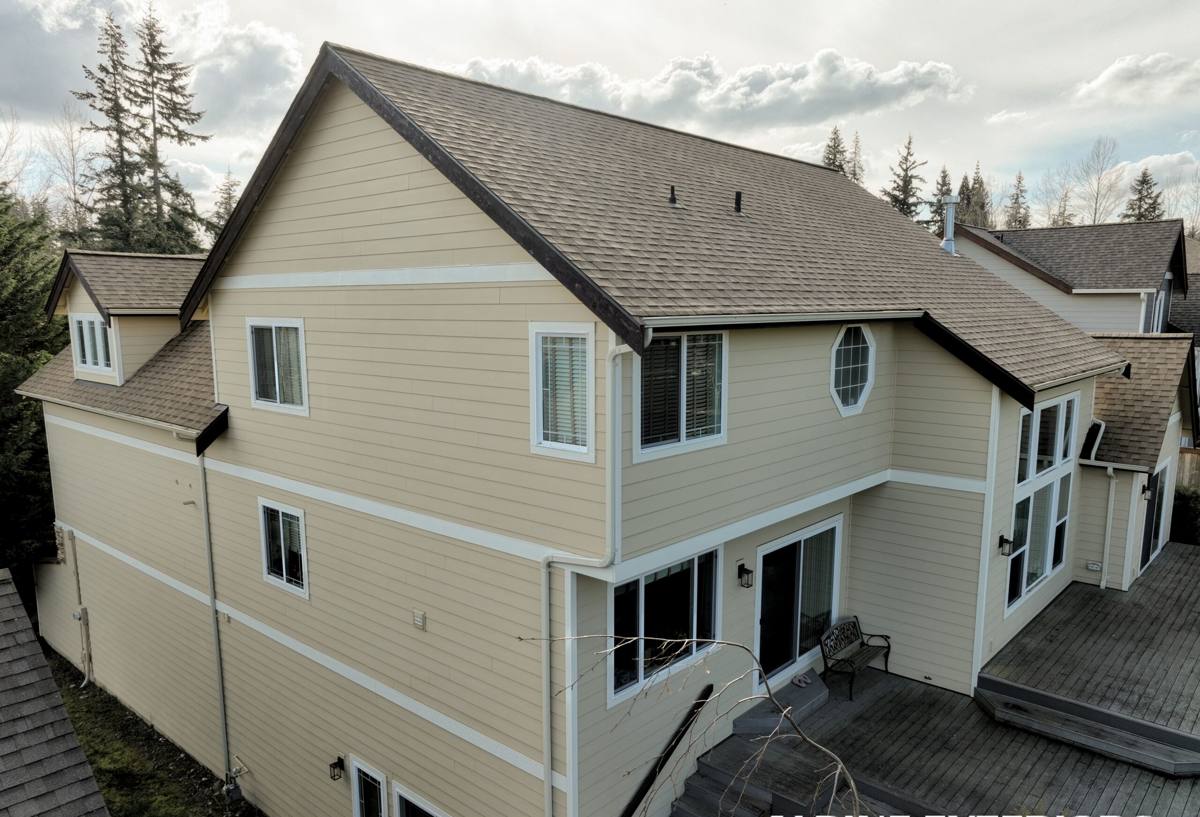
What We're Actually Looking At: Structure First, Surface Second
A lot of deck repair calls start with a homeowner pointing at a soft board or a wobbly rail. That's a reasonable place to start looking, but it's rarely the whole story. Surface problems are often the visible symptom of something happening underneath — and on a property exposed to constant salt air and rain, the structural components deserve the first look.
Structural Elements We Check
- Ledger board attachment to the house — the single most common source of catastrophic deck failure when flashing has failed and water has been getting behind it unnoticed
- Posts and post bases, especially where they meet concrete footings or grade — this is where trapped moisture does the most damage
- Joists and beams for rot, especially at the ends where they're hardest to inspect without pulling decking
- Fasteners and connectors — corroded or undersized hardware is extremely common on older Whatcom County decks and is a quiet safety issue
- Footings for movement, cracking, or inadequate depth for our frost and drainage conditions
Surface Elements We Check
- Decking boards for cupping, splitting, soft spots, and fastener pop
- Railings and balusters for looseness, rot at post connections, and code-height issues on older builds
- Stairs and stringers, which take disproportionate wear and are a common source of deck injuries when neglected
- Finish condition — whether a board needs replacement or simply needs to be cleaned, brightened, and resealed
Skipping the structural pass and jumping straight to replacing a few boards is how homeowners end up paying for the same repair twice.
Signs You're Looking at Repair, Not Just Maintenance
Some deck issues are cosmetic and can wait for a routine cleaning and reseal. Others are early warnings that need attention before the next wet season. A few signals worth taking seriously:
- Boards that feel spongy or flex noticeably underfoot
- Visible gaps opening up where the deck meets the house
- Railings that move when leaned on, even slightly
- Persistent green or black staining that comes back quickly after cleaning
- Fasteners with rust bleed staining the wood around them
- A noticeable increase in splinters or surface roughness on boards that used to be smooth
Any one of these on its own might just mean it's time for maintenance. Two or three together, especially combined with the deck's age, usually means it's time for an actual repair assessment.
Repair Versus Replacement: How We Think About It
Deck repair only makes sense when the framing underneath is sound. If the joists, ledger, and posts are solid, replacing worn decking boards, tightening or rebuilding railings, and addressing moisture points is a straightforward, cost-effective path. If the framing itself has significant rot or the footings have failed, patching the surface is a short-term fix that will need to be redone.
| Factor | Favors Repair | Favors Replacement |
|---|---|---|
| Framing condition | Solid, dry, no rot at joists or ledger | Soft or crumbling wood at structural members |
| Age of deck | Under 15-20 years | Original build is older and was never upgraded |
| Extent of damage | Isolated boards or sections | Damage spread across most of the surface |
| Ledger flashing | Intact or easily corrected | Failed flashing with ongoing water intrusion |
| Code compliance | Railings and stairs already meet current code | Railing height, spacing, or footings don't meet current standards |
We'll walk through this with you directly rather than defaulting to the more expensive option — a well-targeted repair is often the right call, and we'll say so when it is.
Rough Cost Factors
Exact numbers depend heavily on scope, but the broad cost drivers on a Point Roberts repair are consistent: how much decking needs replacing, whether structural framing is involved, whether railings need to be rebuilt to current code, and how much of the underlying moisture damage is hidden until boards come up. Small, surface-only repairs sit at the low end; anything touching the ledger board, posts, or footings moves into a more significant project. We give a firm number after the structural check, not before.
Materials: Matching the Repair to What's Already There
Most repairs are done in the same material as the existing deck, so the patch blends and ages consistently rather than sticking out or aging at a different rate.
Wood Decking
Pressure-treated framing and cedar or fir decking are common on older Point Roberts and Ferndale homes. Wood repairs are straightforward and cost-effective, but the replaced sections need the same sealing and maintenance schedule as the rest of the deck to hold up against the salt air — otherwise the new boards will weather unevenly compared to the old ones.
Composite Decking
Composite repairs require matching the existing board profile and color as closely as possible, since composite lines change over time and an exact match isn't always available. We're upfront when a perfect match isn't possible so you can decide whether a partial-board swap or a broader resurfacing makes more sense.
Hardware and Fasteners
Given the corrosion pressure from salt air, we replace old fasteners with stainless or coated hardware rated for coastal exposure rather than reusing what's there or matching to standard-grade fasteners — this is one area where we don't cut a corner, since fastener failure is a safety issue, not just a cosmetic one.
Our Process on a Point Roberts Repair
- On-site assessment — we inspect from the framing up, including checking under the deck where accessible, not just the visible surface
- Written scope — a clear breakdown of what's structural, what's surface-level, and what's optional versus necessary
- Repair execution — structural fixes first (ledger, framing, footings, hardware), then decking, railings, and stairs
- Moisture management — correcting flashing, drainage, and any grading issues contributing to the original damage, so the repair isn't undone by the same problem within a year or two
- Finish work — cleaning, brightening, sealing, or staining so repaired sections integrate with the rest of the deck
We don't close up a repair without addressing whatever caused the damage in the first place. Replacing a rotted board without fixing the flashing or drainage behind it just buys a year or two before the same spot fails again.
Why a Crew That Already Works Point Roberts Matters
Point Roberts is a peninsula bordered by Canada, which means getting a crew, materials, and equipment out there involves border logistics that a lot of contractors based elsewhere in Whatcom County simply don't want to deal with regularly. That logistical friction is real, and it's part of why some homeowners on the peninsula struggle to get contractors to call back or show up on schedule.
Because we already work in Point Roberts on a regular basis, we're not planning a one-off trip around a single job — we know how to schedule around the crossing, we're not guessing at permitting requirements through Whatcom County, and we've seen firsthand how the local exposure to salt air and driving rain affects deck framing and hardware differently than it does a few miles inland. That familiarity shows up in fewer surprises during the job and repairs that are built for the conditions the deck actually faces, not generic assumptions.
Maintenance Checklist Between Repairs
A few habits go a long way toward stretching the life of a deck in this climate and reducing how often repair is needed at all:
- Sweep debris and standing moisture off the deck surface regularly, especially in shaded corners where moss takes hold first
- Clean and reseal wood decking on a consistent schedule rather than waiting until it looks visibly weathered
- Check railing connections by hand a couple of times a year — loose hardware is easy to catch early and hard to ignore once it's failed
- Keep gutters and downspouts clear so runoff isn't dumping extra water directly onto or under the deck
- Look at the ledger board area where the deck meets the house at least once a year for any sign of gapping or staining
- Address moss and algae promptly rather than letting it build up — it holds moisture against the wood and makes surfaces slick and unsafe
Get a Straight Assessment
If your deck in Point Roberts has soft spots, loose railings, or moss that keeps coming back, it's worth having someone look at the framing before deciding what to do about the surface. We're happy to come out, walk the deck with you, and give you an honest read on whether you're looking at a repair or something bigger — no pressure, no upsell. Use the form below to request a free estimate.