 Ferndale Exterior
 Siding on Point Roberts Faces a Harder Job Than Most
Point Roberts sits on its own peninsula at the southern tip of Boundary Bay, cut off from the rest of Whatcom County by geography — the only way in or out by land is through Canada. That isolation shapes more than commute times. It means homes here sit exposed to open marine air off the Strait of Georgia with little of the wind-breaking development you'd find in a denser coastal town. Salt-laden air, near-constant winter rain, and heavy tree cover on the interior lots combine into one of the tougher siding environments in Whatcom County.
We're a Ferndale-based crew, and Point Roberts is part of our regular service area — not a place we drive out to occasionally. That matters for a job like siding replacement, where the difference between a product that lasts decades and one that fails early usually comes down to whether the installer actually understands the site conditions before the first board goes up.
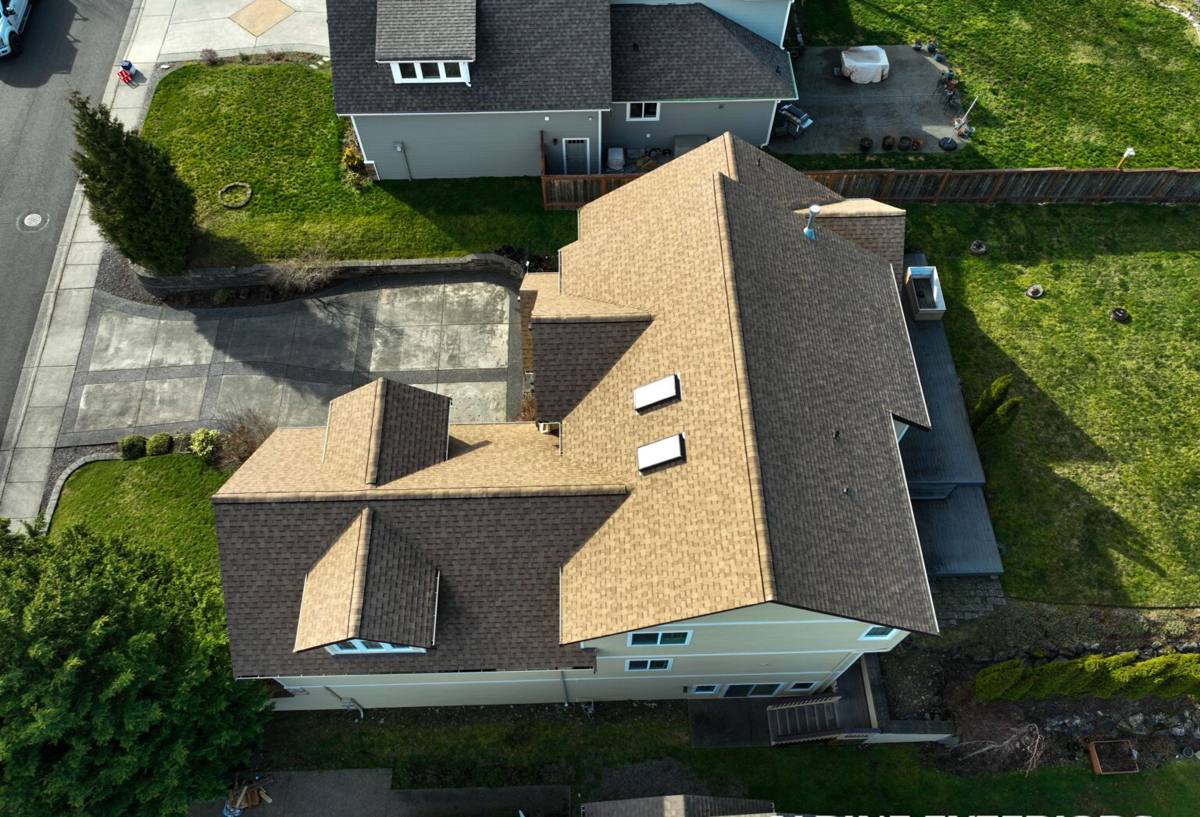
What Salt Air, Rain, and Moss Actually Do to Siding
Salt Air
Airborne salt is corrosive to metal fasteners, flashing, and trim. On homes close to the water, salt exposure accelerates rust at nail heads and behind poorly sealed joints, which shows up years later as staining, streaking, or fastener pop-through. It also degrades paint film faster than inland exposure, so a siding product's factory finish matters more here than it would forty miles inland.
Driving Rain
Point Roberts gets wind-driven rain off the water, which pushes moisture sideways into laps, seams, and butt joints instead of letting it run straight down and off. Siding systems that rely on caulk and paint alone to keep water out struggle in this kind of exposure. What holds up is a properly lapped, properly flashed assembly with a drainage plane behind it — the water management matters as much as the siding material itself.
Moss and Algae
Between the tree cover on many interior lots and the long, wet Pacific Northwest shoulder seasons, north-facing and shaded walls stay damp for extended stretches. That's exactly the environment moss and algae need. Porous or absorbent siding materials hold that moisture and feed the growth; dense, factory-sealed materials shed it and resist staining far longer.
What a Correct Siding Replacement Actually Involves
Replacing siding isn't just stripping old material and nailing up new. Done right, it's a full envelope check:
- Removing old siding and inspecting the sheathing underneath for rot, soft spots, or water damage — especially around windows, doors, and any spot where past caulk failures let water in
- Repairing or replacing any compromised sheathing before covering it back up
- Installing a weather-resistive barrier that's lapped correctly, shingle-style, so water sheds outward instead of pooling behind the cladding
- Flashing every penetration — windows, doors, vents, hose bibs, light fixtures — so water can't track behind the new siding at the weak points
- Installing the siding itself with correct fastener spacing, exposure, and clearances (ground clearance, roof-to-wall clearance) per manufacturer specs
- Sealing and finishing trim, corners, and joints with products rated for the material and the exposure
Skip any one of those steps and the siding on top can be flawless while the wall behind it is still failing. In a high-moisture, high-salt environment like Point Roberts, the margin for skipped steps is smaller than it is elsewhere.
Why We Install Only James Hardie Fiber Cement
We standardized on James Hardie fiber cement siding for every home we work on, including Point Roberts, and we don't install vinyl, LP SmartSide, or other engineered wood products. That's a deliberate call, not a default.
Vinyl siding is affordable and low-maintenance in mild conditions, but it's a thin material that expands and contracts significantly with temperature swings, and its seams and laps rely heavily on correct installation to stay weather-tight under driving rain. Engineered wood products like LP SmartSide use a wood-strand core that's treated to resist moisture, but any wood-based core is still vulnerable if water gets past the finish over time — a real risk in a location that stays damp for long stretches of the year.
James Hardie fiber cement is a cement, sand, and cellulose fiber composite. It doesn't have a wood core to rot, it's non-combustible, and it holds up to sustained moisture exposure without swelling or delaminating the way wood-based products can. Its ColorPlus factory finish is baked on under controlled conditions rather than field-painted, which gives it better fade and chip resistance in salt air than a job-site paint job. Hardie's HZ5 product line is engineered specifically for climates with more moisture cycling, which fits this stretch of Whatcom County.
It's not the cheapest option on the market, and it's heavier and less forgiving to install than vinyl — it requires correct fastening, proper joint treatment, and installers who know the product. That installation sensitivity is exactly why we treat it as a system, not just a material, and why we don't cut corners on the prep work underneath it.
Our Siding Replacement Process
- On-site assessment. We walk the exterior, check for existing moisture damage, note problem areas (shaded walls, low-clearance spots, exposure to prevailing wind and rain), and talk through what you're seeing from the inside — drafts, stains, soft spots.
- Written estimate. You get a clear scope of work and pricing before anything is scheduled, including what's included in tear-off, repair, and installation.
- Tear-off and inspection. Old siding comes off and we inspect the sheathing before covering anything back up. If there's damage, we show you and discuss the repair before proceeding.
- Weather barrier and flashing. This is the step that determines how the wall performs for the next 30-plus years — it happens before a single piece of visible siding goes up.
- Hardie installation. Installed to manufacturer spec for fastening, exposure, and clearance, with attention to every joint and penetration.
- Final walkthrough. We go over the finished work with you before calling the job done.
Cost Factors for Point Roberts Siding Replacement
Every home is different, but the factors that move the price up or down are consistent. Rather than quote a number that won't reflect your home, here's what actually drives cost:
| Factor | Why It Matters |
|---|---|
| Sheathing condition | Rot or water damage found during tear-off adds repair scope before new siding can go on |
| Home size and wall complexity | More corners, gables, and trim detail means more labor and material |
| Siding profile chosen | Hardie lap, shingle, and panel siding vary in material and install time |
| Access | Landscaping, fencing, or tight setbacks that limit staging and scaffolding add time |
| Trim and detail work | Window and door trim, corner boards, and fascia detail scale with home style |
| Logistics to Point Roberts | A crew already scheduled to work in the area avoids the added cost and delay of one-off mobilization |
Why It Matters That We Already Work in Point Roberts
Point Roberts' isolation isn't just a fact about the community — it's a practical issue for any contractor. Crews that aren't set up to work there routinely can end up back-loading trips, rushing material deliveries, or treating the job as a one-off inconvenience. That shows up in scheduling delays and, sometimes, in shortcuts taken to get off the peninsula sooner.
Because we're based in Ferndale and already schedule work throughout the Point Roberts area, we don't have that problem. Material orders, crew scheduling, and any follow-up work happen on the same cadence as the rest of our service area — not as a special case. For a job where sequencing (tear-off, repair, barrier, flashing, siding) has to happen correctly and in order, having a crew that isn't rushing to leave the peninsula is a real advantage.
Signs Your Point Roberts Home May Need New Siding
- Visible warping, buckling, or soft spots when you press on the siding
- Persistent moss, algae, or dark staining that returns shortly after cleaning
- Peeling or bubbling paint, especially on walls facing prevailing wind and rain
- Rust streaking at fastener points or trim seams
- Rot or soft wood visible at corner boards, window trim, or the base of walls
- Higher-than-expected heating bills, which can point to a compromised weather barrier behind the siding
- Siding that's original to a home built more than 25-30 years ago and has never been replaced
Any one of these on its own isn't necessarily an emergency, but a few of them together — particularly moisture-related ones — are worth a professional look before they turn into structural repair costs.
Maintenance After Installation
James Hardie siding is genuinely low-maintenance compared to wood-based alternatives, but "low-maintenance" doesn't mean "no maintenance," especially in this climate. A yearly rinse to clear salt residue and organic buildup, prompt attention to any caulking that starts to fail around trim, and keeping vegetation trimmed back from shaded walls all go a long way toward getting the full lifespan out of the material. None of it is labor-intensive, but skipping it entirely in a salt-air, high-moisture environment shortens the timeline.
If you're seeing any of the warning signs above, or you just want an honest read on where your siding stands, we're happy to come take a look. Estimates are free, there's no pressure, and you'll get a straight answer about what your home actually needs — use the form below to get started.