 Ferndale Exterior
 Fairhaven's Climate Is Hard on Roofs — Here's Why
Homes in the Fairhaven area near Ferndale sit close enough to the water that salt-laden air is a constant factor, not an occasional one. Combine that with Whatcom County's long wet season, driving rain off the Sound, and heavy tree cover that shades roofs for months at a time, and you get a roof environment that ages differently than a roof fifty miles inland. Metal components corrode faster. Moss and algae get a longer growing season because roofs simply don't dry out between storms. And wind-driven rain finds its way into gaps that would stay dry in a calmer climate.
None of that means a Fairhaven-area roof is doomed to constant problems. It means the repair work has to account for those conditions specifically — the materials, the flashing details, and the order of operations all shift when salt air and moss are part of the equation. A patch job that ignores the local climate tends to fail again within a season or two.
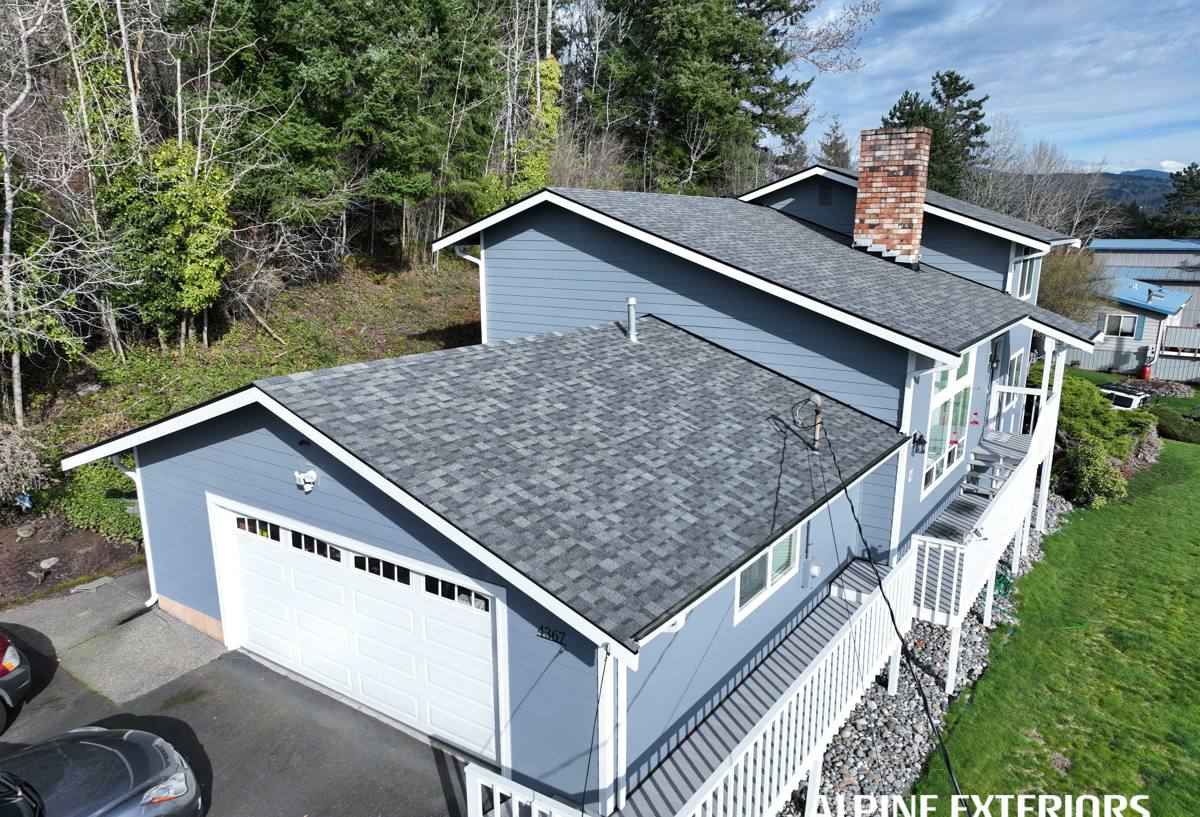
Signs a Fairhaven-Area Roof Needs Repair
Most roof problems we get called out for in this area don't start as leaks — they start as small warning signs that get ignored through a wet winter. Here's what we tell homeowners to watch for:
- Dark streaking or green-black growth concentrated on the shaded or north-facing slopes
- Moss cushions building up along the ridge, in valleys, or at the roof edge
- Granule buildup collecting in gutters or at the base of downspouts
- Curling, cupping, or lifted shingle edges, especially on slopes that get the most sun exposure
- Rust staining below metal flashing, vents, or fasteners
- Soft or discolored ceiling patches after a heavy rain event, even if they dry out afterward
- Daylight visible through the roof deck from inside an attic space
- Gutters pulling away from the fascia or sagging under moss and debris weight
Any one of these on its own isn't necessarily an emergency, but they're the reason we recommend a roof gets looked at before the wet season peaks rather than after a leak shows up inside the house.
What's Actually Causing Most of the Leaks We Find
Moss and Trapped Moisture
Moss doesn't just look bad — it holds water against the shingle surface long after the rain has stopped, which accelerates granule loss and, over time, works its way under shingle tabs and flashing edges. In shaded areas around Fairhaven, roofs can stay damp for days after a storm, which is exactly the environment moss needs to take hold.
Flashing and Valley Failures
Flashing — the metal at roof valleys, chimneys, skylights, and wall intersections — is where the vast majority of real leaks originate, not the open field of shingles. Driving rain off the water pushes water sideways and upward at these transitions in a way that vertical rain doesn't, which means flashing that was installed with only average detailing tends to leak here sooner than it would in a calmer climate.
Fastener and Metal Corrosion
Salt air accelerates corrosion on exposed fasteners, drip edge, and older galvanized flashing. Once a nail head or flashing seam starts to corrode, it loses its seal integrity well before it looks obviously "rusted out" from the ground.
Ventilation-Driven Moisture
A surprising number of "leaks" are actually condensation from poor attic ventilation, not water intrusion from outside. In a climate this wet, a roof that can't breathe properly traps moisture underneath the deck, which can mimic or worsen an actual leak and rot the sheathing from below.
How We Diagnose and Repair a Roof
We don't quote a repair off a photo or a guess. The process is straightforward and it's the same one we'd want used on our own homes:
- Full roof walk, not just a look from the ground — every valley, penetration, and flashing detail gets checked by hand
- Attic inspection where accessible, checking the underside of the deck for staining, rot, or ventilation issues
- Tracing the actual water path — the stain inside the house is rarely directly below the entry point on the roof
- Identifying whether the issue is isolated (a single flashing detail, a section of damaged shingles) or symptomatic of broader wear
- Written scope of the repair before any work starts, including what materials will be used and why
- Repair performed with attention to how the fix integrates with the surrounding roof, not just the failed spot
- Final check to confirm water is shedding correctly at the repaired area under normal roof drainage patterns
That last step matters more than people expect. A repair that stops the visible leak but doesn't correct the underlying water path just moves the problem to a new spot next season.
Repair or Replace? How We Help You Decide
Not every roof problem needs a full replacement, and we're not going to tell you it does. But there's a point where repeated patching stops making financial sense. Here's how we walk homeowners through that decision:
| Factor | Leans Toward Repair | Leans Toward Replacement |
|---|---|---|
| Age of roofing material | Well within expected lifespan | Near or past manufacturer's expected service life |
| Scope of damage | Isolated to one section, flashing, or penetration | Widespread across multiple slopes |
| Deck condition | Solid, dry sheathing found during inspection | Soft spots, rot, or repeated moisture staining |
| Repair history | First or second repair in this area | Same area repaired multiple times already |
| Granule loss | Minor, expected wear for the roof's age | Heavy, exposing the underlying mat broadly |
We'll always give you the honest read on which column your roof falls into, including when the answer is "repair now, plan for replacement in a few years."
Materials and Methods We Use for Lasting Repairs
Given the salt air and rain exposure common to this area, we're deliberate about a few things on every repair:
Flashing metal — we favor corrosion-resistant flashing details at valleys, chimneys, and wall transitions over bare galvanized steel, since salt air shortens the useful life of unprotected metal. This is a durability decision, not a cosmetic one.
Fasteners — corrosion-resistant fasteners matter more here than in a dry inland climate. A fastener that loosens or corrodes early is one of the most common reasons a "repaired" spot leaks again within a year or two.
Shingle matching — when we're replacing damaged shingles rather than the whole field, we match as closely as possible in profile and color so the repair doesn't stand out or create a weak transition line where two shingle generations meet.
Sealants — we use sealants rated for sustained moisture exposure at flashing details, not general-purpose caulk, since a roof in this climate almost never gets a long dry stretch to let a lesser product cure and hold properly.
Moss and Algae: What Happens After the Repair
Fixing the leak is only half the job if the roof still has the growing conditions that caused moss to take hold in the first place. Part of a proper repair visit includes a conversation about ongoing moss and algae management, because in a shaded, wet climate like this one, moss will come back if nothing changes.
- Clear moss and debris from valleys and behind chimneys where water and organic material collect
- Keep gutters and downspouts clear so water isn't sitting against the roof edge
- Trim back overhanging branches where practical to reduce shade and speed drying time
- Address moss growth early each season rather than letting it build up over a full wet season
- Check attic ventilation if moisture problems keep recurring on the same slope
None of this is about selling extra services — it's the difference between a repair that lasts and one you're paying for again in two years.
What Affects the Cost of a Roof Repair
We don't like giving a number over the phone before we've actually seen the roof, because the range on repair cost is wide and depends on real variables. Here's what actually drives the price up or down:
| Factor | Why It Matters |
|---|---|
| Roof pitch and access | Steeper roofs and limited access take longer and require more safety setup |
| Number of penetrations involved | Chimneys, skylights, and vents each add flashing complexity |
| Extent of moss or debris removal needed | Heavy buildup adds cleanup time before repair work can even start |
| Deck condition underneath | Rotted sheathing found during the repair needs to be replaced, which adds scope |
| Material match availability | Older or discontinued shingle profiles can be harder to match cleanly |
We'll walk you through exactly which of these apply to your roof before we give you a number, so there aren't surprises once work starts.
Why Hire a Crew That Already Works in Fairhaven
A roof repair crew that's unfamiliar with this specific stretch of Whatcom County is working from general assumptions about weather and wear. A crew that already services homes in this area knows how quickly moss regrows here, how driving rain tends to find weak flashing during winter storms, and how salt exposure changes the maintenance timeline compared to a roof further inland. That familiarity shows up in smaller ways too — knowing what to expect from tree cover on a given lot, or recognizing a flashing failure pattern because we've corrected the same one on a neighboring street.
It also means a faster, more informed response. When a storm rolls through and a homeowner nearby calls with an active leak, a crew already working the area can get there sooner and diagnose the problem faster because we're not starting from zero on what this climate does to a roof.
Get a Straight Answer About Your Roof
If you're seeing moss buildup, a stain on the ceiling, or just want a second opinion before winter storms hit, we'll come take an honest look. We'll tell you plainly whether it's a repair, what's driving the issue, and what it'll take to fix it right — no pressure, no upsell. Reach out below for a free estimate on your Fairhaven-area roof.