 Ferndale Exterior
 Roofing in Sandy Point Isn't Quite Like Roofing Anywhere Else in Ferndale
Sandy Point sits close enough to the water that the air itself works against a roof. Salt-laden moisture drifts inland, wind off the strait drives rain sideways into places a roof in a more sheltered part of Whatcom County would never see it, and the combination of shade, dampness, and mild temperatures gives moss a long season to take hold. None of that means asphalt shingle roofing is the wrong choice for the neighborhood — it's still one of the most practical, cost-effective options available. It does mean the installation has to account for conditions that a generic roofing job, done the same way everywhere, tends to overlook.
We've worked on homes throughout Ferndale and the surrounding parts of Whatcom County long enough to know that a roof spec'd for an inland subdivision doesn't always hold up the same way a few miles closer to the water. This page walks through what that actually means for a Sandy Point roof — what the climate does to shingles over time, what a correctly built roof system looks like in response, and how we approach the work.
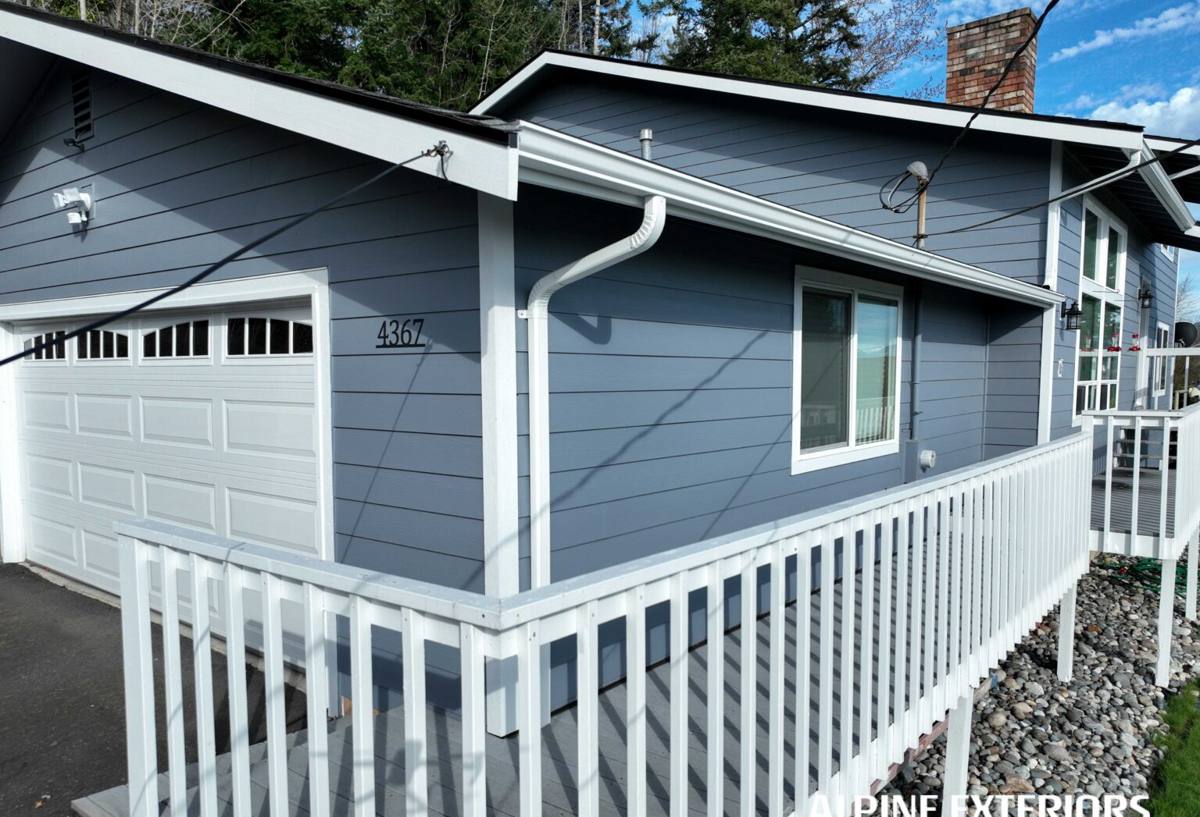
What Salt Air, Driving Rain, and Moss Actually Do to a Roof
Salt Air
Salt exposure doesn't destroy asphalt shingles directly the way it corrodes bare metal, but it accelerates wear on the metal components every shingle roof depends on — flashing, drip edge, nail heads, and vent hoods. Once those start to corrode or lose their coating, water finds its way underneath the shingles long before the shingles themselves look worn out. This is why the metal details on a Sandy Point roof matter as much as the shingle brand.
Driving, Wind-Driven Rain
Rain that falls straight down is easy for any roof to shed. Rain that's being pushed sideways by wind behaves differently — it can work its way under shingle tabs, around chimney and skylight flashing, and into valleys if those areas weren't sealed and lapped correctly. A roof built for calmer conditions can go years without a problem and then leak the first time a real wind event lines up with heavy rain.
Moss and Algae
Whatcom County's mild, damp climate gives moss a long growing window, and shaded, north-facing slopes near the water are especially prone to it. Moss isn't just cosmetic — as it establishes itself, it lifts shingle edges, holds moisture against the roof deck, and gradually shortens the life of the shingles underneath it. Left unaddressed, moss growth is one of the more common reasons a shingle roof fails well before its expected lifespan.
What a Correctly Built Shingle Roof Needs in This Environment
A roof that's going to hold up in Sandy Point needs a few things done right, in order, from the deck up:
- Sound, properly ventilated decking — trapped moisture and heat under the shingles accelerates deterioration from underneath, which is invisible until it isn't.
- A quality synthetic or self-adhered underlayment — this is the roof's real waterproofing layer; the shingles are the first line of defense, but the underlayment is what protects the home if wind-driven rain gets past them.
- Ice-and-water shield or equivalent membrane at vulnerable points — eaves, valleys, and anywhere water tends to pool or back up need extra protection beyond standard underlayment.
- Corrosion-resistant flashing and fasteners — given the salt exposure near the water, we don't cut corners on metal quality here.
- Correct nailing pattern and shingle exposure — installed to the manufacturer's high-wind specifications, not just standard nailing, given how exposed some Sandy Point lots are to wind off the water.
- Proper attic and roof ventilation — balanced intake and exhaust keeps the roof deck dry and helps prevent the moss and algae growth that thrives on cool, damp roof surfaces.
Skip any one of these and the roof may still look fine for a few years. The problems that show up from cutting corners in a marine climate tend to show up as leaks, premature granule loss, or moss infestation rather than obvious installation defects — which is part of why it pays to know the work was done right the first time.
Choosing a Shingle Line for a Salt-Air, High-Moisture Climate
Not every asphalt shingle product is built the same way, and the differences matter more here than they would in a drier, more sheltered part of the state. The table below outlines the general trade-offs we walk homeowners through when discussing options for a Sandy Point home.
| Shingle Class | Typical Lifespan | Moss/Algae Resistance | Wind Rating | Best Fit |
|---|---|---|---|---|
| 3-Tab (economy) | 15–20 years | Standard granules, no built-in resistance | Lower | Budget-focused projects on more sheltered lots |
| Architectural / Dimensional | 25–30 years | Often available with algae-resistant granules | Higher, especially with proper nailing | Most Sandy Point homes — the practical middle ground |
| Premium/Designer Architectural | 30+ years | Algae-resistant granules standard on most lines | Highest among asphalt options | Homes with maximum wind/water exposure or where appearance is a priority |
For most Sandy Point properties, we point homeowners toward a mid-to-upper architectural shingle with algae-resistant granules and a wind rating that matches the exposure of the lot. It's rarely worth saving money upfront on a 3-tab shingle if the home sits somewhere the moss comes back every year or the wind off the water is a regular factor — the maintenance and repair costs tend to erase the initial savings.
How We Approach a Sandy Point Roofing Project
The process itself isn't dramatically different from any quality roofing job, but the sequence and attention to detail shift based on what we know about the site conditions.
- On-site assessment. We look at slope orientation, tree cover, existing moss or algae staining, and how exposed the roof is to wind and salt spray, not just the condition of the shingles themselves.
- Deck inspection. Before anything goes back on, we check the decking for soft spots, rot, or moisture damage — especially in areas that have had moss sitting on them for a while.
- Tear-off and disposal. Old shingles, underlayment, and any compromised flashing come off completely; we don't install a new roof over old, saturated material.
- Repair and prep. Any damaged decking gets replaced, and we confirm ventilation intake and exhaust are balanced before the new system goes down.
- Underlayment and flashing. Ice-and-water membrane at eaves and valleys, synthetic underlayment across the field, and new corrosion-resistant flashing at every penetration and transition.
- Shingle installation. Installed to manufacturer spec for the wind zone, with attention to nailing pattern and exposure.
- Final walkthrough. We check flashing details, ridge and vent work, and cleanup before calling the job done.
Living With a Shingle Roof Near the Water: Maintenance That Actually Matters
A well-installed roof still needs some ongoing attention in this climate, particularly around moss and debris. A few habits go a long way toward getting the full lifespan out of a shingle roof in Sandy Point:
- Keep gutters and valleys clear of needles and debris, especially going into the wetter months — clogged water has to go somewhere, and it's usually not where you want it.
- Address moss when it first appears rather than waiting for it to spread — early growth is far easier and less damaging to remove than an established mat.
- Trim back overhanging branches where practical to reduce shade and debris buildup on north-facing slopes.
- Have flashing and roof penetrations checked periodically, since these are typically where salt-air corrosion shows up first, well before the shingles themselves show wear.
- After any significant wind event, a quick visual check for lifted or missing shingles can catch a small problem before it becomes a leak.
Signs Your Sandy Point Roof May Need a Closer Look
Most roofing problems near the water don't announce themselves with a dramatic leak — they show up gradually. Homeowners in Sandy Point should keep an eye out for:
- Dark streaking or green/black growth on shaded slopes
- Granules collecting in gutters or at the base of downspouts
- Curling, cupping, or lifted shingle edges, particularly on wind-exposed sides of the roof
- Rust staining or visible corrosion around flashing, vents, or metal fasteners
- Soft spots or sagging when walking the roof (or visible from the ground on a steep slope)
- Daylight visible through the roof deck from inside the attic
- Water stains on interior ceilings, especially after a windy rainstorm
Catching these early is almost always cheaper than waiting. A roof that's leaking has usually been letting moisture in for longer than the interior stains suggest.
Why It Matters to Hire a Crew That Already Works This Neighborhood
A roofing crew that mostly works drier, more sheltered inland areas isn't necessarily doing anything wrong by their own standards — but their standard practices may not be built for salt exposure, sustained wind, or a moss season as long as Whatcom County's. Knowing which slopes in a neighborhood like Sandy Point tend to hold moss, which orientations take the brunt of storms off the water, and which flashing details fail first in salt air isn't something you learn from a spec sheet. It comes from doing the work in this specific environment, repeatedly, and paying attention to what actually goes wrong.
That local familiarity shows up in small decisions — upgrading flashing hardware without being asked, recommending algae-resistant shingles on a shaded slope, or flagging ventilation issues before they turn into deck rot. Those are the details that separate a roof that looks good on installation day from one that's still performing correctly ten or twenty years later.
What a Roof Warranty Actually Covers — and Why Installation Quality Is the Real Protection
Manufacturer warranties on asphalt shingles typically cover material defects, and many product lines offer enhanced warranty terms when installed by a certified contractor. But warranty paperwork doesn't prevent a leak caused by poor flashing work, incorrect nailing, or inadequate ventilation — those are installation issues, and most manufacturer warranties explicitly exclude damage caused by improper installation. In practical terms, the real protection for a Sandy Point homeowner is a roof system built correctly from the deck up, by a crew that installs to the wind and moisture conditions the site actually faces. We're glad to walk through what warranty coverage applies to any project and what workmanship coverage we stand behind separately.
If you're weighing a repair, a full replacement, or just want an honest read on how much life is left in your current roof, we're happy to take a look. There's no pressure and no obligation — just a straightforward assessment from a crew that already knows how Sandy Point's climate treats a roof. Reach out using the form below for a free estimate.