 Ferndale Exterior
 Sandy Point Decks Live in a Different Climate Than the Rest of Ferndale
Sandy Point sits close enough to the water that its decks take a different kind of beating than a deck three miles inland in Ferndale proper. Salt-laden air drifts in off the water and settles on every exposed surface. Wind-driven rain comes in at an angle instead of straight down, working its way under boards and into end grain that a more sheltered deck would never expose. And Whatcom County's long, damp shoulder seasons mean a north-facing or shaded deck can hold moisture — and grow moss and algae — for months at a stretch. A deck built with the same materials and details you'd use on a dry inland lot doesn't hold up the same way out here.
None of that means decking is a bad idea for a Sandy Point property. It means the material choice, the framing underneath it, and the fasteners holding it together all need to be picked with that exposure in mind from the start.
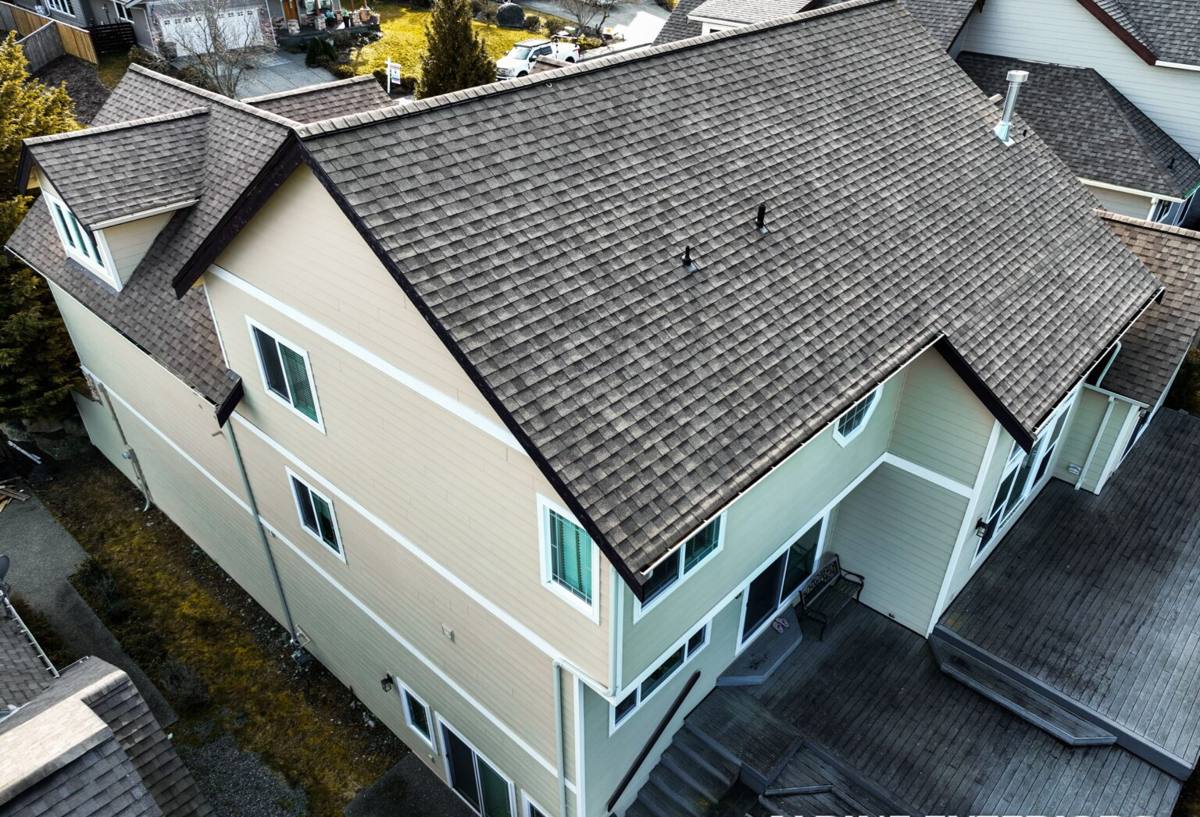
What Salt Air, Rain, and Moss Actually Do to a Deck
It helps to understand the specific ways coastal exposure wears down a deck, because it explains almost every decision in a correct build:
- Salt air accelerates corrosion on any fastener, bracket, or hidden fastening clip that isn't rated for it — this is usually the first thing to fail, long before the decking itself.
- Driving rain pushes water sideways under railings, around post bases, and into butt joints that would stay dry on a more sheltered lot.
- Persistent shade and damp air keep board surfaces wet longer after a storm, which is exactly what moss, algae, and mildew need to take hold.
- Freeze-thaw cycles, while milder here than inland Washington, still stress any joint where trapped moisture has nowhere to go.
A deck that fails early in this environment almost never fails because the decking boards themselves rotted through. It fails at the connections — fasteners, ledger boards, post bases — where water got trapped and nobody was checking.
Why Composite Decking Fits Sandy Point Better Than Solid Wood
Composite decking — boards made from a blend of wood fiber and plastic, usually with a protective cap on capped versions — doesn't absorb water the way solid wood does, doesn't need annual staining or sealing, and resists the surface staining that salt spray and organic debris cause on bare wood. For a deck that's going to see repeated wetting from rain and salt air, that matters more than it does on a dry, covered patio.
Capped vs. Uncapped Composite
Capped composite boards have a polymer shell wrapped around the core, which is the better choice for anything within reach of salt spray or standing moisture — it keeps water and salt residue from working into the board's fiber content over time. Uncapped composite is more affordable but relies on the core material's own resistance, which is a reasonable trade-off on a sheltered, dry deck and a poor one on an exposed Sandy Point site.
What Composite Doesn't Solve On Its Own
Composite decking is not maintenance-free, and it's not a substitute for correct framing. The boards resist rot and don't need refinishing, but they still need to be installed with proper gapping for drainage and airflow, and the structure underneath — joists, beams, fasteners — still needs to be built to handle the same salt and moisture exposure. A quality composite deck installed over an undersized, unprotected substructure will still develop problems, just at the framing level instead of the surface.
What a Correct Install Involves Here
The visible boards are the smallest part of doing this right on a coastal lot. The parts nobody sees are what determine whether the deck is still solid in ten or fifteen years.
Framing and Ledger Attachment
Pressure-treated framing rated for ground contact and coastal exposure, proper flashing at the ledger board where the deck meets the house, and a drainage path that keeps water from pooling against the structure. This is the single most common place we find corner-cutting on older Whatcom County decks — a ledger attached without proper flashing is a slow leak into the house framing, not just the deck.
Fasteners and Hardware
Stainless steel or coated fasteners rated for coastal and treated-lumber exposure, not standard galvanized hardware that will show rust streaks and start weakening within a few seasons of salt air. Hidden fastening clip systems, where used, need to be a grade actually rated for this environment — not just whatever came bundled cheapest with the board order.
Ventilation and Drainage Underneath
Adequate clearance and airflow under the deck so the framing can dry out between rain events, plus grading or drainage so water doesn't sit against posts and footings. On a shaded or low-lying Sandy Point lot, this is often the difference between framing that lasts and framing that quietly rots from underneath while the composite boards on top still look fine.
Comparing Decking Materials for This Kind of Exposure
| Material | Salt/Moisture Resistance | Maintenance | Typical Lifespan Here |
|---|---|---|---|
| Capped composite | Strong — sealed core resists moisture and salt residue | Periodic cleaning, no staining/sealing | Long, with correct framing and fasteners |
| Uncapped composite | Moderate — core exposed to weathering | Occasional cleaning | Shorter than capped in direct salt exposure |
| Pressure-treated wood | Weak without diligent upkeep | Annual sealing/staining recommended | Shortest without consistent maintenance |
| PVC decking | Strong — fully synthetic, no wood fiber to absorb moisture | Low, similar to capped composite | Long, but higher material cost |
There's no single "best" answer for every budget, but for a deck that sees regular salt spray and shade, capped composite or PVC consistently outperform bare wood over the life of the structure. We'll walk through the honest cost and appearance trade-offs for your specific lot rather than pushing one option across the board.
Our Process for a Sandy Point Composite Deck
We start with a site visit, not a phone quote — exposure, drainage, sun and shade patterns, and existing framing condition vary enough between properties in this area that a real look at the lot matters. From there:
- We assess the site: existing structure (if any), drainage, sun/shade exposure, and how close the deck sits to salt spray.
- We walk through board options and finishes with honest trade-offs on cost, appearance, and long-term maintenance for your specific exposure.
- We build the framing first, with coastal-rated fasteners and proper flashing and drainage details before a single deck board goes down.
- We install the decking with correct gapping, fastening, and edge details, then walk the finished deck with you before we call the job done.
Living With a Long Moss Season
Even the right decking and framing still need basic upkeep in a climate where moss and algae are a fact of life for a good chunk of the year. This isn't heavy maintenance — it's a short seasonal routine:
- Sweep off standing leaves, needles, and organic debris regularly, especially under trees or in shaded corners where moss gets a foothold fastest.
- Rinse the deck surface periodically to clear salt residue and organic buildup before it has time to set in.
- Check that gaps between boards stay clear of debris so water and air can keep moving underneath.
- Look at fasteners and railing hardware once or twice a year for early rust staining — catching it early is a quick fix, not a project.
- Keep gutters and downspouts near the deck clear so runoff isn't dumping extra water onto the structure.
Why a Crew That Already Works Sandy Point Matters
A contractor who's worked mostly inland jobs will often spec a deck the same way regardless of where it sits — same fasteners, same framing details, same board grade. That's not dishonesty, it's just unfamiliarity with what salt air and driving rain actually do over a few Whatcom County winters. A crew that's already built and repaired decks in this specific area knows which corners of a Sandy Point lot catch the worst of the wind-driven rain, which fastener grades hold up and which don't, and where past decks in the area have failed first. That's the kind of detail that shows up ten years later, not on install day.
Get a Straight Answer for Your Property
Every lot around Sandy Point handles wind, shade, and salt exposure a little differently, and the right decking package for your home depends on those specifics rather than a one-size answer. If you'd like an honest look at your deck project — new build or replacement — we're happy to walk the site and give you a straightforward, no-pressure estimate using the form below.