 Ferndale Exterior
 Deck Building for Sandy Point's Coastal Conditions
Sandy Point sits right up against the water, and that changes what a deck has to survive compared to a deck built a few miles inland. Homes here take on salt-laden air, wind-driven rain coming off the Strait, and a long, damp moss season that starts early in the fall and doesn't really let go until late spring. A deck built without those conditions in mind will show problems fast — rusted fasteners, soft spots in the decking, slick moss buildup, and railings that loosen years before they should.
We've built and repaired decks throughout Ferndale and the surrounding Whatcom County waterfront communities, and Sandy Point decks get a different set of decisions from us than a deck we'd build in town. This page walks through what that actually means: what the climate does to a deck over time, what materials and hardware hold up, what a correctly built deck involves structurally, and how our process works from first visit to final walkthrough.
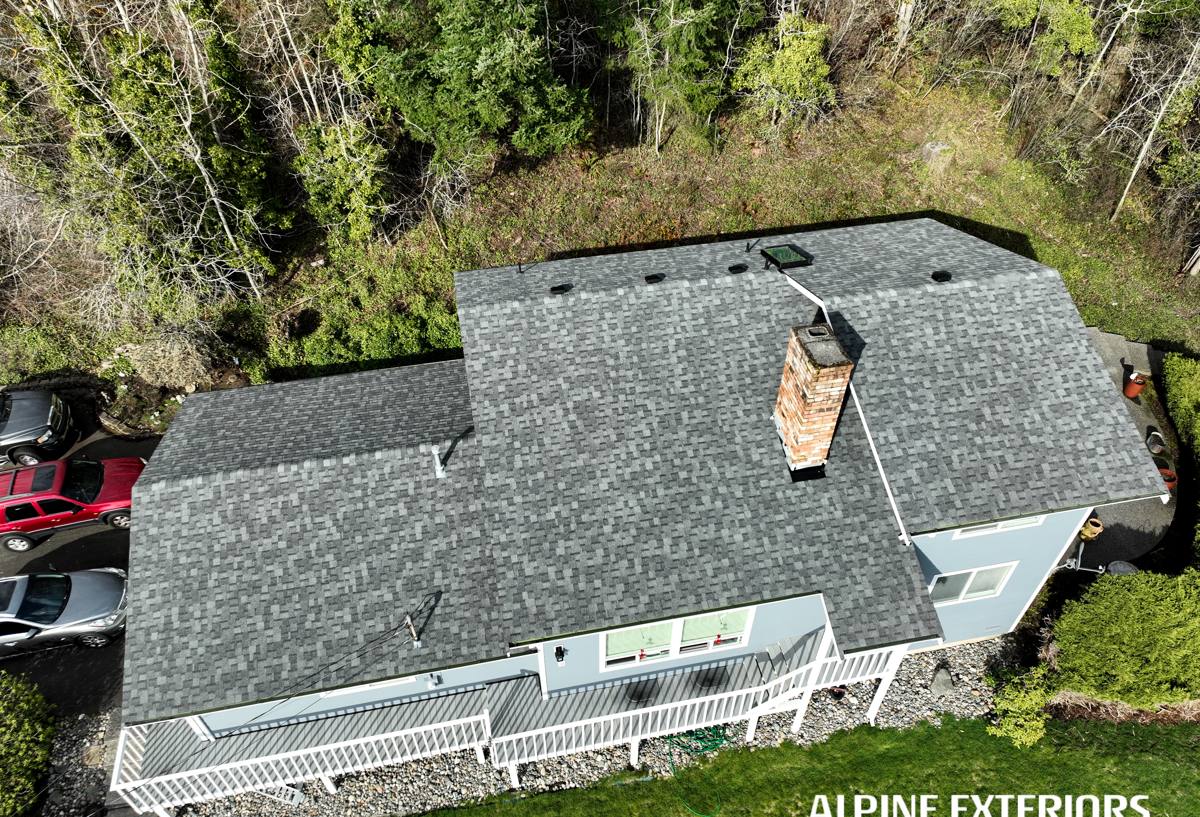
What Salt Air and Moisture Actually Do to a Deck
It's worth understanding the failure points before talking about the fix, because it explains why we make the choices we do.
Fasteners and Hardware
Standard galvanized screws and nails are built for general exterior use, not sustained salt exposure. Near the water, that coating breaks down faster, and once it does, rust sets in at the fastener heads first — which is exactly where you'll see it, as dark streaking around every screw. Rusting fasteners don't just look bad; they lose holding strength, and a deck board held by a corroding screw eventually works loose underfoot.
Wood Decay and Moss
Driving rain gets pushed sideways and up under railings, fascia boards, and stair stringers in ways that vertical rain doesn't. Combined with the region's long wet season, that means more surfaces stay damp longer, which is exactly what wood-decay fungus and moss need to get established. Moss on a deck surface isn't just a cosmetic issue — it holds moisture against the wood and creates a genuinely slippery walking surface, especially on stairs.
UV and Salt Together
Salt air combined with sun exposure accelerates fading and surface checking on some decking materials faster than either factor alone. This matters when choosing a decking product, since manufacturer fade and wear ratings are usually tested in more moderate conditions than a waterfront lot sees.
Choosing the Right Decking Material for a Salt-Air Site
There's no single "best" decking material — every option is a trade-off between upfront cost, maintenance commitment, and how it behaves in salt air and standing moisture. Here's how the common choices compare for a Sandy Point property specifically.
| Material | Salt Air / Moisture Behavior | Maintenance | Relative Cost |
|---|---|---|---|
| Pressure-treated wood | Good if fasteners and flashing are upgraded; end grain and cut edges need re-sealing | Annual cleaning and re-sealing recommended | Lowest upfront |
| Cedar | Naturally decay-resistant but softer; benefits from a breathable finish, not a film-forming coating | Periodic cleaning, re-oiling or re-staining every 2-3 years | Moderate |
| Composite decking | Won't rot, but lower-grade composites can absorb moisture at cut edges if not capped; consistent quality varies by brand | Occasional washing; no sealing or staining | Higher upfront |
| PVC decking | Fully moisture-resistant, handles salt air well, doesn't support moss growth on the surface itself | Lowest ongoing maintenance | Highest upfront |
We don't push one product line across every job. A wood deck that's properly flashed, ventilated underneath, and fastened with the right hardware can last a long time even this close to the water — it just asks more of the homeowner in upkeep. Composite and PVC trade a higher initial cost for less annual maintenance, which is worth weighing honestly against how much deck upkeep you actually want to do each year.
What a Correctly Built Deck Requires Here
The decking surface is the part everyone sees, but most of the deck problems we get called out to fix start below it. For a Sandy Point site, we pay particular attention to:
Ledger Board Attachment and Flashing
Where the deck attaches to the house is the single most common point of hidden water damage on any deck, anywhere. In a driving-rain environment, proper ledger flashing that directs water out and away from the house band joist isn't optional — it's the difference between a deck that lasts decades and one that causes rot behind the siding within a few years.
Footings and Framing
Footings need to be sized and set below frost depth and bear on undisturbed, stable soil — waterfront and low-lying lots can have softer or more variable soil than an inland lot, so we don't assume; we check. Framing lumber should be rated for ground contact where it's close to grade, and joists benefit from a protective tape over the top edge to keep water from wicking into the cut fastener holes.
Drainage and Airflow Underneath
Deck boards need consistent gap spacing so water actually sheds instead of pooling, and the framing underneath needs enough clearance and airflow to dry out between rain events. A deck built tight to the ground with poor airflow underneath is one of the fastest ways to grow moss and mildew on the underside, which then works its way back up.
Railings, Stairs, and Hardware Choices for Salt Exposure
Railings and stair stringers take more direct weather exposure than the deck surface itself, and they're structural — a loose railing post is a safety issue, not just a cosmetic one. For Sandy Point builds we typically recommend:
- Stainless steel or coated structural screws at all load-bearing connections, not standard exterior-grade fasteners
- Post bases and structural connectors rated for exterior/coastal use rather than standard galvanized
- Railing systems selected for how they perform in wet, salt-exposed conditions, not just appearance
- Stair treads with attention to slip resistance, since moss and algae form fastest on shaded stair surfaces
The cost difference between standard and upgraded hardware is small relative to the total project cost, but it's the difference that determines whether you're re-tightening railings in five years or twenty.
Our Deck Building Process
The process itself is straightforward, but each step gets shaped by what we find on your specific lot.
- Site visit and assessment — we look at grade, drainage, sun and wind exposure, and how close the build site is to salt spray, since that affects material and hardware recommendations.
- Design and material selection — we walk through the material comparison honestly, including what each option will actually cost you in maintenance over time, not just upfront.
- Permitting — deck permitting requirements depend on size, height, and attachment to the house; we handle the paperwork with Whatcom County so you don't have to track it down yourself.
- Footings and framing — built to span and load requirements with attention to flashing, fastener selection, and drainage from the start, not added on after the fact.
- Decking, railings, and stairs — installed with proper spacing, edge treatment, and hardware suited to the site.
- Final walkthrough — we go over the finished deck with you, including what maintenance it will need and when.
Maintenance That Actually Matters in Sandy Point
Every deck needs some upkeep — the question is how much, and doing the right things matters more than doing a lot of things. A homeowner's realistic annual checklist:
- Clear leaves, needles, and debris from between boards before they trap moisture through the wet season
- Wash off moss and algae growth as soon as it appears, rather than waiting until it's established
- Check railing posts and stair stringers for movement at least once a year
- Inspect fastener heads for early rust staining, especially near the water side of the structure
- Re-seal or re-stain wood decking on the schedule appropriate to that finish — don't wait until it's visibly gray and dry
- Confirm gutters and downspouts near the deck are directing water away rather than onto the structure
Why Local Experience Matters for This Job
A deck built to a generic inland spec will underperform at Sandy Point regardless of how well it's built otherwise — the climate exposure here is simply different from a deck a few miles from the water. Working this area regularly means we already know what fails first on waterfront builds, what the county expects for permitting, and which hardware and material choices are worth the added cost versus which ones are unnecessary for a given lot's exposure. That's the kind of judgment that only comes from having built and repaired decks in these exact conditions, not from a standard checklist.
If you're planning a new deck, or replacing one that's showing its age, we're happy to take a look and give you an honest read on what your site needs. There's no pressure and no obligation — just fill out the form below for a free estimate.