 Ferndale Exterior
 Windows Built for Sandy Point's Waterfront Exposure
Sandy Point sits right up against the water, which gives homes here a view worth protecting and a set of conditions that push windows harder than most inland properties in Whatcom County ever see. Salt-laden marine air, wind that drives rain sideways instead of straight down, and a moss season that can stretch across most of the year all work against a window's seals, frame materials, and glazing over time. A window that performs fine on a spec sheet can still underperform on an actual Sandy Point wall if it wasn't chosen and installed with that exposure in mind.
Energy efficiency in a window isn't just about a lower heating bill, though that matters here too. It's tied directly to how well the unit resists moisture intrusion, how the frame holds up to salt exposure, and whether the seals stay tight through repeated wet-season cycles. A window that's losing its thermal performance is very often also a window that's starting to let moisture in somewhere it shouldn't. We treat those two problems as connected, not separate, when we look at a Sandy Point home.
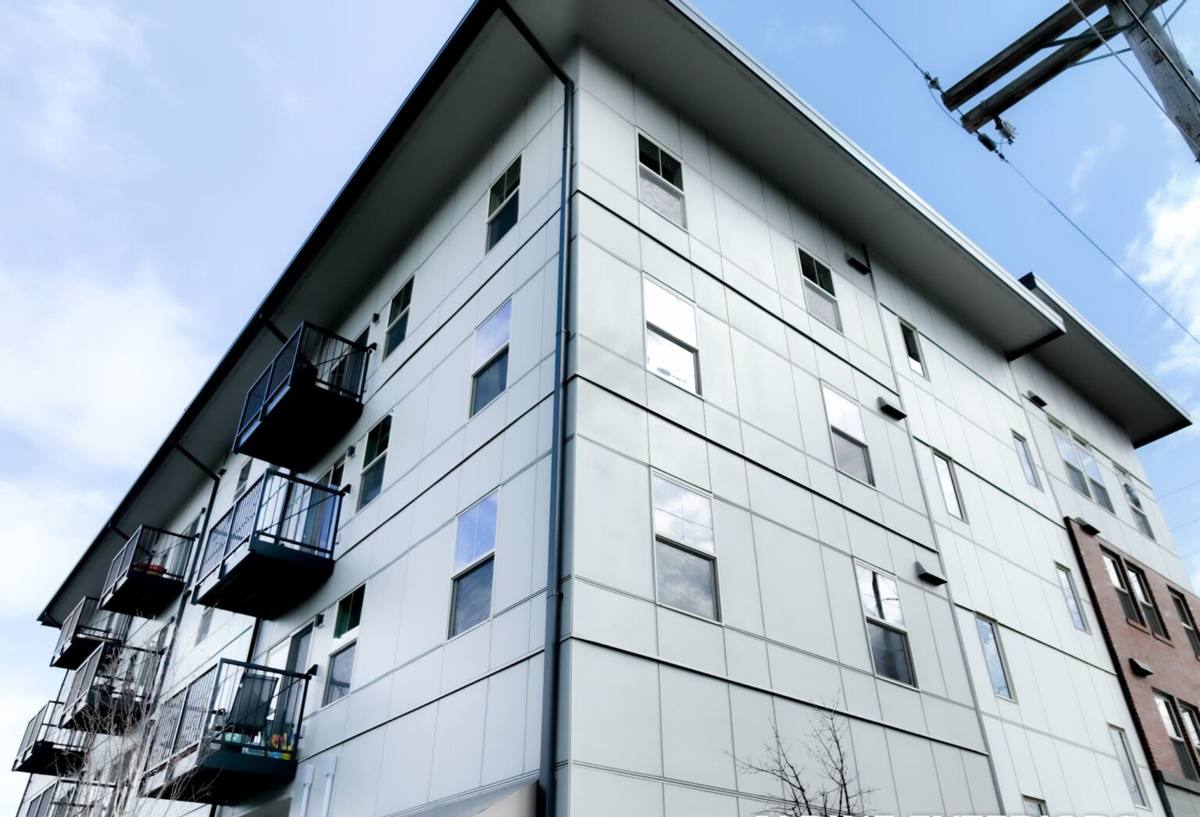
What Sandy Point's Climate Does to Windows
Salt Air and Corrosion
Being this close to the water means a steady, low-level dose of salt-laden air moving across every exterior surface, window hardware included. Cheaper fasteners, hinges, and cranks corrode faster here than they would a few miles inland, and corrosion at a hardware point is one of the more common reasons a window stops sealing tightly years before the glass itself has any problem. Frame finishes matter too — a lower-grade coating can chalk, pit, or discolor under sustained salt exposure well before the window has reached the end of its useful service life.
Wind-Driven Rain
Rain in this part of Whatcom County rarely falls straight down. Wind pushes it sideways into window openings, sills, and trim, which puts real load on flashing and seals that a simple annual rainfall number doesn't capture. A window that would perform fine in a calmer, drier climate can still develop leaks here specifically because water is arriving from the side and from below, not just from above. This is especially true on walls that face open water or prevailing wind, which describes a meaningful share of Sandy Point lots.
Moss, Damp Cold, and Condensation
Mild temperatures combined with near-constant moisture make for a long moss and mildew season across the county, and the added humidity near the water can make it worse right around window openings. That same damp cold is also what makes energy-efficient glazing worth the investment here — the issue isn't extreme temperature swings, it's long stretches of damp chill that a poorly performing window lets straight through, along with a tendency toward interior condensation on frames and glass that aren't rated for it.
What "Energy-Efficient" Actually Means for This Climate
Energy-efficient windows get marketed with a lot of numbers, and not all of them matter equally in a coastal Whatcom County setting. Here's what we actually weigh when we're speccing windows for a Sandy Point home:
- U-factor: Measures how well the window resists heat loss. Lower is better, and it's the single most relevant number for a climate defined by long damp, mild-cold stretches rather than short deep freezes.
- Low-E coatings: A microscopically thin coating that reflects heat back into the home in winter, without meaningfully affecting how much natural light comes through.
- Gas-filled glazing units: Argon or krypton gas between panes slows heat transfer compared to plain air, and it's standard on most quality double- and triple-pane units today.
- Air infiltration rating: How much air leaks around the sash and frame under wind pressure — directly relevant on a site that sees real wind loading off the water.
- Condensation resistance: How well the frame and glazing resist interior condensation in damp, mild-cold conditions, which matters more here than it does in a drier inland climate.
None of these numbers work in isolation. A window can carry a strong U-factor rating and still underperform on a Sandy Point wall if the installation lets air and water bypass the frame entirely. We treat the product rating and the installation quality as one package, not two separate decisions.
Frame Material Trade-offs for Coastal Homes
Frame material has an outsized effect on how a window ages in this specific environment, since salt air and sustained moisture work on the frame long before they touch the glass unit itself.
| Frame Material | Energy Performance | Coastal Trade-offs |
|---|---|---|
| Vinyl | Good, budget-friendly | Resists corrosion well; can face UV and thermal expansion stress over many years of direct exposure |
| Fiberglass | Very good, low expansion | Holds paint and finish well under salt exposure; higher upfront cost than vinyl |
| Wood-clad (exterior-clad) | Good, warm interior look | Interior wood needs the exterior cladding to be flawless, since any breach exposes wood to sustained coastal moisture |
| Aluminum | Weaker without thermal break | Prone to conducting cold and, in some finishes, to corrosion pitting near salt air unless properly coated |
We lead with vinyl and fiberglass frames on most Sandy Point installations because they hold up to sustained coastal moisture with less ongoing upkeep. A wood-clad interior can still be the right call when the interior look matters to a homeowner and the exterior cladding is detailed correctly from day one — it's a real trade-off worth discussing against your specific wall exposure, not an automatic rule.
What a Correct Window Installation Involves
Assessment and Opening Prep
We start by evaluating the existing opening, not just the window itself. On older Sandy Point homes, this is often where we find out whether framing or sheathing around the opening has taken on moisture damage that needs addressing before a new window goes in — installing an efficient window into a compromised opening just locks the underlying problem behind new trim.
Flashing and Weatherproofing Sequence
This is the step that matters most given the exposure here. Flashing has to be layered correctly — housewrap integrated with sill pan flashing, jamb flashing lapped over the sill, and head flashing lapped over the jambs — so that any water that does get past the window sheds outward and down rather than tracking into the wall assembly. On a wind-exposed waterfront wall, this sequence is not optional detail work; it's the difference between a window that performs for decades and one that starts leaking within a few wet seasons.
Setting, Shimming, and Sealing
The window has to be set plumb, level, and square, shimmed at the manufacturer's specified points, and sealed with the right sealant for the frame material and the exposure. Over-relying on caulk to compensate for a poor flashing job is one of the more common shortcuts we see on inspections, and it tends to fail quietly for a year or two before showing up as an interior stain or a soft spot in the trim.
Interior and Exterior Finish
Trim and finish work gets tied back into the surrounding siding and interior wall finish so the completed opening looks intentional and stays properly sealed at every joint, not just at the window unit itself.
Signs Your Sandy Point Windows Are Losing Efficiency
- Noticeable drafts near the sash or frame, even with the window fully latched
- Condensation forming between panes, which usually means a failed seal on the glazing unit itself
- Difficulty opening, closing, or locking a window that used to operate smoothly
- Visible corrosion, pitting, or discoloration on hardware, cranks, or hinges
- Soft or discolored trim or sill material around the window opening
- A room that feels noticeably colder or draftier than the rest of the house in winter
- Rising heating bills without another clear explanation elsewhere in the house
Our Process, Start to Finish
- On-site assessment — we inspect the existing windows, openings, and any signs of moisture or air infiltration specific to the wall's exposure
- Honest recommendation — repair, targeted replacement, or a full window package, explained with the reasoning behind it
- Product selection — frame material and glazing specced to the wall's actual wind and moisture exposure, not a generic default
- Removal and opening prep — old units come out carefully, and any hidden framing or flashing issues get addressed before new windows go in
- Installation and flashing — each unit is set, shimmed, and flashed to a sequence built for coastal wind-driven rain
- Finish and walkthrough — trim and finish integrated with the surrounding wall, with a final check on operation and seal quality
Cost Factors for Sandy Point Window Projects
| Factor | What It Affects | Why It Matters Here |
|---|---|---|
| Number and size of openings | Total material and labor | Larger view-oriented windows are common on waterfront lots and carry more glass and frame area to spec correctly |
| Frame material | Upfront cost vs. long-term upkeep | Salt exposure makes lower-maintenance frame choices more valuable over the life of the window |
| Glazing package | Energy performance and comfort | Higher-performance glazing pays off in a climate defined by long, damp, mild-cold stretches |
| Opening condition | Repair costs before new windows go in | Years of wind-driven rain intrusion can damage framing or sheathing that needs fixing first |
| Site access | Labor time and equipment needs | Waterfront lots can add setup time depending on layout and access to the exposed wall |
Exact numbers depend on the specific home and its exposure, which is why we walk the property in person before giving a real estimate instead of quoting off a generic price sheet.
A Practical Checklist Before You Choose Windows
- Confirm the U-factor and air infiltration ratings for the specific window model, not just a general product line
- Ask what frame material is recommended for your wall's exposure and why
- Get the flashing plan explained in plain terms before work starts
- Ask how existing framing or sheathing issues, if found, will be handled and priced
- Confirm what's covered under warranty for the window unit versus the installation labor
- Ask about realistic lead times, especially for larger or non-standard sizes
Why a Local Crew That Already Works Sandy Point Matters
A crew that installs windows across Whatcom County's waterfront communities on a regular basis sees, year over year, how salt air, wind-driven rain, and moss actually behave on real homes — not just how a product performs on a manufacturer's data sheet. That experience shapes practical decisions on install day: which wall orientations take the worst of the wind, where extra flashing attention pays off, and which frame materials are worth the added upfront cost for a specific lot's exposure. Sandy Point's direct waterfront position means those calls aren't automatically the same as they'd be for a similar home set back from the water a few miles inland, and a crew with real local experience accounts for that rather than applying one standard approach everywhere.
If your Sandy Point home has windows that are drafty, fogging between panes, corroding at the hardware, or just due for an honest look, we're glad to take a look and tell you plainly what we find. Reach out using the form below to schedule a free, no-pressure estimate.