 Ferndale Exterior
 Sandy Point Homes Face a Tougher Climate Than Most of Ferndale
Sandy Point sits close enough to the water that its houses take a different kind of weathering than homes a few miles inland in Ferndale. Salt-laden air moves off the water and settles on exterior surfaces day after day. Wind-driven rain hits harder and more directly on exposed elevations. And because the site stays shaded, damp, and cool for long stretches of the year, moss and algae get a head start that inland Whatcom County homes don't deal with nearly as fast. Siding here isn't just a cosmetic layer — it's the first and most-tested line of defense the house has.
Any siding material can look fine for the first year or two in this environment. The real test is what it looks like — and how well it's still protecting the wall behind it — after five, ten, and twenty years of salt exposure, saturation, and freeze-thaw cycling. That's the lens we use when we talk to Sandy Point homeowners about siding, and it's why we install one product system across every job we take on.
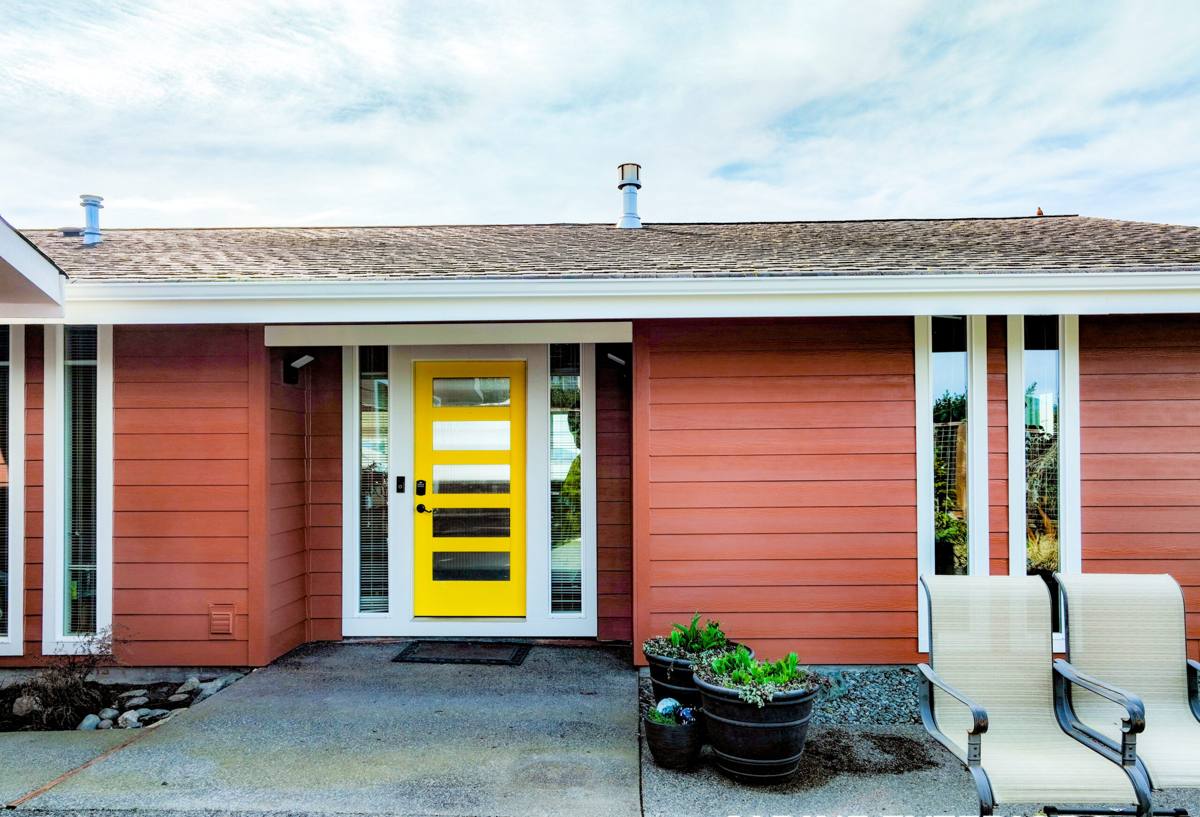
Why We Install Only James Hardie Fiber Cement
We don't install vinyl, LP SmartSide, Cemplank, Allura, or unfinished cedar or spruce siding. That's a deliberate standard, not a lack of options. In a coastal environment like Sandy Point, the material differences that barely matter in a dry inland climate become the differences that determine whether siding lasts fifteen years or fifty.
- Vinyl expands and contracts with temperature swings, and in salt air its fasteners and seams are more prone to long-term corrosion and gapping than homeowners expect.
- Engineered wood products like LP SmartSide perform well when every cut edge and joint stays perfectly sealed, but any breach at a seam, corner, or fastener hole lets moisture into the wood strand core — a real risk in a location that stays wet as long as Sandy Point does.
- Unfinished cedar or spruce looks great on day one but demands a maintenance schedule most owners underestimate: re-staining or re-sealing every few years to keep salt air and moisture from working into the grain.
James Hardie fiber cement is cement, sand, and cellulose fiber — it doesn't rot, it isn't a food source for moss or algae the way raw wood is, and it doesn't expand and contract the way vinyl or wood does. It's also non-combustible, which matters given Washington's wildfire seasons even on the west side of the Cascades. That combination is why it's the only product we put on homes, in Sandy Point or anywhere else we work.
What "Correct" Fiber Cement Installation Actually Requires Here
Fiber cement siding is only as good as its installation. In a low-exposure climate, sloppy installation might not show up for years. In Sandy Point's salt air and driving rain, mistakes get exposed fast. Correct installation in this location means paying close attention to details that are easy to skip:
Fastener Selection
Standard fasteners corrode faster near salt water. We use fasteners rated for coastal and marine-adjacent exposure, driven correctly — not overdriven, which cracks the board's outer coating and opens a path for water.
Clearances and Flashing
Siding needs a gap above roof lines, decks, and grade so it never sits in standing water or gets wicking contact with soil or hardscape. Every window, door, and penetration needs proper flashing and a drainage plane behind the siding — not caulk alone — so any water that gets past the surface has somewhere to go.
Factory-Finished Edges
ColorPlus factory-finished boards come with a baked-on finish that covers the cut edges better than field-applied paint. Every field cut still needs to be sealed with the correct touch-up product, because an unsealed cut edge is one of the fastest ways moisture gets into fiber cement.
Joint and Seam Treatment
Butt joints, corners, and trim intersections are where most siding failures start — coastal or not. We treat every joint as a place water will eventually find, and detail it that way from the start rather than relying on caulk to do all the work.
James Hardie Product Lines That Make Sense for a Home Like This
James Hardie engineers its siding by climate zone, and Whatcom County — including Sandy Point — falls into the HZ5 zone, built for regions with damp, moderate weather and freeze-thaw cycling. That's the baseline for every product line we recommend here.
| Product | Best Use on a Sandy Point Home | Why It Fits |
|---|---|---|
| HardiePlank Lap Siding | Primary wall siding, most home styles | Traditional lap look, widest color and texture range, proven long-term performance in wet coastal climates |
| HardiePanel Vertical Siding | Modern designs, accent walls, gable ends | Fewer horizontal seams for water to track along; strong choice on wind-exposed elevations |
| HardieShingle | Accent areas, dormers, gables | Cedar-shake appearance without the moisture and moss vulnerability of real wood shingle |
| HardieTrim | Corners, fascia, window and door surrounds | Matches the siding's moisture resistance so trim doesn't become the weak point in the system |
Signs a Home's Siding Is Losing the Fight With Moss and Moisture
Because Sandy Point stays damp and shaded longer than most of Ferndale, moss and moisture problems tend to show up earlier and spread faster once they start. Homeowners should watch for:
- Moss or algae staining that comes back within a season or two of cleaning
- Paint that's bubbling, peeling, or chalking, especially on north- and west-facing walls
- Soft spots, visible swelling, or a spongy feel when pressed on wood-based siding
- Streaking or dark staining below window sills, trim, and butt joints
- Gaps opening up at corners, seams, or where siding meets trim
- Rust bleed around fastener heads, a sign the fasteners themselves are failing
Any one of these on its own might just need attention. Several showing up together usually means water has been getting behind the siding for a while, and it's worth having someone look at what's underneath — not just cleaning the surface and hoping it holds.
Our Process for a Sandy Point Siding Project
- On-site assessment. We walk the exterior, check the most exposed elevations first, and look at what's happening behind the current siding wherever we can, not just the surface.
- Scope and product selection. We recommend the Hardie product lines and finish that fit the home's design and its exposure to wind and salt spray, and we're upfront about what full replacement versus targeted repair actually involves.
- Written estimate. Clear scope, product specification, and price before any work starts — no surprise add-ons once the crew is on site.
- Prep and installation. Proper flashing, drainage plane, and fastening detail on every wall, not just the ones facing the street.
- Final walkthrough. We go over the finished work with the homeowner and cover what basic seasonal upkeep looks like going forward.
What Affects Cost on a Coastal Job Like This
| Factor | How It Affects the Project |
|---|---|
| Home size and wall complexity | More corners, gables, and dormers mean more trim, flashing, and labor time |
| Current siding condition | Hidden water damage found during tear-off can add repair scope before new siding goes on |
| Access and site conditions | Waterfront lots, retaining walls, and limited staging space can slow crew movement and material delivery |
| Product selection | Lap, panel, and shingle profiles carry different material and labor costs; ColorPlus finishes reduce future painting costs |
| Trim and detail work | Homes with more architectural detail require more precise, more time-intensive trim work |
Every Sandy Point property is different, which is why we don't quote ballpark numbers over the phone. A home's exposure, current condition, and design all move the price, and the only accurate way to account for that is a walk-through.
Basic Upkeep That Extends the Life of Fiber Cement Siding Here
- Rinse the exterior once or twice a year to keep salt film and moss spores from building up, especially on shaded and north-facing walls
- Keep gutters clear so overflow doesn't run down the siding face or pool at the base of the wall
- Trim back vegetation and tree cover that keeps siding shaded and damp longer than it needs to be
- Check caulking at trim, windows, and joints annually and have any cracked or missing sections redone
- Address paint or finish wear promptly rather than letting it sit through another wet season
Why Hiring a Crew That Already Works Sandy Point Matters
Siding work on a shoreline property isn't the same job as siding work three miles inland, even within the same town. A crew that regularly works Sandy Point and similar Whatcom County waterfront properties already knows to plan around tighter site access, protect adjacent landscaping and hardscape, and detail every wall to the same standard — not just the elevations that face the road. That familiarity shows up in fewer surprises during the job and in how the siding performs five and ten years down the line, long after the crew has left.
If you're weighing a siding project on a Sandy Point home, we're happy to take a look and talk through what we're seeing, with no pressure to move forward. Reach out using the form below to schedule a free estimate.