 Ferndale Exterior
 Sandy Point's Climate and What It Does to a Roof
Sandy Point sits close enough to the water that salt air is part of daily life, not an occasional nuisance. Combine that with the driving rain that rolls through Whatcom County most of the fall and winter, plus a moss season that seems to stretch a little longer every year, and you have a roofing environment that's genuinely tougher than what most inland Ferndale homes deal with. Salt-laden air accelerates corrosion on unprotected metal fasteners and flashing. Wind-driven rain finds every weak seam, lap, and penetration. And the shade, moisture, and mild temperatures that make this stretch of coastline pleasant to live on are the exact conditions moss and algae need to take hold on a roof surface.
None of this means a roof here is doomed to fail early. It means the roof has to be specified and installed with those three stressors in mind from the start, not patched around later. That's the difference between a metal roof that looks good and performs for decades and one that starts showing rust streaks, loosened panels, or moss-clogged seams within the first several years.
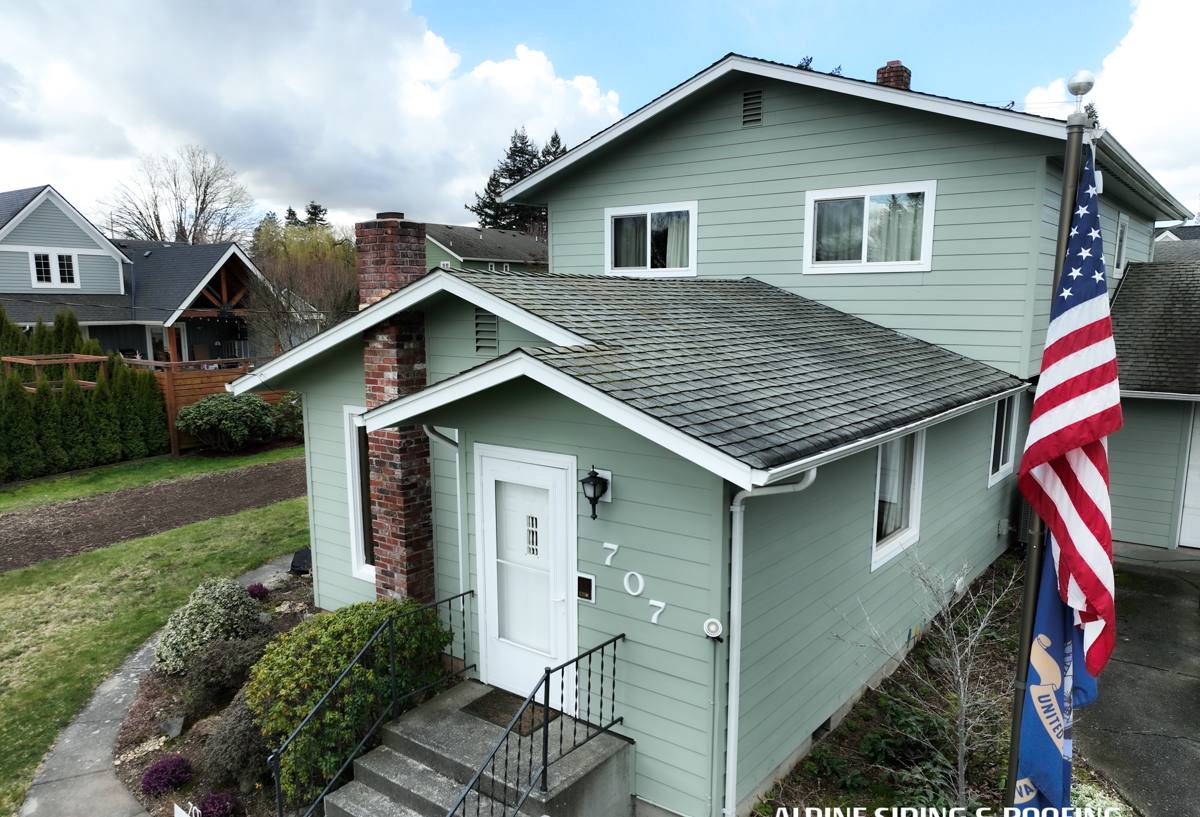
Why Metal Roofing Suits This Location
Metal isn't the right choice for every home or every budget, but for a property exposed to salt air and heavy, sustained rain, it has real advantages over other roofing types:
- A properly coated metal panel doesn't absorb water the way organic shingle materials do, which matters when a roof is wet more months than it's dry.
- Steep, smooth metal panel profiles shed water fast and give moss and algae less to grip onto compared to a rougher, more porous surface.
- Metal handles wind-driven rain well when the panel system, underlayment, and flashing details are matched correctly — the panel itself is rarely the point of failure, the details around it are.
- A quality metal roof, properly maintained, is a multi-decade investment rather than a re-roof-every-15-to-20-years cycle.
The trade-off is that metal roofing is less forgiving of shortcuts. Fastener choice, panel coating, and flashing detail all matter more in a salt-air environment than they would on a dry inland roof, and getting any of them wrong shows up faster here than it would somewhere less exposed.
Where Metal Isn't Automatically the Answer
We'll say this plainly: metal roofing costs more upfront than asphalt shingles, and on a home with a complex roofline, that upfront gap widens because of the extra flashing and cutting involved. We'll walk through the honest trade-offs for your specific roof rather than assume metal is the right call before we've looked at the structure, budget, and how long you plan to stay in the home.
Choosing the Right Metal Panel System
Not all metal roofing is built the same, and in a salt-air setting the coating and fastening system matter as much as the panel style. Here's how the common options generally compare for a coastal Whatcom County home:
| System | Corrosion Resistance | Best Fit | Notes |
|---|---|---|---|
| Standing seam, concealed fasteners | High | Full coastal exposure, longer-term ownership | No exposed screw heads for salt air to attack; higher material and labor cost |
| Exposed-fastener panel, quality coated screws | Moderate | Budget-conscious projects, outbuildings, secondary structures | Fasteners need periodic inspection and eventual replacement |
| Standard galvanized steel, basic coating | Lower | Sheltered, non-coastal locations only | We generally steer Sandy Point clients away from this in favor of a better coating package |
For most Sandy Point homes we recommend a standing seam system with a marine-grade or coastal-rated coating and stainless or coated concealed fasteners. It costs more than an exposed-fastener panel, but the fastener heads — the single most common early failure point for metal roofing near salt water — are hidden under the seam and out of direct weather.
What Correct Installation Involves
A metal roof is only as good as what's underneath it and around it. On every Sandy Point project, a few details get extra attention:
Underlayment
We install a high-temperature, self-adhering synthetic underlayment rather than standard felt. In a climate with this much sustained moisture, felt breaks down faster and offers less real protection if wind-driven rain ever gets past a seam.
Fasteners and Flashing
Every fastener, flashing piece, and trim component is matched to the panel material to avoid galvanic corrosion — mixing incompatible metals is one of the fastest ways to cause premature rust in a salt-air environment, and it's an easy mistake to avoid if you know to look for it. Flashing at valleys, chimneys, vents, and wall transitions is where most roof leaks actually originate, so we treat these as the highest-priority details on the job, not an afterthought once the panels are up.
Ventilation
Proper ridge and soffit ventilation keeps moist air moving through the attic instead of condensing against the underside of the roof deck. In a damp coastal climate, poor ventilation is a slow, hidden path to deck rot even under a roof surface that looks fine from the ground.
Panel Layout and Fastening Pattern
Panel runs and fastening spacing are set to account for wind exposure at this location, not just a generic manufacturer minimum. A roof close to open water sees higher uplift forces than a sheltered inland roof of the same size.
Cost Factors to Understand
We don't publish flat prices because roof size, pitch, complexity, and panel choice all move the number meaningfully. What we can tell you is what tends to drive cost up or down on a project like this:
| Factor | Effect on Cost |
|---|---|
| Roof pitch and complexity (valleys, dormers, penetrations) | More cutting and flashing labor, higher cost |
| Standing seam vs. exposed-fastener panel | Standing seam typically costs more upfront but requires less long-term fastener maintenance |
| Coating grade | Coastal-rated coatings cost more than standard but pay off in corrosion resistance near salt water |
| Tear-off vs. re-roof over existing layer | Tear-off adds labor cost but lets us inspect and address deck condition, which matters more in a wet climate |
| Ventilation upgrades | Modest added cost that protects the long-term investment |
We'll walk the roof, explain what we find, and give you real numbers for your specific home before any decision gets made.
Our Process, Start to Finish
- On-site assessment. We walk the roof and attic, note pitch, existing deck condition, ventilation, and any trouble spots specific to the home's exposure.
- Honest recommendation. We explain panel and coating options in plain terms, including what we'd choose for our own house in this location and why.
- Written estimate. Clear scope, materials, and price — no vague allowances that turn into surprises later.
- Tear-off and deck inspection. If we find soft or damaged decking, we tell you before we cover it up, not after.
- Installation. Underlayment, flashing, ventilation, and panels installed to the details described above.
- Final walkthrough. We review the finished roof with you and go over any care recommendations specific to your home's exposure.
Maintaining a Metal Roof in Salt Air and Moss Season
A well-installed metal roof needs far less maintenance than shingles, but "far less" isn't "none," especially this close to the water. A simple annual routine goes a long way:
- Rinse the roof surface periodically to clear salt residue and organic debris before it builds up in seams and valleys.
- Keep gutters and downspouts clear year-round — clogged gutters back water up under panel edges and flashing.
- Trim back overhanging branches to reduce shade and debris that feed moss growth.
- Have flashing and fastener condition checked every few years, sooner if you notice a leak, staining, or a loose panel edge.
- Address any moss growth early with gentle, roof-safe methods rather than pressure washing, which can damage coatings and force water under seams.
Why a Crew That Already Works Sandy Point Matters
Roofing crews who mostly work drier, inland jobs don't always think in terms of galvanic corrosion, coastal wind uplift, or the specific rhythm of a Whatcom County moss season. Those aren't exotic concerns — they're just the normal conditions of building this close to the water, and they change how a roof should be specified. We work Ferndale and the surrounding coastal areas regularly, which means we're not guessing at how a coating or fastener choice will hold up here — we've seen it play out on other roofs in similar exposure. That familiarity shows up in the small decisions: which flashing detail to prioritize, which coating grade is worth the extra cost, and which shortcuts simply don't hold up long-term in salt air and driving rain.
If you're weighing a metal roof for a Sandy Point property, we're happy to take a look and give you a straight assessment — what your roof actually needs, what it doesn't, and what it would cost to do it right. Reach out for a free, no-pressure estimate using the form below.