 Ferndale Exterior
 Semiahmoo sits out on its own spit of land between Semiahmoo Bay and Drayton Harbor, just outside Blaine and a short drive from our home base in Ferndale. That location is exactly what makes it a distinct place to install windows. Homes here take on wind and salt-laden air off the water almost year-round, and the mix of full-time residences, waterfront condos, and second homes means the window openings we run into vary more than they would in a typical inland subdivision.
Window installation is not a one-size-fits-all job anywhere in Whatcom County, but on the Semiahmoo peninsula the margin for error is smaller. Salt air, driving rain, and a long moss season put real stress on flashing, sealants, and frame materials. Get the installation details right and a window will hold up for decades out here. Skip a step or rush the flashing sequence, and problems show up faster on this stretch of coastline than they would a few miles inland.
Why Semiahmoo's Location Changes the Job
Being surrounded by water on three sides is a defining feature of this community, and it shapes what a window installation has to withstand. Salt-laden marine air is more corrosive to hardware, fasteners, and lower-grade frame components than the drier air found further inland. Wind coming off the bay drives rain sideways into wall assemblies rather than letting gravity carry it straight down, which means water finds its way into gaps and seams that would never get tested in a calmer setting. And the shade, humidity, and mild temperatures common to this part of the county support moss and mildew growth that can run for most of the year on north-facing walls, trim, and window sills.
What That Means for a Window Opening
None of this changes the basic mechanics of installing a window, but it raises the stakes on every detail that keeps water out. A sill pan that isn't sloped correctly, a flashing lap that's a half-inch short, a sealant bead applied to a damp surface — these are the kinds of shortcuts that might go unnoticed for years in a drier climate. On Semiahmoo, wind-driven rain finds those weak points much sooner, and by the time a homeowner sees a stain on drywall or trim, moisture has usually been working on the framing behind it for a while.
The Housing Stock We Work With Here
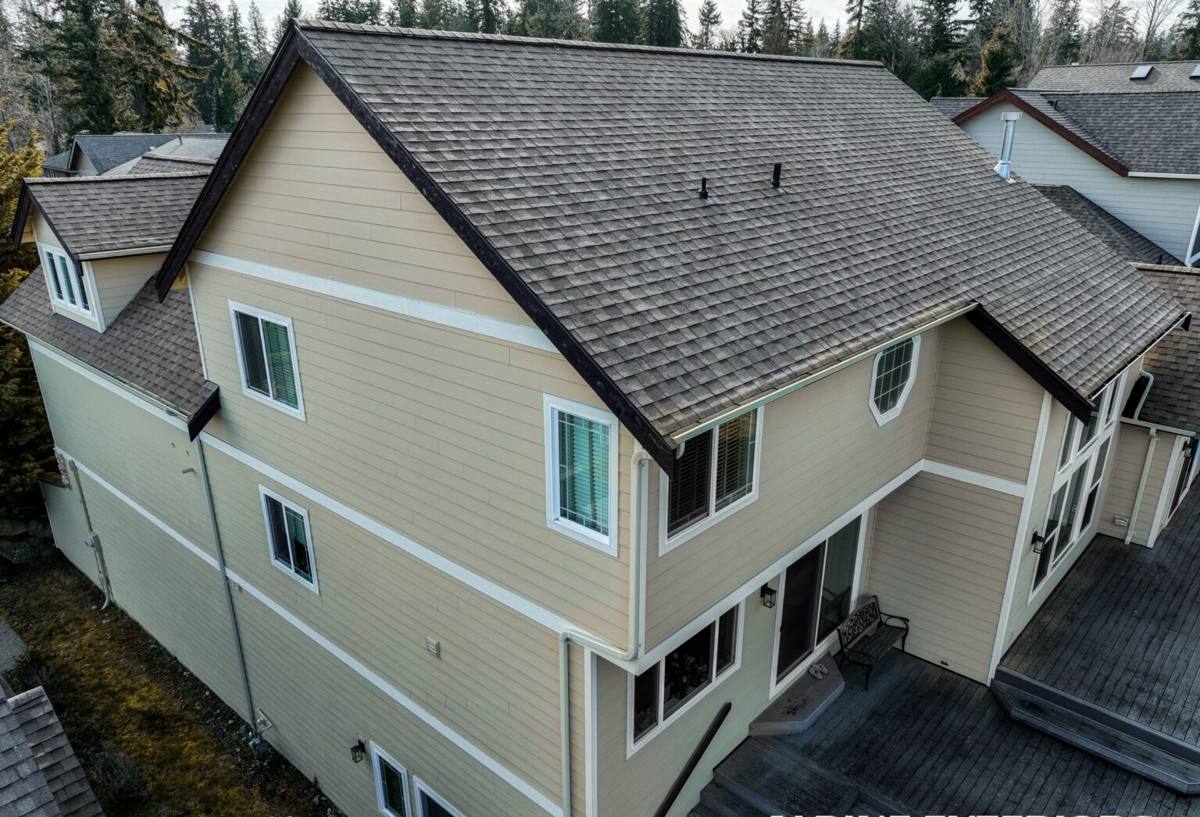
Semiahmoo's mix of property types means we rarely install the same window twice. Waterfront and view-oriented homes tend to feature larger picture windows, sliders, and bay or bow configurations built to take advantage of the outlook toward the bay. Condominiums and townhomes in the area often have shared exterior walls and specific building envelope requirements that a standalone house doesn't. And a number of homes here are used seasonally rather than year-round, which changes how quickly a hidden leak gets noticed — a window that's slowly failing behind the wall can go undetected much longer in a part-time residence than in a home someone lives in every day.
That combination — larger glass, coastal exposure, and properties that aren't always occupied — is exactly why we treat window installation on this peninsula as its own category of work rather than a generic replacement job.
What a Correct Window Installation Actually Involves
A window installation is judged almost entirely by what you can't see once the trim goes back on. The frame and glass matter, but the flashing, the sill pan, and the sealant details are what actually keep water out of the wall over the next twenty or thirty years.
The Sequence That Has to Happen in Order
Correct installation follows a specific order: the opening gets inspected and, if needed, repaired for any existing rot or damage before anything new goes in. A sill pan or sloped flashing membrane goes down first so any water that does get past the window drains back out rather than pooling. The window unit gets set, leveled, and shimmed so it operates correctly and doesn't rack under its own weight. Flashing tape gets applied in a shingle-lap pattern — bottom, sides, then top — so every layer sheds water onto the layer below it, never the reverse. Insulation fills the gap between the frame and the rough opening without overpacking it, which can bow the frame. Interior and exterior sealant and trim finish the job.
Skip or reorder any one of those steps and the window can look fine for years while water works its way into the wall assembly behind it. On a home exposed to wind-driven rain off Semiahmoo Bay, that sequence isn't optional — it's the difference between a window that lasts and one that causes a repair bill down the road.
A Quality Checklist Worth Asking About
- Was the rough opening inspected for existing rot or moisture damage before the new window went in?
- Is there a sloped sill pan or flashing membrane under the window, not just caulk?
- Was flashing tape applied in the correct shingle-lap order — sides overlapping the sill, top overlapping the sides?
- Is the window shimmed and leveled so it operates smoothly without binding?
- Was insulation used correctly around the frame, without gaps or overpacking?
- Is the exterior sealant a product rated for the joint width and movement it will see, not just whatever was on hand?
Choosing a Window Frame That Holds Up on the Water
Frame material matters more on Semiahmoo than it would somewhere inland, because the frame is what takes the brunt of salt air and constant moisture exposure over time. There isn't one right answer for every home — it depends on budget, the style of the house, and how exposed a particular wall is to wind and driving rain.
| Frame Material | How It Handles Marine Exposure | Trade-Offs to Know |
|---|---|---|
| Vinyl | Won't corrode or rot; performs well against salt air and moisture when installed correctly | Can expand and contract more with temperature swings; color and trim options are more limited than clad wood |
| Fiberglass | Very stable in temperature swings and highly resistant to moisture and corrosion | Higher upfront cost than vinyl; fewer installers stock it, so lead times can run longer |
| Aluminum-clad wood | Interior wood look with a protective exterior shell; shell resists weather well | Any breach in the cladding exposes wood underneath to rot in a wet climate; more maintenance-sensitive |
| Bare wood | Traditional appearance homeowners often want on older or historic-style homes | Requires the most ongoing maintenance in a moss-prone, high-moisture environment; not our default recommendation for direct water exposure |
Our standard is to steer waterfront and heavily exposed walls toward vinyl or fiberglass, simply because they hold up with the least maintenance in salt air and constant dampness. That's a judgment based on moisture behavior and upkeep, not a knock on wood-framed windows in general — they still make sense on more protected walls or where the look is a priority and the homeowner is comfortable with the maintenance schedule.
Glass Packages Worth Considering Here
Beyond frame material, the glass package affects both comfort and condensation control. Double-pane, low-E glass is the standard baseline and performs well for most homes. Triple-pane glass adds another layer of insulation and can help on walls that take direct wind exposure, though it adds weight and cost that isn't always necessary. For homes right on the water dealing with wind noise or larger expanses of glass, we'll talk through whether the upgrade is worth it for that specific wall rather than recommending it across the board.
Our Installation Process
We keep the process straightforward and start with an honest look at what's actually needed:
- On-site assessment — we inspect existing openings, check for hidden moisture or rot, and measure precisely, since a number of homes in this area have openings that don't match standard manufacturer sizes.
- Product selection — we walk through frame material and glass options suited to that specific wall's exposure, not a generic recommendation.
- Prep and removal — old units come out carefully, and we address any framing or sheathing damage found underneath before anything new goes in.
- Flashing and installation — sill pan, shingle-lap flashing, leveling, and insulation, done in the correct sequence every time.
- Finish and cleanup — interior and exterior trim, sealant, and a final check that every unit operates correctly.
What Window Installation Typically Costs to Plan For
Costs vary enough by project that we won't give a number that doesn't hold up on your specific house, but the factors that move the price are consistent:
| Cost Factor | Why It Matters |
|---|---|
| Standard vs. custom sizing | Non-standard openings, common on older or renovated homes, require custom-built units and longer lead times |
| Frame material | Vinyl, fiberglass, and clad-wood options carry different price points and different long-term maintenance costs |
| Window type | A simple double-hung costs less to supply and install than a bay, bow, or large fixed picture window |
| Existing damage | Rot or moisture damage found in the rough opening adds repair work before installation can proceed |
| Accessibility | Second-story windows, tight waterfront lots, or condo/shared-wall access can add labor time |
| Number of openings | Whole-house replacements typically bring a better per-window rate than one-off jobs |
Signs Your Current Windows Are Losing the Fight
Marine exposure tends to reveal window problems earlier than it would inland. Watch for these signs, especially on walls facing the water or prevailing wind:
- Soft or discolored trim, sill, or drywall near a window frame
- Persistent condensation between panes, which usually means a failed seal
- Windows that are harder to open, close, or lock than they used to be
- Visible corrosion on hardware, hinges, or latches
- Moss or dark staining building up on the sill or lower frame faster than on the rest of the house
- A noticeable draft or cold spot near the frame during windy weather
Why It Matters to Hire a Crew That Already Works This Area
Window installation done by the book works the same everywhere in principle, but a crew that hasn't worked Semiahmoo's conditions before can underestimate how much wind-driven rain and salt air actually test a flashing detail. We've installed windows on this peninsula enough to know which walls take the worst of the weather, which flashing details need extra attention on waterfront lots, and how the local moss and moisture cycle affects both the install and the years afterward. That familiarity doesn't replace doing the job correctly — it just means fewer surprises and a crew that isn't learning the local conditions on your project.
We're a Ferndale-based crew, and Whatcom County's coastline — from Semiahmoo down through Birch Bay and beyond — is our regular service area, not an occasional trip. That matters when a warranty callback or a follow-up question comes up down the road; we're not far away and we already know the house.
If you're weighing a window replacement or new installation on your Semiahmoo home, we're happy to take a look and give you a straight, no-pressure estimate. Use the form below to get in touch and we'll schedule a time to assess your windows in person.