 Ferndale Exterior
 Why Sudden Valley Roofs Wear Differently Than Roofs Inland
Sudden Valley sits in a pocket of Whatcom County where three things gang up on a roof at once: salt-tinged air moving in off the water, long stretches of driving rain, and tree cover dense enough to keep large sections of most roofs in shade for much of the year. None of those three things is dramatic on its own. Together, over a decade or two, they're what separates a shingle roof that makes it to 25 years from one that starts showing granule loss, moss lines, and soft spots at 12.
Asphalt shingles are still the right call for the vast majority of homes here — they're durable, repairable, and reasonably priced when installed correctly. But "installed correctly" means something more specific in a shaded, damp, coastal-influenced neighborhood than it does on a dry, open lot. This page is about what that actually looks like for a Sudden Valley home, not asphalt shingle roofing in general.
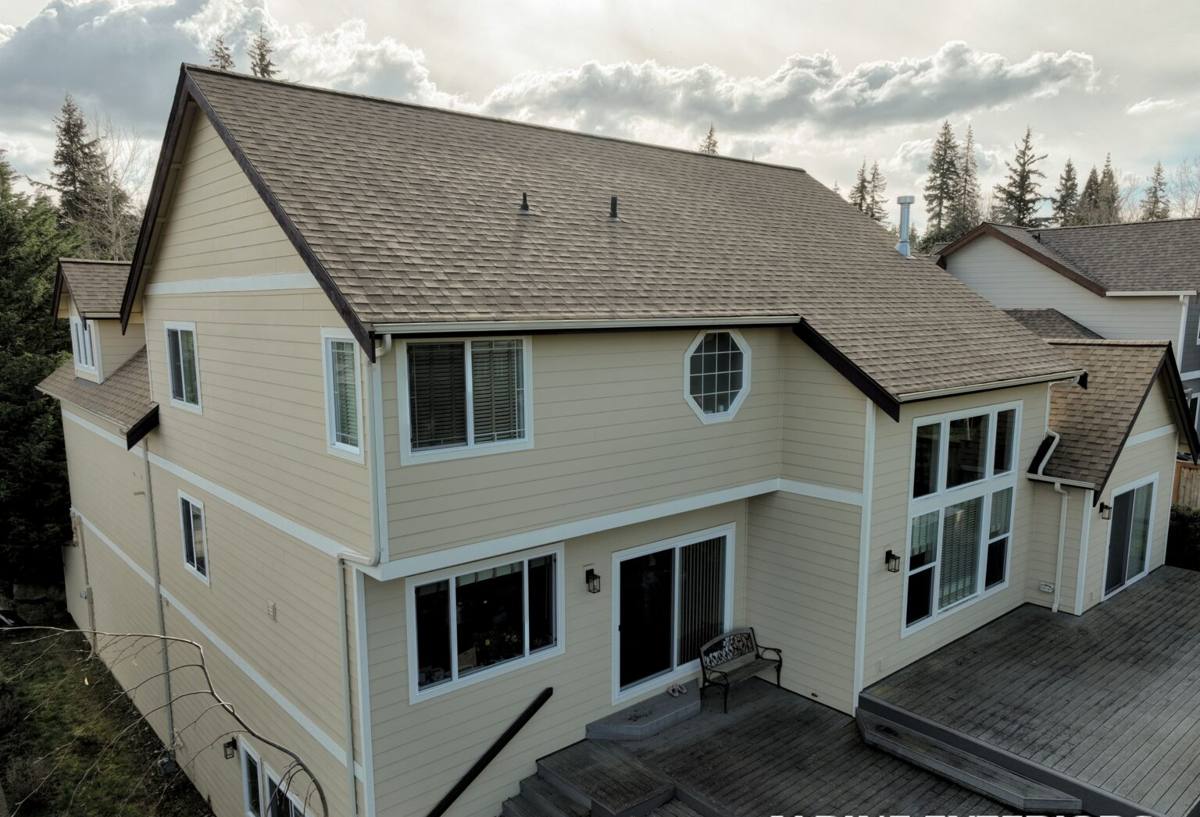
What a Correct Installation Involves Here
A shingle roof is a system, not a single product nailed to plywood. Skip or shortcut any layer and the shingles on top will fail early no matter how good the brand is. For homes in this part of Whatcom County, we pay particular attention to:
Underlayment and Ice/Water Barrier
We run a synthetic underlayment across the full deck, not just felt, because it holds up better through the wet install season we often work in. At eaves, valleys, and any roof-to-wall transition, we add a self-adhering ice-and-water membrane. Sudden Valley doesn't see the deep freeze-thaw cycles of the mountains, but the same membrane does double duty here: it seals the deck against wind-driven rain that finds its way under shingles during winter storms.
Ventilation
A shaded, damp roof needs to be able to breathe, or moisture gets trapped in the attic and works its way back up through the deck from underneath. We check intake at the soffits and exhaust at the ridge on every project — if the attic isn't balanced, new shingles on top of it won't matter much in five years.
Flashing and Nailing
Step flashing at walls, proper valley metal or woven valleys done to spec, and shingles nailed with the correct pattern and number of fasteners for the wind exposure of the specific lot — these are the details that separate a roof that sheds a coastal storm from one that loses shingles in it. We don't staple, and we don't nail high just to move faster.
The Moss and Shade Factor
Tree cover is one of the things people like about living in Sudden Valley, and we're not going to tell anyone to clear their lot. But shade changes how a roof ages. North-facing slopes and sections tucked under overhanging branches stay damp longer after every rain, and that moisture is exactly what moss and algae need to get established.
Once moss takes hold, it does more than look bad. It lifts shingle edges as it grows, holds water against the granule surface, and can work its way under the shingle tabs over a few seasons. That accelerates granule loss and, eventually, leaks — usually first noticed as a dark stain on a ceiling or a soft spot underfoot in the attic.
Zinc or copper strips near the ridge, installed at the time of a re-roof, are a low-maintenance way to slow moss regrowth on shaded sections — rain washes trace metal down the roof plane and moss doesn't like it. We'll flag which parts of a specific roof are moss-prone during the estimate walk and talk through whether strips, more frequent gentle cleaning, or some selective branch trimming makes the most sense for that lot.
Choosing the Right Shingle for This Climate
Not every shingle line is worth the upcharge, and not every budget option is a false economy. The honest differences that matter for a home in this area come down to wind rating, algae resistance, and how the shingle behaves once moss and moisture are part of the equation.
| Shingle Type | Typical Lifespan | Wind Rating | Algae/Moss Resistance | Best Fit |
|---|---|---|---|---|
| 3-Tab | 15–20 years | Lower (60–70 mph class) | Standard, no coating | Budget-driven projects, outbuildings, rentals |
| Architectural (Laminate) | 25–30 years | Higher (110–130 mph class) | Available with algae-resistant granules | Most Sudden Valley homes — our default recommendation |
| Impact-Rated Architectural | 25–30+ years | Higher, plus Class 4 impact rating | Available with algae-resistant granules | Exposed lots, homes wanting the longest service life |
For most homes in Sudden Valley, we point people toward a mid-to-upper tier architectural shingle with algae-resistant (AR) granules built in. The AR treatment doesn't make moss impossible under heavy shade, but it measurably slows algae staining and buys real time before a roof needs cleaning. The extra cost over 3-tab is modest relative to the added wind rating and lifespan, which matters more here than in a lot of other neighborhoods given how exposed some sites are to weather moving off the water.
How We Approach a Sudden Valley Roofing Project
- On-site inspection. We get on the roof (not just a look from the ground), check the deck condition, ventilation, flashing, and note shaded or moss-prone sections specifically.
- Written scope and estimate. Materials, underlayment package, flashing plan, and any deck repair allowance spelled out before work starts — no surprise change orders for things we could have seen in the inspection.
- Tear-off and deck check. Old roofing comes off down to the deck, and we replace any soft or delaminated sheathing we find, not just the spots that were visible from the attic.
- Underlayment, flashing, and shingle install. Done in the sequence and to the fastening spec described above, adjusted for that roof's specific pitch and exposure.
- Site cleanup and magnetic sweep. Old materials and nails hauled out, yard and driveway swept for stray fasteners before we consider the job done.
- Final walkthrough. We go over the finished roof with the homeowner, point out any moss-treatment recommendations, and answer questions before we leave.
Repair or Replace? Signs to Watch For
Not every issue means a full roof. But in a damp, shaded neighborhood, small problems tend to compound faster than they would somewhere drier, so it's worth checking these regularly rather than waiting for a leak to show up inside.
- Granules collecting in gutters or at downspout outlets — a sign of accelerating wear, not necessarily an emergency by itself
- Visible moss lines or thick moss patches, especially on shaded or north-facing slopes
- Curling, cupping, or cracked shingle tabs, particularly on older 3-tab roofs
- Dark streaking that doesn't wash off with rain — often algae staining rather than dirt
- Soft or spongy feel when walking the roof, or a sagging ridge line
- Daylight visible through the roof deck from inside the attic
- Water stains on ceilings or in the attic, even faint or old-looking ones
- Missing or damaged flashing around chimneys, skylights, or wall transitions
A roof with isolated damage and a sound deck is often a good repair candidate. A roof with widespread granule loss, multiple soft spots, or moss that's been established for several seasons is usually past the point where repair makes financial sense — we'll always tell you honestly which category a roof falls into.
Maintenance That Actually Extends Roof Life Here
Given the climate, a small amount of regular attention goes further in Sudden Valley than in drier parts of the county. A few habits worth keeping:
- Clear gutters and downspouts at least twice a year — clogged gutters back water up under the shingle edge, which is one of the more common causes of edge rot we see
- Have moss gently treated or removed before it spreads past a thin layer, rather than after it's thick — aggressive scraping on an established growth can damage granules
- Keep overhanging branches trimmed back where reasonable, so shaded sections get at least some direct sun and airflow
- Walk the attic once a year with a flashlight, checking for daylight, staining, or damp insulation
- Get a roof looked at after any major windstorm, even if nothing looks obviously wrong from the ground
Why Local Experience with Sudden Valley Specifically Matters
Roofing crews that mostly work drier, more open parts of Whatcom County sometimes underbuild for what a shaded, coastal-influenced lot actually needs — lighter underlayment packages, standard granules instead of AR, minimal attention to ventilation. None of that shows up as a problem on day one. It shows up five or ten years later as premature moss, granule loss, or a leak that traces back to a corner that was never really at issue on paper.
Working this specific area regularly also means knowing practical things that don't show up on a set of plans — which streets and driveways make staging equipment straightforward and which need extra planning, how HOA or community guidelines affect scheduling and material staging in a neighborhood setting, and which roof orientations in this pocket of the county tend to hold moss the longest. That's the kind of thing that only comes from doing the work here repeatedly, not from a general familiarity with asphalt roofing.
We're licensed, insured, and carry manufacturer certifications for the shingle lines we install most often, which matters both for workmanship warranty coverage and for making sure the installation itself doesn't void the manufacturer's material warranty.
Get a Straight Answer on Your Roof
If you're not sure whether your Sudden Valley roof needs a repair, a full replacement, or just a moss cleaning this season, we're glad to take a look and tell you honestly which one it is. Use the form below to request a free, no-pressure estimate — we'll walk the roof, explain what we find, and give you options that fit both the climate here and your budget.