 Ferndale Exterior
 Building a Deck That Actually Holds Up in Sudden Valley
A deck in Sudden Valley has to do more than look good for the first summer. Between the salt-laden air moving in off the Salish Sea, the driving rain that Whatcom County sees for a good stretch of the year, and the moss that creeps across anything shaded or damp, this is not a forgiving environment for a poorly built deck. We build custom decks for homeowners in and around Ferndale who want something that still looks and performs the way it should five, ten, and twenty years from now — not just on the day we finish.
This page is about one thing: custom deck construction for Sudden Valley properties specifically. Not a generic overview of decking, and not a sales pitch for one particular product. What follows is what we've learned building and repairing decks in this climate, and what we think you should know before you commit to a design, a material, or a contractor.
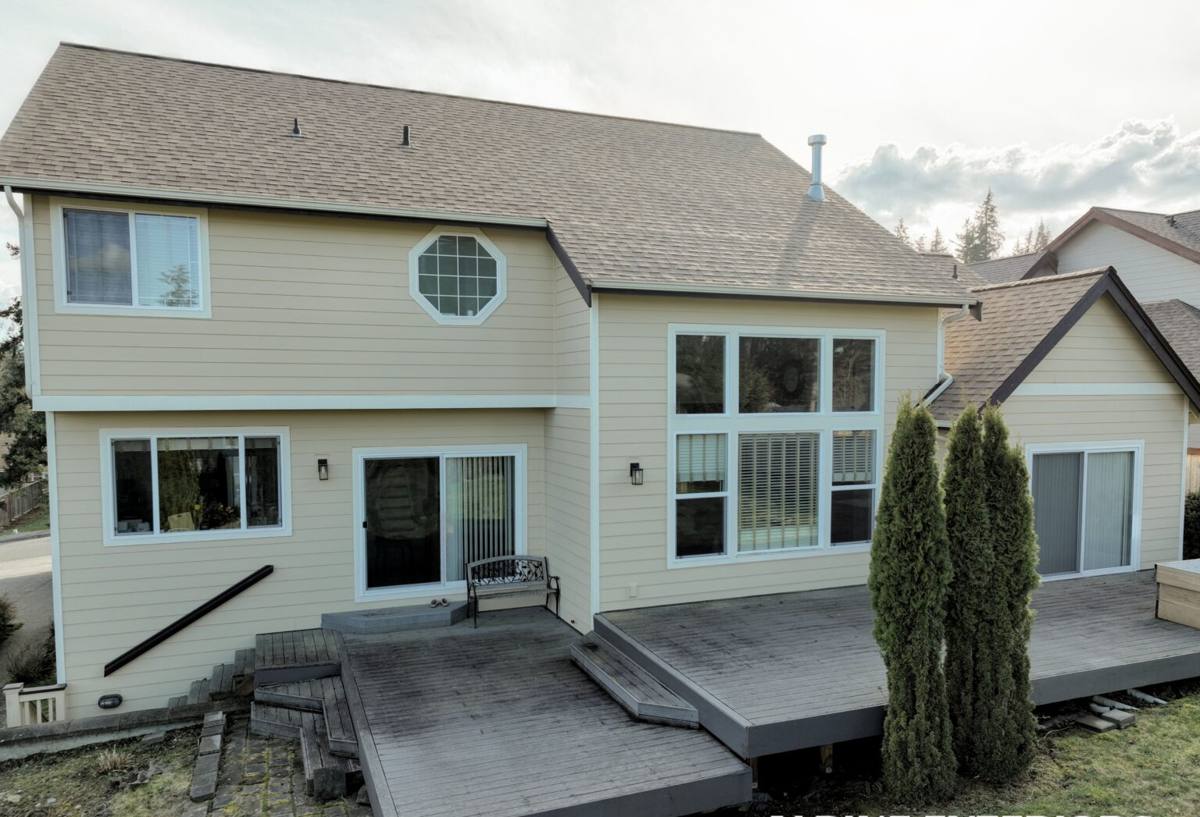
What This Corner of Whatcom County Puts a Deck Through
Shade, Tree Cover, and a Long Moss Season
A lot of Sudden Valley lots carry heavier tree cover than you'd find on a more open, in-town property. That's part of what makes the area appealing to live in, but it also means decks here spend more of the year shaded and damp than a deck out in the open would. Shade slows drying time after every rain, and slow drying is exactly what moss, algae, and mildew need to take hold. Left unchecked, moss doesn't just look bad — it holds moisture directly against the board surface and, on wood decking, against fasteners and connectors underneath.
Driving Rain and Salt Air
Whatcom County storms don't always fall straight down. Wind-driven rain gets pushed sideways into ledger connections, under railings, and into any gap in the flashing that a calmer climate might get away with. Add in the marine air that reaches inland from the coast, and you've got a slow, steady source of corrosion working on anything metal — fasteners, joist hangers, railing hardware — even when it isn't raining. None of this is dramatic on its own. It's the accumulation over years that separates a deck that's still solid at year fifteen from one that needs major rebuild work at year eight.
Choosing a Decking Material for a Wet, Wooded Lot
There's no single "best" decking material — there's a best material for your specific lot, budget, and how much upkeep you actually want to do. Here's how the common options compare for a shaded, damp Sudden Valley setting:
| Material | Moisture & Moss Behavior | Maintenance | Typical Lifespan |
|---|---|---|---|
| Pressure-treated wood | Absorbs moisture readily; needs consistent sealing to resist moss and rot | Annual cleaning, re-sealing every 1-3 years | 15-20 years with upkeep |
| Cedar | Naturally moisture and insect resistant, but surface still needs protection in constant shade | Regular cleaning, periodic oiling or sealing | 15-25 years with upkeep |
| Capped composite | Won't rot, but can still grow surface moss/algae in deep shade if never cleaned | Occasional washing, no sealing or staining | 25-30+ years |
| PVC decking | Fully moisture-resistant board; still benefits from periodic washing in shaded spots | Low — washing only | 25-30+ years |
Why We're Selective About Which Composite Boards We Install
Not every composite product on the market is built the same way, and in a shaded, wet climate that difference shows up faster than it would somewhere drier. Some boards handle standing moisture and prolonged shade better than others, and installation details — ventilation underneath, board spacing, how the ends are capped — matter as much as the product itself. We tell homeowners honestly when a particular board or install method isn't a good match for a heavily shaded lot, even if it's a popular choice elsewhere, because a warranty on paper doesn't fix a deck that's holding moisture against itself.
What's Under the Boards Matters More Than What's On Top
Footings and Framing
On sloped or wooded Sudden Valley lots, footing depth and placement need to account for drainage patterns you can't always see from the surface — water moves downhill through soil, and a footing set in the wrong spot can end up sitting in a damp pocket year-round. We check drainage and soil conditions on-site before finalizing footing layout rather than defaulting to a standard grid.
Fasteners and Hardware
Given the salt air and near-constant humidity, we use stainless steel or heavy-duty coated fasteners and connectors rather than standard galvanized hardware. It costs a little more upfront. It's a lot cheaper than replacing corroded joist hangers under a deck that's otherwise in fine shape.
Flashing, Ledger Boards, and Drainage
Where a deck attaches to the house, proper ledger flashing is what keeps wind-driven rain from working its way behind the siding and into the rim joist — this is one of the most common failure points we find on older decks in this area. We also build in consistent board spacing and a slight slope away from the house so water sheds instead of pooling, especially important under tree cover where things dry slowly to begin with.
Cost Factors for a Sudden Valley Deck
Every project is different, but the same handful of factors drive most of the cost variation we see on decks in this area:
| Factor | Why It Matters Here |
|---|---|
| Site slope and access | Sloped, wooded lots often need deeper or more numerous footings, and material access can be harder |
| Decking material | Wood costs less upfront; composite and PVC cost more but reduce long-term upkeep |
| Height above grade | Taller decks need engineered railings and stairs, which adds labor and material |
| Hardware and fasteners | Corrosion-resistant fasteners and connectors cost more than standard galvanized options |
| Tree removal or trimming | Some shaded lots need limited clearing to reduce moss buildup and improve drying time |
We give straightforward, itemized estimates so you can see where the money is going and where there's room to adjust the scope if needed.
Our Process, Start to Finish
- On-site visit to assess slope, drainage, tree cover, and existing structures (or the remains of an old deck)
- Design conversation covering layout, material options, and railing style based on how you actually use the space
- Written estimate with material and labor broken out, plus permit handling where required
- Footing and framing work, built to account for the specific drainage and soil conditions on your lot
- Decking, railing, and hardware installation using corrosion-resistant fasteners throughout
- Final walkthrough to confirm drainage, spacing, and finish before we consider the job done
Signs Your Current Deck Is Losing the Fight
If you're deciding whether to repair or replace, these are the things worth checking first:
- Soft or spongy spots when you walk across the boards
- Persistent moss or dark staining that comes back within weeks of cleaning
- Rust streaks around fasteners, joist hangers, or railing posts
- Gaps or separation where the deck meets the house (ledger board area)
- Railings that feel loose or flex under normal pressure
- Standing water or slow drying after rain, especially in shaded corners
Any one of these on its own might just need attention. Several together usually mean it's time to talk about a rebuild rather than another round of patching.
Living With a Deck Here: Maintenance That Actually Matters
A well-built deck in Sudden Valley still needs some seasonal attention — the climate doesn't let anything coast on a "set it and forget it" basis. A short, realistic maintenance routine goes a long way:
- Sweep debris and fallen needles off the surface regularly, especially in fall
- Wash down shaded areas once or twice a year to keep moss from establishing
- Check and clear drainage gaps between boards so water isn't pooling
- Inspect fasteners and railing connections annually for rust or looseness
- Re-seal or re-stain wood decking on the schedule the product actually calls for, not just when it looks worn
None of this is complicated, but skipping it is exactly how a good deck turns into a problem deck ahead of schedule in this climate.
Why Hire a Crew That Already Works in Sudden Valley
Decks built without accounting for shade, moss, salt air, and wind-driven rain tend to show their age early — often through problems that were preventable at the framing and fastener stage, long before they show up as a soft board or a rusted hanger. We build decks for this specific area regularly, which means the drainage details, hardware choices, and material trade-offs described above aren't guesswork for us — they're standard practice on every job. If you're planning a new deck or trying to figure out whether an existing one is worth saving, we're happy to take a look and give you a straightforward, no-pressure estimate using the form below.